Why a Beverly Mine's Sewer Path Is Not an NPDES Permit
A factory-floor scenario plays out across Beverly-area operations every quarter: a batch discharge from a mill clean-out blows through an undersized equalization basin, the zinc probe at the manhole climbs from 0.4 mg/L to 4 mg/L in twenty minutes, and the operations manager gets the call from the control authority before the next shift starts. The plant did not violate an NPDES permit — it violated the local sewer-use ordinance, and the pathway that governs the response runs through Clean Water Act §307(b) and 40 CFR Part 403, not the NPDES program (per EPA pretreatment standards guidance, epa.gov/npdes/pretreatment-standards-and-requirements-local-limits).
Direct discharge to surface water — Bass River, Salem Sound, the North River system — requires an NPDES permit under CWA §402. Sewer discharge to a POTW is regulated under CWA §307(b) and 40 CFR Part 403, and enforcement is delegated to the local control authority through its sewer-use ordinance (per EPA 40 CFR Part 403). Most Beverly-area operations carry both authorizations in parallel because they have separate stormwater outfalls. Conflating the two paths is the most common reason a plant invests in the wrong treatment train: NPDES surface-water limits are written around receiving-stream assimilation, while pretreatment limits are written around protection of the POTW's biological process, its sludge quality, and its workers. The chemistry is identical; the numerical targets and the consequence of a single excursion are not.
Mining and metals operations typically qualify as Categorical Industrial Users under 40 CFR Part 437 (Ore Mining and Dressing) or, where plating, pickling, or anodizing lines exist, 40 CFR Part 433 (Metal Finishing). 40 CFR 433 caps copper at 3.38 mg/L daily max / 2.07 mg/L monthly average and total chromium at 2.77 mg/L daily max / 1.71 mg/L monthly average (per 40 CFR 433.15). The Beverly Wastewater Treatment Plant is a roughly 5.7 MGD secondary activated-sludge facility discharging to Bass River and Salem/Beverly Harbor, and its sewer-use ordinance sets site-specific local limits tighter than the federal categorical floor — especially for zinc, copper, lead, and ammonia. The rest of this article is anchored to that distinction.
Federal Floor vs Beverly POTW Ceiling: The Numbers That Matter
The federal categorical standard at 40 CFR Part 437 sets the floor for the parameters a mining/metals plant actually has to monitor, and the local sewer-use ordinance sets a tighter ceiling on top of it. Treat the federal numbers as the compliance floor and the local numbers as the design target — sizing equipment to the floor is the most common reason plants trip Significant Noncompliance (SNUR) notices, which trigger formal publication and a forced re-derivation in the next permit cycle.
| Parameter | 40 CFR Part 437 Daily Max (mg/L) | 40 CFR Part 437 Monthly Avg (mg/L) | Typical Beverly-Area Local POTW Limit (mg/L) |
|---|---|---|---|
| Total Suspended Solids | 50 | 25 | 10–30 (instantaneous ceiling often lower) |
| Zinc | 1.0 | 0.5 | 0.3–1.0 monthly avg |
| Copper | 2.0 | 1.0 | 0.3–0.5 monthly avg |
| Lead | 0.6 | 0.3 | 0.1–0.2 (LCRR pressure toward 0.01 mg/L action level) |
| Cadmium | 0.2 | 0.1 | 0.05–0.1 monthly avg |
| Nickel | 2.0 | 1.0 | 0.5–1.0 monthly avg |
| Arsenic | 0.6 | 0.3 | 0.1–0.2 monthly avg |
| Oil & Grease | 50 | 25 | 10–25 (instantaneous) |
| pH | 6.0–9.0 | 6.0–9.0 | 6.5–9.0 instantaneous |
Civil penalties under CWA §309 reach $25,000 per day per violation, and a SNUR triggers formal publication that follows the discharger into the next permit cycle. Three 2024–2026 EPA trends are reshaping what counts as compliant in 2026: the Lead and Copper Rule Revisions (LCRR) are pushing lead action levels toward 10 µg/L and forcing POTWs to re-derive local limits at much lower numbers; EPA's 2024 Multi-Sector General Permit (finalized 2024-09) added PFAS monitoring for PFOS, PFOA, PFHxS, and PFNA in sectors that include metal mining, and local control authorities are adopting the same suite for indirect dischargers; and the 2025 ore-mining BAT revisions (2025-03) are tightening the cost-benefit envelope on total recoverable metals. Treat all three as the next permit-cycle risk in 2026 (per EPA 2024 MSGP; EPA 2025 ore-mining BAT revisions).
The Chemistry That Drives the Design
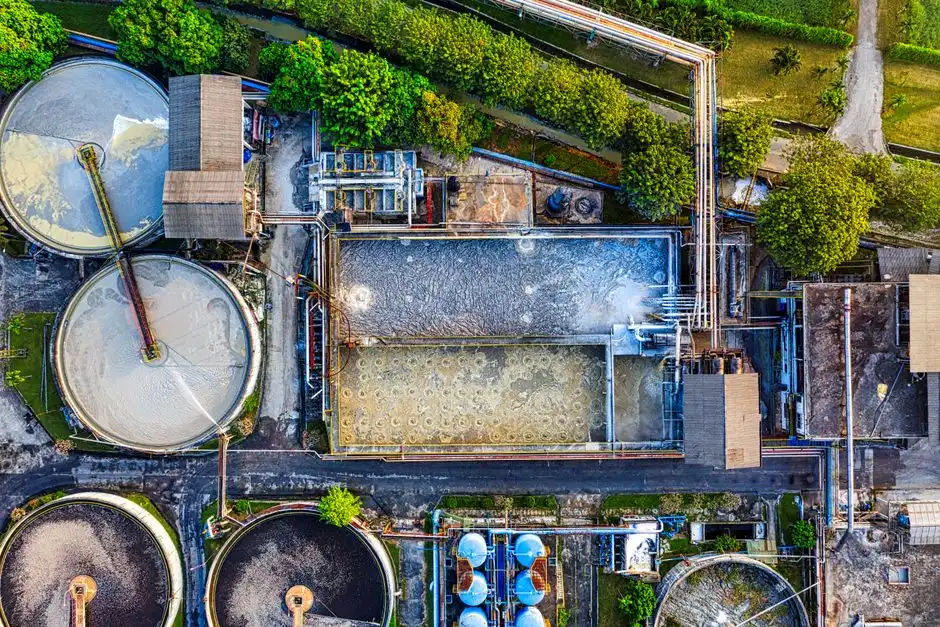
Raw acid mine drainage and spent process solutions out of the Beverly-area quarries and metal-finishing shops arrive at the pretreatment headworks with pH 2–4, total suspended solids in the hundreds to several thousand mg/L, dissolved heavy metals (Pb, Cu, Zn, Cd, Ni, As), and elevated sulfate and TDS in leach-pad runoff and brine streams. That is the influent profile the train has to treat, and it is the same profile across the sector (per Fluence, 2024-11). The chemistry is rarely the engineering problem; the variability is.
Local POTW limits are written around protection of the biological process, sludge quality, and worker safety — not receiving-stream assimilation. The consequence of a single excursion is faster and more visible than under NPDES: a slug that would only flag a quarterly report on the river path trips a 24-hour notice of violation on the sewer path. The 2024 MSGP PFAS suite and the LCRR lead re-derivation are converging on the same 2026 permit cycle, so any capex decision should be sized against the next permit cycle, not the current one.
Raw flow characterization should include 24-hour composite sampling across at least one shift change, one dump-leach cycle, and one mill clean-out. That sampling protocol is what catches the spikes equalization must absorb; grab samples miss them and produce a plant that looks fine on paper until the first real event. Build the equalization basin to handle the largest spike the sampling actually showed, not the average the SCADA logged.
Equalization and pH Correction: The Two Stages Most Plants Get Wrong
Equalization and pH correction are where most chronic noncompliance starts, and they are also where the cheapest gains are available. The equalization basin is the most undersized piece of equipment in most Beverly-area pretreatment plants and the most expensive to retrofit. Spec the basin at 8–24 hours of average daily flow to dampen batch discharges from shift changes, dump-leach cycles, and mill clean-outs; a 4-hour basin is the single most common undersizing and will pass every spike from the upstream process straight into the clarifier, where it overwhelms the polymer dose and washes the sludge blanket out.
pH correction sits immediately downstream. NaOH is the workhorse for high-TDS mining streams because lime generates 3–5× more sludge despite being cheaper per ton — that sludge-disposal delta is what flips the OPEX calculation on a 310 CMR 19.000-disposal cost basis. Target pH 6.5–9.0 to satisfy virtually every Beverly-area POTW's instantaneous range, and stage dosing in two reactors if the influent swings more than 2 pH units. The downstream consequence of sloppy pH control is severe: each 1 pH unit away from the metals-precipitation optimum can cut removal efficiency by an order of magnitude, pushing zinc from <1 mg/L to 10+ mg/L with no other change in chemistry.
A PLC-controlled chemical dosing skid that handles both pH adjustment and coagulant feed on a single controller keeps pH inside a ±0.2 band — the difference between meeting and missing a 0.3 mg/L zinc monthly average. Plants that try to ride pH on operator attention alone lose the band within one shift change.
Hydroxide vs Sulfide Precipitation: Picking the Right Removal Mechanism
Hydroxide precipitation with NaOH or lime is the default for most plants because the reagent is cheap, the chemistry is well understood, and residuals land in the 0.5–2.0 mg/L range for Cu, Zn, Cd, and Ni. Sulfide precipitation with NaHS, FeS, or Na₂S drives residuals down to 0.01–0.05 mg/L — an order of magnitude lower than hydroxide — but reagent cost runs 2–4× higher and the system requires sealed reactors with H₂S scrubbed vents. The right answer for most Beverly-area flows is hydroxide bulk precipitation with sulfide polishing on a slipstream.
The flow-split design is what makes that compromise cost-effective. Run the full stream through the hydroxide reactor at pH 8.5–9.5 to drop the bulk of the metals, then split 10–25% of the flow to a sulfide reactor for polishing when the local limit is below 0.3 mg/L; at 50% slipstream, sulfide economics start to lose against a full-stream hydroxide system with multimedia polishing. Properly controlled precipitation systems in operating mining/metals installations routinely achieve 85–95% total metals removal (per Fluence, 2024-11). A polymer coagulant aid dosed at 0.5–3 mg/L flocs the metal-hydroxide particles fast enough for the clarifier to operate at 20–40 m/h hydraulic loading without carryover, and reduces TDS bleed by collapsing the colloidal fraction before settling.
Use the same PLC-controlled chemical dosing skid for the coagulant and flocculant streams as for pH — split control across two skids is one of the most common reliability problems in the field, and it always shows up as a clarifier upset on the day the operator is off-site.
DAF vs Lamella: The Clarifier Decision That Drives Footprint and OPEX
DAF and lamella both work; neither is universally better. The DAF system operates at 5–25 m/h hydraulic loading, floats oil-coated and colloidal particles with microbubbles, and achieves 90–98% TSS removal and 85–95% oil/grease removal in mining and metal-finishing service. It covers 4–300 m³/h across 13 models, which fits most plant scales without civil redesign. The HydropureWater lamella clarifier operates at 20–40 m/h surface loading in roughly one-third the footprint of a conventional clarifier, with about 30% lower chemical consumption because the sludge blanket is denser. It handles heavy metal-hydroxide flocs very well and does not remove free oil or colloidal fines as effectively as DAF.
| Criterion | DAF | Lamella Clarifier |
|---|---|---|
| Hydraulic / surface loading | 5–25 m/h | 20–40 m/h |
| TSS removal | 90–98% | 85–95% |
| Oil/grease removal | 85–95% | Limited (not designed for free oil) |
| Flow range | 4–300 m³/h (13 models) | 50–500+ m³/h typical |
| Footprint | Moderate | ~1/3 of conventional clarifier |
| Best-fit stream | Oil, grease, colloidal fines | Metal-hydroxide sludge, footprint-constrained |
| Typical threshold | <200 m³/h with oil/colloidal fines | >100 m³/h metal-hydroxide sludge |
The heuristic: DAF when the stream carries oil, grease, or fine colloidal metals; lamella when the stream is primarily a metal-hydroxide sludge at high flow and the footprint is constrained. Below 10 m³/h, packaged DAF skids are common; above 100 m³/h, multiple DAF trains in parallel or a lamella typically becomes more economical. For the parallel sector framing, see the Central US DAF vs clarifier buyer's guide and the Goldendale factory guide. For commissioning pitfalls once a DAF is selected, the DAF troubleshooting guide covers the twelve failure modes that show up in the first ninety days.
Filtration, Disinfection, and Sludge: Closing the Loop to the Manhole
A multimedia filter (anthracite over sand over garnet) at 1–2 m/h filtration rate with backwash triggered on differential pressure strips residual TSS to <10 mg/L and provides a buffer for the days when the clarifier underperforms because of a polymer mis-dose or a hydraulic surge. Size the filter for the backwash cycle, not the average flow — undersized backwash is the most common multimedia-filter complaint in the field. A ClO2 generator dosed at 1–5 mg/L provides the residual the Beverly POTW asks for without forming the regulated trihalomethanes that chlorine produces; UV is the chemical-free alternative where the local ordinance allows it.
The plate and frame filter press dewateres clarifier and DAF sludge to 25–35% dry solids, producing a stackable cake hauled to a subtitle-D landfill or, in the case of recoverable metals, sent to a smelter. In Massachusetts, metal-bearing cake triggers MA 310 CMR 19.000 and the federal Toxicity Characteristic at 40 CFR 261.24 for Zn, Pb, Cd, and As. The TCLP test is the gate that decides subtitle-D vs hazardous disposal, and the per-ton cost delta between the two paths is roughly 5–10× — that single test result is what determines whether the 2026 OPEX line item is $80/ton or $800/ton for cake disposal.
Sizing and Costing a Beverly Pretreatment Train in 2026
Design for the peak 2-hour flow with 20–30% turndown, and treat to the local POTW's sewer-use ordinance — not just the federal categorical standard. The local numbers are tighter and the penalty structure under CWA §309 is enforced. Build the train in this order: equalization basin (8–24 h HRT) → pH correction skid → hydroxide reactor with sulfide polishing on a 10–25% slipstream → lamella or DAF → multimedia filter → plate-and-frame press.
| Flow Band | Delivery Format | CAPEX (installed, $/gpd) | OPEX ($/m³ treated) | Dominant Cost Lines |
|---|---|---|---|---|
| <50 m³/h | Packaged skid (equalization + pH + DAF + filter) | $8–14 | $0.45–0.80 | Reagent, sludge hauling, POTW fee |
| 50–200 m³/h | Hybrid equalization + hydroxide + lamella + multimedia + press | $5–9 | $0.30–0.55 | NaOH, polymer, 310 CMR 19.000 cake disposal, LCRR lead ICP-MS |
| >200 m³/h | Parallel trains with sulfide polishing on slipstream | $4–7 | $0.25–0.45 | NaHS, H₂S scrubbing maintenance, smelter credit offset |
Three MA-specific cost lines belong in every 2026 estimate. 310 CMR 19.000 sludge disposal runs $60–120/ton for subtitle-D cake and $400–900/ton for hazardous cake, with the TCLP gate deciding which. The POTW annual discharge fee is typically $0.08–0.20 per pound of pollutant discharged and is set by the local ordinance; in 2026 most Beverly-area authorities are re-basing that fee structure around the LCRR-driven re-derivation. LCRR-driven lead monitoring at low-µg/L ICP-MS runs roughly 3–5× the cost of a standard metals panel, and the analytical line item is what catches estimators off guard on the first quote cycle. Treat the flow band as a hard input to vendor selection: a 30 m³/h plant specified as a 100 m³/h train wastes capex, and a 250 m³/h plant specified as a packaged skid wastes OPEX on reagent and hauling.
Frequently Asked Questions
Is a sewer discharge to the Beverly POTW an NPDES permit?
No. NPDES permits govern direct discharge to surface water under CWA §402. Sewer discharge is regulated under CWA §307(b) and 40 CFR Part 403, with categorical standards in 40 CFR Part 437 (Ore Mining and Dressing) and 40 CFR Part 433 (Metal Finishing). Most plants carry both because of separate stormwater outfalls (per EPA pretreatment guidance).
What local limits should a Beverly-area mine expect in 2026?
Local sewer-use ordinances in 2026 typically set zinc at 0.3–1.0 mg/L monthly average and copper at 0.3–0.5 mg/L monthly average, both tighter than the 40 CFR Part 437 floor of 1.0 mg/L daily max / 0.5 mg/L monthly average for zinc. Always confirm against the specific POTW ordinance before sizing equipment.
When is sulfide precipitation worth the cost premium over hydroxide?
Sulfide precipitation (NaHS, FeS) achieves residual metals of 0.01–0.05 mg/L versus 0.5–2.0 mg/L for hydroxide, which matters when the local limit is below 0.3 mg/L. Reagent cost runs 2–4× higher and the system requires sealed reactors with H₂S scrubbing. For most mining flows, hydroxide bulk precipitation with sulfide polishing on a 10–25% slipstream is the cost-effective compromise.
At what flow rate does a lamella clarifier beat a DAF?
Standard DAF units cover 4–300 m³/h across the typical product range (13 models), with hydraulic loading of 5–25 m/h. Below 10 m³/h, packaged skid systems are common; above 100 m³/h, multiple DAF trains in parallel or a lamella clarifier typically becomes more economical, especially on metal-hydroxide sludge streams without free oil.