
Why a Lonza Acquisition Re-Opens the Wastewater File
A change of control on a Malaysian industrial site is a permit-restart event, not a paper formality: under EQA 1974 Section 18/19 the licence to occupy prescribed premises is issued to a specific operator and is not transferable by share sale (DOE Investor Guide, S3). When Lonza acquires a Malaysian plant, the inherited Section 18 licence does not travel with the share certificate; the new owner must lodge a fresh written-approval application, a new site-suitability evaluation for any process change, and a new Notice of Construction/Notification of New Source under the 2009 Regulations before commissioning any new discharge point (S5). The seller's licence typically remains valid only until its stated expiry or until DOE is notified of the share transfer, whichever comes first; in practice, deal teams should plan for a 90–180 day DOE re-permitting window during which the site is legally exposed to a Section 25 enforcement action if the inherited discharge continues to operate on a lapsed licence.
Three further obligations trigger on day one. First, the 2005 Scheduled Wastes Regulations require generator registration to be novated within 30 days of any change in the generator's name or legal status; failure to do so invalidates the consignment note chain and blocks legal disposal routes. Second, if the inherited activity sits on the 1987 Prescribed Activities list (and most API or large-volume chemical synthesis does), any process modification triggers a new EIA or at minimum an EIA review under EQA Section 34A. Third, the deal-side representations and warranties on environmental liability do not substitute for a live permit: a buyer who relies on an indemnity instead of a transferred licence still faces RM500,000 statutory exposure plus licence-revocation risk (S5). The full compliance basis for these limits is set out in the Malaysia 2026 wastewater compliance limits reference.
The Malaysian Regulatory Stack That Applies on Day One
The legal architecture starts with the Environmental Quality Act 1974 (Act 127), administered by the Department of Environment (DOE) under the Ministry of Environment and Water (KASA); the Director General of Environmental Quality is the named authority for every approval below (S3). Onto EQA 1974 are bolted four subordinate regulations that any pharma or API site will touch within the first 90 days:
- Environmental Quality (Industrial Effluent) Regulations 2009, PU(A) 434 — the numerical envelope (BOD, COD, SS, pH, ammoniacal nitrogen, oil and grease) and the discharge-permit procedure.
- Environmental Quality (Sewage) Regulations 2009, PU(A) 432 — governs domestic sewage streams and any on-site treatment plant above 20 PE.
- Environmental Quality (Scheduled Wastes) Regulations 2005 — first-schedule waste codes, consignment-note system, generator registration.
- Environmental Quality (Clean Air) Regulations 1978 — relevant where the new effluent train includes an incinerator or thermal oxidiser for solvent recovery.
Two non-obvious layers often missed in M&A compliance registers. Section 34A EQA prohibits the discharge of untreated sludge or effluent to inland waters in absolute terms, so any temporary bypass during commissioning must be engineered out, not paperwork'd out. And the Indah Water Konsortium (IWK) acts as a parallel gatekeeper for any flow entering the municipal sewer — its acceptance standards sit on top of the 2009 Regulations and routinely include tighter surfactant and heavy-metal thresholds. The forward direction of enforcement is set by the DOE 2020 zero liquid discharge (ZLD) mandates for high-risk sectors and by the Selangor and Johor continuous-monitoring pilots, which signal that quarterly self-reporting will migrate to real-time telemetry before 2027 (S5).
Effluent Limits Lonza Must Hit: Standard A vs Standard B
The design envelope for any new or re-permitted Malaysian discharge is set by the parameter table below, drawn from the 2009 Industrial Effluent Regulations PU(A) 434. Standard A applies to inland waters; Standard B applies to sensitive catchments, typically upstream of public water intakes or inside water-supply protection zones.
| Parameter | Standard A (Inland Waters) | Standard B (Sensitive Areas) | Method / Note |
|---|---|---|---|
| BOD3 (3-day, 27°C) | 50 mg/L | 20 mg/L | 24-h composite, MS ISO/IEC 17025 lab |
| COD | 100 mg/L | 60 mg/L | Dichromate closed-reflux |
| Suspended Solids (SS) | 50 mg/L | 30 mg/L | Gravimetric, 103–105°C |
| pH | 6.0–9.0 | 6.0–9.0 | On-line or grab at discharge |
| Ammoniacal Nitrogen (NH3-N) | 15 mg/L | 5 mg/L | Nessler's or distillation |
| Oil & Grease | 10 mg/L | 5 mg/L | Partition-gravimetric |
| Temperature | < 40 °C | < 40 °C | At discharge point |
| Cadmium / Chromium / Lead / Mercury | Sector-specific schedule | Tighter sector-specific schedule | ICP-MS; relevant to catalyst traces |
| Total Nitrogen / Phosphorus | Sector-specific | Sector-specific | Watch-item under Selangor/Johor pilots |
Pharma-specific schedule items most often missed: residual solvents (tracked as BOD/COD but with a toxicity footprint on the biological stage), catalyst-borne heavy metals, and total nitrogen, which the forward-looking Selangor/Johor pilots are already flagging for tighter limits. Quarterly self-monitoring is the floor; high-risk facilities are placed on monthly or continuous monitoring with results submitted electronically through the Integrated Environmental Quality Information System (IEQIS), creating an immutable audit trail (S5). Engineers choose Standard A or B by mapping the discharge point against the receiving-water classification in the DOE water-quality register, then defensibly justifying the choice in the permit application.
Pharma-Specific Effluent Character and Why Generic Limits Aren’t Enough
A pharmaceutical or API mother-liquor stream does not behave like a food-processing or textile wastewater. Typical ranges seen in Malaysian and regional pharma facilities are COD 1,500–8,000 mg/L, BOD 800–4,000 mg/L, pH swings of 4–10 across batch campaigns, total suspended solids 200–1,500 mg/L, oil and grease up to 300 mg/L from formulation washouts, plus a solvent fraction (methanol, ethanol, acetone, dichloromethane traces) and — most consequentially — residual active pharmaceutical ingredients and antibiotic compounds (HydropureWater pharma project data, 2024–2026). The COD:N:P ratio rarely sits at the 100:5:1 that conventional activated sludge wants, so the biological stage needs nutrient supplementation via a PLC-controlled chemical dosing system for pH and nutrient adjustment.
Antibiotic residues suppress nitrifier activity and shift the mixed-liquor population; an MBR with submerged PVDF membranes is more resilient to these spikes than a conventional activated-sludge train, both because of the higher biomass inventory and because the membrane retains biomass that a clarifier would wash out. Lonza's own public position on minimising aqueous pharmaceutical waste — its wastewater-incineration reduction knowledge centre (S2) — underlines the corporate expectation that acquired sites will pursue source separation and solvent recovery before treatment, not just rely on end-of-pipe compliance. Design implication: equalisation must be sized for batch peaks, biological treatment must be toxicity-tolerant, and a polishing stage is required to address trace organics that survive secondary treatment.
Designing the Pre-Treatment Train for a Malaysian Pharma Site
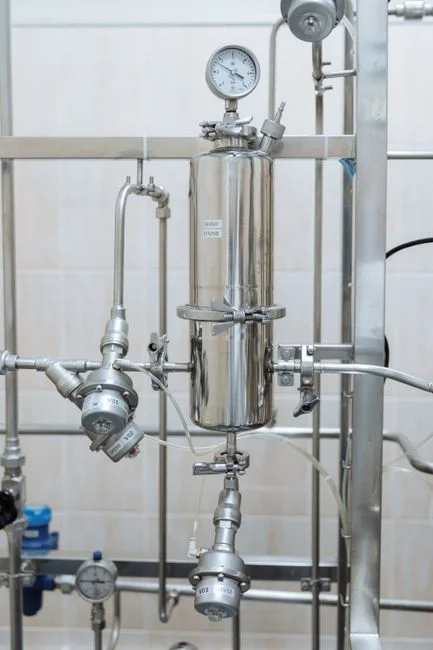
A defensible 2026 train for a Lonza-class Malaysian API site runs: rotary bar screen → flow equalisation → DAF → MBR → UF → RO polish → sludge dewatering, with chemical dosing at the equalisation and MBR stages.
- Headworks — a rotary bar screen for headworks protection with 6 mm openings removes rags, packaging debris and tablet fragments; design flow is tied to the acquired plant's peak shift load, typically 1.5× the daily average.
- Flow equalisation — 8–24 hours of buffering to dampen the pH 4–10 and COD spikes that batch API production generates; a concrete or coated-steel basin sized at 0.5–1.0 m³ per m³/day of design flow is typical.
- Primary clarification — a DAF system for oil, grease and suspended-solids removal targets the 10 mg/L oil-and-grease ceiling and the bulk SS load ahead of the biological stage, recovering a float that is routed directly to the scheduled-waste sludge line.
- Secondary biological — an MBR membrane bioreactor for pharmaceutical effluent combines anoxic/aerobic zones with submerged PVDF ultrafiltration (typically 0.03–0.1 µm pore size); MBRs deliver the low-COD effluent, small footprint and toxicity tolerance that pharma flows demand, and they retain biomass that antibiotic spikes would otherwise wash out of a clarifier.
- Tertiary polishing — a UF polishing stage for water reuse followed by RO strips residual APIs, total dissolved solids and provides a recycled-water stream that offsets site freshwater demand; phosphorus removal of 95%+ is a useful side benefit where the receiving water is eutrophication-sensitive.
- Sludge handling — a plate-and-frame filter press for sludge dewatering produces a 22–28% dry-solids cake that is consigned under the 2005 Scheduled Wastes Regulations to a licensed disposer; landfill of untreated sludge is prohibited under EQA Section 34A (S5).
- Disinfection — chlorine dioxide or UV to meet microbiological limits; chlorine dioxide is preferred over chlorine where reuse is intended, because it does not generate the trihalomethanes that WHO and EPA drinking-water guidelines flag.
This train is dimensioned against the Standard A 50/100/50 envelope but is over-specified enough to absorb the 2026 ZLD direction of travel (S5); a parallel reference for the process logic is the pharmaceutical wastewater treatment process train reference for the UAE, which addresses a similar API effluent profile under a different permit regime.
Sampling, Reporting, and the IEQIS Compliance Loop
Post-acquisition monitoring is non-negotiable from the date the new operator takes possession. Quarterly self-monitoring is the floor; high-risk facilities (which most API plants are) sit on monthly or continuous monitoring (S5). Each report requires 24-hour composite samples analysed by a STANDARDS MALAYSIA-accredited laboratory under MS ISO/IEC 17025; results from a non-accredited lab are treated as no result and trigger the same enforcement pathway as a missed deadline.
Submission goes through the Integrated Environmental Quality Information System (IEQIS), which creates an immutable, time-stamped audit trail that the DOE can subpoena during unannounced inspections. The engineering consequence is that the plant SCADA should be configured from day one to export IEQIS-ready datasets (parameter, value, timestamp, method code, lab accreditation number) rather than rely on a clerk transcribing spreadsheets. DOE also conducts unannounced audits; chain-of-custody documentation must cover every scheduled-waste consignment from generator premises to licensed disposal, and the same discipline must be applied to retained sample splits in case of dispute.
90-Day Post-Acquisition Integration Roadmap

The legal and engineering analysis above compresses into the sequenced plan below. The integration PMO should run this as four weekly gates with named owners, not a back-of-envelope schedule.
| Window | Legal & Permitting | Engineering & Operations | Cost / Risk Lever |
|---|---|---|---|
| Days 0–30 | Close legal DD; novate scheduled-waste generator registration within 30 days; baseline outfall sampling (2× 24-h composites); environmental liability review against seller representations | Confirm inherited treatment-train capacity; lock in IEQIS account transfer; freeze process changes during due diligence | Section 25 EQA exposure capped at RM500,000 per offence (S5); representations and warranties do not substitute for a live permit |
| Days 31–60 | DOE pre-application consultation; EIA screening decision under the 1987 Order; engineering plan submission; permit application lodgement | Treatability tests on actual acquired-site wastewater (not generic); vendor selection for upgrade equipment; capex sanction paper | EIA review adds 60–90 days if triggered; bypassing it on a prescribed activity is the single largest enforcement risk |
| Days 61–90 | Support DOE site inspection; respond to any engineering queries; IEQIS account transfer to new operator entity | Treatment-train gap analysis; long-lead procurement; commissioning plan for new equipment; operator training | Refurbish-in-place capex typically 30–50% of a greenfield ZLD build; greenfield ZLD future-proofs against 2026 ZLD direction (S5) |
| Day 90+ | DOE issues new Section 18 licence and discharge permit; plant operates under new permit | First full quarter of IEQIS reporting under Lonza entity | RM500,000 statutory ceiling + reputational and licence-revocation risk justify preventive capex (S5) |
The decision that the integration team must make by day 60 is refurbish-in-place versus greenfield ZLD. Refurbishing the inherited activated-sludge or SBR train to meet the Standard A 50/100/50 envelope typically costs RM2–4 million and runs 6–9 months; a greenfield ZLD train with MBR, RO and a thermal crystalliser runs RM8–15 million but positions the site for the 2026 DOE ZLD direction and the 2027 reuse mandate signalled in the Selangor/Johor pilots (S5). The RM500,000 Section 25 ceiling, multiplied by the probability of a single non-compliance event in the first two years of operation, is the risk-cost anchor that justifies the differential. For a parallel compliance pattern in another jurisdiction, see the parallel pharma M&A compliance brief for India and the comparable multinational M&A wastewater compliance brief for Arizona.
Frequently Asked Questions
Does a Lonza share acquisition automatically transfer the existing DOE discharge permit in Malaysia?
No. Under EQA 1974 Section 18/19, the licence to occupy prescribed premises is issued to a specific operator and is not transferable on a share sale; the new owner must lodge a fresh application with the DOE, and the seller's licence is at risk of lapse on change-of-control notification (S3).
What numerical effluent limits apply to a Malaysian API plant under the 2009 Industrial Effluent Regulations?
Standard A limits are BOD ≤ 50 mg/L, COD ≤ 100 mg/L, SS ≤ 50 mg/L, pH 6.0–9.0, ammoniacal nitrogen ≤ 15 mg/L, oil and grease ≤ 10 mg/L, temperature < 40°C; Standard B tightens BOD to 20 mg/L and metals/ammonia further for sensitive catchments (S5).
When is a new EIA triggered by an acquisition in Malaysia?
A new EIA or EIA review is triggered when the inherited activity is on the 1987 Prescribed Activities (EIA) Order list and the new operator proposes any process, capacity or raw-material change; pharmaceuticals and large-scale chemical synthesis almost always fall inside that list (S3).
How much is the statutory fine for an EQA 1974 wastewater offence in Malaysia?
Under Section 25 EQA 1974, fines reach RM500,000 per offence, with potential imprisonment, operational suspension and licence revocation on repeat offence (S5). The 30-day novation window for scheduled-waste generator registration is enforced separately.