Why Red Lion Fabricated Metals Plants Are Choosing MBR Over CAS in 2026
For Red Lion, PA fabricated metals shops in the 10–2,000 m³/day band, a submerged PVDF MBR is the stronger choice over conventional activated sludge (CAS) because 40 CFR Part 433 daily-max and monthly-average limits on hex chrome (0.60/0.31 mg/L), nickel (3.98/2.38 mg/L), and oil and grease (52 mg/L) cannot be guaranteed after a metal or oil pulse on a 5–15 day SRT clarifier train, whereas an MBR holds 30–60 day SRT and delivers effluent TSS below 2 mg/L, NH3-N of 0.10–0.72 mg/L, and turbidity of 0.01–1.31 NTU per the EPA MBR Fact Sheet.
Picture a Monday-morning shift at a York County stamping and plating shop: the plating line dumps a hex-chrome drag-out slug at 06:30, the parts-washer pushes a 400 mg/L emulsified oil slug an hour later, and the pH probe at the equalization basin swings from 9.8 to 3.4 before lunch. That is the operating envelope for a Red Lion fabricated metals plant, and it is the envelope that drives the procurement conversation. The federal categorical pretreatment standard at 40 CFR Part 433 sets the ceiling every shop in the band has to defend: total chromium 2.61/1.71 mg/L (DM/MA), hexavalent chromium 0.60/0.31 mg/L, nickel 3.98/2.38 mg/L, zinc 2.61/1.48 mg/L, lead 0.69/0.43 mg/L, cadmium 0.69/0.26 mg/L, copper 3.38/2.07 mg/L, and oil and grease 52 mg/L DM.
Layered on top of the federal numbers is PA DEP Chapter 302/303, which governs industrial discharge to the Susquehanna basin and the Chesapeake Bay watershed, where the fishable/swimmable streams designation and the nutrient and sediment TMDL pressure push the actual compliance bar higher than the categorical minimum. The Red Lion Sewer Authority then writes local limits and surcharges on top of that, with metals mass loading and oil-and-grease concentration surcharges that the federal rule does not capture. A fabricated metals feed carrying free and emulsified oils at 50–500 mg/L, dissolved metals at 1–50 mg/L at the secondary feed, pH swings of 2–11 within a shift, BOD/COD ratios below 0.3, and TDS above 3,000 mg/L selects for filamentous organisms in a clarifier, and bulking follows. The procurement question for the 10–2,000 m³/day band is therefore narrow and binary: retrofit a CAS basin to chase the local limits, or specify a packaged submerged PVDF MBR skid from a vendor that already supplies an MBR vs CAS comparison for the fabricated metals band the plant sits inside.
MBR vs CAS at a Glance: Parameter Matrix for a 1,000 m³/day Feed
Two rows in the parameter matrix below drive the procurement answer for a 1,000 m³/day Red Lion fabricated metals plant more than the rest: the 30–60 day SRT range of an MBR protects slow-growing nitrifiers and metal-tolerant biomass through a hex-chrome or nickel pulse, and the ~60% footprint reduction is what lets a retrofit fit on a Red Lion job-shop lot where a clarifier-and-sand-filter train physically will not.
| Parameter | Submerged PVDF MBR | Conventional Activated Sludge (CAS) |
|---|---|---|
| Hydraulic retention time (HRT) | 4–8 hr biological + membrane separation (per EPA MBR Fact Sheet) | 6–10 hr biological + separate clarifier |
| Mixed liquor suspended solids (MLSS) | 8,000–12,000 mg/L | 1,500–4,000 mg/L |
| Solids retention time (SRT) | 30–60 days | 5–15 days |
| Effluent total suspended solids (TSS) | Near detection limit (<2 mg/L) | 10–30 mg/L typical; up to 100 mg/L during bulking |
| Effluent ammonia-nitrogen (NH3-N) | 0.10–0.72 mg/L (per EPA MBR Fact Sheet) | Variable; often >5 mg/L at low SRT |
| Effluent turbidity | 0.01–1.31 NTU (per EPA MBR Fact Sheet) | Variable; often >5 NTU at low SRT |
| Footprint (biological + solids separation) | ~60% smaller (per EPA MBR Fact Sheet) | Baseline (clarifier + sand filter) |
| Oil and grease tolerance | Higher; biomass retained, oil shed as surface scum | Low; emulsified oil triggers floc fouling and washout |
| Stability through metal or oil pulse | Stable; biomass retained at 30–60 d SRT | 30–60% removal loss for 24–72 h after pulse (per S3) |
| CAPEX premium (vs CAS, same flow) | 20–35% above equivalent CAS (HydropureWater field data, 2026) | Baseline |
The footprint row is the one a Red Lion plant manager should paste into the evaluation memo. A packaged MBR wastewater treatment system explained with 2026 cost and sizing data consolidates biological reactor, membrane cassettes, permeate pumps, fine screens, and PLC into a single skid sized for the 10–2,000 m³/day band, which is the band every Red Lion job shop sits in. CAS still keeps a CAPEX and OPEX advantage for very large, dilute, stable flows above roughly 5,000 m³/day, and the answer flips as flows drop and feed variability rises — which is exactly the regime that defines most fabricated metals operations.
How a Submerged PVDF MBR Handles the Hex-Chrome and Nickel Pulse
The membrane barrier in a submerged MBR decouples biomass retention time from hydraulic retention time, which is the mechanism that lets a 1,000 m³/day skid hold 30–60 day SRT inside roughly 60% of the footprint of a CAS train doing the same duty. At 5–15 day SRT, a CAS basin loses nitrifiers and floc-formers inside the toxicity band that 1–50 mg/L dissolved metals create at the secondary feed, and the practical consequence is that CAS sheds 30–60% of its removal efficiency for 24–72 hours after a metal or oil pulse (per S3). That is the failure mode a Red Lion plating shop cannot afford during a Susquehanna basin self-monitoring window.
The dominant 2026 configuration for this duty class is a submerged PVDF hollow-fiber or flat-sheet module with nominal pore size below 1 µm, sitting inside an aerated biological tank. A current format example is the DF-series PVDF flat sheet MBR membrane module at 0.1 µm with an integrated aeration box, packaged inside an integrated MBR wastewater treatment system for the 10–2,000 m³/day band. Hollow-fiber bundles typically demand 1–2 mm fine screening upstream, while flat-plate modules tolerate 2–3 mm — a procurement-spec decision that drives both CAPEX and the headworks design, and one the engineer should pin down in writing before signing the vendor proposal.
The Headworks an MBR Demands on a Fabricated Metals Feed
Most MBR failures at fabricated metals plants trace back to skipped pretreatment, and the headworks review is where an MBR recommendation is most often torpedoed in month one. A GX-series rotary bar screen at 1–2 mm cutoff is the standard headworks answer for hollow-fiber bundles, and 2–3 mm for flat-plate modules; undersized screening is the single most common cause of torn membranes and shortened cassette life on a Red Lion job shop.
An automatic chemical dosing system holding pH at 6.5–7.5 keeps dissolved metals precipitated as hydroxides before the MBR and protects the membrane CIP schedule from operator error. For high-turbidity or oil-laden feeds upstream of equalization, a dissolved air flotation system drops free and emulsified oil in the 50–500 mg/L range to below 50 mg/L and keeps the fine screens from blinding. MBR waste sludge has lower settleability and more colloidal particles than CAS waste activated sludge, so a plate-and-frame filter press is the right dewatering choice to hit 25–35% dry solids for landfill or backhaul. The CIP protocol is non-negotiable: sodium hypochlorite at 500–1,000 mg/L free chlorine for organic fouling, citric acid at 1–2% w/w for inorganic scaling, with a recovery-clean interval at or above 30 days.
2026 CAPEX, OPEX, and Payback for a Red Lion Fabricated Metals Plant

For a 1,000 m³/day Red Lion fabricated metals plant, MBR CAPEX runs 20–35% above an equivalent-flow CAS basin because of the membrane cassettes, fine screens, permeate pumps, and PLC upgrade (HydropureWater field data, 2026). OPEX runs 15–30% higher per m³ over a 20-year horizon, driven by air-scour energy, periodic CIP with sodium hypochlorite and citric acid, and membrane replacements amortized over a 5–8 year membrane life.
| Scenario (1,000 m³/day, 20-year horizon) | MBR + reuse, water >$2/m³, electricity >$0.09/kWh | MBR + reuse, water $1–2/m³, electricity $0.07–0.09/kWh | MBR no reuse, electricity <$0.07/kWh | CAS retrofit of existing aeration basin, 20+ yr life |
|---|---|---|---|---|
| CAPEX | 20–35% premium over CAS | 20–35% premium over CAS | 20–35% premium over CAS | Lowest CAPEX |
| OPEX (per m³) | 15–30% above CAS, offset by reuse credit | 15–30% above CAS, partial offset | 15–30% above CAS, no offset | Lowest OPEX |
| Payback vs CAS | Inside 4–6 yr (HydropureWater field data, 2026) | ~Parity; depends on Red Lion Sewer Authority surcharge | Longer than 10 yr | CAPEX saving wiped out by one 40 CFR Part 433 DM exceedance |
| 20-yr NPV | Lower than CAS (reuse + lower downstream polish) | ~Parity | Higher than CAS | Lowest only if zero 40 CFR Part 433 exceedances over 20 yr |
The two OPEX swing factors that flip the answer in Red Lion are the PJM-grid electricity tariff and the value of reused water against the Red Lion Sewer Authority surcharge schedule. When make-up water exceeds $2/m³ and electricity exceeds $0.09/kWh during PJM summer peaks, the CAPEX premium pays back inside 4–6 years. The 20-year NPV case is reinforced by Karim and Mark (2017), who found that for operation beyond roughly 6–7 years, MBR overtakes CAS on net present cost because of consistently higher effluent quality and lower downstream polishing cost (per the MBR cost and sizing reference). The CAS retrofit row is the one plant managers underestimate: lowest CAPEX is real, but a single 40 CFR Part 433 daily-maximum exceedance on hex chrome, nickel, or zinc during a Red Lion Sewer Authority self-monitoring event can trigger surcharges, mandatory capital upgrades, and consent-order deadlines that wipe out the CAPEX saving.
The Four-Question Decision Rule for Red Lion Buyers
The decision rule for the procurement memo is a four-question scorecard a process engineer can defend in front of plant management.
- Is the available footprint below roughly 500 m²? If yes, the MBR's ~60% footprint reduction (per EPA MBR Fact Sheet) is what physically lets the retrofit fit on a Red Lion job-shop lot.
- Is there a reuse, zero-liquid-discharge, or sewer-surcharge driver under the Red Lion Sewer Authority? If yes, MBR permeate clears the reuse turbidity and TSS thresholds without tertiary polish, and surcharges on metals mass loading and O&G concentration make the CAPEX premium pay back faster.
- Is average flow below 2,000 m³/day? If yes, the plant sits inside the 10–2,000 m³/day band where a packaged integrated MBR wastewater treatment system outperforms a CAS basin on NPV once reuse and surcharge are priced in.
- Does the feed carry oil, hex chrome, nickel, or zinc shock risk that equalization cannot fully smooth? If yes, the 30–60 day MBR SRT retains nitrifiers and metal-tolerant biomass through the pulse, while 5–15 day CAS SRT loses 30–60% removal for 24–72 hours (per S3).
Three or four yes answers means MBR. One or zero yes answers means CAS, or a hybrid clarifier-plus-MBR polish on the reuse stream. This is the same scoring framework that a comparable procurement analysis for the Fort Worth basin uses, re-anchored to PA DEP Chapter 302/303 and the Red Lion Sewer Authority surcharge schedule.
60–90 Day Pilot Acceptance Protocol Before Committing CAPEX
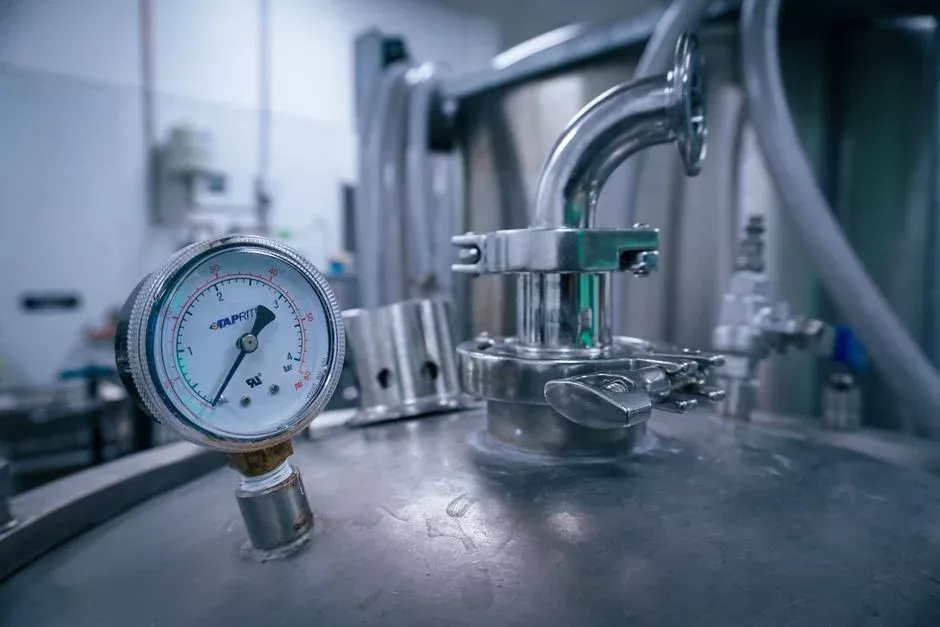
Before committing CAPEX, run a 60–90 day pilot with one rented MBR cassette against the real Red Lion feed and produce a five-line data package: 7-day composite influent characterization (BOD, COD, TSS, O&G, total and hex chrome, nickel, zinc, cyanide), equalization volume in hours of average flow, fine-screen specification in mm, membrane warranty length in years, and 10-year membrane replacement cost in dollars per m² of membrane area. Pilot target values to write into the contract: effluent TSS below 2 mg/L, effluent NH3-N in the 0.10–0.72 mg/L band, transmembrane pressure rise below 0.05 bar per 30 days at design flux, and CIP interval at or above 30 days between recovery cleans.
A vendor offering a packaged integrated MBR wastewater treatment system for the 10–2,000 m³/day band will accept that data package as a defensible input to a fixed-price proposal. If any pilot target is missed, the engineer has a documented basis to walk away or to renegotiate membrane warranty terms before the CAPEX check is cut. For cross-reference on parameter and pilot data drawn from adjacent industrial sectors, the engineering notes on MBR vs CAS for chemicals wastewater and on MBR vs CAS for mining wastewater both run the same five-line data package against comparable pulse-fed duty classes.
Frequently Asked Questions
What 40 CFR Part 433 daily-maximum and monthly-average limits apply to a Red Lion fabricated metals plant?
The 40 CFR Part 433 Metal Finishing categorical pretreatment standard sets daily-maximum and monthly-average limits on total chromium (2.61/1.71 mg/L), hexavalent chromium (0.60/0.31 mg/L), nickel (3.98/2.38 mg/L), zinc (2.61/1.48 mg/L), lead (0.69/0.43 mg/L), cadmium (0.69/0.26 mg/L), copper (3.38/2.07 mg/L), and oil and grease at 52 mg/L DM, and the Red Lion Sewer Authority layers local limits and surcharges on top of these federal numbers.
How does an MBR outperform CAS on effluent quality for a Red Lion metals feed?
A submerged PVDF MBR delivers effluent TSS below 2 mg/L, NH3-N of 0.10–0.72 mg/L, and turbidity of 0.01–1.31 NTU per the EPA MBR Fact Sheet, while a 5–15 day SRT CAS train at a fabricated metals plant typically loses 30–60% removal efficiency for 24–72 hours after a metal or oil pulse because floc washout is the failure mode (per S3).
What is the 2026 CAPEX and OPEX premium for an MBR versus CAS at 1,000 m³/day in Red Lion?
At 1,000 m³/day, MBR CAPEX runs 20–35% above an equivalent CAS basin and OPEX runs 15–30% higher per m³ over a 20-year horizon (HydropureWater field data, 2026), and the premium pays back inside 4–6 years when PJM-grid electricity exceeds $0.09/kWh and make-up water exceeds $2/m³.
What pilot data deliverables should a Red Lion engineer require before signing an MBR CAPEX contract?
A 60–90 day pilot should produce a five-line data package — 7-day composite influent characterization, equalization volume in hours of average flow, fine-screen specification in mm, membrane warranty in years, and 10-year membrane replacement cost per m² — with target values of effluent TSS below 2 mg/L, NH3-N in the 0.10–0.72 mg/L band, transmembrane pressure rise below 0.05 bar per 30 days at design flux, and CIP interval at or above 30 days between recovery cleans.