Why Packaged MBR Is the Default Choice for Wellington Hotels in 2026
A packaged MBR STP is a factory-built, containerised or skid-mounted membrane bioreactor — distinct from a site-built concrete activated-sludge plant — and the local benchmark is Hydroflux Epco's RapidSmart unit covering 50–250 EP (hydrofluxepco.nz). In Wellington the technology is favoured for three converging reasons. First, CBD and Seaview sites are tight, often heritage-overlaid, and frequently constrained on excavation depth; MBR eliminates the separate clarifier and trims footprint by roughly 60% versus conventional activated sludge (per Imemflo, 2026). Second, Wellington Water's reticulation is operating near capacity in parts of the CBD, and the Cross Harbour Interceptor constraints in 2026 mean some hotel sites cannot discharge to sewer at all and must plan for full on-site treatment and disposal. Third, Imemflo's hollow-fibre and flat-sheet MBR systems deliver 90–95% removal of BOD, COD and TSS, with effluent typically at <5 mg/L BOD and <1 NTU turbidity — clean enough for toilet flushing, landscape irrigation and laundry reuse, which materially offsets hotel OPEX (imemflo.com, 2026).
The 2026 Wellington buy is therefore a choice between local packaged MBR supply (Hydroflux RapidSmart, Smith & Loveless TITAN MBR) and imported containerised units such as Optima from India and other export programmes. Both paths are legitimate; the trade-off is unit cost and shipping risk versus local commissioning support and warranty reach. For a procurement briefing this is the first decision to frame, not the last.
Wellington Discharge Rules and Consenting Pathway
Two regulators sit between a Wellington hotel STP and commissioning, and they must be approached in parallel. Greater Wellington Regional Council (GWRC) administers discharge consents under s.15 of the Resource Management Act 1991 for any discharge to land or water; the application package typically includes a site plan, design BOD/COD/TSS/nutrient load, receiving-environment description, and an assessment against the National Environmental Standard for Sources of Human Drinking Water and the NZ Municipal Wastewater Discharge NES where applicable. The framework is national, but the numeric limits and receiving-environment sensitivity are set case-by-case through the consent.
Wellington Water manages the trade-waste interface for any site connecting to the reticulated network. Hotels with F&B must also satisfy grease-trap requirements and the trade-waste consent's BOD, TSS and oil-and-grease limits before any flow enters the council pipe. Where the network cannot accept the discharge, the hotel is effectively a fully off-grid site and must dispose of treated effluent to land via irrigation or subsurface drip — which is where an MBR's reuse-grade effluent becomes decisive. Engaging both GWRC and Wellington Water before equipment is specified is the single most common gap in Wellington hotel STP procurement, and it is the gap that determines whether the design target is 30 mg/L BOD (typical trade-waste ceiling) or <5 mg/L BOD (reuse-grade). Plan for a 6–10 week consent review window on the critical path.
Sizing a Packaged MBR for a Wellington Hotel: The Calculation
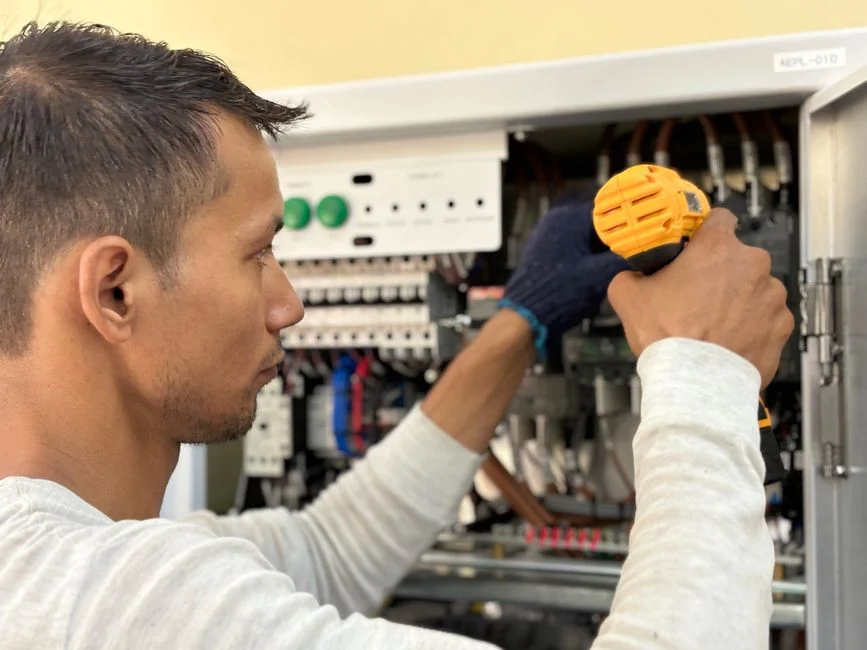
Hotel flows are driven by occupied room-nights, F&B covers, laundry mass, pool backwash and staff numbers — not by key count alone. Use these per-unit consumption ranges: 0.40–0.60 m³ per occupied room-night, 25–40 L per F&B cover, 25–40 L per kg of laundry, plus 30–50 L per staff per shift. Worked for a 120-key Wellington hotel at 75% occupancy (90 room-nights), 120 F&B covers/day, 200 kg laundry/day, 40 staff: average daily flow lands at roughly 55 m³/d. Apply a peak factor of 1.5–2.0× and the design flow becomes 80–110 m³/d. Hotel BOD₅ typically runs 250–400 mg/L, so the same example carries about 14–22 kg BOD/d — consistent with Imemflo's 200-bed 5-star reference plant at 250 m³/d (imemflo.com, 2026).
Match the calculated m³/d to an integrated MBR system envelope of 10–2,000 m³/day, with module selection from the DF-series flat-sheet range at 32–135 m³/day per module. A 90 m³/d design typically needs one duty plus one standby train for redundancy. Equalisation is sized at 6–12 hours of average flow and is normally integrated inside the package. The table below shows how a 120-key Wellington hotel maps to module selection.
| Parameter | Calculated value | Design input | Equipment selection |
|---|---|---|---|
| Keys | 120 | — | — |
| Occupancy assumption | 75% | 90 occupied room-nights | — |
| Average daily flow | ~55 m³/d | 0.40–0.60 m³/room-night + F&B + laundry + staff | — |
| Peak factor | 1.5–2.0× | Design flow 80–110 m³/d | 1 × DF module at 90 m³/d + 1 standby |
| BOD₅ loading | 250–400 mg/L | 14–22 kg BOD/d | Verify MLSS and F:M against module envelope |
| Equalisation | 14–28 m³ | 6–12 h of ADF | Integrated EQ tank in package |
| Effluent target | — | <5 mg/L BOD, <5 mg/L TSS, <1 NTU | 0.1 μm PVDF flat-sheet, reuse-ready |
MBR vs MBBR vs SBR for Hotel Applications: What Actually Wins
The three packaged technologies compete on six hotel-relevant axes: effluent quality, footprint, operator skill, reuse suitability, capex/opex, and peak-flow tolerance. MBR's 0.1 μm PVDF flat-sheet geometry produces the cleanest effluent and the smallest footprint, and is the only option that realistically supports on-site reuse for toilet flushing and irrigation without a tertiary polish step. MBBR is cheaper to buy and tolerates shock load well, but effluent TSS rarely drops below 20–30 mg/L without a downstream cloth or disc filter, which erodes the capex advantage once reuse is on the table. SBR is a batch process with no separate clarifier — useful where flows are small and highly variable — but the larger tankage and 4–6 hour cycle time make it a poor fit for a hotel that can swing from 20% to 100% occupancy in a single weekend. The decision rule: choose MBR when reuse is planned or site area is constrained; choose MBBR when discharge-only and budget is tight; choose SBR when daily flow is small (<20 m³/d) and very variable.
| Axis | MBR (PVDF flat-sheet) | MBR (Hollow-fibre) | MBBR | SBR |
|---|---|---|---|---|
| Effluent BOD / TSS | <5 / <5 mg/L | <5 / <5 mg/L | <20 / 20–30 mg/L | <20 / <30 mg/L |
| Reuse-ready? | Yes (toilet, irrigation, laundry) | Yes | No without tertiary | Marginal |
| Footprint vs CAS | ~40% | ~40% | ~60% | ~70% |
| Operator skill | Medium (membrane care) | Medium-high (fouling risk) | Low | Medium |
| Peak-flow tolerance | Good with EQ tank | Good with EQ tank | Excellent | Limited by cycle time |
| Relative capex | High | High | Medium | Medium |
| Relative opex | Medium (membrane air) | Medium-high (cleaning) | Low | Low |
For a deeper process comparison, see How Does MBR Work: Membrane Bioreactor Process Explained and How MBBR Works: Engineering Guide to Moving Bed Biofilm Reactors.
Membranes, Tanks and Auxiliaries: What to Specify
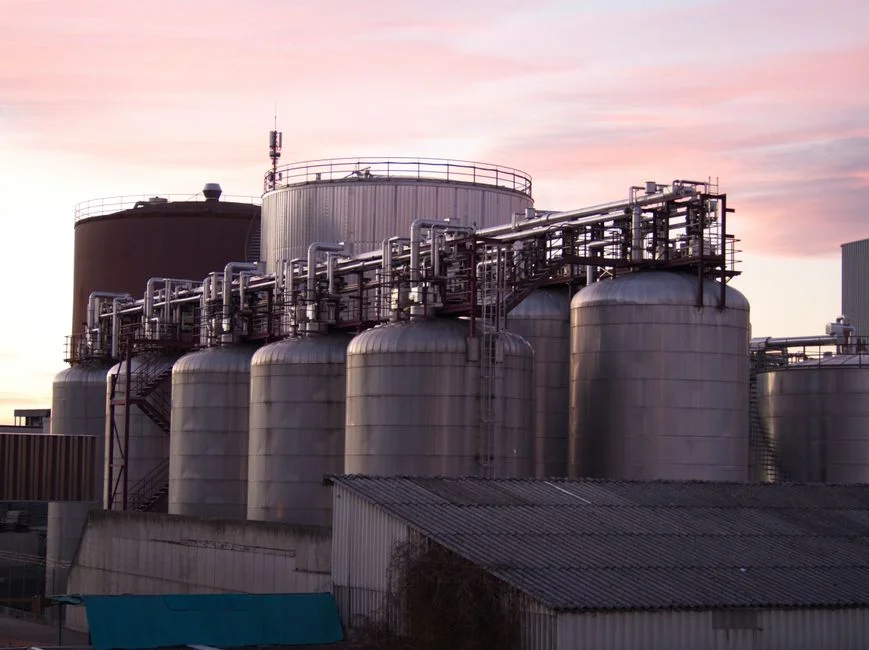
Specify the membrane geometry explicitly. The DF-series PVDF flat-sheet membrane module at 80–225 m² per element, with 0.1 μm nominal pore size, runs at 32–135 m³/d per module and uses coarse-bubble aeration for scouring — robust, easy to clean in place, and 10–20× lower specific energy than cross-flow hollow-fibre. Hollow-fibre gives higher packing density but is more sensitive to fouling and hair/fibre fouling, which is precisely the failure mode hotels generate from laundry lint. Pre-treatment matters: a GX-series rotary bar screen at 2–3 mm aperture protects the membranes from hair, lint and solids that would otherwise shorten cleaning intervals. Sludge from a packaged MBR is typically wasted weekly at 0.5–1.5% solids and is best handled by a small plate-and-frame filter press to drop volume before off-site disposal. For disinfection, a UV steriliser is the default for reuse applications because it adds no chemicals and produces no chlorinated by-products.
Local Supply vs Imported Containerised: Build vs Buy Decision
Local NZ-assembled packaged MBR (Hydroflux RapidSmart at 50–250 EP, Smith & Loveless TITAN MBR) buys you a Wellington-based commissioning crew, an in-country warranty network, and no shipping risk — typically at a 10–20% unit-cost premium (per Hydroflux and S&L NZ product data, 2026). Imported containerised MBR (Optima from India, plus other export programmes) is factory-FAT-tested before dispatch, ships at lower equipment cost, but commissioning is often remote and the buyer carries more interface risk across freight, customs and installation. Lead-time reality for 2026: imported containerised units ship in 4–8 weeks ex-factory plus 3–5 weeks transit to Wellington, so allow 8–13 weeks door-to-site; local supply typically runs 8–14 weeks from order. The deciding factors are project schedule pressure, in-house commissioning capability, the weight of after-sales service, and whether the operator has a multi-site NZ rollout that would benefit from a single imported platform standardised across properties. For a one-off Wellington hotel where local service response matters more than 10% capex, local supply usually wins; for a multi-site rollout, the imported platform wins on standardisation.
2026 Cost, Commissioning and Operating Reality
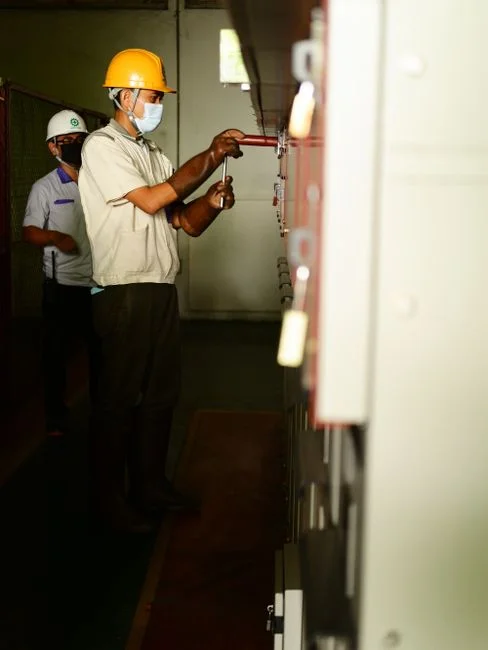
For a 50–250 EP containerised packaged MBR suited to a 100–250-key Wellington hotel, equipment typically sits in the low six-figure NZD range; installed cost (civil, plumbing, electrical, commissioning) commonly adds 60–100% on top, with membrane area, automation level and sludge handling driving the spread (HydropureWater field data, 2026). OPEX is dominated by membrane aeration energy, periodic cleaning chemicals, an operator visit of 4–8 hours/week, and membrane replacement every 8–12 years. The commissioning sequence for a containerised unit is factory acceptance test → delivery → placement on prepared slab → hydraulic test → membrane install → seeding → performance test → consent sign-off, typically 2–4 weeks on site versus 8–12 weeks for a site-built concrete plant.
The board-paper offset to highlight is reuse: hotels reusing treated water for toilet flushing and landscape irrigation typically see a 30–50% reduction in municipal water demand, and that line item should be on the same page as the STP capex in any proposal. An integrated MBR system sized for a 120-key Wellington hotel at 80–110 m³/d is the practical envelope to brief against.
Frequently Asked Questions
How much does a packaged MBR STP cost for a Wellington hotel in 2026?
Equipment typically falls in the low six-figure NZD for a 50–250 EP containerised unit. Installed cost (civil, plumbing, electrical, commissioning) commonly runs 1.6–2.0× equipment cost depending on slab prep, electrical scope and sludge handling. The largest cost drivers are membrane area, automation level, and whether reuse pumping and UV are included.
Do I need a resource consent for a packaged MBR at a Wellington hotel?
Yes. Any discharge to land or water requires a Greater Wellington Regional Council consent under RMA s.15, with an application covering design load, receiving environment and an assessment against the NZ Municipal Wastewater Discharge NES. Discharge to the Wellington Water network additionally requires a trade-waste consent, with separate BOD, TSS and oil-and-grease limits for any F&B flow.
What effluent quality can a packaged MBR achieve for hotel reuse?
With 0.1 μm PVDF membrane filtration, a packaged MBR typically produces BOD₅ <5 mg/L, TSS <5 mg/L and turbidity <1 NTU — well within the limits for toilet flushing, landscape irrigation and (with UV disinfection) laundry reuse. Without UV, reuse is limited to sub-surface irrigation and toilet flushing.
How long does a packaged MBR take to install at a Wellington hotel?
A containerised unit typically reaches commissioning within 2–4 weeks of arrival on site, assuming the slab, electrical and inlet piping are prepared. A site-built concrete plant takes 8–12 weeks for the same scope. The non-equipment path (consenting, design, council review) usually takes longer than the install itself — budget 12–20 weeks from order to consented discharge.
How do I size a packaged MBR for a 120-key Wellington hotel?
Assume 0.40–0.60 m³ per occupied room-night, add 25–40 L per F&B cover, 25–40 L per kg of laundry, and 30–50 L per staff per shift. At 75% occupancy, 120 F&B covers and 200 kg laundry/day, average daily flow is roughly 55 m³/d. Apply a 1.5–2.0× peak factor, design BOD₅ at 250–400 mg/L, and size the plant at 80–110 m³/d with one duty plus one standby train.