Why Addis Ababa's Sewage Treatment Market Looks Different in 2026
Addis Ababa buyers in 2026 face a four-way supply market, not a single category. On the local side, four Ethiopian integrators carry most of the in-country track record: EthioWater Solutions (founded 2010, modular nationwide systems built for areas with limited electricity), PureTech Water (2014, compact plants for regional towns and rural industrial clients), Sustainable Water Works or SWW (2005, dry-process water-reuse systems active in Addis Ababa, Mekelle, and Bahir Dar — including a university campus reuse loop using sand filtration and UV), and Nile Environmental Services (2013, construction-grade and municipal sewage work in Gondar, Jimma, and Harar) (source: San Lan Technologies 2025 supplier profile). On the supply side, Alibaba lists 1,973 sewage treatment plant manufacturers, with gold-tier Chinese suppliers posting response rates between 92.6% and 94.7%, so a shortlist built purely on directory size is meaningless.
Addis Ababa's highland climate and intermittent grid dictate the spec. EthioWater's published design rationale explicitly calls out "limited electricity" as a driver for modular, low-energy systems, which is why the dominant 2026 configuration is a buried WSZ underground integrated package STP for small communities or a skid-mounted containerized MBR package plant at 10–2,000 m³/day for anything larger. The buyer's real decision is therefore not "which Alibaba listing" but which of four supplier archetypes — local Ethiopian integrator, Chinese OEM direct, Indian turnkey EPC, or Sino-Ethiopian JV — best matches the flow rate, discharge destination, and construction timeline.
Effluent Standards and Compliance Map for Ethiopia
Ethiopia's Federal Environmental Authority (EEA) sets national effluent limits under Proclamation No. 513/2007, with sector-specific amendments for tanneries, textiles, food and beverage, and hospital wastewater. For municipal STPs discharging to the Akaki or Little Akaki rivers, the working 2026 benchmark is BOD ≤50 mg/L, COD ≤250 mg/L, TSS ≤50 mg/L, with NH₃-N and total coliform limits tightened in the 2017 amendment for any water body used downstream for irrigation or livestock. The Addis Ababa Water and Sewerage Authority (AAWSA) layers on a separate consent-to-discharge process for any industrial wastewater entering the municipal sewer, so a factory in Bole Lemi or Akaki cannot legally discharge without both an FEA-compliant plant and an AAWSA permit.
For industrial parks with multilateral financing — Hawassa, Dire Dawa, Kilinto — the World Bank Group / IFC Environmental, Health, and Safety Guidelines for Wastewater and Ambient Water Quality (2008, with 2024 updates) override local limits on BOD, COD, TSS, total nitrogen, and heavy metals. The engineering consequence is direct: a DF-series flat-sheet MBR module producing sub-1 μm effluent clears the BOD, COD, and TSS thresholds in a single pass, which removes the need for a separate tertiary polishing stage on most municipal flows. Always confirm the current Proclamation number and the specific sectoral guideline with the FEA before signing a purchase order.
| Discharge destination | Governing body | Key parameters (working 2026 limit) | Reference |
|---|---|---|---|
| Municipal sewer (Addis Ababa) | AAWSA | pH 6–9; consent-to-discharge required | AAWSA industrial discharge procedure |
| Akaki / Little Akaki river (municipal) | FEA / EEA | BOD ≤50 mg/L; COD ≤250 mg/L; TSS ≤50 mg/L | Proclamation 513/2007 + 2017 amendment |
| Industrial park WWTP (Hawassa, Bole Lemi) | FEA + financier | BOD ≤30 mg/L; COD ≤150 mg/L; total N ≤10 mg/L | IFC EHS Guidelines (2008, updated 2024) |
| Hospital effluent (reuse / discharge) | FEA + MOH | BOD ≤50 mg/L; total coliform ≤200 CFU/100 mL; Cl₂ residual 0.5–2 mg/L | FEA hospital sectoral guideline |
Equipment Specifications That Actually Fit Addis Ababa Projects
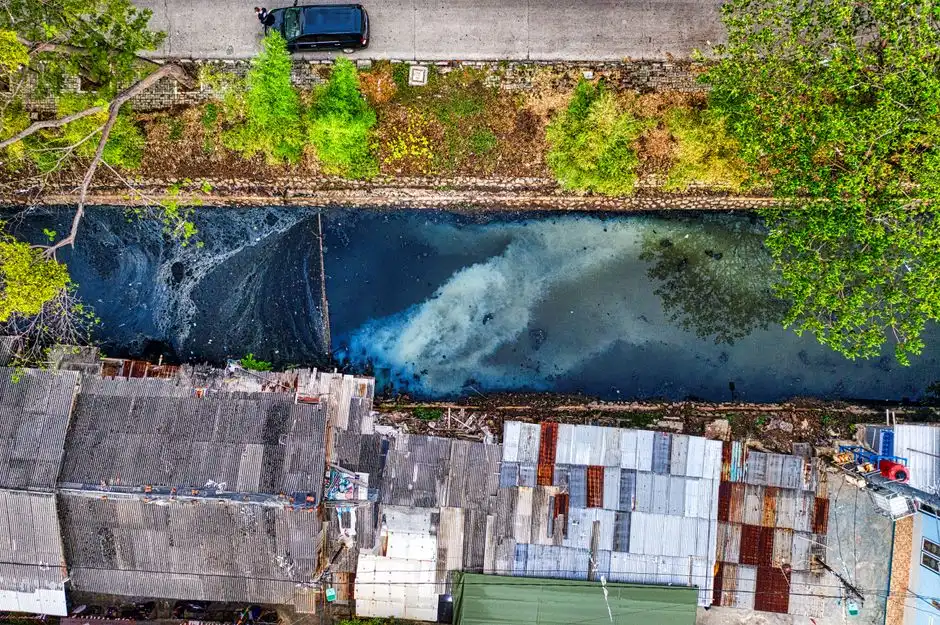
The right plant for an Addis Ababa project is the one whose flow envelope matches the duty cycle and whose footprint fits the site, not the one with the largest Alibaba gallery. The WSZ underground integrated package STP covers 1–80 m³/h using A/O biological contact oxidation followed by sedimentation and disinfection; it is fully buried, requires no dedicated operator, and suits residential communities, hotels, hospitals, and small factories where above-ground footprint is a constraint. For flows between 10 and 2,000 m³/day, the MBR integrated system uses submerged PVDF hollow-fiber membranes to deliver sub-1 μm effluent in a skid that occupies roughly 60% of the area of a conventional activated-sludge basin of the same capacity.
Inside the MBR skid, the DF-series flat-sheet module is the component that actually addresses Addis Ababa's power-quality concern: 0.1 μm pore size, integrated aeration box, 80–225 m² membrane area per module, 32–135 m³/day per unit, and 10–20× lower energy draw than external cross-flow designs because vacuum drives permeate flow rather than high-pressure pumping; individual elements are replaceable without dropping the whole cassette. Upstream of the biological step, a DAF pre-treatment unit handles the high-FOG and high-TSS streams typical of Ethiopian food processing, brewery, tannery, and textile clients, with 13 standard models spanning 4–300 m³/h. Downstream, a plate-and-frame sludge filter press at 1–500 m² filtration area dewaters the biosolids from the Akaki basin to a transportable cake. For hospital and industrial reuse loops, a ClO₂ generator at 50–20,000 g/h covers the contact-tank residual that standard chlorination struggles to hold at high pH.
| Equipment | Flow range | Footprint / form factor | Best-fit Addis Ababa use case |
|---|---|---|---|
| WSZ underground integrated package STP | 1–80 m³/h | Buried, no above-grade building | Residential compounds, hotels, hospitals, small factories |
| MBR integrated system (skid) | 10–2,000 m³/day | 40' HQ container skid, 60% of CAS area | Apartment blocks, industrial parks, municipal |
| DF-series MBR flat-sheet module | 32–135 m³/day per unit | Replaceable cassette, 0.1 μm pore | Intermittent-power sites needing low vacuum drive |
| DAF pre-treatment | 4–300 m³/h | Skid, 13 standard models | Food processing, brewery, tannery, textile pre-treatment |
| Plate-and-frame filter press | 1–500 m² filtration area | Standalone frame | Sludge dewatering for any of the above |
| ClO₂ disinfection generator | 50–20,000 g/h | Wall-mount or skid | Hospital effluent, beverage reuse, brewery loop |
Head-to-Head: Local Ethiopian Suppliers vs Chinese OEMs
The realistic shortlist for an Addis Ababa buyer is four archetypes, not fifty supplier names. The comparison below uses the trade data already published by Alibaba and the project records published by the Ethiopian integrators themselves, so the cells are auditable rather than estimated. SWW's Mekelle university campus project — sand filtration plus UV for lawn and garden reuse — is the kind of reference that matters when a hospital or campus procurement officer asks for proof of in-country reuse work, and it is the type of project a pure Chinese OEM rarely carries.
On the Chinese side, Jiangsu BOE Environmental Protection (US$5–10M revenue, 62% domestic, 6% SE Asia, 5% Oceania) and Jvisi Fujian (US$1–2.5M revenue, 30% South America, 30% North America) sit in the mid-tier band that Addis buyers actually negotiate with; neither is a top-5 global OEM, but both are price-competitive, both list MBR and rotary drum equipment, and both post gold-tier response rates above 92% (source: Alibaba supplier pages, accessed 2025-11). The decision rule is therefore driven by flow rate: under 500 m³/day community, hospitality, or hospital work goes to a local integrator that sources Chinese equipment; 500–5,000 m³/day industrial park or municipal work goes to a Chinese OEM partnered with a local EPC; above 5,000 m³/day, expect a turnkey EPC or multilateral-funded tender (World Bank, AfDB, EXIM Bank of China). The Addis bottleneck is rarely the equipment itself — it is installation crew availability and overland logistics from Djibouti, which is why local presence still matters even when the skid ships from Shanghai.
| Criterion | Local Ethiopian integrator (EthioWater / SWW / PureTech / Nile) | Chinese OEM direct (e.g. Jiangsu BOE, Jvisi) | Indian turnkey EPC | Sino-Ethiopian JV |
|---|---|---|---|---|
| Typical flow range | 10–500 m³/day | 50–5,000 m³/day | 500–20,000 m³/day | 1,000–50,000 m³/day |
| Lead time (PO to site) | 60–120 days incl. local install | 75–130 days incl. sea freight | 120–240 days | 180–360 days |
| CIF Addis Ababa cost band (USD per m³/day) | 600–1,200 | 500–1,000 | 900–2,000 | 1,200–3,000 |
| Local service | Strong, in-country crews | Remote / agent-based | Project-tied only | Strong, JV-backed |
| Compliance documentation | FEA familiar, AAWSA process handled | PVoC, CE, ISO on request | CE, ISO, BIS | FEA + Chinese standards |
| Containerization | Re-packages Chinese skids | Native 40' HQ design | Skid + loose items | Skid + civil package |
Five-Point Supplier Vetting Checklist Before You Sign the PO
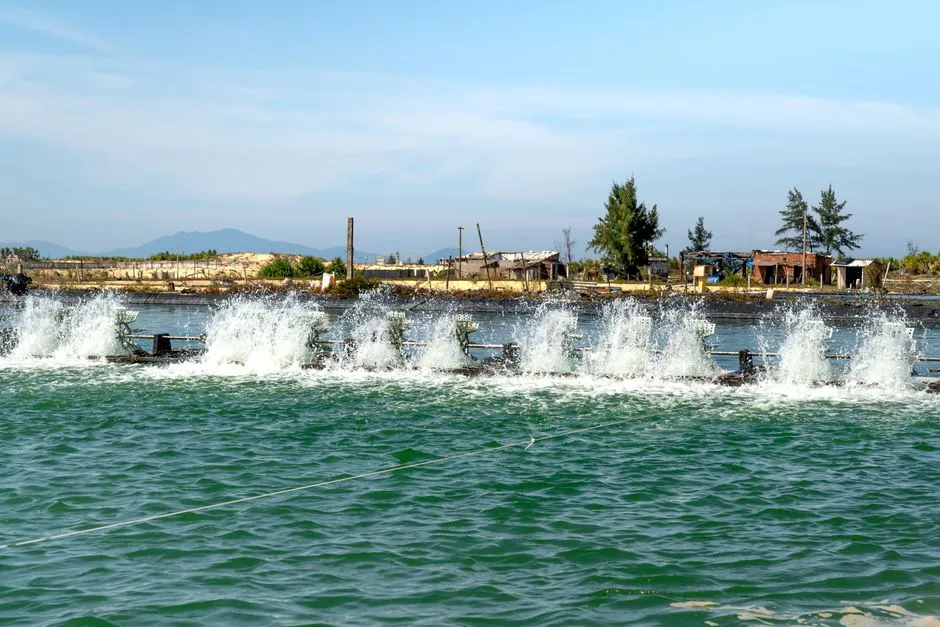
The cheapest quote on Alibaba is rarely the cheapest delivered plant, and the only way to defend a supplier choice to a board is to run the same five-point check on every shortlisted vendor. Treat this as a procurement workflow you can hand to legal and QC, not as a wish list.
First, documentation. Insist on ISO 9001 and ISO 14001 certificates with verifiable certificate numbers, CE marking where applicable, and a Pre-Verification of Conformity (PVoC) document — Ethiopia's mandatory conformity programme for imported goods, currently operated by INTERTEK on behalf of the FEA (verify the current programme operator with your freight forwarder before issuing the PO). Second, a factory audit: request a live video walk-through of the assembly line producing your exact model and ask for two customer references with operating plants in Sub-Saharan Africa. Third, a witnessed Factory Acceptance Test (FAT) on real wastewater, not clean water — a pass/fail table for influent versus effluent BOD, COD, TSS, and NH₃-N is non-negotiable. Fourth, containerization: confirm the unit fits a 40' high-cube container (typical WSZ models ship at 5–8 units per 40' HQ; an MBR skid at 100 m³/day usually ships one skid per 40' HQ with controls and membranes boxed separately), and ask the supplier to mark up the loading plan. Fifth, get a full CIF Djibouti plus overland trucking quote to Addis Ababa and budget 12–18% of equipment value for inland logistics and customs — this is a typical 2026 East Africa logistics markup and should be verified with a freight forwarder before the board meeting.
| Check | What to ask for | Pass criterion |
|---|---|---|
| Documentation | ISO 9001, ISO 14001, CE, PVoC | Valid certificate numbers, PVoC route confirmed |
| Factory audit | Live video tour, 2 African references | References contacted, site visit feasible |
| FAT | Test report on real wastewater | Effluent meets FEA / IFC thresholds |
| Containerization | 40' HQ loading plan | Units fit, no over-dimension crates |
| Logistics | CIF Djibouti + Addis trucking quote | 12–18% logistics markup budgeted |
Cost Benchmarks and Container Loading for Addis Ababa Deliveries
The number the CFO cares about is landed cost in Addis Ababa, not FOB Shanghai. As a 2026 working band for African municipal projects, verify with updated quotes before issuing any PO: a small community package STP runs USD 150–350 per m³/day FOB China, a containerized MBR package plant runs USD 400–900 per m³/day FOB, and a full turnkey EPC including civil works runs USD 1,200–3,000 per m³/day. On container math, a WSZ-AO-5 at 5 m³/h ships about 8 units per 40' HQ; an MBR-100 skid at 100 m³/day ships one fully assembled skid per 40' HQ with the control panel and spare membrane cartridges crated separately. Lead time benchmarks stack as 25–40 days manufacturing for a standard WSZ underground integrated package STP, 60–90 days for an MBR skid, 14–25 days Djibouti to Addis Ababa overland, and 10–14 days customs clearance if the PVoC file is in order. Local Ethiopian integrators typically add 25–40% margin over the Chinese OEM FOB price, which is the price you pay for absorbing the logistics and AAWSA paperwork risk on a first import.
For a useful cross-reference on containerized design, see this skid-mounted treatment plant specifications guide, and for a regional cost comparison, the wastewater treatment plant supplier in Tanzania 2026 buyer's guide tracks a similar CIF logistics markup. On market sizing, the MBR market 2026 buyer data brief confirms that MBR remains the fastest-growing segment in Sub-Saharan municipal tenders.
Frequently Asked Questions
What is the dominant sewage treatment plant spec for Addis Ababa in 2026?A modular package STP at 10–2,000 m³/day with sub-1 μm MBR effluent, containerized for 40' HQ sea freight and compliant with FEA effluent thresholds. The highland climate and intermittent grid rule out civil activated-sludge builds for most sub-5,000 m³/day projects.
Which Ethiopian local suppliers should a buyer shortlist first?EthioWater Solutions (modular nationwide), Sustainable Water Works (Addis Ababa, Mekelle, Bahir Dar with a documented campus reuse loop), PureTech Water (regional and rural), and Nile Environmental Services (Gondar, Jimma, Harar municipal work).
What are the typical Addis Ababa discharge limits for BOD, COD, and TSS?Working 2026 FEA-aligned municipal limits are BOD ≤50 mg/L, COD ≤250 mg/L, TSS ≤50 mg/L, with AAWSA consent-to-discharge required for any industrial wastewater entering the municipal sewer. Industrial parks financed by multilaterals follow the stricter IFC EHS Guidelines.
How many WSZ or MBR units fit a 40' high-cube container?Typical WSZ models ship at 5–8 units per 40' HQ, and an MBR-100 skid at 100 m³/day ships one fully assembled skid per 40' HQ with controls and membranes boxed separately. Always request a marked loading plan before signing the PO.
How much should be budgeted for inland logistics from Djibouti to Addis Ababa?Plan for 12–18% of equipment value to cover Djibouti port handling, overland trucking, customs clearance, and PVoC inspection. Verify the current rate with a freight forwarder before locking the budget.