Vadodara’s top sewage treatment equipment suppliers offer systems with 92–97% TSS removal and flow rates from 1–80 m³/h, but choosing the right one depends on influent parameters, footprint constraints, and Gujarat PCB compliance. For example, MBR systems deliver 60% smaller footprints than conventional STPs but cost ₹25–40 lakhs for a 50 m³/h unit, while SBR systems balance cost (₹15–25 lakhs) with flexibility for variable loads. This guide compares suppliers on technical specs, cost benchmarks, and compliance data to help industrial buyers in Vadodara make data-driven decisions.
Why Vadodara Factories Need Advanced Sewage Treatment Equipment in 2025
Gujarat Pollution Control Board (GPCB) tightened discharge standards in late 2024, mandating that industrial effluent meet strict thresholds: BOD <30 mg/L, COD <250 mg/L, and TSS <100 mg/L. For factories in Vadodara’s industrial hubs like Makarpura and Nandesari, these standards are no longer suggestions but survival requirements. Outdated treatment systems often fail to meet these limits during peak production, leading to immediate legal and financial repercussions.
Water scarcity has become a primary operational risk in Gujarat. According to a 2023 Gujarat Water Resources Department report, 40% of industrial units in the region face seasonal water rationing. This has shifted the procurement focus from simple "disposal" to "recovery." Modern underground integrated sewage treatment plant for Vadodara projects are now designed to facilitate high-grade recycling, reducing the reliance on municipal or tanker water supplies.
A 2024 case study involving a Vadodara-based textile factory illustrates the high cost of equipment failure. The facility was fined ₹12 lakhs by the GPCB after its conventional activated sludge plant failed to handle a 20% surge in organic loading. The influent BOD levels of 450 mg/L were being discharged at 85 mg/L—nearly triple the legal limit. The factory eventually replaced their secondary clarifier with an MBR system for Vadodara industrial projects requiring near-reuse-quality effluent, which stabilized discharge BOD to <5 mg/L regardless of influent fluctuations.
The financial risk of non-compliance in Vadodara now ranges from ₹5–10 lakhs per year in recurring penalties, excluding the risk of mandatory "closure notices" issued under the Water (Prevention and Control of Pollution) Act. Investing in high-efficiency equipment is a strategic move to hedge against the ₹1,000–₹5,000 per day environmental compensation fees frequently levied on non-compliant units (Gujarat PCB 2024 penalty schedule).
Sewage Treatment Equipment Types for Vadodara Industrial Buyers: Technical Comparison
Selecting the right technology requires a balance between influent characteristics and site-specific constraints. In Vadodara, where land prices in GIDC areas are high, footprint efficiency often dictates the technology choice. Industrial buyers typically evaluate four primary equipment categories based on their removal efficiency and operational complexity.
Conventional STPs (A/O Process): These systems utilize the Anaerobic/Oxic process and are the standard for municipal-grade sewage. They support flow rates of 1–80 m³/h and achieve 85–92% TSS removal. However, they require a significant footprint (10–20 m²/m³/h) and consistent influent quality to maintain bacterial health (HydropureWater field data, 2025).
SBR (Sequencing Batch Reactor) Systems: SBRs are ideal for Vadodara factories with variable shifts and fluctuating wastewater volumes. By using a single tank for aeration and sedimentation in timed sequences (fill, react, settle, decant), they achieve 90–95% TSS removal. They occupy 8–15 m²/m³/h and offer superior flexibility for nitrogen and phosphorus removal.
MBR (Membrane Bioreactor) Systems: For projects requiring the highest effluent quality, MBR integrates biological treatment with membrane filtration. These systems handle flow rates from 10–2,000 m³/day and achieve 95–99% TSS removal. The footprint is minimized to 4–8 m²/m³/h, making them the preferred choice for urban industrial sites where space is at a premium. This technology effectively bridges the gap between how to choose between aerobic and anaerobic systems for Vadodara projects by providing high-intensity aerobic treatment in a compact volume.
DAF (Dissolved Air Flotation) Systems: In food processing or pulp and paper units in Vadodara, high FOG (Fats, Oils, and Grease) levels can blind membranes or kill aerobic bacteria. A DAF system for Vadodara’s high-FOG industrial wastewater acts as a critical pre-treatment or primary treatment stage, removing 92–97% of TSS and FOG. You can learn more about how DAF systems remove 95%+ TSS and FOG from industrial wastewater to determine if your influent requires this specific mechanical separation.
| Equipment Type | TSS Removal (%) | Footprint (m²/m³/h) | Energy Use (kWh/m³) | Best Use Case |
|---|---|---|---|---|
| Conventional STP | 85–92% | 10–20 | 0.2–0.4 | Large municipal projects; budget-sensitive sites |
| SBR System | 90–95% | 8–15 | 0.3–0.5 | Factories with variable loads (e.g., Textile) |
| MBR System | 95–99% | 4–8 | 0.5–1.0 | Space-constrained sites; high-quality reuse |
| DAF System | 92–97% | 5–10 | 0.1–0.3 | High FOG/Colloidal loads (e.g., Food processing) |
Top Sewage Treatment Equipment Suppliers in Vadodara: Technical Specs & Compliance Data
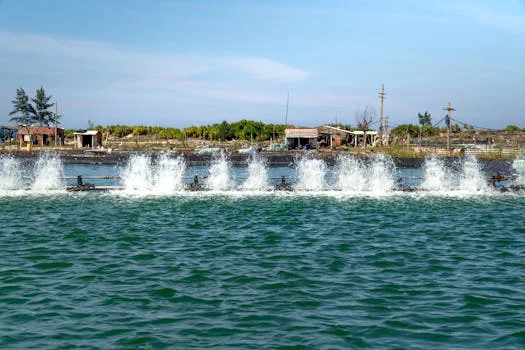
The Vadodara market is served by several specialized manufacturers, each excelling in different technology niches. When comparing suppliers, procurement managers must look beyond the purchase price and evaluate the energy-to-removal ratio and compliance overhead.
MBR Specialists: Leading suppliers in this category, such as ArCh Enviro, provide systems focused on 95–99% TSS removal. Their equipment typically utilizes hollow-fiber or flat-sheet membranes with energy consumption ranging from 0.3–0.5 kWh/m³. These systems are designed to exceed GPCB standards, often meeting international EPA reuse guidelines for non-potable applications.
Conventional and SBR Manufacturers: Companies like Simem India focus on heavy-duty infrastructure for industrial units. Their conventional STPs achieve 85–92% TSS removal with a lower energy profile of 0.2–0.4 kWh/m³. While the footprint is larger (10–15 m²/m³/h), the mechanical simplicity reduces the need for specialized maintenance staff.
Pre-treatment and DAF Providers: Bt Water Treatment is a notable supplier for DAF systems in the region. Their equipment is engineered for high-FOG loads, typical of Vadodara’s dairy and snack food industries. These units operate with very low energy use (0.1–0.3 kWh/m³) and are essential for protecting downstream biological units from fouling.
| Supplier Type | Primary Tech | Flow Range (m³/h) | Avg. TSS Removal | Compliance Level |
|---|---|---|---|---|
| MBR Manufacturers | Membrane Bio-Reactor | 5–500+ | 98% | Exceeds GPCB; EPA Reuse |
| Standard STP Vendors | Conventional A/O | 1–100 | 88% | GPCB Compliant |
| SBR Specialists | Sequencing Batch | 10–200 | 93% | GPCB Compliant |
| Industrial ETP Vendors | DAF / Chemical | 2–300 | 94% (FOG) | Primary Compliance |
All reputable suppliers in Vadodara provide equipment that meets the 2024 GPCB discharge standards. However, if your facility aims for "Zero Liquid Discharge" (ZLD) or cooling tower make-up reuse, MBR-based suppliers offer a significant technical advantage due to the ultra-filtration stage inherent in their design.
Cost Breakdown for Sewage Treatment Plants in Vadodara: 2025 Budgetary Benchmarks
Procurement decisions in Vadodara are heavily influenced by the Total Cost of Ownership (TCO). While MBR systems have a higher upfront cost, their ability to produce reusable water can offset OPEX over a 3-to-5-year period. Understanding the technical specs and cost benchmarks for package STPs in India is the first step in building a realistic budget.
CAPEX Benchmarks (50 m³/h capacity):
- Conventional STP: ₹15–25 lakhs. Lower cost due to standard tankage and blowers.
- SBR System: ₹20–30 lakhs. Higher cost due to automated PLC controls and motorized decanters.
- MBR System: ₹25–40 lakhs. Premium pricing due to membrane modules and high-pressure pumps.
OPEX Benchmarks: Operational costs include energy, chemical dosing (coagulants/disinfectants), and periodic maintenance. Conventional systems are the most economical to run at ₹0.5–1.5/m³, while MBR systems range from ₹1.0–2.5/m³ due to membrane scouring requirements and higher pump pressures. For a deeper look at financial modeling, refer to the wastewater treatment plant cost in Lucknow 2025 engineering breakdown and ROI calculator, which uses similar industrial utility rates to Gujarat.
ROI Calculation Example: Consider a Vadodara factory installing a 50 m³/h MBR system.
- CAPEX: ₹30 lakhs.
- Annual OPEX: ₹1.5 lakhs (including energy and chemicals).
- Annual Savings: By reusing 80% of treated water for landscaping and floor washing, the factory saves ₹4.5 lakhs/year in municipal water charges (calculated at ₹15/m³).
- Payback Period: ~10 years on water savings alone. However, when avoiding a single ₹12 lakh GPCB fine, the payback period drops to under 5 years.
Hidden Costs: Buyers should budget an additional ₹2–5 lakhs for site preparation and ₹5–10 lakhs for civil works (RCC tanks). Gujarat PCB approval and consultancy fees typically add another ₹1–2 lakhs to the total project cost.
How to Choose the Right Sewage Treatment Equipment Supplier in Vadodara: Decision Framework
To mitigate procurement risk, Vadodara plant engineers should follow a structured evaluation process. This framework ensures that the selected equipment matches the specific chemical and biological profile of the facility's waste stream.
Step 1: Define Influent Parameters. Conduct a 7-day composite sampling of your raw sewage. You must know your peak BOD, COD, TSS, and FOG levels. If your TSS is consistently >500 mg/L, you cannot jump straight to an MBR; you will need primary clarification equipment.
Step 2: Match Technology to Constraints. If your factory is in a congested GIDC zone, prioritize footprint-efficient technologies like MBR. If your production is seasonal (common in the Vadodara chemical sector), SBR is the superior choice because it can be "turned down" during low-flow periods without losing biological activity.
Step 3: Evaluate Supplier Technical Depth. Use the supplier matrix provided earlier to shortlist three vendors. Ask for "Specific Energy Consumption" (SEC) data—how many kWh are required to remove 1kg of BOD? A lower SEC indicates better engineering and lower long-term OPEX.
Step 4: Request Pilot Tests. For complex industrial sewage (e.g., mixed with process wash water), request a 48-hour pilot run. Most top-tier Vadodara suppliers have skid-mounted pilot units. This validates the removal efficiency before you commit to a multi-million rupee CAPEX.
Step 5: Audit After-Sales Support. Sewage treatment is a 24/7 process. Ensure the supplier has a local service team in Vadodara or Ahmedabad. Verify the availability of critical spares like air diffusers, submersible pumps, and PLC modules. Ask if they provide assistance with GPCB annual returns and environmental audits.
Frequently Asked Questions
Which is the best STP company in India?
The "best" supplier depends on your specific influent parameters, footprint constraints, and budget. For space-constrained industrial sites in Vadodara, MBR systems from specialized manufacturers are superior for achieving 99% TSS removal. For municipal-scale or budget-sensitive projects, conventional A/O systems from established national players remain the standard. (HydropureWater Market Data, 2025).
How much does it cost to set up a sewage treatment plant in Vadodara?
For a standard 50 m³/h STP, CAPEX ranges from ₹15–40 lakhs. Conventional systems are at the lower end (₹15–25 lakhs), while high-efficiency MBR systems occupy the higher end (₹25–40 lakhs). Total project costs should also include 30–50% extra for civil works and installation.
Which is better: SBR or MBBR?
SBR is better for variable loads (e.g., textile or food processing) as it offers 90–95% TSS removal through batch processing. MBBR (Moving Bed Biofilm Reactor) is ideal for high-strength wastewater (e.g., pharmaceuticals) with 95–99% removal. MBBR systems generally cost 20–30% more than SBR but offer a smaller footprint (per EPA 2024 benchmarks).
How much does it cost to install a sewage treatment plant?
Installation costs, including civil works, piping, and electrical integration, typically add 30–50% to the equipment CAPEX. For a ₹20 lakh STP unit in Vadodara, expect to spend an additional ₹6–10 lakhs on installation and site integration (Vadodara market data, 2025).