Why a SK On acquisition in Malaysia triggers a brand-new DOE licence
Under Section 18 of the Environmental Quality Act 1974 (Act 127), any "person carrying on any work or activity which may result in pollution" must hold a current DOE industrial-effluent discharge licence. A change in operating control — whether executed as a share purchase, asset deal, or business transfer — is treated by the Department of Environment as the commencement of a new undertaking; the seller's licence does not transfer with the share register or the asset bundle. The acquirer must file a fresh application, re-submit engineering plans, and may be required to undertake a new Detailed EIA screening under the EIA Order 2015 if the activity falls within Schedule 2.
For a cathode-coating and cell-assembly line operating at typical Korean-OEM throughputs (roughly 20–40 GWh/yr nameplate), the practical consequence is that SK On cannot lawfully discharge a single cubic metre under the new ownership until the new licence is in hand. The seller's licence, the IEQIS monitoring history, and any open corrective-action notices are public records and should be pulled during Phase II due diligence before signing — a seller's "clean file" assertion is only as good as the last 12 quarters of IEQIS returns. The cross-border sequencing for parallel transactions is laid out in the SK On Germany acquisition compliance guide and the SK On Mexico acquisition compliance guide.
The numerical envelope: Standard A, Standard B, and the battery-stream gaps
Standard A (inland waters) caps BOD5 at 20 mg/L, while Standard B (upstream of water intakes) caps BOD5 at 50 mg/L, both per the Environmental Quality (Industrial Effluent) Regulations 2009. Plants in Selangor's Klang Valley and Penang's Bayan Lepas industrial zone are far more likely to face the tighter Standard B envelope because of downstream abstraction — the same logic applies to Johor's Senai and Tanjung Langsat industrial estates, which feed the Johor River water supply intake. Ammoniacal N is capped at 15 mg/L under Standard A, with tighter sector-specific values applied where the catchment is nutrient-sensitive; pH must fall within 5.5–9.0, and temperature at the point of discharge must not exceed 40°C. The following table consolidates the full parameter list with explicit 2009-Regulations ceilings.
| Parameter | Standard A ceiling (inland waters) | Standard B ceiling (upstream of intakes) | Notes for an EV-battery cell plant |
|---|---|---|---|
| BOD5 | 20 mg/L | 50 mg/L | Driven by residual organics in coating rinses and formation condensate |
| COD | 50 mg/L (typical, sector schedule) | 100 mg/L (typical, sector schedule) | Often the binding constraint for cathode-coating NMP solvent streams |
| TSS | 50 mg/L | 100 mg/L | Controlled by DAF system for suspended solids and FOG removal ahead of the biological stage |
| Ammoniacal N | 15 mg/L | 20 mg/L (sector schedule) | Nitrification required in the biological stage; formation-gas scrubber blowdown is the main contributor |
| Oil & grease | 10 mg/L | 10 mg/L | DAF or API skimmer upstream of equalization |
| pH | 5.5–9.0 | 5.5–9.0 | Online probe at the monitoring station; formation charging swings pH batch-to-batch |
| Temperature | ≤40°C at point of discharge | ≤40°C at point of discharge | Cooling-tower blowdown frequently breaches this; quench tanks or cooling loops required |
| Total fluoride | No explicit ceiling | No explicit ceiling | Falls under Toxicity Characteristic; LiPF6 hydrolysis is the source |
| Lithium (total) | No explicit ceiling | No explicit ceiling | Cathode slurry carryover; DOE can demand proof of non-injury |
| NMP solvent | No explicit ceiling | No explicit ceiling | Cathode-coating solvent load; BOD/COD surrogate only |
The four battery-relevant parameters with no explicit numeric ceiling present the primary risk. NMP solvent, lithium carryover, fluoride, and total ammoniacal N fall under the Toxicity Characteristic framework, where the DOE can demand proof the effluent is not "injurious" to receiving waters. The due-diligence question to ask the seller is: "what is your effluent fingerprint for NMP, fluoride, and lithium, and does it survive a 24-hour composite?" For an acquirer benchmarking against similar regional regimes, the comparable numeric envelopes are detailed in the Indonesia PermenLH No. 11/2025 compliance guide.
The four-stage DOE permitting sequence SK On must run
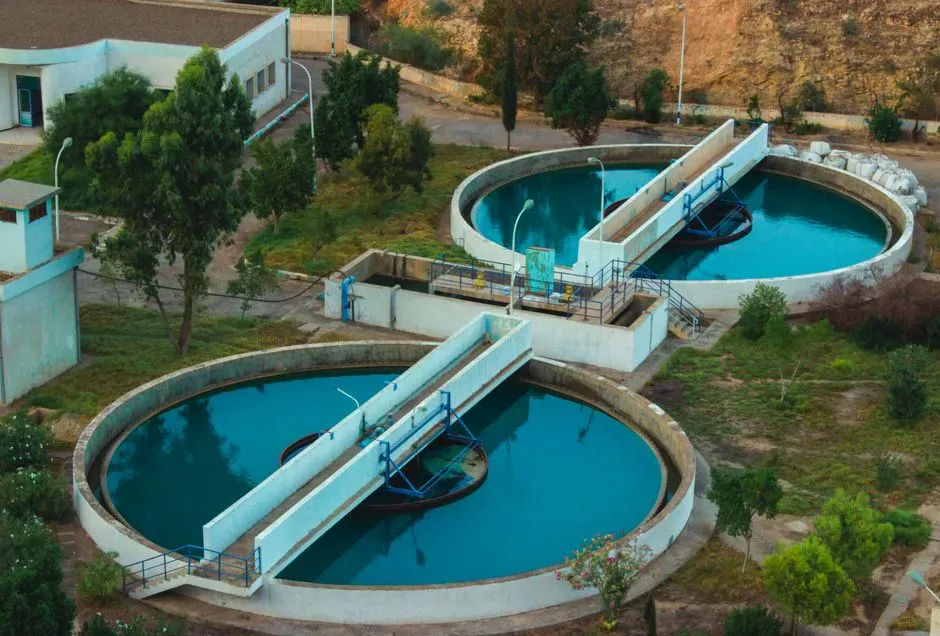
- Stage 1 — Pre-application consultation. A scheduled meeting with the relevant state DOE director (Selangor, Penang, or Johor) converts an unknown timeline into a known one and surfaces retrofit conditions before deal close. Budget 30–60 days from request to meeting.
- Stage 2 — Detailed EIA screening. Submission and approval under the EIA Order 2015 is required if the activity is a Schedule 2 prescription. Cathode-coating and electrolyte-mixing operations at typical OEM throughputs will fall in scope; the EIA report must address the four battery-specific parameters discussed above.
- Stage 3 — DOE site inspection. The state DOE inspects the proposed treatment system and confirms 24-hour composite sampling capability — autosampler, chain-of-custody, and dispatch to an MS ISO/IEC 17025-accredited lab. A failed inspection restarts the clock.
- Stage 4 — Licence issuance. Until the licence is in hand, the new owner cannot lawfully discharge any effluent under SK On's name. Plan for 6–9 months from pre-application to licence for a greenfield retrofit on an existing shell.
Pre-treatment train design for an EV-battery cell plant
The unit operations the state DOE will expect to see include headworks protection, starting with a rotary mechanical bar screen for headworks protection to keep pouch-cell offcut, separator film carryover, and fibrous debris out of downstream pumps and biological stages. Equalization with PLC-controlled pH adjustment dampens batch swings from formation charging (pH excursions from 4 to 11 within a single shift are not uncommon) and electrolyte-mixing operations.
Coagulation and DAF system for suspended solids and FOG removal ahead of the biological stage strip TSS and trace oils from coating rinses and formation condensate. Biological treatment is sized around the high-COD NMP solvent load and runs as an MBR — flat-sheet PVDF modules with 0.1 μm pore size are the standard submerged configuration in Malaysian battery plants. The process chemistry is laid out in the explainer on how MBR works for high-COD streams, and the integration with the rest of the train is mapped in the MBR membrane bioreactor for high-COD NMP-loaded battery effluent reference design.
Polishing is sand filtration or activated carbon ahead of the discharge point. For sites targeting 20% reuse, RO polishing of the MBR permeate with concentrate routed to a crystallizer puts the plant on the zero liquid discharge trajectory the DOE signalled for high-risk sectors in its 2020 mandate. Sludge dewatering uses a plate and frame filter press for sludge dewatering to bring the cake to 25–30% DS, suitable for off-site incineration. Where effluent is sewered rather than discharged to a watercourse, the on-site pre-treatment must be designed to the more stringent of the DOE licence limits and any Indah Water Konsortium agreement limits — IWK applies surcharges for non-compliance, and the surcharge schedule sits on top of the DOE envelope.
The 90-day handover calendar after closing
The first quarter of ownership is where most acquisition-related compliance failures occur, so a disciplined calendar aligned to the DOE's reporting rhythm is essential.
- Days 0–30: File the change-of-ownership notification with the state DOE, transfer the IEQIS account credentials from the seller, and run parallel baseline sampling on the existing effluent to establish the "pre-deal fingerprint." The 2009 Regulations require 24-hour composite samples; results submitted through any channel other than IEQIS are inadmissible, so the new operator's analyst credentials must be active before the first quarter ends.
- Days 31–60: Submit the engineering re-approval package — updated PFDs, P&IDs, chemical inventory, sludge-handling plan, and a pre-treatment retrofit concept. Engage an MS ISO/IEC 17025-accredited lab for the quarterly programme and commission an independent pre-treatment audit.
- Days 61–90: Host the DOE site inspection, demonstrate 24-hour composite sampling capability, close out any corrective-action notices, and file the first quarterly IEQIS return under SK On's account. A non-accredited lab return is a violation under the 2009 Regulations.
The same sequence applied to a parallel European transaction is documented in the SK On Germany acquisition compliance guide; the day-by-day differences (no IEQIS, different regulator) make the Malaysian version more calendar-driven.
Penalties, telemetry, and the Selangor/Johor real-time pilot
Under the EQA (Amendment) Act 2024, a single instance of non-compliance can attract fines from RM50,000 up to RM10,000,000 and up to 5 years imprisonment, with repeat offenders facing operational suspension. The DOE is running real-time Online Environmental Monitoring System (OEMS) pilots in Selangor and Johor through 2026, with a battery plant discharging to a sensitive catchment expected to face telemetry-ready sampling on COD, flow, pH, and ammoniacal N from the first quarter of operation. Design the pre-treatment train one tier tighter than the applicable Standard A/B envelope and maintain a six-month rolling dataset of accredited lab results on file for audit defence. For a high-purity-water-adjacent facility such as a data-centre cooling loop on the same industrial estate, the parallel framing sits in the Manila cooling blowdown treatment guide.
Frequently Asked Questions
Does the seller's DOE industrial-effluent licence transfer to SK On on closing?
No. Section 18 of the Environmental Quality Act 1974 treats a change in operating control — share purchase, asset deal, or business transfer — as a new undertaking. SK On must file a fresh application, re-submit engineering plans, and complete the pre-application → EIA → site inspection → licence issuance sequence before discharging any effluent under the new ownership.
Standard A versus Standard B — which applies to a Selangor or Johor battery plant?
Standard B (BOD5 50 mg/L) typically applies to discharges upstream of public water intakes, which covers most Klang Valley, Senai, and Bayan Lepas sites because of downstream abstraction. Standard A (BOD5 20 mg/L, ammoniacal N 15 mg/L) applies to inland waters further from intakes. Confirm the binding tier against the DOE water-classification map during pre-application consultation.
What is the IEQIS sampling cadence and which labs are accepted?
Quarterly 24