
Why a Hotel in Kuala Lumpur Needs a Packaged MBR STP, Not Just Any Sewage Plant
A packaged MBR STP is a factory-built, skid- or containerised sewage treatment plant that combines activated-sludge biology with submerged PVDF ultrafiltration membranes (typically 0.1 µm pore size), producing a clarified, near-reusable effluent in a single skid. For a Kuala Lumpur hotel, sizing starts from room count, converts to population equivalent (PE) at roughly 1.5–2.0 PE per key, then to about 0.2 m³ per PE per day of peak flow, before selecting a packaged unit that meets Malaysian DOE effluent Standard B.
Three hotel-specific drivers make packaged MBR a legitimate choice over conventional extended-aeration (EA) in KL city-centre and Klang Valley projects. First, daily hydraulic and organic loading is highly variable: 60–85% occupancy swings, weekend banquet surges, F&B kitchen peaks, and on-site laundry discharge. A submerged-membrane system tolerates these swings because MLSS can be held at 8,000–12,000 mg/L in the bioreactor without harming solids separation. Second, footprint is scarce: a 200-key business hotel on a 0.4 ha service-yard lot rarely has room for a 1,500 m² concrete aeration tank, whereas a packaged MBR wastewater treatment system in a 40 ft container occupies 25–35 m². Third, treated-effluent reuse for cooling-tower make-up and landscape irrigation is now a common owner requirement, and MBR effluent (typically BOD <5 mg/L, SS <1 mg/L, turbidity <1 NTU) feeds directly into polishing without extra filtration.
Packaged STP is also a proven scope in Malaysia. Local contractors have delivered factory-built EA, SBR, and MBR plants to hotel clients including Rangkaian Hotel Seri Malaysia, De View Hotel, and Lexis Suites Penang, plus an MBR system for Secret Recipe Malaysia (per YG company project list, 2021). The question is no longer whether packaged MBR works in Malaysia — it is how to size, specify, and shortlist it for a specific hotel.
Step 1: Size the Hotel's Packaged MBR from Room Count and Occupancy
The defensible sizing path runs room count → population equivalent (PE) → average dry-weather flow (ADWF) → peak wet-weather flow (PWWF) → packaged MBR flow band. Two rule-of-thumb conversions are widely used in Malaysian hotel design. First, full-service and resort hotels are typically rated at 1.5–2.0 PE per key, because each occupied room is treated as one resident equivalent plus a loading allowance for F&B, banqueting, and laundry. Limited-service and business hotels fall into the 1.0–1.5 PE per key range, since F&B and laundry are smaller or outsourced. Second, average dry-weather flow is taken at about 200 L per PE per day, with a peaking factor of 1.5–2.0 to capture wet-weather infiltration and diurnal peak.
Worked example for a 200-key business hotel in KL city centre:
- Occupancy design basis: 1.5 PE per key → 300 PE
- ADWF: 300 PE × 200 L/PE/day = 60 m³/day
- PWWF: 60 m³/day × 1.5–2.0 = 90–120 m³/day
- Select packaged MBR in the 80–150 m³/day range, configured as one duty + one standby membrane cassette
Cross-check that flow band against module capacity. The DF series flat-sheet MBR membrane cassette delivers 32–135 m³/day per module (per HydropureWater DF module spec, 2026), so a two-cassette skid in the lower half of its flux range covers the worked example with margin for banquet surges. A 100-key boutique hotel drops to about 150 PE, 30 m³/day ADWF, and 45–60 m³/day PWWF — a single DF cassette in the 32–60 m³/day band. A 500-key resort at 2.0 PE/key reaches 1,000 PE, 200 m³/day ADWF, 300–400 m³/day PWWF, which sits across two parallel 200 m³/day packaged MBR skids.
| Hotel size | PE basis | PE total | ADWF (m³/day) | PWWF (m³/day) | Packaged MBR flow band | DF cassettes |
|---|---|---|---|---|---|---|
| 100-key boutique | 1.5 PE/key | 150 | 30 | 45–60 | 30–60 m³/day | 1 |
| 200-key business | 1.5 PE/key | 300 | 60 | 90–120 | 80–150 m³/day | 1 + 1 standby |
| 300-key full-service | 1.8 PE/key | 540 | 108 | 160–216 | 150–250 m³/day | 2 |
| 500-key resort | 2.0 PE/key | 1,000 | 200 | 300–400 | 300–500 m³/day (2 skids) | 4 |
Step 2: Match Malaysian DOE Effluent Standard B and IWK Sewerage Rules
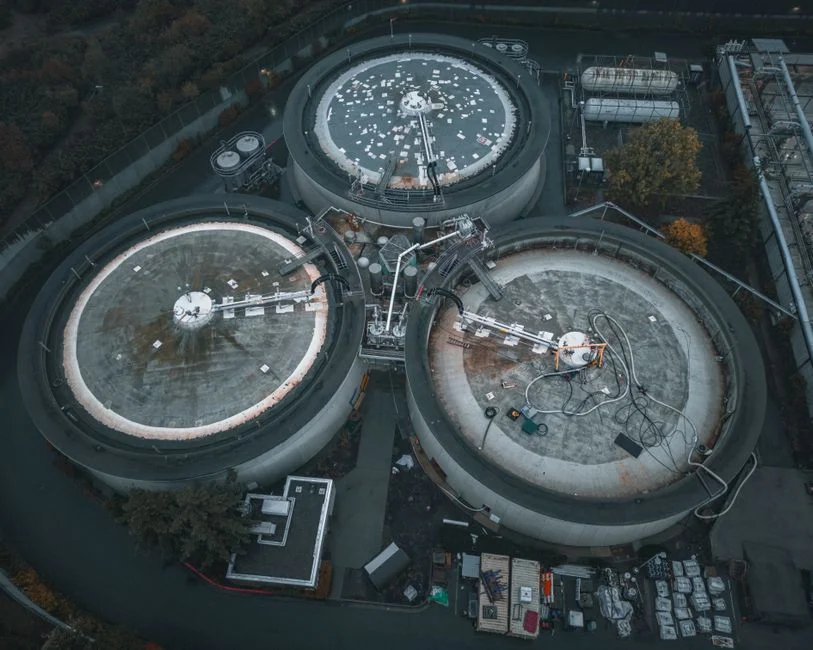
Malaysian Department of Environment (DOE) effluent Standard B is the regulatory envelope that any KL hotel packaged STP will be judged against before commissioning and during periodic compliance sampling. Typical Standard B parameters applied to hotel and resort developments are BOD ≤20 mg/L, COD ≤120 mg/L, SS ≤50 mg/L, oil & grease ≤5 mg/L, pH 6.0–9.0, and ammoniacal nitrogen limits set per project — confirm the exact current values with DOE's latest guidance before tender (typical Standard B values, verify with current DOE guidance). These are the numbers a consultant defends in front of the main contractor and the DOE officer on site.
Two discharge pathways govern a KL hotel. Pathway A is discharge to the public sewer, typically under the operating concession of Indah Water Konsortium (IWK): the focus is compliance at the discharge manhole, and the packaged STP's job is to deliver Standard B influent to IWK's network. Pathway B is on-site discharge to a watercourse or for reuse (cooling-tower make-up, irrigation, toilet flushing), which requires DOE written approval, a higher monitoring frequency, and a reuse risk-management plan. In both pathways, the SS ≤50 mg/L and BOD ≤20 mg/L envelope is the binding design target, and submerged ultrafiltration is what allows a packaged plant to meet it under peak hotel loading where conventional clarifiers struggle to hold SS below 30 mg/L.
For a project inside an IWK sewerage catchment — common in mature KL districts such as Bukit Bintang, Bangsar, and parts of PJ — the packaged STP can be sized as a polishing buffer rather than a full treatment train. For projects outside the IWK catchment, or where the hotel wants a water reuse loop, a packaged MBR is sized as a full secondary + tertiary plant with optional UV or chlorination downstream.
Step 3: Compare Packaged MBR Against Extended-Aeration and SBR for a Hotel
Conventional extended-aeration (EA) and sequencing batch reactor (SBR) packaged plants are the conservative baselines that local Malaysian turnkey contractors deliver as a matter of course. Documented Malaysian EA precedents include 1,000 PE, 2,400 PE, and 5,100 PE plants; documented SBR and FRP precedents include 450 PE and 9,000 PE upgrades (per YG company profile, 2021). The comparison below is the matrix an M&E consultant will be asked to defend.
| Parameter | Conventional EA (packaged) | SBR (packaged) | Packaged MBR |
|---|---|---|---|
| Typical PE range, Malaysia | 225–5,100 PE (per YG project list) | 450–9,000 PE upgrades | 150–1,000 PE per skid (multi-skid for larger) |
| Footprint (per m³/day treated) | Highest (large aeration tank + clarifier) | Moderate (batch basin + decanter) | Significantly smaller — no secondary clarifier, high MLSS 8,000–12,000 mg/L |
| Effluent BOD (typical) | ≤20 mg/L | ≤20 mg/L | <5 mg/L |
| Effluent SS (typical) | ≤30 mg/L | ≤30 mg/L | <1 mg/L (membrane-retained) |
| Reuse-ready (cooling tower, irrigation) | No — needs tertiary | No — needs tertiary | Yes, directly |
| Hydraulic/load tolerance | Low to moderate; sensitive to peak load | Moderate; cycle time limits peak | High; stable at peak hotel loading |
| Sludge production | High (long SRT but wasted as mixed liquor) | High | Lower (high SRT, less waste activated sludge) |
| CAPEX (membrane + cassette) | Lowest | Low–moderate | Higher (membrane modules) |
| OPEX (membrane replacement, energy) | Lowest | Low | Higher membrane OPEX, offset by lower civil works and reuse revenue |
| Malaysian reference projects | Rangkaian Hotel Seri Malaysia, Lexis Suites Penang, De View Hotel (per YG project list) | Sipadan Mangrove Resort, Alpha Faith hybrid SBR (per YG) | Secret Recipe Malaysia, commercial MBR (per YG) |
Decision rule: choose packaged MBR when footprint in a dense KL district, treated-effluent reuse, or stable performance under peak hotel loading are the project drivers. Choose EA or SBR when CAPEX is the primary constraint, the site has room, and there is no reuse requirement (per Kloberz and stpsrihartamas MBR descriptions, 2025; HydropureWater DF module catalog, 2026).
Step 4: Specify the Packaged MBR Skid — Membrane, Aeration and Controls
Once the process is fixed, the next decision is component-level specification. A packaged MBR proposal should be readable on these five points.
Membrane cassette. Specify PVDF flat-sheet, nominal pore size 0.1 µm, 80–225 m² of membrane area per cassette, and a flux rating of 32–135 m³/day per cassette depending on the duty point (per HydropureWater DF module spec, 2026). The cassette frame should be stainless steel, and individual elements should be replaceable without lifting the whole skid — this is what keeps membrane replacement cost manageable over a 10-year life. The DF series flat-sheet MBR membrane cassette covers this envelope.
Aeration. Specify coarse-bubble membrane scour via an integrated aeration box beneath the cassette. This is what gives submerged MBR its 10–20× lower specific energy demand versus external cross-flow systems, because there is no recirculation pump pushing mixed liquor through a loop (per HydropureWater DF module spec, 2026). A separate fine-bubble grid in the bioreactor handles BOD removal.
Pre-treatment. Specify a rotary mechanical bar screen upstream of the bioreactor. Rags, hair, and grit from hotel laundry and housekeeping discharge are the most common cause of membrane fouling, and a GX-series mechanical bar screen with 3–5 mm aperture is the matching headworks unit for a packaged MBR skid.
Sludge handling. Specify a plate and frame filter press as the sludge-dewatering companion. This keeps the packaged plant's O&M footprint low by reducing waste-activated sludge volume by 75–85% to a stackable cake, instead of relying on liquid sludge removal.
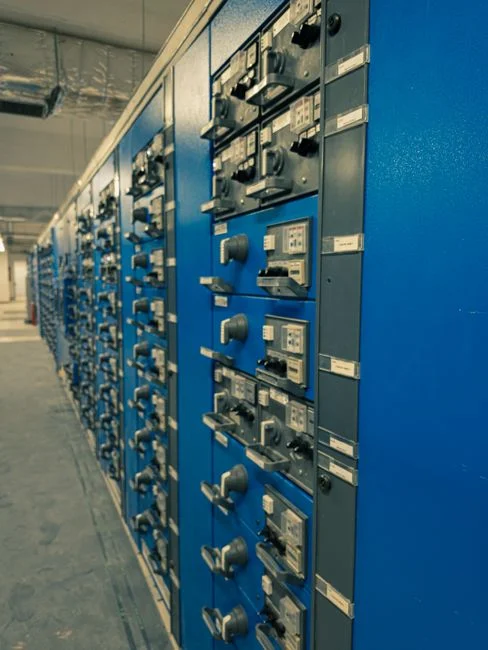
Controls. Specify a PLC panel with overload protection, transmembrane pressure (TMP) trending, and self-cleaning logic that triggers a chemical-in-place wash on pressure excursion. Local panel-builders such as DP Controls Sdn Bhd supply 500×400×300 mm panels to Malaysian water projects including the Sungai Batu WTP (per DP Controls project post, 2025-01), confirming that the local panel ecosystem supports packaged MBR integration.
| Subsystem | Spec | Typical value / range |
|---|---|---|
| Membrane cassette | PVDF flat-sheet, 0.1 µm | 80–225 m² per cassette, 32–135 m³/day per cassette |
| MLSS in bioreactor | Submerged MBR operating window | 8,000–12,000 mg/L |
| Membrane aeration | Coarse-bubble scour, integrated aeration box | 10–20× lower energy vs cross-flow |
| Pre-treatment | Mechanical bar screen, 3–5 mm aperture | GX-series rotary |
| Sludge dewatering | Plate & frame filter press | Cake dryness 25–35% DS |
| Controls | PLC panel, TMP trending, CIP trigger | 500×400×300 mm enclosure class |
Step 5: Build a Malaysian Supplier Shortlist and Rough Cost Envelope
Procurement comes down to a 4-point filter. A shortlist is defensible when each candidate can answer yes to all four.
- Flow band matches hotel PE (e.g. 80–150 m³/day for the 200-key worked example).
- Effluent envelope matches DOE Standard B (BOD ≤20 mg/L, SS ≤50 mg/L, O&G ≤5 mg/L, pH 6–9) at the vendor's quoted MLSS and flux.
- Malaysian reference list — packaged plants delivered, maintained, and compliantly sampled in Malaysia, not just export shipments.
- Membrane warranty and replacement-cost transparency — written warranty term (typically 5–10 years on PVDF), documented replacement cost per cassette, and a defined CIP chemical regime.
Three supplier archetypes are active in the Malaysian packaged STP market. Local turnkey contractors (e.g. the YG-type firm with documented EA, SBR, and MBR projects across Penang, Kedah, and KL) handle design, build, and maintenance as a single contract. MBR module specialists (e.g. Kloberz) supply the membrane cassette and process design but expect a local civil contractor for the skid. Chinese OEM packaged MBR exporters (e.g. HydropureWater with a 10–2,000 m³/day packaged range) supply a complete skid or containerised unit, typically at the lowest membrane CAPEX of the three, with project references across Southeast Asia and Latin America — for a worked-example spec, see this package wastewater treatment plant supplier checklist.
On cost, packaged MBR carries a higher membrane CAPEX than EA or SBR because the membrane cassette is the largest single line item. That delta is offset by smaller civil works (no secondary clarifier, no tertiary sand filter if reuse is in scope), lower sludge disposal volumes, and reuse revenue. OPEX runs higher on membrane cleaning and periodic cassette replacement, but the air-scour system keeps the energy premium modest. For a 200-key, 80–150 m³/day packaged MBR skid in KL, total installed CAPEX typically sits in the band of a small commercial plant of comparable flow — treat any specific RM figure as indicative only, and request a vendor quote against the worked example above. The wider 2026 outlook for decentralised systems, including cost and technology trends, is covered in this decentralized wastewater treatment buyer guide.
| Archetype | Typical scope | Strength | Watchpoint |
|---|---|---|---|
| Malaysian turnkey contractor | Design, build, maintain (EA/SBR/MBR) | Local references, IWK liaison, after-sales | Membrane depth varies — check cassette origin |
| MBR module specialist | Membrane cassette + process design | Process depth, flux know-how | Needs local civil/ME partner for skid |
| Chinese OEM exporter | Full containerised/skid unit | Lowest CAPEX, fast delivery | Validate Malaysian reference list and warranty support |
Frequently Asked Questions
What is the population equivalent (PE) for a hotel room in Malaysia?
For a full-service or resort hotel in a tropical urban setting, use 1.5–2.0 PE per key; for a limited-service or business hotel, use 1.0–1.5 PE per key. A 200-key business hotel therefore designs to 300 PE on the basis of 1.5 PE per key.
Which Malaysian DOE effluent standard applies to a hotel packaged MBR STP?
Hotel developments typically discharge to DOE effluent Standard B (typical parameters: BOD ≤20 mg/L, COD ≤120 mg/L, SS ≤50 mg/L, oil & grease ≤5 mg/L, pH 6.0–9.0 — verify current values with DOE guidance). Submerged MBR with PVDF 0.1 µm membranes comfortably meets the BOD and SS envelope even at peak hotel loading.
What capacity does a single HydropureWater DF flat-sheet MBR cassette cover?
A DF series flat-sheet MBR membrane cassette delivers 32–135 m³/day per module at 0.1 µm pore size, with 80–225 m² of membrane area per cassette — covering the 30–120 m³/day PWWF range typical of a 100–200-key KL hotel.
Does a KL hotel need IWK approval for a packaged MBR STP?
If the hotel discharges to the public sewer inside an IWK catchment, the focus is compliance at the discharge manhole. If the hotel discharges on-site to a watercourse or reuses the treated effluent, DOE written approval is required. In both cases, the packaged MBR wastewater treatment system must be sized to meet Standard B at the discharge point.
Related Equipment
- WSZ underground packaged sewage treatment plant — specifications, capacity range, and technical data