Why a Merck KGaA Darmstadt acquisition in Germany is a four-rail permit problem, not a single POTW transfer
When Merck KGaA Darmstadt acquires a plant in Germany, four wastewater permit rails activate on closing day: a §16 WHG Anzeige to the Wasserbehörde within one month (€50,000 Bußgeldrahmen per missed parameter under §103 WHG), a parallel BImSchG operator-change Anzeige (4–9 month Genehmigungsverfahren if capacity rises), an Indirekteinleiter confirmation under Land-specific LWG §58 and the kommunal Satzung, and a PRTR (EC 166/2006) successor filing by March 31 via the Umweltbundesamt portal. Discharge limits are governed by AbwV Anhang 49 for pharmaceutical products and APIs, layered with IED 2024/2995/EU BAT-AEL ceilings of COD ≤30–100 mg/L, total N ≤10–15 mg/L, total P ≤0.3–2 mg/L, plus a 50 ng/L PFOS/PFOA cap from the 17 April 2024 AbwV overhaul (BGBl. 2024 I Nr. 132). The live deal-flow context is the April 2025 Merck KGaA Darmstadt agreement to acquire Bio-Techne, announced as a ~$2.6B life-sciences platform deal that places European biotech manufacturing footprints squarely on the 2026 integration calendar (S2).
German Umweltrecht successor-liability principles do not behave like the U.S. EPCRA/Form R + 40 CFR 433 POTW model. The seller's existing §8 Erlaubnis or §13 Anzeige survives the closing in the seller's legal name; what transfers with the asset is the AbwV Eigenüberwachung calendar, and that calendar must be on the buyer's dashboard by Day 30 or the Bußgeldrahmen starts attaching per parameter. U.S. deal teams trained on EPCRA routinely drop two of the four rails in the 90-day sprint; this article is structured so none of them get dropped.
The four permit rails a Merck acquirer must hit in the first 90 days
Each rail has a separate agency, a separate deadline, and a separate penalty schedule. Missing one filing does not excuse the others — the Bußgeldrahmen attaches independently to each parameter under §103 WHG and §69 KrWG. The single view a corporate-development lead needs is below.
| Rail | Filing | Legal basis | Deadline | Agency | Penalty if missed |
|---|---|---|---|---|---|
| 1 | §16 WHG Anzeige (operator change notification); existing §8 Erlaubnis or §13 Anzeige survives in seller's name | §16 WHG, §103 WHG | Within 1 month of closing | Competent Wasserbehörde | Up to €50,000 per missed Eigenüberwachung parameter under §103 WHG (S5) |
| 2 | BImSchG operator-change Anzeige; §4 Genehmigung required if capacity rises | §4, §15 BImSchG | Pre-construction; 4–9 months including Beteiligung der Öffentlichkeit | Land Immissionsschutzbehörde | Operating prohibition + Bußgeldrahmen (S5) |
| 3 | AbwV Eigenüberwachung calendar + §58 LWG + kommunale Satzung of local Abwasserverband | AbwV, LWG, Satzung | Transfers with asset; Satzung confirmation at Day 0 | Land authority + local Abwasserverband | Compounds with Rail 1; €50,000 per parameter (S5) |
| 4 | PRTR (EC 166/2006) successor filing + Nachweisverordnung for AVV 11 01 09* | EC 166/2006, KrWG | March 31 successor filing for prior calendar year | Umweltbundesamt portal + Land authority | §103 WHG and §69 KrWG Bußgeldrahmen (S5) |
Rail 2 is the rail that stretches the 90-day sprint. A contemplated capacity increase forces a combined BImSchG plus WHG Genehmigungsverfahren that runs 4–9 months and includes the Beteiligung der Öffentlichkeit public participation phase. The PRTR successor filing by March 31 is the one most often underweighted by U.S. counsel because EPCRA Form R uses a July 1 deadline; the German filing deadline is two months earlier, and liability for missed filings survives closing under German Umweltrecht successor-liability principles (S5).
AbwV Anh. 49 vs. IED 2024/2995/EU: the parameter crosswalk a pharma acquirer needs
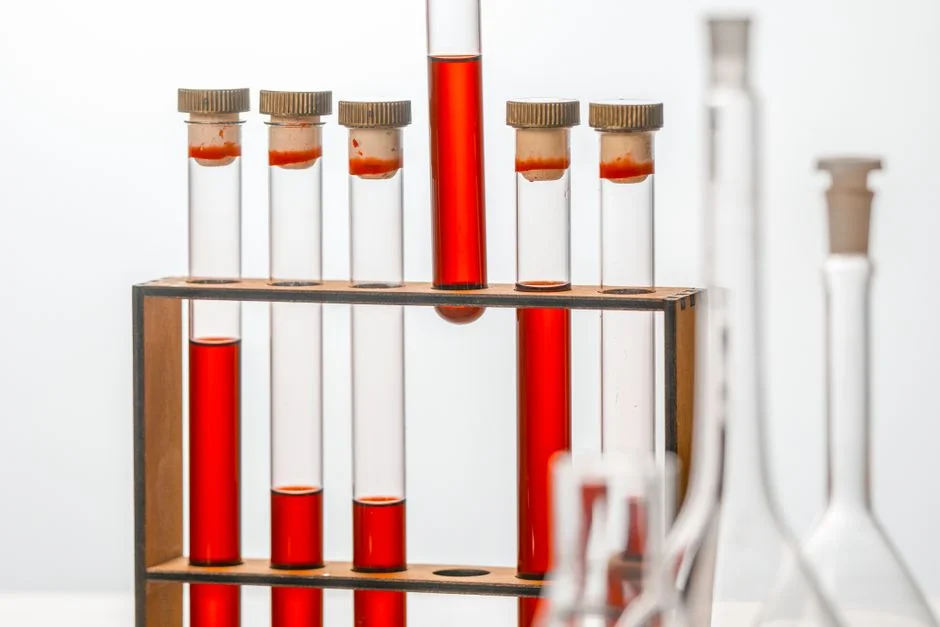
AbwV Anhang 49 governs the manufacture of pharmaceutical products and active pharmaceutical ingredients — not the automotive-focused Anh. 40 cited in adjacent compliance guides. The pharmaceutical parameter set is materially different: it covers chemical oxygen demand (COD), adsorbable organically bound halogens (AOX), total nitrogen, sulfate, mercury, and API surrogate parameters, with values tighter than the metal-finishing 24h-Mischprobe ceilings and tested on a 24h-Mischprobe basis. On the European side, IED Annex I 4.1(b) covers installations for the manufacture of basic pharmaceutical products, and the 2024 BAT-AEL conclusions under Implementing Decision 2024/2995/EU layer on top of the AbwV floor to set the discharge-point envelope. The table below is the head-to-head crosswalk an engineering team needs to size a treatment train against the right number, and for additional influent characterisation work the antibiotic fermentation wastewater treatment guide gives the upstream profile.
| Parameter | AbwV Anh. 49 ceiling | IED 2024/2995/EU BAT-AEL | Note |
|---|---|---|---|
| COD (24h-Mischprobe) | Pharma-specific; tighter than Anh. 40 | ≤30–100 mg/L at discharge point | Anh. 49 governs; IED is the ceiling |
| Total N | Per Anh. 49 | ≤10–15 mg/L | Drives MBR nitrification sizing |
| Total P | Per Anh. 49 | ≤0.3–2 mg/L | Biological or chemical P removal |
| AOX, sulfate, Hg | Anh. 49 specific ceilings | Metal-specific limits apply | API surrogate parameters tracked |
| PFOS / PFOA | 50 ng/L (BGBl. 2024 I Nr. 132, 17 Apr 2024) | Watch list under IED | Below LOD of legacy online analysers; new CAPEX line for LC-MS sampling or on-line PFAS sensor (S5) |
The 17 April 2024 AbwV overhaul (BGBl. 2024 I Nr. 132) introduced the 50 ng/L PFOS/PFOA cap that is below the limit of detection of legacy online analysers. Every acquired site that wants to keep operating with continuous monitoring will need a CAPEX line for LC-MS sampling or a new on-line PFAS sensor, which is the single most common deal-breaking new parameter on a 2026 German pharma retrofit (S5). For U.S. context on the parallel federal direction, see the September 2026 EPA 2022 PFAS wastewater permit guidance rescission.
The Indirekteinleiter check U.S. counsel most often miss: §58 LWG and the kommunal Satzung
The fifth check that U.S. counsel most often miss is the Indirekteinleiter confirmation under §58 of the relevant Landeswassergesetz (LWG) and the kommunale Satzung of the local Abwasserverband. The Satzung is the German analogue of U.S. POTW pretreatment limits and can run tighter than the federal AbwV floor — heavy metals, AOX, and sulfate ceilings that pass at the federal level routinely fail at the Satzung level in Upper Bavaria and the Rhine-Ruhr corridor. Land-specific rules in BY, BW, and NW diverge in ways that compress or stretch the 4–9 month BImSchG clock, so a single "Germany" answer is rarely defensible. Treat the Land-specific Genehmigungsverfahren rules as a separate workstream; the divergence between Bayern, Baden-Württemberg, and Nordrhein-Westfalen Satzung practice routinely determines whether a 1,000 m³/day site discharges at all on Day 30. A missed Satzung confirmation compounds with Rail 1, attaching €50,000 per parameter under §103 WHG (S5).
Penzberg as the working case: a five-stage reference train for a 1,000–1,500 m³/day biotech envelope
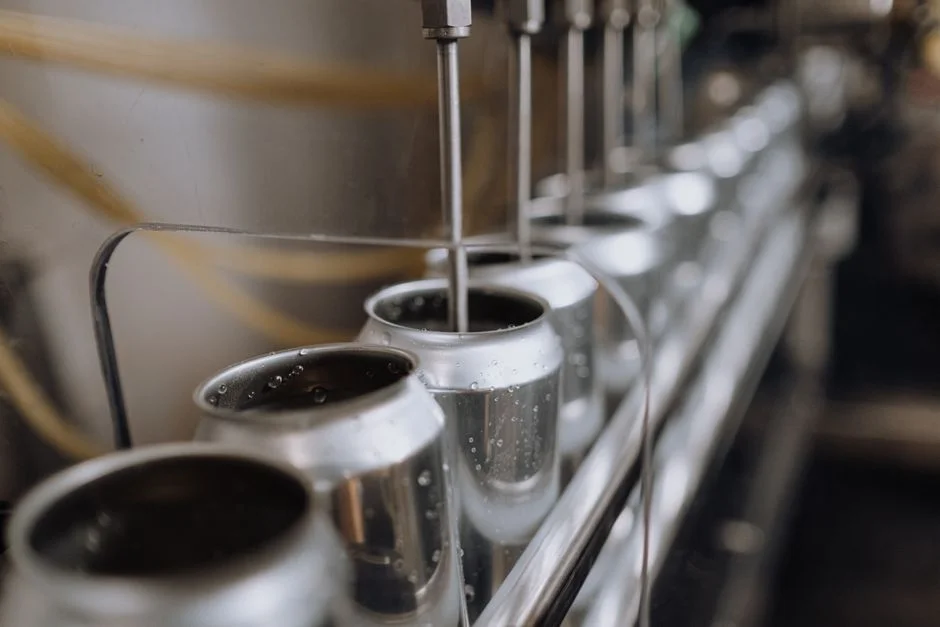
Penzberg is the only documented Roche-scale EGSB plus membrane train in the public record, and it is the benchmark a buyer's engineering team should gap any acquired site drawings against. The Roche Penzberg biotechnologie site in Upper Bavaria covers 350,000 m², employs 4,600 staff, and is one of the largest biotech centres in Europe (S4). For an acquirer inheriting that arrangement or sizing a new one, the five-stage reference train below is reverse-engineered from Penzberg and current best practice at comparable German pharma sites, sized for a 1,000–1,500 m³/day biotech flow envelope.
- Stage 1 — Equalization surge basin. 6–12 hour retention with PLC-controlled coagulant and pH dosing to 6.5–7.5, required because fermentation batch cycles drive significant hydraulic and load swings. A HydropureWater automatic chemical dosing system is the standard package for nutrient and trace-metal trim into downstream stages.
- Stage 2 — Dissolved air flotation. 4–300 m³/h skid range with 80–95% FOG removal and downstream TSS below 100 mg/L. The DAF system fits this duty and is the highest-impact equipment choice for FOG removal on a German retrofit.
- Stage 3 — Anaerobic EGSB. Penzberg 480 m³ Aquantis Biobed as the benchmark, producing energy-rich biogas that offsets more than 90% of plant electricity, eliminating the previous upstream aerobic high-load stage and cutting ~950 t/yr of CO₂ (S4). For parallel German-acquirer framing see the Roche Penzberg compliance guide.
- Stage 4 — MBR polish. Submerged PVDF hollow-fibre modules delivering effluent turbidity below 1 NTU at MLSS 8,000–12,000 mg/L, reactor volume sized to peak flows near 5,000 m³/day at full scale. The HydropureWater MBR system covers this duty.
- Stage 5 — Two-pass RO and disinfection. 70–85% recovery with permeate conductivity below 50 µS/cm for cooling-tower makeup, driven by the Trinkwasserverordnung reuse thresholds. Final disinfection via HydropureWater ClO₂ generator in the 50 g/h to 20,000 g/h range, or a UV bank; both are valid for EU Drinking Water Directive 98/83/EC alignment (S4).
2026 CAPEX envelope a Merck deal team can put in the integration memo
The defensible number a deal team can paste into the integration memo is a 2026 euro envelope, not a U.S. dollar figure, because German Anlagenbauer rates, the German construction-cost index, and Indirekteinleiter Abwassergebühren are jurisdiction-specific. All numbers below are euro, German-installed, 2026.
| Line item | 2026 euro CAPEX envelope | Note |
|---|---|---|
| Full train (DAF + MBR + RO, no evaporator) | €0.9M–€3.5M CAPEX (~€1,000–€3,500 per m³/day) | HydropureWater field data, 2026; pair RO with a HydropureWater industrial RO system |
| Add EGSB (Penzberg 480 m³ Biobed analogue) | +€0.6M–€1.2M; CHP pays back 3–5 years at industrial tariffs | ZLD-ready alignment; biogas offsets >90% of plant electricity (S4) |
| ZLD-ready (evaporator / crystallizer) | 1.5x–2.5x multiplier on the full train | Aligns with 2030 corporate ZLD targets; strongest argument against brine reject OPEX |
| Sludge dewatering (plate-and-frame filter press) | Discrete CAPEX line; route to AVV 11 01 09* hazardous disposal | Do not bundle into "treatment upgrades"; pair with high-efficiency sedimentation tank upstream |
| Hidden OPEX — brine reject off-site disposal | 15–30% reject on 1,000 m³/day = 150–300 m³/day at €30–€60/m³ Abfallgebühren | Single largest hidden OPEX line on a German pharma retrofit |
Frequently Asked Questions
What wastewater permits transfer when Merck KGaA Darmstadt acquires a German plant?
Four rails activate on closing day: a §16 WHG Anzeige to the Wasserbehörde within one month, a parallel BImSchG operator-change Anzeige, an Indirekteinleiter confirmation under §58 LWG and the kommunal Satzung, and a PRTR (EC 166/2006) successor filing by March 31 through the Umweltbundesamt portal. The seller's existing §8 Erlaubnis survives in the seller's name, but the AbwV Eigenüberwachung calendar transfers with the asset (S5).
What is the PFOS discharge cap under the 2024 AbwV overhaul?
The 17 April 2024 AbwV overhaul (BGBl. 2024 I Nr. 132) introduced a 50 ng/L PFOS/PFOA cap that sits below the limit of detection of legacy online analysers. Every acquired site that wants to keep operating with continuous monitoring needs a CAPEX line for LC-MS sampling or a new on-line PFAS sensor, making it the single most common deal-breaking new parameter on a 2026 German pharma retrofit (S5).
What does the Penzberg reference train look like for a 1,000 m³/day biotech flow?
The Penzberg 480 m³ Aquantis Biobed EGSB plus membrane train is the documented benchmark: a 6–12 hour equalization surge basin at pH 6.5–7.5, dissolved air flotation at 4–300 m³/h with 80–95% FOG removal, the 480 m³ EGSB producing biogas that offsets more than 90% of plant electricity, MBR polish with submerged PVDF modules at MLSS 8,000–12,000 mg/L, and two-pass RO at 70–85% recovery with permeate conductivity below 50 µS/cm (S4).
What is the 2026 CAPEX envelope for a 1,000 m³/day German biotech wastewater retrofit?
A full train (DAF + MBR + RO, no evaporator) fits a €0.9M–€3.5M CAPEX envelope at ~€1,000–€3,500 per m³/day of design capacity (HydropureWater field data, 2026). Adding an EGSB stage modelled on the 480 m³ Penzberg Biobed adds €0.6M–€1.2M, with CHP payback of 3–5 years at German industrial tariffs. Hidden OPEX on brine reject off-site disposal runs 150–300 m³/day at €30–€60/m³ Abfallgebühren — the single largest hidden OPEX line.