
Why SK On Targets Need a Different ETP Diligence Framework
SK On factory ETP due diligence for a legacy-liability acquisition must follow a two-phase sequence: Phase I (2-4 weeks pre-signing) verifies NPDES or Korean KOSAF permit transferability and screens seven hidden-liability categories; Phase II (4-8 weeks post-signing) runs 5-7 day composite sampling scoped to NMP, LiPF6 hydrolysis products, fluoride, ammonia-N, and silicon-bearing anode rinse. Provision 2-8% of enterprise value as the 2026 environmental reserve, with MBR cassette, NMP-recovery column, and HF-scrubber retrofits ranging $420K-$1.8M each, and book an ASC 410-20 ARO at closing.
Generic industrial checklists under-reserve SK On-specific exposure because the cathode and anode chemistries generate effluent signatures that standard biological trains do not see. SK On's NCM811 high-nickel cathode processing produces sulfate, ammonia-N, and trace heavy-metal rinse streams absent from generic chemicals checklists, and per the 2025-2026 SK On Sustainability Report those parameters are now disclosed at the cathode-precursor step rather than only at final ETP discharge. Silicon-carbon anode rinsing carries fluoride, silica colloids, and PVDF binder wash that defeat standard biological trains; any fluoride or pH excursion at the ETP headworks is a Phase II trigger regardless of grab-sample timing, because LiPF6 hydrolysis produces HF in the presence of moisture and the spike is rarely captured outside a structured composite program.
Korean KOSAF pre-acquisition filings under the Toxic Chemicals Control Act can add 60-120 days on top of a standard NPDES or KECO consent transfer, and a 2024 mid-market chemicals deal closed with a 22-month consent decree and a $9M ETP retrofit after undisclosed BOD exceedances surfaced post-close (per 2026 PE platform-deal data). The opening reserve band should be anchored to a 5-15% EV erosion pattern that legacy wastewater liabilities routinely erase when discovered post-close, applied to the SK On-specific cathode and anode parameter set rather than to a generic chemicals baseline. For acquirers comparing against a parallel Samsung SDI acquisition ETP due diligence framework, the SK On overlay adds the NMP-recovery column, lithium-selective ion exchange, FRP lining, and HF scrubber reviews that move the reserve from the lower to the upper end of the 2-8% band.
Phase I Paper Review: The Eight-Item Permit Audit Plus Three SK On Overlays
The Phase I paper review is the highest-leverage deliverable in the entire audit, and on SK On targets it must run the eight-item permit checklist plus three battery-specific overlays before LOI. A current permit is not an assignable permit; the eight items are: (1) current permit number and issuing authority, (2) expiry and renewal status, (3) permitted versus actual 12-month flow with any variance above 10% flagged as an automatic Phase II trigger, (4) parameter list versus current effluent characterization, (5) renewal history and any refused or contested renewals, (6) transferability trigger language, with most permits requiring pre-signing application, (7) name-change provisions for the new operating entity, and (8) any open NOV or pending administrative consent order. Failure to file written pre-closing notice for a permit name-change is a legal deal-closing blocker in the US, and missing the 90-180 day Korean KOSAF pre-filing window can force an 18-24 month reapplication cycle incompatible with standard deal timelines (per 2026 KOSAF/NIER guidance).
The three SK On overlays are non-negotiable. First, confirm that the NMP-recovery still vent is permitted under Korea's Clean Air Conservation Act (or US CAA Title V for a US target), and that the air permit is assignable rather than re-issuable — cathode-coating plants without an assignable solvent vent permit will need a parallel air permit amendment adding 90-180 days. Second, verify that fluoride, ammonia-N, lithium, cobalt, nickel, and manganese are explicit permit parameters, because older grandfathered Korean consents may exclude lithium and require a parallel parameter amendment adding 60-90 days. Third, under EU Battery Regulation 2023/1542 supply-chain due-diligence provisions, confirm that lithium and cobalt exports are not blocked by a missing pre-acquisition TCCA filing in Korea, since a failed filing is a non-tariff trade barrier that survives closing.
| Phase I Item | Standard Ask | SK On Overlay | Trigger |
|---|---|---|---|
| Permit number & authority | KOSAF / NPDES / KECO | Air permit for NMP still vent | Re-issue ≠ assign |
| Flow variance 12 mo | >10% = Phase II | Cathode/anode split load | Undocumented growth |
| Parameter list | BOD/COD/TSS/pH/heavy metals | Li, Co, Ni, Mn, F, NH3-N, NMP, Si | Older Korean consents omit Li |
| Transferability | Pre-signing application | KOSAF 90-180 day pre-file | 18-24 mo reapply if missed |
| Open NOVs / consent orders | 5-yr enforcement pull | Electrolyte / NMP excursions | Dollar-for-dollar indemnity |
| TCCA / KOSAF pre-file | n/a (generic) | Toxic Chemicals Control Act filing | EU 2023/1542 export block |
The 8-item structure is consistent with the Panasonic Energy M&A ETP due diligence framework, with the SK On overlay tightening the air-permit and lithium-export language.
Phase II Sampling Scope: A Battery-Anode-Cathode-Specific Parameter Table
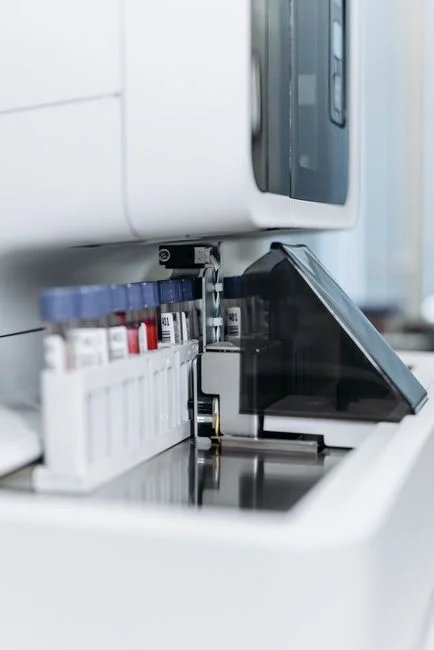
A standard Phase II ESA scoped to a chemicals-plant parameter list will return a clean bill of health on a battery plant with real electrolyte and NMP exposure. The Phase II scope of work for any SK On target must include the following parameter table, drawn from 2025-2026 cathode-coating and electrolyte-mixing process disclosures and the Korean NIER enhanced disclosure regime:
| Parameter | Source Stream | Threshold / Benchmark | Sampling Method |
|---|---|---|---|
| BOD, COD, TSS, pH | Standard suite | ~80% of regulator concern | 24-hr composite |
| Lithium (Li) | Electrolyte salt rinse | Any detection; export-control flag | 24-hr composite |
| Cobalt, Nickel, Manganese | NCM811 cathode rinse | Catalogue vs site influent | 24-hr composite |
| Fluoride | LiPF6 hydrolysis / HF | Headworks excursion = Phase II | Grab, multiple/day |
| Ammonia-N | Cathode precursor + binder | Site-specific vs permit | 24-hr composite |
| NMP (N-methyl-2-pyrrolidone) | Cathode coating condensate | RCRA U-listed under U359; >0.5 mg/L flagged | 24-hr composite |
| Total silica | Silicon-carbon anode rinse | Colloidal silica defeats bio | 24-hr composite |
| TOC | Binder + solvent load | Parallel to COD | 24-hr composite |
| Oil & grease | Pack assembly, coolant | 50-100 mg/L EPA auto-sector benchmark | Grab |
Specify 5-7 day minimum composite program; a single grab sample captures neither production-week variability nor chemical dosing cycles. For legacy sites, run parallel influent and effluent composite samples so that removal efficiency can be calculated directly. NMP solvent recovery condensate runs above 0.5 mg/L and is RCRA U-listed under U359, so spent NMP manifests must be requested as a standalone historical audit, not bundled with general hazardous-waste manifests. Pack-assembly lines add oil and grease at the 50-100 mg/L EPA auto-sector benchmark, and DAF micro-bubble pre-treatment must be evaluated for both cathode and pack streams. A primary clarifier achieving 60-70% TSS removal is the benchmark consistent with a properly operating biological train (Green Mark Engineering, 2025); anything materially below on a sustained basis is a process-control problem, not a sampling artifact. The output of the Phase II program feeds directly into an integrated MBR membrane bioreactor system scoping exercise if biological capacity is the bottleneck.
Asset-Condition Walk-Down: Nine Standard Items Plus Four SK On Overlays
The asset-condition walk-down is where the $9M retrofit gets caught, or doesn't. Run nine standard items: (1) design versus actual hydraulic loading in m³/day, (2) design versus actual organic loading in kg BOD/day, (3) age and last refurbishment of clarifier, aeration, MBR, and RO units, (4) last membrane replacement date, (5) MBR cassette age and supplier model, (6) blower and pump operating hours versus nameplate service life, (7) structural condition of concrete tanks under potentially acidic streams, (8) PLC and SCADA vintage where anything pre-2010 is functionally obsolete, and (9) SCADA data retention period where 90 days is unusable for trend analysis and 3+ years is the standard. MBR cassettes older than 7 years represent a near-term capex line of $420K-$1.8M that does not appear in the seller's maintenance budget (per MBR engineering guides, 2025), and a >15% variance between design and actual metal loading is a critical capacity-review trigger.
Layer four SK On overlays on top of the standard nine. First, NMP-recovery column packing life runs 5-7 years; a repack at year 6 is a near-term capex line the seller will not surface. Second, lithium-selective ion exchange resin exhaustion varies with influent Li loading, so verify cycle count and breakthrough history against the current production mix. Third, fluoride-resistant FRP tank lining condition — pinholes from HF attack compromise secondary containment and trigger RCRA corrective action with 18-36 month remediation timelines. Fourth, HF scrubber integrity for dry-room blowdown; scrubber media life is 3-5 years and replacement requires a process shutdown that should be priced into the post-close roadmap. For sludge dewatering on the metal-bearing hydroxide stream, the standard sizing points to a plate and frame filter press for metal-bearing sludge dewatering and an MBR membrane bioreactor module upgrade where biological capacity is the constraint.
Seven Hidden Liabilities That Routinely Surface After Signing
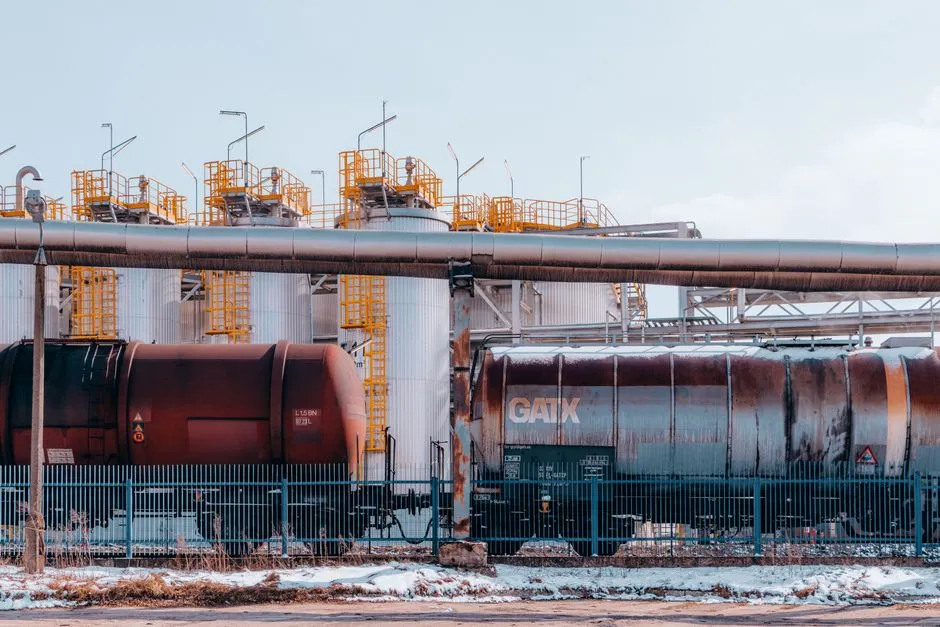
The risks that erode post-closing IRR rarely appear in the CIM. Surface seven items in Phase I and verify them in Phase II: (1) Phase I ESA availability and date — Phase II is mandated if any REC is identified; (2) on-site sludge lagoon volume, age, and characterization; (3) hazardous-waste manifests for the last 5 years; (4) PFAS or hexavalent chromium testing history, since ASTM E1527-21 explicitly excludes PFAS from the hazardous-substance definition and historical testing must be requested separately; (5) buried tank and underground piping registry; (6) off-site disposal contractor audit trail including license verification; and (7) historic operator non-compliance records from the regulator database.
The SK On overlay adds three battery-specific streams: spent NMP manifests under RCRA U359, spent lithium electrolyte manifests under universal waste or RCRA corrosivity rules, and Cu/Al hydroxide sludge characterization from the foil etching rinse stream. Hazardous sludge disposal runs $80-450/tonne in 2026 (HydropureWater field data, 2026), and an undocumented lagoon can represent 200-2,000 tonnes of working-capital exposure, or $16K-$900K of disposal cost alone. For SK On targets linked to the Hyundai Motor Group consolidated ESG reporting cycle, undisclosed findings force a reissued ESG disclosure within the next reporting window, which compresses the SPA negotiation timeline and lifts the reserve toward the upper end of the 2-8% band.
Reserve Sizing, SPA Carve-Outs, and the ASC 410-20 ARO
Apply the deal reserve formula: 80th percentile of cost range × probability of exceedance × years of historical non-compliance. For a 1,200 m³/day SK On cell plant with a 4-year BOD/COD non-compliance tail: $496/m³/day × 1,200 × 0.6 × 4 = $1.43M reserve floor, before NMP-recovery, MBR, and ZLD lines. Full ZLD retrofits run $5M-$15M in 2026, with lithium or copper recovery credits from a properly designed NMP-recovery and ion-exchange train offsetting 10-25% of capex. The environmental reserve band is 2-8% of enterprise value, with the upper end (6-8%) reserved for SK On cell-assembly targets carrying heavy-metal, electrolyte-salt, and NMP exposures with documented permit history issues. An ASC 410-20 ARO study is non-negotiable; the resulting liability must be booked at closing and flows through the purchase price adjustment, with the sludge tonnage cross-referenced from the Phase II report against the booked ARO (an 800t identified vs 200t booked gap is a typical $200K-$1M reserve gap).
| Retrofit Line | 2026 Cost Band | Trigger / Driver |
|---|---|---|
| MBR cassette replacement (7+ yr) | $420K-$1.8M | Cassette age > 7 yr |
| NMP-recovery column repack | $600K-$1.4M | Packing life 5-7 yr |
| HF scrubber media change | $350K-$900K | Media life 3-5 yr; shutdown reqd |
| FRP lining replacement | $280K-$1.1M | HF pinhole / RCRA corrective action |
| Li-selective IX resin swap | $220K-$650K | Cycle count / breakthrough |
| Full ZLD retrofit (RO + evap) | $5M-$15M | ESG / water-stress mandate |
| Hazardous sludge removal | $80-$450/tonne | 200-2,000 t lagoon exposure |
Seven SPA carve-outs are required, each tied to a specific deal-phase trigger: (1) environmental R&W survival 5+ years displacing standard 12-18 months; (2) specific environmental indemnity outside the general basket, not reliance on basket-and-cap; (3) 10-15% of purchase price held in escrow for 24-36 months; (4) permit-transfer cooperation covenant with seller obligations through the transfer date; (5) regulatory change cost-sharing for post-closing EU IED recast or Korea's strengthened 2024-2026 NMP and PFAS emission guidance; (6) Phase II ESA bring-down as a closing condition, not a post-closing deliverable; and (7) no MAE carve-out for pre-signing environmental findings. Specific indemnities sit outside the basket and cap, preserving buyer recovery against the full indemnity limit; the dollar gap between a specific indemnity floor and a basket-and-cap recovery is typically 3-7× over a 5-year survival period. For ZLD retrofit sizing, anchor capex to an industrial RO system for ZLD retrofit and an automatic chemical dosing system upgrade, both standard post-close roadmap items.
Frequently Asked Questions
How long does ETP due diligence take for an SK On factory acquisition?
6-12 weeks end-to-end: Phase I runs 2-4 weeks pre-signing and Phase II runs 4-8 weeks post-signing-pre-closing, with a parallel 90-180 day KOSAF pre-filing window for the Korean consent transfer. A Korean target with a grandfathered permit missing lithium as a parameter will add a 60-90 day parameter-amendment line on top of the base transfer.
What is the typical environmental reserve for an SK On cell-assembly plant?
2-8% of enterprise value, with the upper end (6-8%) used for plants carrying heavy-metal, electrolyte-salt, and NMP exposures and documented permit history issues. A 1,200 m³/day cell plant with a 4-year BOD/COD non-compliance tail maps to a $1.43M reserve floor at 80th percentile × 0.6 probability × 4 years before NMP-recovery and ZLD lines.
Does SK On need an ASC 410-20 asset retirement obligation study?
Yes, and it must be booked at closing and reflected in the purchase price adjustment. Cross-reference identified sludge tonnage in the Phase II report against the booked ARO; an 800t identified vs 200t booked gap is a typical $200K-$1M reserve gap that surfaces in the first post-closing audit.
Which Phase II parameters are SK On-specific?
Lithium, cobalt, nickel, manganese, fluoride, ammonia-N, NMP, TOC, and total silica, on top of the standard BOD/COD/TSS/pH/heavy-metals suite. Specify 24-hour composite sampling for COD, ammonia-N, and TOC, and grab samples for fluoride and pH to catch LiPF6 hydrolysis spikes at the ETP headworks.
When is Environmental Insurance cheaper than escrow?
When the target is ETP-heavy with a 5+ year remediation tail. Commission a 90-day post-signing Environmental Insurance (EIL) feasibility study alongside escrow sizing rather than treating them as alternatives, because EIL covers long-tail remediation that a 5-year R&W survival may not reach, and the combined cost is often lower than a 10-15% escrow holdback trapped for 24-36 months.