What a Package Sewage Treatment Plant for Pharmaceutical Actually Treats
A package sewage treatment plant for pharmaceutical manufacturing in 2026 is a skid- or containerised biological treatment system (typically A/O or MBR) sized to pharma-specific loads of 2,000–8,000 mg/L COD, 1,000–4,000 mg/L BOD, and 50–500 mg/L NH3-N, delivering effluent of COD ≤100–300 mg/L, BOD ≤30 mg/L, and NH3-N ≤5–10 mg/L. The 2024 Li et al. review of 229 Chinese pharma plants confirms that composite conventional systems are land-hungry, high-cost, and carbon-heavy — which is why packaged MBR/A/O units with optional AOP polishing are now the default for greenfield pharma capacity.
In practical terms, a "package" unit in 2026 is a factory-built, PLC-automated, skid- or containerised treatment block shipped to site with the headworks, biological core, and disinfection loop pre-piped and pre-wired. The WSZ underground A/O package sewage treatment plant typifies the format: 1–80 m³/h, buried below grade for landscaping, or trailer-mounted for mobile deployment. An MBR package wraps the same envelope around submerged PVDF membranes at 0.1 μm nominal pore size, with the option of adding an AOP or RO polish downstream for reuse.
What separates a pharma package from a municipal one is the influent. The 229-plant dataset behind the Li et al. (2024) review places typical pharma influent at COD 2,000–8,000 mg/L, BOD 1,000–4,000 mg/L, NH3-N 50–500 mg/L, TP 10–60 mg/L, TSS 500–3,000 mg/L, pH 4–9, and temperature 25–40°C. On top of that come pharmaceutical active compounds (PhACs), antibiotics, solvents, and antibiotic resistance genes (ARGs) at ng/L to μg/L concentrations (per the Emerging Contaminants review, S1). A municipal package running on acclimatised domestic biomass is not designed for that load envelope, and that is the first design decision a 2026 EPC buyer must lock in.
The package STP is therefore best understood as the "pre-treatment + secondary biological" stage inside a larger pharma effluent train, with polishing AOP/RO added downstream for reuse or tightest discharge. It is not a black box; it is a module inside a stack.
Process Train Inside a Packaged Pharma STP (Headworks to Disinfection)
The unit operations in a packaged pharma STP are the same as in a conventional plant, but each step is selected for pharma stress events: batch discharges, pH swings, solvent slugs, and high TDS from API synthesis. The 2026 reference train runs in six steps, and every step has a vendor-specifiable equipment choice that should appear as a separate line in the RFQ.
- Screening. A rotary mechanical bar screen at 2–5 mm aperture strips rags, packaging debris, and undissolved API solids before they reach pumps and membranes. Without it, downstream valves and MBR modules fail within months.
- Equalisation and pre-oxidation. An EQ tank sized to 8–24 h of average daily flow (Qavg) damps hydraulic and contaminant spikes. pH is corrected to 6.5–8.5, and free cyanide, sulfide, and residual chlorine are quenched with an automatic chemical dosing system for NaOH/H₂SO₄, NaClO, and FeSO₄ dosing.
- Primary clarification or DAF. A dissolved air flotation system (4–300 m³/h, 13 models) removes FOG, biomass, and high-COD suspended load. DAF is preferred over settling for emulsified API wastewater because emulsions do not settle cleanly.
- Biological core. This is the design choice. A/O contact oxidation (WSZ series) handles moderate loads at lower CAPEX. MBR (submerged PVDF, DF series flat sheet modules) handles tighter effluent, cuts footprint by roughly 60% versus equivalent A/O, and operates at 10–2,000 m³/day per packaged train.
- Disinfection. A chlorine dioxide generator (compliant with EPA, WHO, and EU 98/83/EC limits) is the workhorse for discharge. For reuse, a UV-C steriliser is chemical-free and effective against Cryptosporidium and Giardia — important when the effluent feeds a cooling tower or boiler.
- Sludge handling. A plate-and-frame filter press dewastes biological and chemical sludge to 25–35% dry solids, suitable for licensed hazardous-waste pickup rather than landfill.
Each of the six steps has a measurable design basis. Get the EQ tank wrong and the biomass in the biological core dies within a batch; get the screen wrong and the membranes get shredded. The package form factor does not remove the engineering — it concentrates it.
A/O Package vs MBR Package for Pharmaceutical Wastewater
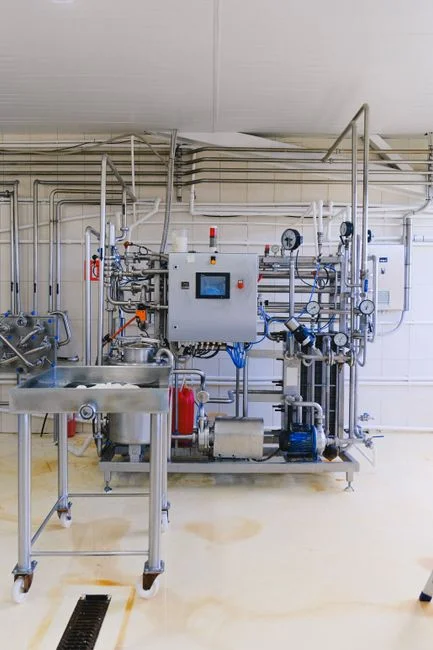
The A/O-versus-MBR decision is the most common fork a 2026 pharma buyer faces. The two technologies are not interchangeable: A/O wins on CAPEX and shock tolerance, MBR wins on effluent quality, footprint, and reuse compliance. The table below condenses the operating envelope; the prose that follows maps it onto plant reality.
| Parameter | A/O contact oxidation (WSZ) | MBR (DF series, submerged PVDF) |
|---|---|---|
| Effluent COD (mg/L) | 150–300 | ≤50–100 |
| Effluent BOD (mg/L) | ~30 | ≤5–10 |
| Effluent TSS (mg/L) | 20–30 | ≤1–5 (essentially zero) |
| Effluent NH3-N (mg/L) | 10–25 | ≤5 |
| Footprint vs A/O baseline | 1.0× | ~0.4× (60% reduction) |
| Module / unit capacity | 1–80 m³/h packaged | 10–2,000 m³/day; 80–225 m² per module, 32–135 m³/day per module |
| Energy intensity | 0.3–0.6 kWh/m³ | 0.5–0.9 kWh/m³ (membrane air scour dominates) |
| CAPEX profile | Lower | ~1.5–2.5× A/O at equal flow |
| Best fit | Discharge to sewer, intermittent duty, diluted pharma loads | Antibiotic / hormone APIs, reuse mandate, tight discharge, limited plot |
| ARG / PhAC removal | Limited | Supports ARG reduction when paired with AOP (Hou et al., 2019) |
Pick A/O when the plant is a greenfield with a budget ceiling, batch production means intermittent hydraulic load, or the receiving sewer has a lenient pretreatment rule (COD ≤300 mg/L). The WSZ underground A/O package sewage treatment plant buries below grade, freeing the plot for vehicle movement or landscaping, and tolerates feed interruptions of 12–24 h without biomass collapse.
Pick MBR when the waste stream contains antibiotic or hormone APIs, the local discharge limit is COD ≤100 mg/L, the plant has a water-reuse mandate (CIP wash, boiler feed, cooling-tower make-up), or the plot is too small for an A/O basin. The HydropureWater MBR membrane bioreactor with DF series PVDF flat sheet membrane modules delivers sub-100 μm filtration at 10–20× lower energy than external cross-flow, and supports simultaneous COD/NH3-N removal plus ARG reduction when followed by an AOP step (Hou et al., 2019).
Pick the hybrid when the 2024 Li et al. review's headline finding applies: composite trains win on residual-API compliance. A/O as a primary biological stage followed by an MBR polish gives the most robust performance envelope, at the cost of the largest CAPEX line item in the RFQ.
2026 Influent and Effluent Targets for Packaged Pharma STPs
Two numbers define the engineering envelope of a packaged pharma STP: the influent characterisation the unit is sized against, and the effluent targets the unit must hit to discharge or reuse. The table below consolidates both, with the compliance basis that a 2026 RFQ should reference line-by-line.
| Parameter | Influent range (pharma, 229-plant dataset, Li et al. 2024) | Effluent target — packaged A/O | Effluent target — packaged MBR | Compliance basis |
|---|---|---|---|---|
| COD (mg/L) | 2,000–8,000 | ≤300 | ≤50–100 | GB 8978-1996 Class 1; EU UWWTD 91/271/EEC; EPA categorical pretreatment |
| BOD (mg/L) | 1,000–4,000 | ≤30 | ≤5–10 | GB 8978-1996; EU UWWTD |
| NH3-N (mg/L) | 50–500 | 10–25 | ≤5 | GB 8978-1996 Class 1 ≤15; tighter EU/site-specific limits |
| TP (mg/L) | 10–60 | ≤1 | ≤0.5 (with biological P removal) | Site-specific; EU UWWTD sensitive catchment ≤2 |
| TSS (mg/L) | 500–3,000 | 20–30 | ≤1–5 | GB 8978-1996 ≤70; MBR achieves near-zero |
| pH | 4–9 (synthesis swings) | 6–9 | 6–9 | GB 8978-1996; EU UWWTD |
| Temperature (°C) | 25–40 | — | — | Design parameter, not regulated |
| Residual PhACs / APIs | ng/L–μg/L (S1) | Variable; partial | Non-detect with AOP/RO polish (S2) | Site-specific, EU watchlists |
Removal efficiencies from operating data: MBR delivers 95–99% COD, 98%+ TSS, and 80–95% NH3-N at HRT 6–12 h (HydropureWater MBR spec, pharma operating data 2024–2025). Where the receiving environment is sensitive or the plant has a reuse mandate, the polish step (chlorine dioxide, UV, ozone, Fenton, or RO) is the line that converts "compliant" into "reusable," and that distinction matters when water is a constrained input at a 2026 greenfield site.
Sizing, Footprint, and 2026 Cost Drivers for a Packaged Pharma STP
The sizing logic for a packaged pharma STP is direct: the unit is sized to the average daily flow, with a peak factor applied to the equalisation tank, not the biological core. Three rules of thumb carry the design.
Sizing. Pharmaceutical plants typically discharge 60–80% of their water intake as effluent, and 1 m³ of product generates 0.5–4 m³ of wastewater depending on synthesis route. A 50 m³/day API line with 70% discharge ratio translates to a 35 m³/day design flow. HydropureWater packages cover 1–2,000 m³/day, so the capacity match is rarely the constraint.
Footprint. An MBR package at 10–200 m³/day fits inside a 20-foot (6 m) container envelope — important for indoor or rooftop siting at capacity-constrained plants. An A/O package at 50–500 m³/day needs roughly twice the plot but can be buried below grade, with landscaping or vehicle access above.
CAPEX bands in 2026. Small MBR packages in the 10–50 m³/day range sit in the low-USD-five-figures to low-six-figures bracket; 200–500 m³/day A/O + MBR trains move into the mid-six-figures. These are project-dependent ranges, not list prices, and a vendor quoting a turnkey lump sum should be challenged on the boundary items: civil works, interconnecting piping, instrumentation, and commissioning.
Cost drivers to challenge. Membrane replacement frequency is the largest lifecycle line item — typically every 7–9 years for PVDF flat sheet modules. Chemical dosing (NaOH, H₂SO₄, NaClO, defoamer, CIP chemicals) runs 8–15% of OPEX. Sludge disposal as hazardous waste varies sharply by jurisdiction and must be priced as a per-tonne pickup. Aeration energy dominates at 0.3–0.6 kWh/m³, so blower selection and DO control strategy move the OPEX needle. Downstream, a reverse osmosis polish converts MBR effluent to reuse quality, but the high-pressure pump energy and membrane replacement cost must be in the OPEX model from day one.
OPEX win. PLC automation and remote monitoring have eliminated the dedicated operator from most 2026 packaged installations, and O&M contracts are increasingly shifting to performance-based fee structures where the operator carries biology and membrane-replacement risk.
Choosing a Supplier and Operating a Packaged Pharma STP in 2026
Academic reviews stop at the process diagram. The EPC buyer's job starts there. Five items de-risk vendor selection, and a 2026 RFQ should fail any supplier that cannot produce them on request.
Supplier checklist (10 items): (1) factory acceptance test (FAT) video for the specific skid being ordered; (2) membrane OEM traceability (PVDF resin source, nominal pore size, casting date); (3) PLC ladder-logic disclosure with I/O list; (4) CE / ISO 9001 / UL compliance documentation; (5) spare-parts lead time for membranes and dosing pumps (target ≤14 days for membranes, ≤7 days for pumps); (6) reference list of at least three operating pharma sites at similar influent; (7) on-site commissioning including biomass acclimation to API toxicity; (8) performance guarantee with liquidated damages tied to effluent COD/NH3-N; (9) O&M manual with preventive-maintenance schedule; (10) operator training plan including the Online COD Analyzer for Wastewater Treatment Plant: 2026 Engineering Guide instrumentation stack.
Common 2026 commissioning mistakes: skipping biomass acclimation to API toxicity (always budget 4–6 weeks of dead-band operation before COD guarantees apply), undersizing the equalisation tank, and omitting on-line COD and pH instrumentation. A 2026 performance-based O&M contract shifts the biology and membrane risk to the operator — see the Performance-Based Wastewater O&M Contracts: 2026 Engineering Guide for the contract structure. Lifecycle expectation for a well-maintained package MBR is 10–15 years of equipment life with membrane replacement at year 7–9; for an A/O package the equipment life is similar, with no membrane replacement but with periodic media top-up. Where the waste stream includes antibiotic or hormone APIs, the polish stack typically includes an activated carbon adsorber — the Activated Carbon Filter for Biopharmaceutical Wastewater: 2026 Engineering Guide covers selection and bed-life calculation. Discharge limits and 2026 compliance targets are summarised jurisdiction-by-jurisdiction in the China Wastewater Discharge Standards 2026: Complete Limits & Plant Design Guide, which is the reference for any RFQ that ships to or supplies from a China-based plant.
Frequently Asked Questions
What influent COD and BOD should a packaged pharma STP be sized for?
Pharma influent in 2026 typically runs 2,000–8,000 mg/L COD, 1,000–4,000 mg/L BOD, 50–500 mg/L NH3-N, and 500–3,000 mg/L TSS (Li et al., 2024, 229-plant dataset). A packaged MBR delivers effluent ≤50–100 mg/L COD; a packaged A/O delivers 150–300 mg/L COD.
What flow range can a packaged pharma STP cover?
Packaged MBR units cover 10–2,000 m³/day; packaged A/O units (including underground WSZ configurations) cover 1–80 m³/h. Both can be containerised for indoor or rooftop installation or buried below grade for landscaping above.
Can a packaged pharma STP remove antibiotics and antibiotic resistance genes?
An MBR alone achieves partial removal of antibiotics and ARGs. Combined with an advanced oxidation process (ozone, UV/H₂O₂, or Fenton) downstream, ARG and residual-API removal is significantly improved (Hou et al., 2019, Water Research). The full ARG and PhAC envelope is covered with an MBR + AOP train.
What is the expected equipment life and membrane replacement cycle?
A well-maintained package MBR runs 10–15 years; membrane replacement is typically scheduled at year 7–9 for PVDF flat sheet modules operating at 0.1 μm nominal pore size. A/O packages have similar equipment life with periodic biological-media top-up rather than membrane replacement.
Which 2026 discharge standards apply to a packaged pharma STP?
The three reference frameworks are GB 8978-1996 (China, Class 1 limits), EU Urban Waste Water Directive 91/271/EEC, and EPA categorical pretreatment standards for the United States. WHO Guidelines for Drinking-water Quality apply where the effluent is reused for boiler feed, CIP, or cooling-tower make-up. State Pollution Control Board (India) and local authority rules apply for Indian sites, and GCC authorities typically adopt EU UWWTD thresholds with site-specific tightening.