Why the Samsung SDI acquisition changes the wastewater scope
An operator change in a German battery plant is not a paperwork event — it re-opens the wastewater envelope. On 11 August 2026 Samsung SDI announced it had acquired GM's 49.99% stake in the SynergyCells joint venture in New Carlisle, Indiana, making the plant its first wholly-owned battery facility in North America, with an explicit pivot to energy storage system (ESS) production (source: samsungsdi.com, 2026-08-11). The same logic applies in Germany: a new operator on a brownfield site triggers a re-issuance or material-change notification under §16 BImSchG and a new water-law permit path under §57 or §58 WHG, because German law ties discharge rights to the permit holder, not the asset.
That re-permitting is amplified by Samsung SDI's stated environmental posture. The company operates an ISO 14001 environmental management system and an ISO 50001 energy management system, and joined the RE100 initiative in October 2022, committing to 100% renewable electricity across its operations (source: samsungsdi.com ESG page). For a German EHS manager, that translates into a corporate internal bar that sits above the statutory minimum: water reuse, material efficiency and product carbon footprint are reported externally, so a retrofit-only approach to a German plant is rarely acceptable to the parent. The active SAMSUNG SDI–Tesvolt supply relationship in Germany, covering the 20-foot SBB container with cells, modules and racks, also shows that ESS integration is a live part of any co-located German site (source: samsungsdi.com, 2025). In short: a 2026 acquisition is the moment when compliance scope, ESG disclosure scope and capex scope are negotiated at the same table.
The German and EU legal stack that governs battery-plant discharge
Battery-plant discharge in Germany is governed by a four-layer stack, and the EHS manager must read all four before sizing a single tank. The EU Industrial Emissions Directive 2010/75/EU is transposed into German law through the Bundes-Immissionsschutzgesetz (BImSchG) and the federal Water Resources Act (Wasserhaushaltsgesetz, WHG). The WHG sets the framework: §57 WHG covers direct discharge to a receiving water, §58 WHG covers indirect discharge to a municipal sewage treatment plant (Klärwerk) and triggers the Indirekteinleiter (indirect discharger) permit path. Beneath WHG sits the Abwasserverordnung (AbwV), the Wastewater Ordinance, which sets sector-specific minimum limits; Annex 31 of the AbwV is the part that applies to manufacture of primary cells, secondary cells and batteries. Federal-state authorities — Bezirksregierung, Landesamt für Umwelt or the equivalent — issue the WHG permit, while the municipal Entwässerungssatzung and the ATV/DVWK worksheet A 198 add stricter indirect-discharger limits on top of AbwV minimums.
Layered on top is the EU Battery Regulation 2023/1542 (corrected citation: Regulation (EU) 2023/1542, not 2023/1545), in force since 17 August 2023, with phased duties through 2027 covering collection, recycling efficiency and producer responsibility; those duties generate separate recycling-effluent handling requirements on any site that handles end-of-life cells. IED BAT conclusions apply where the site falls under Annex I of the IED, and the 2022 and 2024 BREF reviews for waste treatment and surface treatment using solvents tighten material-efficiency and water-reuse expectations that a battery plant cannot ignore.
| Layer | Instrument | What it controls | Authority |
|---|---|---|---|
| EU | Industrial Emissions Directive 2010/75/EU; EU Battery Regulation 2023/1542 | Permit framework, BAT conclusions; producer responsibility, recycling efficiency | European Commission; national transposition |
| Federal | BImSchG, WHG (§57 direct / §58 indirect), AbwV Annex 31 | Material-change notification, water permit, sector limits | Federal state water authority |
| State | Landeswassergesetz, state implementation decrees | Receiving-water protection, low-flow dilution, monitoring | Bezirksregierung, Landesamt |
| Municipal | Entwässerungssatzung, ATV/DVWK A 198 | Indirekteinleiter limits, hydraulic capacity, pre-treatment standards | City / Klärwerk operator |
AbwV Annex 31 and IED BAT-AEL: the actual numbers a Samsung SDI plant must meet
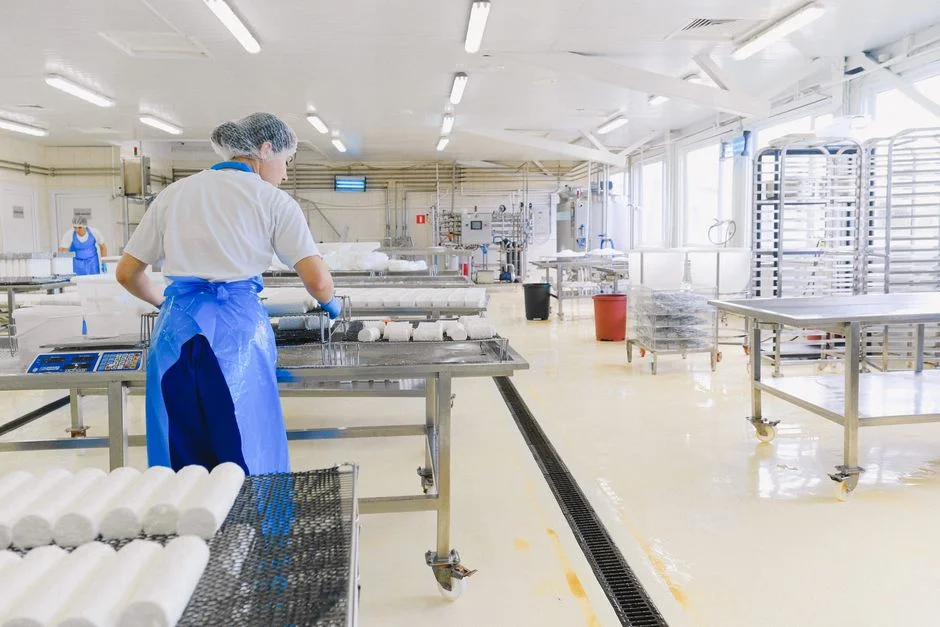
AbwV Annex 31 covers wastewater from manufacture of primary cells, secondary cells and batteries, and its scope reaches into electrode coating, electrolyte filling, formation cycling and module/pack assembly — every stream that touches solvent, fluoride or trace metals. In practice, German permits for cell plants draw the parameter band from Annex 31 and tighten it through state notice and municipal bylaw; the typical envelope is pH 6.5–9, COD 150–300 mg/L at the discharge point, sulfate, fluoride, zinc, copper, nickel, lead, lithium, total nitrogen, and AOX (adsorbable organically bound halogens). Indirect-discharger limits in the Entwässerungssatzung are routinely 20–50% stricter than AbwV minimums for heavy metals and AOX, on top of any municipal surcharge for chloride or sulfate that would damage sewer corrosion profiles or Klärwerk biology.
Where the site falls under IED Annex I, the BAT-AEL for the Surface Treatment Using Solvents BREF (STM BREF, 2024 conclusions) is the closest published reference for coating-line organic emissions and wastewater; the 2024 Waste Treatment BREF raises material-efficiency and water-reuse expectations that a battery plant must benchmark against, even where the strict BAT-AEL does not bind. For any site potable reuse, the EU Drinking Water Directive 98/83/EC sets the parameter list the reuse loop must be designed to meet; a chlorine dioxide generator for reuse-loop disinfection is the typical final barrier on that loop.
| Parameter | AbwV Annex 31 typical band | Indirekteinleiter (A 198) practice | Source / driver |
|---|---|---|---|
| pH | 6.5–9.0 | 6.5–9.0 (sometimes 7.0–8.5) | AbwV Annex 31 |
| COD | 150–300 mg/L | Municipal surcharge up to 20% | AbwV Annex 31 + A 198 |
| Fluoride (F⁻) | ≤ 20–50 mg/L site-dependent | Tighter via state notice | Electrolyte hydrolysis (LiPF6) |
| Sulfate (SO4²⁻) | ≤ 400–600 mg/L | Often ≤ 200 mg/L for sewer corrosion | AbwV + municipal |
| Zinc, copper, nickel, lead | mg/L range per Annex 31 | 20–50% stricter | AbwV + Indirekteinleiter |
| Lithium | Increasingly parameterised | Local notice | State water authority guidance |
| AOX | ≤ 1 mg/L class band | Tighter via A 198 | Solvent-bearing streams |
| Total nitrogen | Site-specific | Klärwerk load-dependent | Formation rinse water |
Direct versus indirect discharge — which route Samsung SDI should choose
Two discharge routes are available, and the choice changes the engineering envelope, the capex profile and the permitting clock. Direct discharge under §57 WHG sends treated effluent to a receiving water (river or lake) under a permit issued by the federal-state water authority, and the limit values are tied to low-flow dilution calculations and the BAT-AEL envelope; the operator carries the full treatment chain on site. Indirect discharge under §58 WHG sends pre-treated effluent to a municipal Klärwerk under an Indirekteinleiter permit and the local Entwässerungssatzung; the Klärwerk provides biological polishing, which lets the operator avoid the full BAT-AEL envelope on site but locks the operator into municipal pre-treatment standards and hydraulic capacity.
Most German gigafactory sites pursue indirect discharge because it is faster to permit, the Klärwerk absorbs shock loads and biological polishing, and the local water authority tends to view it as the preferred hierarchy under WHG. The trade-off is real: direct discharge costs more in on-site treatment capex (full BAT-AEL polishing, often including RO and AOX removal) but removes dependence on municipal hydraulic capacity and on municipal enforcement of pre-treatment bylaws.
| Dimension | Direct discharge (§57 WHG) | Indirect discharge (§58 WHG) |
|---|---|---|
| Permit issuer | Federal-state water authority | Federal-state + municipality (Indirekteinleiter) |
| Receiving medium | River / lake | Municipal sewer → Klärwerk |
| On-site treatment scope | Full BAT-AEL polishing | Pre-treatment to municipal limits |
| Capex profile | Higher (RO, AOX, fluoride polish) | Lower (biology at Klärwerk) |
| Permit timeline | Longer (low-flow, dilution, BAT) | Shorter, but constrained by Klärwerk capacity |
| Operational risk | Self-managed, less external dependency | Dependent on municipal bylaws and sewer capacity |
Process wastewater streams a German battery plant actually produces
Each unit operation on a cell line produces a different wastewater fingerprint, and the EHS manager must map floor chemistry to stream before sizing any unit. Electrode coating wastewater carries N-methyl-2-pyrrolidone (NMP) and PVDF binder; COD runs high, biodegradability is poor until NMP is recovered, and the standard route is vacuum distillation recovery of NMP followed by biological polishing. Electrolyte filling and formation wastewater contains LiPF6, carbonate solvents, fluoride and trace HF; pH swings are wide and the fluoride load must be precipitated before discharge. Module and pack assembly wastewater is lower volume, mostly rinse water with trace metals and oil, and is amenable to DAF system for battery-plant wastewater pre-treatment followed by chemical precipitation. ESS container wash-down and SBB commissioning water, relevant given Samsung SDI's SBB is a 20-foot container with battery cells, modules and racks, is low-contamination and can be segregated for reuse if the plant is co-located with an on-site ESS integration.
A typical water balance for a German gigafactory runs 1.2–1.6 m³ of process wastewater per kWh of cell capacity annually, plus 0.3–0.5 m³ of sanitary wastewater per employee per shift; segregation at source is the single most cost-effective decision in the train, because mixing fluoride-bearing and NMP-bearing streams forces tighter on-site removal and pushes the operator out of the indirect-discharge comfort zone.
Recommended treatment train for compliance and reuse
The train below translates AbwV Annex 31, the municipal A 198 envelope and Samsung SDI's RE100 water-stewardship posture into a process line the procurement team can size and install. Step 1 is source segregation with a rotary mechanical bar screen for headworks protection at the headworks to protect downstream units from solids and packaging debris. Step 2 is equalisation and pH neutralisation using automatic chemical dosing for fluoride precipitation and pH control, with calcium chloride added to drive fluoride below the AbwV expectation. Step 3 is DAF or lamella clarification to remove suspended solids, oils and metal-hydroxide flocs. Step 4 is a MBR system for COD and ammonia reduction in a small footprint, producing near-reuse effluent and decoupling the biology from the hydraulic profile. Step 5 is polishing with activated carbon for AOX and trace organics, followed by UV or chlorine dioxide for disinfection if any water enters a reuse loop. Step 6 is optional RO for process-water reuse; this is where RE100 and ISO 46001 water-stewardship targets become engineering deliverables rather than poster commitments. Sludge handling closes the loop with a plate and frame filter press for hydroxide sludge dewatering prior to licensed disposal as a metal-bearing waste.
For discharge-route selection, the operational rule is straightforward: if the site is connected to a municipal Klärwerk with sufficient hydraulic capacity, run for indirect discharge and stop at MBR plus carbon polish; if the site must hold a §57 WHG direct-discharge permit, add RO and tighten AOX polishing to meet the BAT-AEL envelope. Either way, NMP recovery by vacuum distillation should be designed in upstream of the biological stage — it is cheaper to recover solvent than to destroy it, and it cuts the COD load on the MBR by an order of magnitude.
Permit timeline and ESG reporting for a 2026 acquisition
Permits and ESG reporting must move on parallel tracks, not in series. Pre-acquisition, the deal team needs a permit review of every BImSchG and WHG permit on file, an operator-change notification under §16 BImSchG, and a clean statement of any outstanding enforcement orders. Months 0–6 are for filing a Vorbescheid (preliminary decision) on capacity or process change, notifying the state water authority of the operator change, and confirming the Indirekteinleiter contract with the local Klärwerk including hydraulic capacity. Months 6–18 cover detailed engineering, baseline monitoring, BAT-AEL gap analysis, and water-reuse design aligned to RE100 and ISO 46001. Ongoing obligations are annual wastewater reporting to the state authority, quarterly self-monitoring per the permit schedule, and integration of the site into Samsung SDI's ISO 14001 EMS and ESG disclosures.
For EHS teams used to AZPDES or CPCB/SPCB permitting, the German IED + WHG + AbwV stack is denser and more prescriptive; the Roche Arizona acquisition wastewater compliance guide lays out the AZPDES contrast for the same M&A moment. The Kimper mining and metals pretreatment limits guide is a useful reference on how indirect-discharger bylaws add parameters on top of federal minimums, and the Mombasa data center cooling blowdown treatment in Mombasa guide is a useful reference for reuse-loop design under water-stress conditions — all three methods carry over to a German battery plant once the legal stack is mapped.
Frequently Asked Questions
Does a Samsung SDI plant in Germany need an IED permit?
Yes, where the installation exceeds the capacity thresholds in Annex I of the EU Industrial Emissions Directive 2010/75/EU. The applicable BAT conclusions (notably the STM BREF for surface treatment using solvents and the 2024 Waste Treatment BREF) document the emission levels the permit must reflect, and the BImSchG procedure is the vehicle for issuing that permit.
What are the standard AbwV limits for battery-cell manufacturing wastewater?
AbwV Annex 31 sets the federal minimum band — pH 6.5–9, COD 150–300 mg/L, plus fluoride, sulfate, zinc, copper, nickel, lead, lithium, AOX and total nitrogen. Indirekteinleiter permits under §58 WHG and ATV/DVWK A 198 routinely tighten heavy metals and AOX by 20–50% on top of the AbwV band.
Can a battery plant discharge to a municipal Klärwerk in Germany?
Yes, under §58 WHG with an Indirekteinleiter permit, subject to the municipal Entwässerungssatzung and A 198 limits. The operator must demonstrate pre-treatment to the municipal standards and stay within the Klärwerk's hydraulic and biological capacity.
How does the EU Battery Regulation 2023/1542 affect on-site wastewater?
Regulation (EU) 2023/1542 sets producer-responsibility and recycling-efficiency duties that translate into on-site handling requirements for any recycling effluent, including collection logistics, sorting residues and treatment of black-mass processing wastewater where end-of-life cells are handled.
What treatment train is typical for NMP and fluoride wastewater in a German gigafactory?
NMP is recovered by vacuum distillation upstream of the biological stage, fluoride is precipitated with calcium chloride after pH adjustment, suspended solids and metals are removed by DAF, COD and ammonia are handled by an MBR, AOX and trace organics are polished on activated carbon, and RO is added for reuse loops. Sludge is dewatered on a plate and frame filter press before licensed disposal.