
What Changes on Day One of a Roche Acquisition in Arizona
When Roche acquires an Arizona plant, the Clean Water Act (33 U.S.C. §§ 1251 et seq.) and Arizona's AZPDES, Aquifer Protection Permit (APP), and pretreatment programs all trigger at closing. The new operator must file an AZPDES name-change transfer within 30 days, re-issue any APP, enroll in the local POTW pretreatment program if not already covered, and, where applicable, design the on-site train to meet Advanced Water Purification log-reduction targets of 13-log enteric virus, 10-log Giardia, and 10-log Cryptosporidium under Ariz. Admin. Code tit. 18, § R18-9.
The federal CWA baseline does not pause for the deal. Point-source discharge to waters of the United States still requires an NPDES authorization, and Arizona implements that program through AZPDES. A change in the controlling entity does not exempt the facility from those baseline obligations; it only changes who signs the forms and who holds the compliance liability. The 30-day AZPDES name-transfer deadline is anchored in 40 CFR § 122.61 — miss it, and the underlying permit auto-terminates, leaving the new operator discharging without authorization, which is a strict-liability violation regardless of intent.
Four state-level triggers activate the moment the asset transfers. First, the AZPDES individual permit must be amended to reflect the new operator within 30 days. Second, an APP issued under Ariz. Admin. Code tit. 18, ch. 9 must be re-issued or administratively amended because Arizona treats a controlling-entity change as a re-issuance event, not a simple transfer. Third, if the plant discharges to a sanitary sewer, the new operator must submit a new Industrial Wastewater Discharge Permit application to the local POTW — that permit does not transfer with the asset. Fourth, where the underlying federal NPDES permit is supported by a Section 401 state water-quality certification, the certification has to be reviewed for continued applicability under the new operator.
The distinction between "transfer" and "re-issuance" is the most common diligence gap. An AZPDES permit can move from one operator to another through an administrative name change. An APP, by contrast, is re-evaluated against the new responsible party's technical and financial capacity, the new Best Management Practices plan, and the 180-day pre-construction notice requirement if process changes are contemplated. Treating the APP as a simple transfer is a recurring source of post-close enforcement risk in pharma buyouts.
ADEQ Permits That Move With the Plant — and the Ones That Don't
ADEQ issues roughly a dozen permit families that can attach to a pharmaceutical manufacturing site, and they do not all behave the same way at closing. The AZPDES individual permit is the cleanest case: it transfers administratively via Form 2A or 2S, and ADEQ issues an administrative amendment. The reporting window is 30 days from the change in ownership, and the new operator inherits the existing effluent limits, monitoring frequencies, and compliance schedule.
The APP (Ariz. Admin. Code tit. 18, ch. 9) is more demanding. It is issued to the facility, but a controlling-entity change triggers re-issuance: a new Best Management Practices plan, confirmation of 180-day pre-construction notice if the treatment train is being modified, and a new financial-assurance review. Multi-Sector General Permit (MSGP) coverage for industrial stormwater requires a re-Notice of Intent submittal under the new operator within the timeframe specified by the current MSGP — coverage is operator-specific, not facility-specific.
POTW pretreatment does not transfer at all. An Industrial Wastewater Discharge Permit from the City of Phoenix, Tucson Water, or the City of Mesa is issued to a specific discharger; a new application is required, and the local limits can shift even if the underlying POTW is unchanged. The Advanced Water Purification (AWP) permit under § R18-9-C816 is the most operator-tied of all: it is issued to the Advanced Water Purification Responsible Agency (AWPRA), and as of October 2025 ADEQ is still in the implementation phase (ADEQ, 2025a).
| Permit | Authority | Transfer or Re-issue? | Deadline / Window |
|---|---|---|---|
| AZPDES Individual Permit | ADEQ / 40 CFR § 122.61 | Administrative name change (Form 2A / 2S) | 30 days from ownership change |
| Aquifer Protection Permit (APP) | Ariz. Admin. Code tit. 18, ch. 9 | Re-issuance; new BMP plan | 180-day pre-construction notice if modified |
| Multi-Sector General Permit (MSGP) | ADEQ / EPA | Re-NOI under new operator | Per current MSGP terms |
| POTW Industrial Wastewater Discharge Permit | Local sewer authority | New application required | Before discharge under new operator |
| AWP Permit (§ R18-9-C816) | ADEQ | Issued to AWPRA — full application | Per ADEQ implementation schedule |
For a parallel compliance breakdown tied to a different pharma buyer, the Novartis Arizona acquisition compliance guide walks through the same trigger map. Outside Arizona, the Roche Texas acquisition compliance guide addresses TCEQ transfer mechanics for a comparable deal.
Mapping Arizona's Reuse Classes to a Pharma Effluent Train
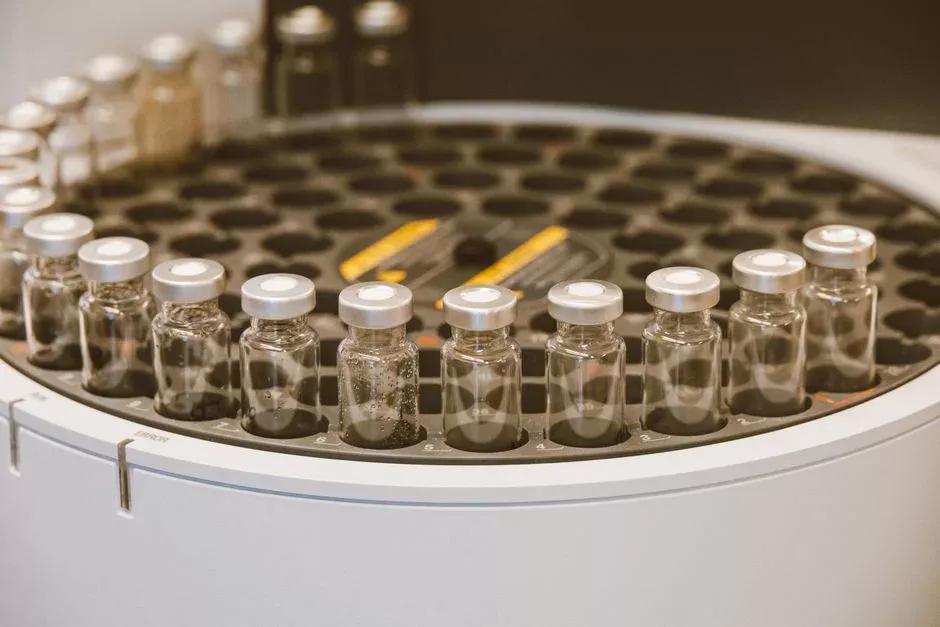
Ariz. Admin. Code § 18-11 defines four reclaimed-water classes (A+, A, B+, B) keyed to pathogen control and end use. For a pharmaceutical plant evaluating on-site reuse for closed-loop cooling, boiler feed, or vehicle/equipment washing, the Class A+ envelope is the practical target. The numeric limits in that class are tight, but they map cleanly onto proven unit operations.
Class A+ requires turbidity ≤2 NTU as a 24-hour average and ≤5 NTU at any time, measured after filtration and immediately before disinfection. MBR effluent followed by a hollow-fiber ultrafiltration polish reliably delivers this range (HydropureWater field data, 2026). The total coliform requirement is the binding constraint: 0 organisms/100 mL in four of the last seven daily samples, with a single-sample maximum of ≤23 organisms/100 mL. That limit is not achievable by chlorination alone at the cell densities typical of secondary effluent; it requires either a validated ClO₂ or UV dose after filtration. Class A+ also requires a 5-sample geometric mean of <10 mg/L for fecal coliform, supporting closed-loop cooling and boiler feed reuse. The viral requirement — no detectable enteric virus in 4 of the last 7 monthly samples — adds a third barrier.
Class B+ is a step down: <200 organisms/100 mL in 4 of 7 daily samples and <800 organisms/100 mL single-sample max, intended for dust control, soil compaction, and concrete mixing. It is reachable with chlorination alone, but most pharma EHS leads push for Class A+ by default to preserve optionality for higher-value reuse. The recommended train is MBR (submerged PVDF) → UF (0.03 μm) → ClO₂ or UV for Class A+ compliance, with online turbidity and SCADA trending required to defend the log-reduction credits.
| Class | Turbidity | Total Coliform | Fecal Coliform | Typical Unit Operations |
|---|---|---|---|---|
| A+ | ≤2 NTU (24-hr avg); ≤5 NTU any time | 0 org/100 mL (4 of 7 daily); ≤23 org/100 mL single | <10 mg/L (5-sample geo mean) | MBR + UF + ClO₂ or UV |
| A | ≤2 NTU (24-hr avg); ≤5 NTU any time | 0 org/100 mL (4 of 7 daily); ≤23 org/100 mL single | — | Filtration + ClO₂ or UV |
| B+ | — | <200 org/100 mL (4 of 7); <800 org/100 mL single | <10 mg/L (5-sample geo mean) | Chlorination alone (not preferred for pharma) |
| B | — | <200 org/100 mL (4 of 7); <800 org/100 mL single | — | Chlorination alone |
For the upstream biological step, a submerged PVDF MBR membrane bioreactor system provides the mixed-liquor separation that drives the downstream numbers. The downstream barrier should be a hollow-fiber ultrafiltration system at 0.03 μm nominal pore size to lock the turbidity envelope before disinfection.
Advanced Water Purification (AWP) — When the Plant Is a Future Direct Potable Reuse Source
If the long-term plan is aquifer recharge or surface-water augmentation rather than on-site reuse, the AWP framework under Ariz. Admin. Code tit. 18, § R18-9 applies. The log-reduction targets (LRTs) are 13-log enteric virus, 10-log Giardia lamblia cysts, and 10-log Cryptosporidium oocysts from raw wastewater to finished water (Ariz. Admin. Code tit. 18, § R18-9-E828). The QMRA benchmark is 1 infection per 10,000 people per year at an ingestion of 2.5 L/day, with dose-response models drawn from the AWP Technical Advisory Group (2023) and Pecson et al. (2022).
For total organic carbon, AWPRA applicants can use either a standard approach (AWTF effluent ≤2 mg/L TOC) or a site-specific approach requiring two validation procedures per § R18-9-F834(C). Each treatment barrier is credited with a minimum 0.5 and a maximum 6.0 validated log-reduction value per pathogen. Blending is explicitly ineligible for credit, and any credited barrier must be continuously tracked by a SCADA online monitoring system for surrogates and operational parameters.
The October 2025 implementation status matters for the deal timeline. ADEQ is still working on the compliance-demonstration protocols, and future revisions to the rule may be required (ADEQ, 2025a). For a Roche acquirer, that means the AWP permit is live in rule but operationally fluid — engineering specs should reference the 2 mg/L TOC ceiling as a hard target while building flexibility for any rule revision. Disinfection capacity should be sized around an on-site chlorine dioxide generator sized to maintain CT credit across the full range of expected flow and temperature conditions.
Pretreatment, Sludge, and Pharma-Specific Overlaps

Local POTW limits across the Phoenix, Tucson, and Mesa service areas typically cap BOD at <250 mg/L, TSS at <250 mg/L, pH at 5–11, and oil & grease at <100 mg/L. Pharma-specific parameters layered on top include total nitrogen, sulfate, silver (from photographic or process washdowns), and adsorbable organically bound halides (AOX). These local limits are non-negotiable; a POTW can reject a new IWWD application outright if the proposed discharge would load the treatment plant beyond its design capacity, which is a real risk for high-strength API or fermentation effluent.
Sludge and hazardous-waste overlap is the part of the diligence that is most often missed. APP discharge to a surface impoundment triggers 40 CFR Part 503 biosolids handling and monitoring. API separators and DAF skimmings can classify as K-listed hazardous waste under RCRA if the feedstock contains spent solvents — K-listed codes are acute-hazard wastes, and misclassification is a strict-liability issue independent of the CWA permit. A dissolved-air flotation unit ahead of biological treatment handles the bulk of free oil and floating TSS, while a plate-and-frame filter press dewaters the resulting sludge to a cake solids profile that meets 40 CFR Part 503 disposal criteria.
For 90-day execution and commissioning visibility, the DCS system cost 2026 engineering breakdown is a useful I/O-counting reference when scoping the SCADA upgrade that AWP online monitoring requires.
90-Day Post-Close Compliance Timeline
The deal closes; the clock starts. The following week-by-week sequence is what an EHS director can hand to legal and operations as an executable plan.
Days 1–14: Notify ADEQ in writing of the ownership change. Submit the AZPDES transfer package (Form 2A or 2S) and the APP administrative amendment package. Open the dialog with the local POTW pretreatment coordinator; confirm whether a new IWWD application triggers a permit denial risk or a routine re-issue.
Days 15–45: File the new pretreatment application with the POTW. Re-submit the MSGP NOI under the new operator name. If AWP is in scope, audit the existing SCADA against the AWP SCADA online monitoring requirements and develop a gap list. Begin the 24-month initial source water characterization (ISWC) plan required for AWP applicants under § R18-9-C814(C)(3)(c).
Days 46–75: Run a baseline monitoring round across influent and effluent for BOD, TSS, total nitrogen, sulfate, silver, and AOX. Validate the MBR + UF + ClO₂/UV train against the Class A+ numeric envelope on a side-stream basis.
Days 76–90: Commission any new unit operations. Train operations staff on the SCADA surrogate trends, the AWP monthly portal reporting, and the AZPDES DMR cadence. File the first post-close DMR and, if applicable, the first monthly AWP portal report. Confirm the annual report calendar (AWP reports due March 30 per § R18-9-E831).
Frequently Asked Questions
What wastewater permits must be transferred within 30 days of a Roche acquisition in Arizona?
The AZPDES individual permit name change must be filed within 30 days under 40 CFR § 122.61; the permit auto-terminates if the deadline is missed. The APP must be re-issued — not transferred — under Ariz. Admin. Code tit. 18, ch. 9, because Arizona treats a controlling-entity change as a re-issuance event with a new BMP plan and possible 180-day pre-construction notice.
Does a POTW pretreatment permit transfer automatically when Roche buys an Arizona plant?
No. An Industrial Wastewater Discharge Permit from the local sewer authority (e.g., City of Phoenix, Tucson Water) is issued to a specific discharger; a new application is required before the new operator discharges. Expect typical local limits of BOD <250 mg/L, TSS <250 mg/L, pH 5–11, and oil & grease <100 mg/L, plus pharma-specific parameters like total nitrogen, sulfate, silver, and AOX.
What log-reduction targets apply if the plant becomes an AWP source?
Ariz. Admin. Code tit. 18, § R18-9-E828 sets LRTs of 13-log enteric virus, 10-log Giardia, and 10-log Cryptosporidium from raw wastewater to finished water, based on a QMRA benchmark of 1 infection per 10,000 people per year at 2.5 L/day ingestion. Each credited barrier must deliver a minimum 0.5 and a maximum 6.0 validated log value, and blending is not eligible for credit.
What is the Class A+ reclaimed water turbidity and coliform limit in Arizona?
Class A+ requires turbidity ≤2 NTU (24-hour average) and ≤5 NTU at any time, measured after filtration, plus 0 organisms/100 mL total coliform in 4 of 7 daily samples with a ≤23 organisms/100 mL single-sample max. MBR plus UF at 0.03 μm followed by ClO₂ or UV is the typical train that meets this envelope.
When does ADEQ require the first AWP annual report?
Permittees must submit an annual AWP report to ADEQ by March 30 of each year under Ariz. Admin. Code tit. 18, § R18-9-E831, with monthly monitoring results filed through the AWP online portal per § R18-9-E830. Note that as of October 2025, ADEQ is still in the rule's implementation phase, and additional compliance-demonstration guidance may be issued.