
What India-Specific Wastewater Rules Apply to a Rivian Plant Acquisition
When a foreign EV acquirer takes over an Indian manufacturing plant in 2026, the buyer inherits unlimited, no-statute-of-limitations liability for all pre-existing water and contamination conditions, and must secure a fresh Consent to Operate (CTO) from the relevant State Pollution Control Board (SPCB) under Section 25 of the Water (Prevention and Control of Pollution) Act, 1974, before any discharge begins. The CTO is a state-board instrument and is not auto-transferred on equity sale, which is the structural parallel to Mexico's CONAGUA novation mechanic. The deal team should expect four parallel authorizations to be novated or re-issued at closing: (1) Consent to Establish (CTE) and (2) Consent to Operate (CTO) under the Water Act and the Air Act, (3) a Battery Waste Management Rules 2022 (BMWM) authorization covering cobalt, nickel, lithium, and fluoride-bearing streams, and (4) a Central Ground Water Authority (CGWA) NOC if the plant extracts ground water in an over-exploited or critical-notified block. The Hazardous and Other Wastes (Management and Transboundary Movement) Rules 2016 (HWMR) govern hazardous-waste authorization transfer on change of ownership and run in parallel to the BMWM authorization, and a foreign-owned buyer must establish an Indian subsidiary or project office with a PAN before any SPCB application can be admitted. The SPCB cannot issue a CTO to a non-existent Indian entity, which means closing and the formation of the buyer SPV are sequenced events; a foreign acquirer who closes before PAN issuance will operate illegally for every day between handover and CTO issuance.
| Permit | Issuing authority | Trigger / scope | Novation mechanism | Realistic timeline |
|---|---|---|---|---|
| Consent to Establish (CTE) | SPCB under Water Act Sec 25 / Air Act Sec 21 | New or expanded process lines | Fresh application by new entity; not auto-transferred | 60–120 days |
| Consent to Operate (CTO) | SPCB under Water Act Sec 25 / Air Act Sec 21 | Operating discharges to stream, land, or CETP | Form XIII application; CTO re-issued to buyer's PAN | 90–180 days |
| BMWM Authorization 2022 | SPCB (MoEFCC framework) | Cell coating effluent with Co/Ni/Li/F | Authorization transfer on change of ownership | 60–90 days |
| CGWA NOC (ground water) | Central Ground Water Authority via state agency | Extraction in over-exploited / critical blocks | Fresh NOC to new entity; existing NOC lapses on equity change | 60–120 days |
Indian Wastewater Standards Versus the Mexican NOM Precedent
CPCB Schedule VI "General Standards for discharge of effluents" are the structural analog to Mexico's NOM-001-SEMARNAT-2021 for water-body discharge, with hard numerical ceilings the deal team can paste into a rep & warranty: BOD 100 mg/L, COD 250 mg/L, TSS 100 mg/L, oil & grease 10 mg/L, total nitrogen 100 mg/L, and pH 5.5–9.0 (per CPCB Schedule VI). For CETP discharge, Schedule II and the SPCB-specific inlet norms are the analog to NOM-002-SEMARNAT, and they are typically stricter than Schedule VI on certain parameters; CETP inlet norms routinely include TDS ceilings of 1,000–2,100 mg/L and fluoride ceilings of 2 mg/L, with the exact figure negotiated against the receiving CETP's own consent order. The Indian receiving-body compliance risk is the direct parallel to Mexico's 32% national compliance benchmark; the NITI Aayog Composite Water Management Index and CPCB's own 2024–2025 CETP audits have repeatedly flagged that a large fraction of India's industrial CETPs are either non-operational, under-performing, or operating on expired consent, which converts the CETP discharge contract from an administrative filing into a closing condition. Unlike Mexico, India has no single federal ground-discharge standard; discharge to land or stream falls under SPCB consent-specific limits layered on top of CPCB's ground water quality discharge schedule. The consent order itself is the binding numerical standard for any given plant, and the limits inside it are negotiated, not inherited, which means the engineering team should size the train against the values the SPCB is likely to write, not against a generic national ceiling. The structural difference a deal team must internalize is that Mexico operates under a unified NOM regime with a single federal inspection body (SEMARNAT), while India runs two parallel statutes (Water Act 1974, Air Act 1981) with state-level enforcement and at least four rule layers (HWMR 2016, BMWM 2022, PWM 2016 as amended in 2022, and the CPCB guidelines themselves), so the count of authorizations to novate is higher in India, not lower.
The Four High-Impact Wastewater Streams at a Rivian India Plant
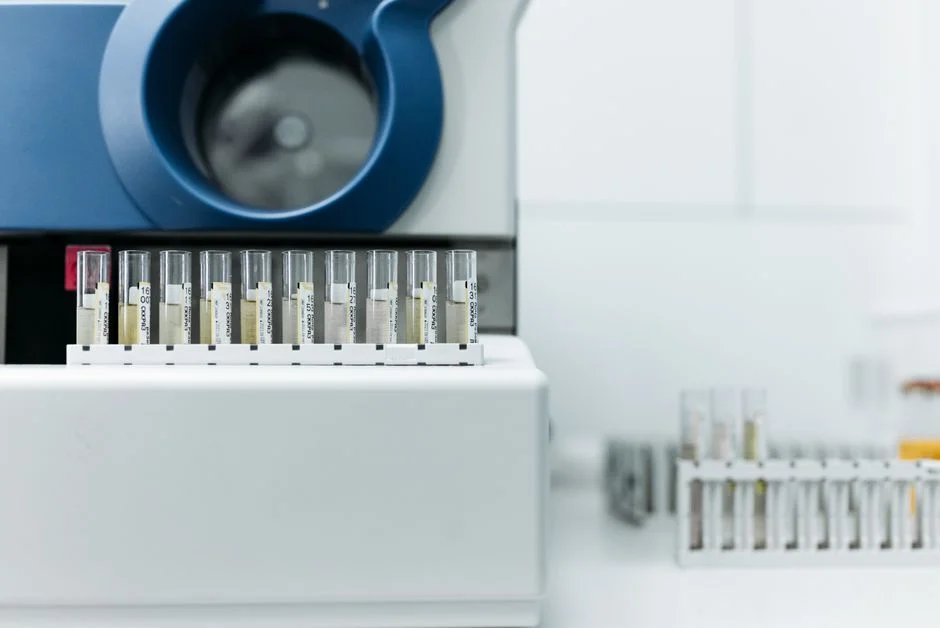
A Rivian-class EV plant in India generates four high-impact wastewater streams that the engineering team must size against CPCB Schedule VI plus the receiving CETP's inlet norms. Battery cell coating and formation contributes trace cobalt, nickel, and lithium together with fluoride and a meaningful COD load; fluoride is the India-specific risk because most SPCBs apply a 2 mg/L discharge ceiling and the BMWM Rules 2022 require a separate manifest system for cobalt, nickel, and lithium-bearing waste. Paint shop effluent carries high TSS from booth overspray, VOCs partitioned into the water-wash curtain, and codispersed oils that drive a DAF pre-treatment unit ahead of equalization, with a typical DAF duty range of 4–300 m³/h for free and emulsified oil removal. Stamping and body-in-white contributes oils, greases, and suspended solids from drawing and stamping lubricants at free + emulsified oil concentrations typically in the 50–500 mg/L range, and the standard pre-treatment is an emulsion-breaking DAF ahead of the equalization basin. Utilities — cooling-tower blowdown, RO reject, and boiler blowdown — concentrate TDS, often to 2,000–5,000 mg/L, with silica and hardness that drive the reuse-versus-discharge decision and ultimately decide whether the capex line favors a dissolved air flotation (DAF) system for paint shop and stamping pre-treatment paired with an MBR or a full RO polish loop.
| Stream | Key parameters | CPCB Schedule VI ceiling | Typical CETP inlet norm | Pre-treatment unit |
|---|---|---|---|---|
| Battery cell coating & formation | Co, Ni, Li, F⁻, COD | F⁻ not separately listed; metals per schedule; COD 250 mg/L | F⁻ ~2 mg/L; COD 1,000 mg/L inlet | Chemical precipitation + ion exchange for F⁻ |
| Paint shop | TSS, VOCs, codispersed oils, paint solids | TSS 100 mg/L; O&G 10 mg/L | TSS 100–600 mg/L inlet; O&G 10–20 mg/L inlet | Coagulation/flocculation → DAF → media filter |
| Stamping & body-in-white | Oils, greases, suspended solids, drawing lubricant | O&G 10 mg/L; TSS 100 mg/L | O&G 10–20 mg/L inlet | Emulsion-breaking DAF → equalization |
| Utilities (cooling tower, RO reject, boiler) | High TDS (2,000–5,000 mg/L), silica, hardness | TDS not in Schedule VI (stream-specific) | TDS 1,000–2,100 mg/L inlet; fluoride by state | UF/RO polishing or chemical softening for silica |
Treatment Train Sizing for a Brownfield Indian EV Plant
The default brownfield train for an Indian Rivian plant is rotary bar screen → DAF for oils, greases, and TSS → equalization basin → MBR membrane bioreactor for COD/BOD reduction and reuse-loop feed → chemical precipitation for cobalt, nickel, and lithium → fluoride-specific ion exchange or precipitation → industrial RO polishing for water reuse and high-TDS utility blowdown management with a multi-media filter ahead of the RO train to drop the Silt Density Index below the membrane manufacturer's feed limit. The headworks should be protected by a rotary mechanical bar screen for headworks protection sized to the plant's peak hourly flow. Anchor specs the engineering team can paste into a capex worksheet: MBR modules typically deliver 10–2,000 m³/day per skid with roughly 60% smaller footprint than conventional activated sludge, which matters on the space-constrained Indian brownfield sites that EV acquisitions typically inherit (HydropureWater product data, 2026); DAF units cover 4–300 m³/h with automatic skimming, suiting paint-shop and stamping streams specifically. Genesis Water Tech's 2026 case data on Mexico shows industrial firms are retrofitting rather than building greenfield, and the same logic applies in India where most acquisition targets are operational brownfields with a partial legacy train to upgrade, not a clean slab (Genesis Water Tech, 2026). Sludge dewatering downstream of this train typically uses a plate-and-frame filter press or decanter centrifuge, because the HWMR 2016 manifest rules for metal-bearing sludge require a defined handling chain back to a TSDF. The capex line item should be sized for reuse at installation, because retrofitting a treatment train later to add a polishing loop costs roughly 30–50% more than installing it during the initial build-out, a quotable figure the deal team can use against the CFO.
Ten-Item Data Room Checklist for the Indian Closing
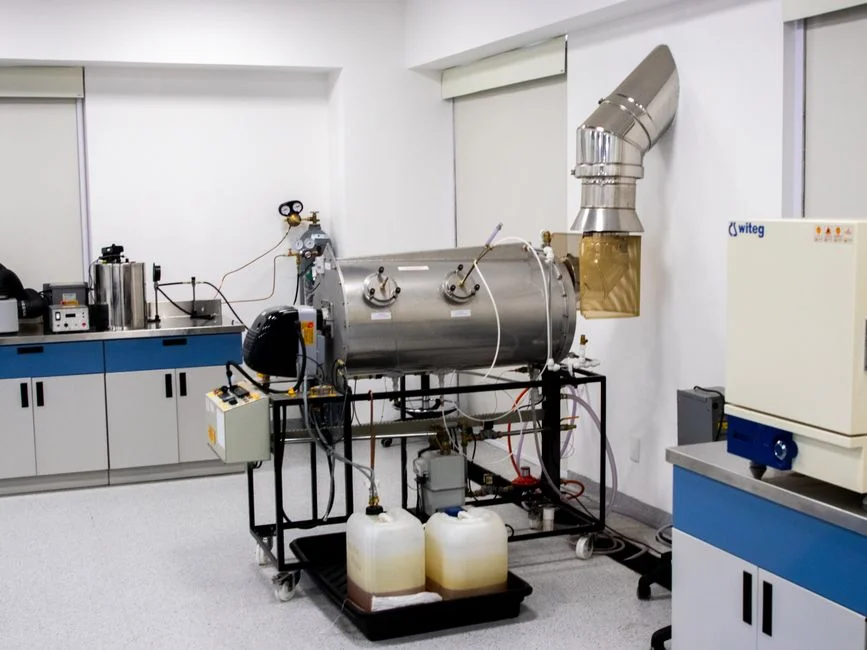
The M&A team should paste the following ten items into the data room request and tie each to a specific rep & warranty in the share purchase agreement. The CETP compliance check is the most overlooked item and is the India-specific parallel to the 32% Mexican non-compliance finding; the BMWM authorization item is India-specific and has no Mexican equivalent, and is a discrete reason to extend the data room from the precedent set in the Roche pharmaceutical plant acquisition compliance precedent in India.
| Item | Inherited risk | Indian statute / rule | Rep & warranty to require |
|---|---|---|---|
| 1. Phase I ESA with historical use review | Missed historical source of liability | General EHS due diligence | Seller R&W on completeness of historical use disclosure |
| 2. Phase II ESA — soil & groundwater sampling | Inherited cleanup liability | CPCB Soil/Sediment Guideline 2019 | R&W on no exceedance; specific indemnity for known exceedances |
| 3. State water commission / CGWA title search | Loss of extraction right at closing | CGWA NOC guidelines; state groundwater acts | R&W on validity and assignability of existing NOC |
| 4. Last 3 years SPCB Form 26 / Form XII self-monitoring returns | Inherited non-compliance fines | Water Act Sec 25; SPCB consent order | R&W on no material excursion; indemnity for prior fines |
| 5. Open show-cause notices and prosecutions under Water Act & HWMR 2016 | Fines transfer to buyer on closing | Water Act Sec 25/26; HWMR 2016 | Full disclosure schedule; specific indemnity |
| 6. BMWM authorization status and prior-year returns | No lawful handling of Co/Ni/Li/F waste | BMWM Rules 2022 | R&W on valid authorization; manifest reconciliation |
| 7. Closure status of historical hazardous-waste storage under HWMR Rule 8 | Unlimited liability for pre-closing waste | HWMR 2016 Rule 8 | Closure certificate or R&W on path to closure |
| 8. Receiving CETP consent status (own SPCB CTO) | No lawful discharge path if CETP is non-compliant | Water Act Sec 25; CPCB CETP audits | Closing condition: CETP holds valid CTO |
| 9. Environmental liability insurance enforceability under Indian law & IRDAI | Policy may not respond to Indian enforcement | IRDAI registration; Indian Contract Act | R&W on IRDAI-admitted policy; tail coverage for statutory period |
| 10. Compliance status of any ZLD commitment in existing consent | ZLD retrofit obligation inherits at closing | SPCB consent order (state-specific) | R&W on no ZLD commitment, or specific capex indemnity |
100-Day Post-Close Workstream and the Retrofit Premium
The integration PM should run a 100-day post-close workstream that novates CTE/CTO, BMWM authorization, CGWA NOC, HWMR authorization, and any ZLD commitment in parallel with the treatment-train retrofit, so that the production ramp does not collide with the consent order's compliance date. Realistic novation timelines in India run 90–180 days, with state-level variation: Tamil Nadu, Karnataka, Maharashtra, and Gujarat typically close the four authorizations in 90–120 days, while Uttar Pradesh, Bihar, and most North-East states run longer. The 30–50% retrofit premium is the quotable ROI/avoidance line: if a polishing loop is added after the initial build-out versus at the initial build-out, the capex penalty is roughly 30–50%, a figure the CFO can hold against an aggressive bid. On insurance, Indian environmental liability policies must be admitted by the Insurance Regulatory and Development Authority of India (IRDAI) to be enforceable against SPCB and CGWA enforcement actions, and the buyer's R&W package should require a seller-funded IRDAI-admitted tail policy for the statutory contaminated-site liability period, which under the Public Liability Insurance Act 1991 and the National Green Tribunal Act 2010 has no fixed statute of limitations. The retrofit-versus-greenfield framing from the Hyundai EV plant acquisition compliance precedent in Germany applies with equal force in India, and the same packaged MBR STP sizing rules for Indian sites govern skid selection when the brownfield lacks the civil works for a conventional activated-sludge basin.
Frequently Asked Questions
Does the Consent to Operate auto-transfer when Rivian buys the plant?
No. The CTO is a state-board instrument under Section 25 of the Water Act, 1974 and is not auto-transferred on equity sale; the buyer must apply on Form XIII to the relevant SPCB and receive a fresh CTO in the name of the new Indian entity before any discharge begins (per Water Act Sec 25).
Which Indian rule governs battery wastewater from cell coating?
The Battery Waste Management Rules 2022 govern collection, recycling, and effluent handling for cobalt, nickel, lithium, and fluoride-bearing streams, and most SPCBs layer on a fluoride discharge limit of around 2 mg/L through the consent order (per BMWM Rules 2022; state SPCB consent orders).
Can Rivian discharge directly to a river instead of a CETP?
Yes, under CPCB Schedule VI norms with the CTO specifying the receiving stream, but Schedule VI ceilings (BOD 100 mg/L, COD 250 mg/L, TSS 100 mg/L) are generally stricter on BOD and COD than typical CETP inlet norms, and the treatment train must be sized to the lower of the two ceilings.
What is the realistic novation timeline for all four authorizations in India?
90–180 days end-to-end, with state-level variation; Tamil Nadu, Karnataka, Maharashtra, and Gujarat typically run 90–120 days, which is why a 100-day post-close workstream should be scheduled in the integration plan, mirroring the Mexican precedent.
What is the most commonly overlooked item in an Indian plant acquisition?
The receiving CETP's own SPCB consent status, because if the CETP is non-compliant or operating on expired consent there is no lawful discharge path for the acquired plant, and the deal team will end up retrofitting the train to Schedule VI direct-discharge limits under closing-day pressure.