Why Vietnam's Permit Regime Makes Pharma M&A Different
Under Vietnam's Law on Environmental Protection 2020 (LEP 2020, effective 1 January 2022), the consolidated Environmental Permit (Giấy phép môi trường) attaches to the operating legal entity, not to the asset — so a share acquisition by AstraZeneca does not transfer the permit by operation of law, and the new owner must file a re-issuance or amendment with the provincial Department of Natural Resources and Environment (DONRE) within 30 days of share transfer. A permit gap at closing halts discharge authorization, which halts production, and Vietnamese chemical plants typically operate on only 5–15 days of finished-goods inventory (HydropureWater field data, 2026), putting Day-One loss exposure at roughly USD 80,000–300,000 per day in lost margin on a mid-sized chemical plant.
The macro enforcement signal is tightening, not softening. Ho Chi Minh City is commissioning a 1.1 million m³/day MBBR plant in Thu Duc at USD 524 million (per U.S. DOC / trade.gov, 2024, cited in HydropureWater, 2026) — the largest such facility in Southeast Asia — and the Nhiêu Lộc–Thị Nghè basin plant (480,000 m³/day) targets completion in 2025. That capital signal correlates with intensified inspection frequency across industrial zones in Dong Nai, Binh Duong, and Hai Phong through 2024–2026.
For an AstraZeneca deal team, the right internal benchmark is not the QCVN floor but the buyer's publicly stated Wuxi water-reuse system, which operates a circular cascade-utilization loop with online quality monitoring (AstraZeneca, 2023). That benchmark belongs inside the SPA covenant envelope; the QCVN envelope is the regulatory floor, not the strategic target. The permit is a Day-One assumption, not a 100-day-plan item — the environmental workstream should be a closing condition. For a peer-listed acquirer blueprint, see the Pfizer Vietnam compliance guide.
Which QCVN Envelope Binds a 2026 AstraZeneca Target?
The deal team must locate the target inside Vietnam's layered QCVN stack before signing, because each envelope has different compliance math. The QCVN 40:2011/BTNMT national industrial wastewater baseline applies to plants in service before 1 September 2025, and remains binding through 31 December 2031: COD ≤150 mg/L, BOD₅ ≤50 mg/L, TSS ≤100 mg/L, pH 6–9, TN ≤40 mg/L, TP ≤6 mg/L, oil/grease ≤10 mg/L, plus Pb ≤0.5, Hg ≤0.05, Cd ≤0.1 mg/L (enviliance.com, 2025). For any chemical or pharmaceutical discharge, QCVN 13-MT:2015 stacks on top of QCVN 40, adding sulfides, phenol, and residual chlorine as binding parameters.
Per Circular 06/2025/TT-BTNMT, enterprises that commenced operations, obtained EIA approval, or submitted a complete and accurate EIA/permit application before 1 September 2025 may apply the QCVN 40:2011 envelope (plus QCVN 13-MT:2015) until 31 December 2031. New or expanded projects initiated after 1 September 2025 must meet QCVN 40:2025/BTNMT immediately (enviliance.com, 2025). The 2025 regulation restructures discharge destinations into three categories (A, B, C) — replacing the previous A/B binary — and removes the Cmax calculation: limits are now stated directly in Tables 1 and 2 of QCVN 40:2025/BTNMT (enviliance.com, 2025).
Vietnam's QCVN framework does not publish explicit numerical limits for active pharmaceutical ingredients (APIs), antibiotic residues, or trace organic solvents, so the deal team cannot rely on the QCVN envelope alone to characterize influent during diligence. The buyer must pull influent characterization and target-site monitoring data on APIs by therapeutic class, ICH Q3C residual solvents, and antibiotic resistance gene markers before signing.
| Parameter | QCVN 40:2011/BTNMT (in-service, through 31 Dec 2031) | QCVN 40:2025/BTNMT (new/expanded after 1 Sept 2025) |
|---|---|---|
| COD | ≤ 150 mg/L | Direct Table 1/2 limits (Cmax removed) |
| BOD₅ | ≤ 50 mg/L | Direct Table 1/2 limits |
| TSS | ≤ 100 mg/L | Direct Table 1/2 limits |
| Total nitrogen (TN) | ≤ 40 mg/L | Stated directly in Tables 1/2 |
| Total phosphorus (TP) | ≤ 6 mg/L | Stated directly in Tables 1/2 |
| pH | 6–9 | 6–9 (typical envelope) |
| Discharge categories | A / B (two categories) | A / B / C (three categories) |
| Calculation method | Cmax multiplier on flow/destination | Direct Table 1/2 limits; no Cmax |
| Stacked: QCVN 13-MT:2015 | Sulfides, phenol, residual chlorine binding | Stacked where chemical sector applies |
The Three Permit Events at Closing — and Which One Applies
The single most consequential diligence question is whether the closing event triggers an administrative name change, a permit amendment under Article 42 LEP 2020, or a full re-permitting with a new EIA under Decree 08/2022/NĐ-CP environmental impact assessment thresholds. The answer changes the closing timeline by months and the escrow sizing by a factor of three or more.
Event 1 — administrative name change. If the target's legal name is the only change and the project profile (capacity, technology, product line, wastewater volume) is unchanged, the buyer files an administrative update with the provincial DONRE. This is the cleanest path; cost is typically USD 5,000–15,000 in filing and translation fees (HydropureWater field data, 2026).
Event 2 — permit amendment under Article 42 of LEP 2020. If the new owner intends to change the project's scale, technology, raw material mix, or product line within the existing permit envelope, an amendment is required. The dossier includes the new company's business registration, an updated process description, current WWTP design, and the last 12 months of self-monitoring reports. The standard DONRE review window is 30–45 working days per Article 45 of LEP 2020, and the cost envelope is USD 60,000–150,000 in legal and consultancy fees (HydropureWater field data, 2026).
Event 3 — full re-permitting with new EIA. Decree 08/2022/NĐ-CP defines the trigger thresholds: capacity increases of ≥10% for Category I projects, ≥25% for Category II projects, wastewater volume increases of ≥30%, or any introduction of a new pollutant class. The timeline extends to 4–9 months because the EIA is the rate-limiting step, and the cost envelope rises to USD 150,000–250,000+ (HydropureWater field data, 2026). If the target's permit was issued under the pre-2020 regime and the new project profile differs, the old permit is invalid ab initio and the buyer operates under a 90-day temporary discharge exemption that often forces rushed EIA scoping (HydropureWater field data, 2026).
| Event | Trigger | Dossier | Cost envelope (USD) | Timeline |
|---|---|---|---|---|
| 1. Administrative name change | Legal name only; no project-profile change | Administrative update to DONRE | 5,000–15,000 | ~10–20 working days |
| 2. Permit amendment (Art. 42 LEP 2020) | Scale, technology, raw material, or product line change within existing envelope | Dossier + 12 months of self-monitoring | 60,000–150,000 | 30–45 working days (Art. 45 LEP 2020) |
| 3. Full re-permitting + new EIA (Decree 08/2022/NĐ-CP) | Capacity +10% (Cat. I) or +25% (Cat. II); wastewater +30%; new pollutant class | New EIA report + consolidated permit application | 150,000–250,000+ | 4–9 months (EIA rate-limiting) |
A Day-One Closing Checklist for the Deal Team
Compress the legal mechanics into a dated sequence so the closing memorandum is buildable, not theoretical:
- Financial close — confirm the share-purchase agreement's environmental conditions precedent are satisfied (no open DONRE penalty, no undisclosed capacity expansion, last 12–24 months of self-monitoring reconciled).
- Share transfer — new legal entity becomes the operating permit holder of record; the 30-day DONRE filing clock starts here.
- 30-day filing window — the new owner files the re-issuance or amendment dossier with the provincial DONRE per Article 42 of LEP 2020.
- DONRE review window — standard 30–45 working days for Event 2; 4–9 months for Event 3 because the EIA step is the rate-limiting dependency. Operation under the old permit is permitted during this window, so a clear handover protocol matters.
- Pre-engage the EIA consultancy before closing on any Event 3 path; do not wait for share transfer to begin scoping, or the 4–9 month clock collapses on the deal team.
The disclosure overlay is what differentiates a listed buyer's risk profile from a private-equity buyer's. Under Circular 96/2020/TT-BTC and the HOSE UPCOM listing rules extraordinary disclosure framework, any material environmental event at a subsidiary — permit suspension, discharge exceedance, MONRE/DONRE penalty, or community complaint — triggers a 24-hour extraordinary-event disclosure window. The clock starts on closing day, not on the date the new owner first learns of the underlying issue (HydropureWater field data, 2026). Pre-draft the disclosure template and the internal sign-off chain before closing so the 24-hour clock is not spent on routing. Red flags that must become closing conditions: any self-monitoring report showing exceedance against the QCVN envelope, any unresolved administrative penalty, or any mismatch between the permit's approved capacity and actual production — including four consecutive quarters of TSS exceedance against QCVN 40:2011 limits.
What an AstraZeneca-Target API Plant Actually Discharges
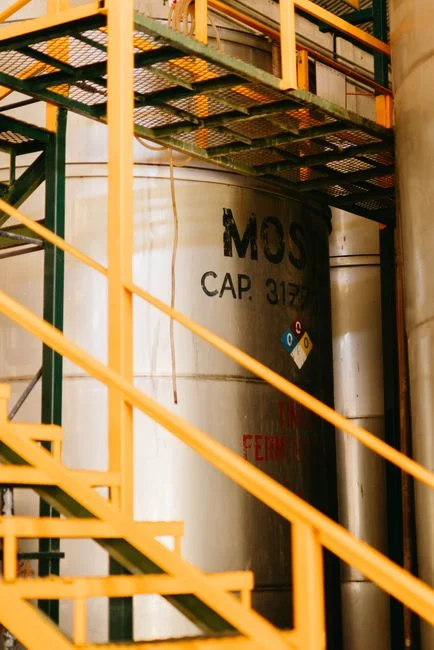
Typical API-plant wastewater runs COD 2,000–8,000 mg/L with variable pH (HydropureWater field data, 2026). Solvent carryover includes methanol, acetone, acetonitrile, and dichloromethane, and trace metals from catalyst residues must be characterized during diligence. API effluent is often nitrogen-deficient relative to phosphorus, so external nutrient dosing must be sized into the retrofit budget based on BOD:N:P stoichiometry — this is where a PLC-controlled chemical dosing skid typically enters the equipment list.
Because the QCVN envelope does not publish explicit numerical limits for APIs, antibiotic residues, or ICH Q3C solvents, the diligence checklist must include APIs by therapeutic class, residual solvents from ICH Q3C categories, and antibiotic resistance gene markers. The EU GMP effluent guidance and WHO wastewater guidance are not legally binding in Vietnam, but they should anchor the SPA covenant envelope as the buyer's group EHS benchmark — not the QCVN-mandated floor. This is the same logic AstraZeneca applies at Wuxi, where the circular cascade-utilization loop and online monitoring define the internal reuse target regardless of local discharge rules (AstraZeneca, 2023).
Sizing SPA Escrow and Post-Closing Covenants
For an Event 1 administrative change, ringfence USD 5,000–15,000 in escrow plus a brief environmental indemnity. For an Event 2 amendment, ringfence the upper end of the USD 60,000–150,000 envelope for legal fees, EIA consultancy, and DONRE filing fees, plus a 24-month post-closing covenant covering any pre-closing non-compliance (HydropureWater field data, 2026). For an Event 3 full EIA, ringfence the upper end of the USD 150,000–250,000+ envelope plus 4–9 months of carrying-cost risk, and structure the escrow as 12–18 months of compliance remediation cost against the engineering estimate of the gap between the target's actual discharge quality and the QCVN envelope.
Add a Rep & Warranty insurance carve-out for environmental matters — R&W insurers typically exclude pre-closing environmental liability, so a separate indemnity tranche is required. A capex holdback against the engineering estimate of the retrofit gap is the cleanest structure because the buyer's downside is bounded by the actual remediation cost, not the seller's willingness to fund escrows. For the sustainability reporting overlay: HOSE-listed companies have been required since 2023 to publish an annual Sustainability Report following GRI or SASB frameworks, and if the listed parent is also subject to EU CSRD Scope 3 wastewater or California SB-253, the Vietnam plant's wastewater metrics feed into consolidated Scope 3 reporting in 2026 (HydropureWater field data, 2026). The acquirer inherits a Scope 3 wastewater liability that the new parent's first post-closing sustainability report must disclose.
Engineering the Treatment Train to Meet the Envelope
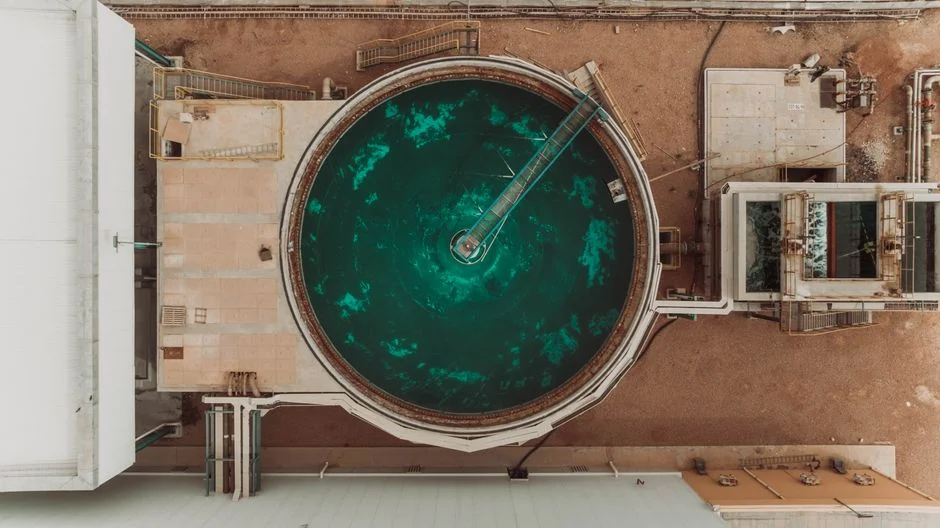
Once the QCVN envelope is locked, the engineering question becomes which treatment train delivers it. The standard train for a Vietnamese chemical or pharmaceutical plant is: equalization and pH adjustment → DAF pre-treatment or lamella clarifier for oil and suspended-solids removal → biological treatment (A/O or SBR) → MBR for solids separation → activated carbon or advanced oxidation for refractory organics → sludge dewatering via plate-and-frame filter press (HydropureWater field data, 2026). For a activated carbon filter engineering guide for biopharma wastewater or the AOP system process flow engineering guide, the polishing-stage decisions are spelled out in detail.
Macro context matters for technology choice. Vietnam's adoption of MBBR at the Thu Duc plant (1.1M m³/day, USD 524M; per U.S. DOC / trade.gov, 2024) signals municipal-level comfort with biofilm technology, and MBBR is increasingly specified for chemical-plant retrofits where the existing basin inventory can be repurposed. DAF units cover the pre-treatment envelope for most mid-sized plants — a DAF system in the 4–300 m³/h envelope is the typical specification. An integrated MBR system in the 10–2,000 m³/day range covers the biological step, and a lamella clarifier running at 20–40 m/h surface loading handles high-rate primary duty. A plate-and-frame filter press delivering 60–70% dry cake brings the sludge cake to spec for off-site disposal.
Retrofit vs. greenfield decision logic: if the target's existing WWTP has fewer than 24 months of remaining useful life and the provincial DONRE is tightening permit limits (common in Dong Nai, Binh Duong, and Hai Phong through 2025–2026), a full MBR-based rebuild is typically cheaper than incremental upgrades. The rebuild also positions the asset for any future ZLD or water-reuse mandate that MONRE has signaled in its 2024–2030 enforcement roadmap. For long-term operations strategy, the performance-based wastewater O&M contracts guide is the right next read once the equipment selection is locked.
Frequently Asked Questions
Does the environmental permit transfer automatically when AstraZeneca acquires a Vietnamese plant by share purchase?
No. Under LEP 2020, the consolidated Environmental Permit (Giấy phép môi trường) attaches to the operating legal entity, not to the asset. A share acquisition does not transfer the permit by operation of law; the new owner must file a re-issuance or amendment dossier with the provincial DONRE within 30 days of share transfer, or discharge authorization lapses and production halts.
What triggers a full new EIA under Decree 08/2022/NĐ-CP during a 2026 closing?
A new EIA is required only when Decree 08/2022/NĐ-CP thresholds are crossed: capacity increases of ≥10% for Category I projects, ≥25% for Category II projects, wastewater volume increases of ≥30%, or introduction of a new pollutant class. Below those triggers, a permit amendment under Article 42 of LEP 2020 is sufficient, with a 30–45 working day review window.
Does the QCVN 40:2011 or QCVN 40:2025 envelope bind an in-service plant acquired in 2026?
Plants in service before 1 September 2025 that obtained EIA approval or submitted a complete EIA/permit application before that date may apply the QCVN 40:2011 envelope (plus QCVN 13-MT:2015 for chemical-sector parameters) until 31 December 2031. New or expanded projects initiated after 1 September 2025 must meet QCVN 40:2025/BTNMT, which uses a three-category A/B/C structure with limits stated directly in Tables 1 and 2.
How fast must a listed acquirer disclose an environmental event at a newly acquired Vietnam subsidiary?
Under Circular 96/2020/TT-BTC and the HOSE/UPCOM Listing Rules, a permit suspension, a discharge exceedance, or a MONRE/DONRE administrative penalty triggers a 24-hour extraordinary-event disclosure. The clock starts on closing day, not on the date the new owner first learns of the underlying issue, so the disclosure template and sign-off chain must be pre-drafted before closing.