Why Bandung Hotels Are Switching to Packaged MBR
Land in Dago, Setiabudi, and Lembang now trades above IDR 4–8 million per square meter for hotel-zoned plots, and a conventional activated sludge (CAS) plant at 200 m³/day typically demands 350–500 m² of civil footprint — land the developer can no longer afford to bury under concrete. A packaged MBR bioreactor system cuts that footprint by up to 60% because it eliminates the secondary clarifier and tertiary sand filter (HydropureWater 2026 guide), freeing roughly 200–300 m² on a typical 150-room resort for villas, F&B outlets, or back-of-house parking.
Regulatory pressure compounds the land argument. KLHK through PP 5/2014 enforces BOD ≤30 mg/L, COD ≤100 mg/L, TSS ≤50 mg/L, and pH 6–9 for general commercial discharges, and West Java DLH increasingly demands a reuse plan before issuing a construction recommendation letter. An MBR delivers TSS <1 mg/L and BOD <5 mg/L as a steady-state output (HydropureWater 2026 guide), so the same packaged unit that fits on a tight basement also clears the discharge permit on the first round of review.
Bandung's highland climate is a third, often-overlooked anchor. At ~768 m elevation the ambient range sits at 18–28°C year-round — comfortably inside the mesophilic band where MLSS of 8,000–12,000 mg/L and PVDF flux of 15–25 LMH stay stable without the cooling load a Jakarta or Surabaya plant must budget (HydropureWater 2026 guide). A useful hospitality precedent is the 250 m³/day submerged MBR commissioned at a 200-bed five-star property — both hollow-fibre and flat-sheet trains have been proven on hotel duty at that scale.
Step 1 — Size the STP Using Bandung Hotel Loading Rules
A defensible Bandung hotel sizing starts with three unit-loading rules layered onto occupancy, then absorbs F&B and laundry before rounding to the next standard packaged skid.
- Guest-room wastewater: 150–200 L per guest-night (industry hospitality rule of thumb covering shower, basin, and toilet flow; use 180 L as the Bandung mid-point).
- F&B allowance: 30–50 L per cover for kitchens, dishwash, and floor cleaning — apply the hotel's expected daily covers at peak banquet occupancy.
- Laundry allowance: 15–25 L per kg of linen; on-site hotel laundries in Bandung typically process 1.0–1.5 kg linen per occupied room per day.
Apply a 1.2–1.3 peaking factor for Bandung's weekend and conference spikes (Braga events, factory visits in the Dago corridor, wedding season). Worked example for a 150-room resort at 70% occupancy and 2.0 guests per occupied room: 150 × 0.70 × 2.0 × 180 L = 37,800 L/day base, plus F&B and laundry that typically lift total flow to 50–80 m³/day. Round up to the next standard packaged skid — 50, 100, 150, or 200 m³/day — and oversize by 10–15% to leave membrane turndown room.
| Parameter | Value / Range | Source |
|---|---|---|
| Guest-room loading | 150–200 L per guest-night | Hospitality rule of thumb |
| F&B loading | 30–50 L per cover | Hospitality rule of thumb |
| Laundry loading | 15–25 L per kg linen | Hospitality rule of thumb |
| Peaking factor | 1.2–1.3 | Bandung weekend / conference profile |
| Standard packaged skid sizes | 50, 100, 150, 200 m³/day | Industry standard offerings |
Step 2 — Pretreatment for Hotel FOG, Rags, and Laundry Lint

Two foulants dominate Bandung hotel influent — fats, oils, and grease (FOG) from kitchen and banquet lines, and fibrous lint from on-site laundry. If either reaches the membrane cassette, flux decay is guaranteed within 30–60 days of commissioning.
Headworks should begin with a rotary bar screen for lint and rags with ≤3 mm aperture — fine enough to strip the long fibres that wrap around hollow-fibre bundles, coarse enough to stay maintainable for hotel engineering staff. The screen should be sized to the peak 1.3× flow rather than the daily average, since lint pulses with each laundry cycle.
Downstream of screening, install a hotel FOG pre-treatment DAF rated to drop influent oil and grease below 30 mg/L; Bandung banquet kitchens can produce instantaneous FOG spikes of 200–400 mg/L during a wedding service, and a properly sized DAF with 4–12 m³/h ratings (the DAF range covers 4–300 m³/h) absorbs that surge. An equalisation buffer ahead of the bioreactor should hold 6–8 hours of peak flow — long enough to dampen the diurnal swing between morning buffet discharge and evening banquet peaks so the MBR sees a steady loading rate.
Step 3 — Pick the Right MBR Membrane Geometry for Tropical Bandung
Two membrane formats are credible for Bandung hotel duty: PVDF hollow-fibre (HF) and PVDF flat-sheet (FS). Both work; the choice comes down to fouling resilience and retrofit geometry.
PVDF flat-sheet modules handle hotel mixed liquor with high solids better and tolerate chemical enhanced backwash (CEB) cycles more aggressively — a critical advantage when FOG slips past the DAF or lint pulses during a linen cycle. HF MBR modules offer higher packing density (more m² of membrane per m³ of cassette volume) but foul faster on fibrous feed and require tighter upstream screening (HydropureWater 2026 guide). The trade-off is documented in the same hospitality reference cited earlier: a 250 m³/day hotel plant was successfully built with both formats.
For Bandung retrofits on a tight basement or podium level, flat-sheet modules usually win because individual cassettes can be pulled from the top of the tank without draining the basin — a major serviceability benefit when the only access is a service lift. Specify 0.1 μm nominal pore for guaranteed TSS <1 mg/L and near-complete coliform removal; the wider 0.03–0.4 μm UF window in the engineering literature is acceptable for industrial reuse but not optimal when the hotel wants toilet-flushing quality.
| Parameter | PVDF Flat-Sheet (DF) | PVDF Hollow-Fibre (HF) |
|---|---|---|
| Nominal pore size | 0.1 μm | 0.03–0.4 μm |
| Flux (tropical duty) | 15–25 LMH | 15–25 LMH |
| MLSS tolerance | 8,000–12,000 mg/L | 8,000–12,000 mg/L |
| HRT vs CAS | ~60% shorter | ~60% shorter |
| FOG / lint tolerance | Higher (robust sheet) | Lower (fibre fouling) |
| Maintenance access | Top-pull cassettes | Module rack, drain-down |
| Best Bandung fit | Tight retrofit, high-FOG kitchen | New build with strong pretreatment |
Step 4 — Automation, Monitoring, and Operator Skill
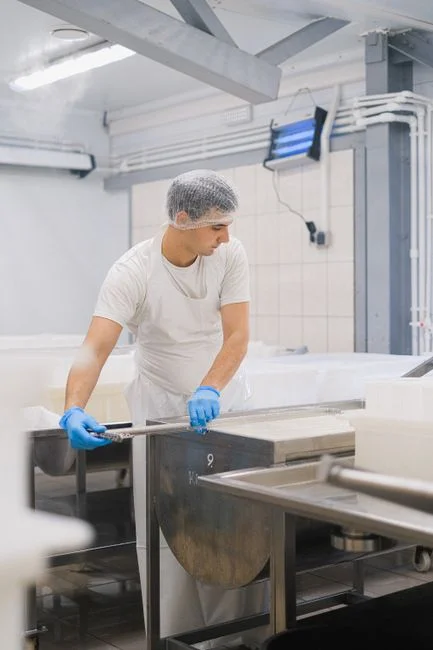
A Bandung hotel does not want to hire a wastewater engineer; it has a chief engineer and two or three MEP technicians who also run the chiller, BMS, and fire pump. Specify the packaged MBR to be operable from that team, not a specialist crew.
Specify a PLC with HMI plus remote telemetry so the hotel's BMS team can monitor MLSS, transmembrane pressure, permeate flow, and aeration pressure from the engineering office — a 4G router on the panel and a vendor-hosted dashboard is now standard scope. Automatic CEB chemical dosing every 1–2 weeks is non-negotiable for the 5–8 year membrane life Bandung can expect under the HydropureWater 2026 operating envelope; manual cleaning gets skipped during banquets and wedding seasons, and skipped cleans shorten membrane life by 30–40%.
For reuse to toilet flushing, integrate UV or chlorine dioxide polishing downstream of the MBR cassette. UV is simpler for hotels (no chemical handling on site); ClO₂ suits larger resorts with on-site generation capacity. A single trained MEP technician can run a packaged MBR of 100–200 m³/day with vendor-provided commissioning and SOP training — verify that scope is in the contract, not an optional extra.
Step 5 — Navigate KLHK, AMDAL, and West Java DLH Permitting
Permitting is the most common schedule-killer on Bandung hotel projects, and it is the section most competitor articles skip. Hotels with design flow below 100 m³/day typically file a UKL-UPL (Environmental Management and Monitoring Effort); above 100 m³/day, or any plant inside the Citarum watershed catchment (which covers Dago, Setiabudi, and most of Lembang), an AMDAL (Environmental Impact Assessment) is triggered (HydropureWater 2026 guide). Either path runs 6–12 months from document submission to DLH sign-off.
Reference PP 5/2014 limits as the headline numbers: BOD ≤30, COD ≤100, TSS ≤50 mg/L, pH 6–9, plus oil and grease ≤10 mg/L for commercial discharges. An MBR comfortably meets these on the first attempt; a CAS plant typically needs a polishing step to clear the TSS line. Use the MBR's reuse-quality effluent (TSS <1 mg/L, BOD <5 mg/L) as a "Best Available Technology" argument in the AMDAL — Indonesian regulators are demonstrably more comfortable with documented reuse plans, and a 70% reuse scheme is a strong permit accelerant.
Watch for Jakarta-style reuse mandates to spread. West Java DLH is increasingly requesting reuse plans for new hotel builds even when provincial regulation does not yet formally require them; if the AMDAL does not include a reuse section, expect a request for additional information that adds 8–12 weeks. Build the reuse plan into the AMDAL from day one.
Step 6 — Vendor Qualification and CAPEX/OPEX Benchmark for 2026
Vendor selection is where most Bandung projects leak money. The lowest sticker price usually comes from a trading house that has never commissioned an MBR in tropical highland conditions, and the cost of a failed membrane batch plus a missed high season is not recoverable. Use a four-axis shortlist framework before asking for quotations.
| Evaluation Axis | What to Verify | Pass / Fail Cue |
|---|---|---|
| Reference list | ≥2 Southeast Asian hotel or resort MBRs ≥100 m³/day in the last 5 years | No local reference = disqualify |
| Commissioning team | In-house (not sub-contracted), speaks Bahasa Indonesia, present at site test | Outsourced commissioning = risk |
| Spares and membranes | Local spares warehouse in Java; membrane modules ex-stock, not 12-week import | Import-only spares = schedule risk |
| Warranty and SOPs | 2-year mechanical, 5-year membrane pro-rata, full Indonesian-language SOPs and as-built drawings | English-only docs = training gap |
CAPEX for a 100 m³/day packaged MBR turnkey in Indonesia in 2026 sits in the IDR 1.5–3.5 billion band including civil works, membranes, and PLC (HydropureWater 2026 guide). Civil works are 20% of total cost — lower than CAS because there are no large settling tanks — and membrane modules plus controls are roughly 60% of the equipment cost. OPEX is dominated by electricity at IDR 1,400–1,600/kWh (industrial I-3/I-4 tariffs), with aeration alone at ~40% of total OPEX. Membrane replacement hits every 5–8 years and runs IDR 200–400 million for a 100 m³/day plant (HydropureWater 2026 guide).
Cross-check vendor claims against the published Indonesia benchmarks in the Indonesia MBR engineering and cost guide and review the wastewater permits and AMDAL checklist to confirm scope before signing.
Bandung 2026 Worked Example: 150-Room Resort with 70% Reuse
Project: 150-room highland resort in the Setiabudi–Lembang corridor, mixed-room inventory (60% deluxe, 30% suite, 10% villa), on-site F&B covering 250 covers per day at peak, and an in-house laundry processing ~1.2 kg linen per occupied room per day. Design flow after peaking lands at 100 m³/day, so a single 100 m³/day packaged skid is specified — no need to parallel two units.
| Line Item | 2026 Budget (IDR) | Notes |
|---|---|---|
| Packaged MBR skid (DF flat-sheet, 0.1 μm) | 1.4–1.9 billion | Equipment ex-works, including PLC and PVDF flat-sheet membrane modules |
| Civil works, headworks, equalisation tank | 350–500 million | 20% of total CAPEX |
| UV polishing for reuse | 120–180 million | Toilet-flushing quality, Class B |
| Installation, commissioning, training | 130–220 million | Vendor on-site, SOPs in Bahasa Indonesia |
| Total CAPEX | 2.0–2.8 billion | Turnkey, ready to commission |
| Annual electricity (IDR 1,500/kWh) | 150–200 million | Aeration at 40% of OPEX |
| Chemicals and CEB | 60–80 million | Acid, NaOCl, antifoam |
| Labour and sludge haulage | 110–170 million | One MEP tech, quarterly sludge removal |
| Annual OPEX | 320–450 million | Year 1, excluding membrane replacement |
Reuse math: 60 m³/day of treated effluent displaces PDAM draw at IDR 14,000/m³ (typical Bandung hotel commercial rate), saving roughly IDR 306 million per year. That alone produces a simple payback of 5–6 years against the upper CAPEX band. Add the land saved — about 400 m² of footprint that a CAS plant would have consumed — valued at Bandung villa-zone land prices of IDR 4–6 million/m², and the effective payback falls under 4 years once the land opportunity cost is credited. The 5-year reuse savings on this worked example are roughly IDR 1.5 billion, more than half the lower-band CAPEX, which is the financial argument to take to the board.
Frequently Asked Questions
What KLHK effluent limits apply to a Bandung hotel STP?
PP 5/2014 sets the headline limits at BOD ≤30 mg/L, COD ≤100 mg/L, TSS ≤50 mg/L, oil and grease ≤10 mg/L, and pH 6–9 for general commercial discharges. A well-run packaged MBR clears all of these as steady-state output.
How much does a 100 m³/day packaged MBR cost in Indonesia in 2026?
Turnkey CAPEX including civil works, membranes, PLC, and commissioning sits in the IDR 1.5–3.5 billion band for a 100 m³/day hotel plant. Annual OPEX runs IDR 320–450 million depending on electricity tariff and staffing model.
Hollow-fibre or flat-sheet MBR for a hotel?
Flat-sheet PVDF is the safer choice for high-FOG kitchen and high-lint laundry duty because it tolerates chemical cleaning more aggressively and is easier to service on top-pull cassettes. Hollow-fibre is acceptable when pretreatment is bulletproof and the plant layout is greenfield rather than a tight retrofit.
Can hotel MBR effluent be reused for toilet flushing?
Yes — after UV or chlorine dioxide polishing, MBR effluent meets Class B reuse for toilet flushing, landscape irrigation, and cooling-tower makeup at 60–70% reuse rates, which is the typical Bandung design target.
How long do MBR membranes last in Bandung?
PVDF flat-sheet membranes last 5–8 years in tropical highland conditions with routine CEB and effective screening, as documented in the published MBR lifespan data. Skipped cleans and inadequate pretreatment can cut that to 2–3 years.