
Why Rural Sewage Treatment in Iran Is a Different Engineering Problem
Rural sewage treatment in Iran in 2026 is built around decentralized packaged plants sized 10–1,000 m³/day using A/O, SBR, or MBR processes to meet Iran Department of Environment effluent limits of BOD₅ ≤ 50 mg/L, COD ≤ 200 mg/L, TSS ≤ 50 mg/L, and fecal coliform ≤ 400 MPN/100 mL. Buried skid-mounted A/O units dominate village work, while MBR is preferred where reuse for landscape irrigation is specified. Final selection depends on influent load, available operator skill, and whether the effluent will be reused in Iran's water-stressed climate.
Iran has roughly 70,000 villages, most below 5,000 population, where sewer coverage lags urban centers. The operating envelope is harsh: summer ambient temperatures of 35–45 °C push biological kinetics above standard design curves, raise aeration-tank evaporation losses, and degrade diffusers faster; grid supply is intermittent in 30–40% of rural substations; per-capita surface-water availability in central and eastern basins is below 1,000 m³/year, well under the 1,700 m³/year scarcity threshold. A packaged plant that works in northern Europe or coastal China will not transfer directly — diffused-aeration alpha factors drop, mixed-liquor temperatures reach 28–32 °C, and storage tanks sized for temperate winters need only 1.5 days of equalization rather than 4–6.
Sludge handling cannot be designed away: 80–90% of influent contaminants in a municipal plant accumulate in the sludge stream (Agoro et al., Water 2020), so even a 100 m³/d village STP produces 5–8 kg DS/day that must be thickened, dewatered, or dried. Finally, treated effluent is increasingly treated as a resource — not waste — in arid provinces (Yazd, Kerman, Sistan-Baluchestan) where it is reused for park irrigation, cotton and pistachio fields, and toilet flushing in newer townships.
Applicable Standards: Iran DOE, IFP, and Reuse Guidelines
The compliance envelope for a 2026 village STP in Iran is set by the Department of Environment (DOE) regulations originally published in 1991 and amended in 1994, and by the Iranian Forest and Pasture Organization / Institute of Standards reuse guidelines issued in 2009–2010. Engineers bidding on World Bank, JBIC, or EBRD-funded projects should also cross-check WHO 2006 guidelines for reuse, since the international lender usually references those directly.
DOE surface-water discharge limits (typical for rural plants draining to qanats, rivers, or dry-stream beds) are: BOD₅ ≤ 50 mg/L, COD ≤ 200 mg/L, TSS ≤ 50 mg/L, fecal coliform ≤ 400 MPN/100 mL, oil & grease ≤ 10 mg/L, pH 6.5–8.5, residual chlorine 0.5–1.5 mg/L. Where effluent enters a sensitive aquifer or recharges a drinking-water wellfield — common in the Hamadan, Isfahan, and Kashmar plains — provincial DOE offices apply tighter envelopes: NH₃-N ≤ 5 mg/L, total nitrogen ≤ 40 mg/L, total phosphorus ≤ 5 mg/L. For unrestricted irrigation under IFO 2009/2010, the limits tighten further to BOD₅ ≤ 20 mg/L, TSS ≤ 20 mg/L, fecal coliform ≤ 100 MPN/100 mL, and intestinal nematodes ≤ 1 egg/L. WHO 2006 uses a risk-based approach: ≤ 10⁴ fecal coliform/100 mL for restricted irrigation, ≤ 10³ for unrestricted, with nematode ≤ 1 egg/L as a hard floor.
| Receptor | Standard | BOD₅ (mg/L) | TSS (mg/L) | Fecal coliform (MPN/100 mL) | NH₃-N (mg/L) |
|---|---|---|---|---|---|
| Surface water (default) | Iran DOE 1994 | ≤ 50 | ≤ 50 | ≤ 400 | — |
| Sensitive aquifer | Iran DOE (provincial) | ≤ 30 | ≤ 30 | ≤ 200 | ≤ 5 |
| Unrestricted irrigation | IFO 2009/2010 | ≤ 20 | ≤ 20 | ≤ 100 | — |
| Unrestricted irrigation (donor-funded) | WHO 2006 | — | — | ≤ 1,000 | — |
Influent Characteristics for Iranian Rural Sewage
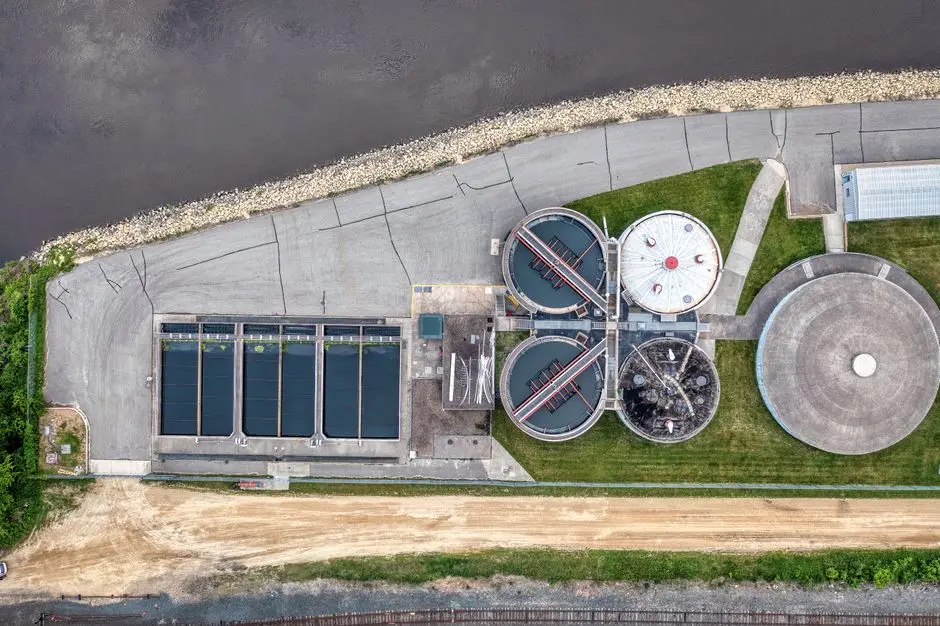
Rural Iranian sewage is weaker than urban influent because of lower water consumption and significant groundwater ingress. Per-capita generation is typically 80–120 L/c/d (vs. 150–200 L/c/d in Tehran), with BOD₅ 200–400 mg/L and TSS 200–350 mg/L. Use 250 mg/L BOD and 250 mg/L TSS as the design basis for a village without measured data — both numbers sit in the conservative middle of the reported range and align with HydropureWater field data for installed WSZ units in Qazvin and Markazi provinces (2025-08).
Infiltration in older vitrified-clay and asbestos-cement sewers can be severe. In villages with cracked pipes and high groundwater, I/I peaks at 1.5–2.0× dry-weather flow during spring snowmelt; size the biological stage for the higher figure or provide a 4–6 hour equalization basin upstream to buffer peaks. Heavy metals in rural sewage are generally low — most provincial monitoring finds Cd, Pb, Zn below detection in pure residential catchments — but agricultural villages applying pesticides to orchards or rice paddies can carry seasonal organochlorine and organophosphate load; sample the influent during planting season before finalizing the bid. Tourist and pilgrimage villages (Mashhad, Qom, Karbala-corridor routes) can see 5–10× population spikes in peak weeks; size the plant for peak flow, not annual average, or specify an equalization basin of 1× DWF.
Process Selection: A/O, SBR, MBR, Constructed Wetland, or Septic + Filter
Process selection for a 2026 Iranian village STP is a four-axis decision: population served, reuse target, available operator skill, and CAPEX/OPEX budget. The five processes that work at village scale in Iran are A/O (anoxic/oxic), SBR (sequencing batch reactor), MBR (membrane bioreactor), constructed wetland (CW), and septic tank plus intermittent sand filter. Each has a clear niche.
| Process | BOD removal | NH₃-N removal | Footprint (m²/m³/d) | Operator skill | Reuse suitability | CAPEX order | OPEX order |
|---|---|---|---|---|---|---|---|
| Buried A/O package (WSZ) | 90–95% | 70–85% | 0.15–0.30 | None (timer-controlled) | Surface water; reuse with disinfection | Low | Low |
| SBR | 93–96% | 85–95% | 0.20–0.35 | 1 visit/week | Reuse with filtration | Medium | Low |
| MBR (submerged) | 98–99% | 95–99% | 0.08–0.15 | 1 visit/week + membrane CIP | Unrestricted irrigation | High | Medium |
| Constructed wetland | 80–90% | 50–70% | 5–10 | Monthly | Surface water; restricted irrigation | Very low | Very low |
| Septic + intermittent sand filter | 85–92% | 40–60% | 0.5–1.0 (filter only) | Annual desludging | Soil disposal only | Lowest | Lowest |
For villages under 2,000 people, a buried A/O package plant is the default: simple, no operator, timer-controlled aeration tolerates 4–8 hour power outages, and the buried envelope eliminates land-use conflict in the village. For 2,000–10,000 population where a small maintenance visit is feasible, SBR (or batch-fed A/O) gives better nutrient removal at modest extra cost. Where the client — usually a provincial water authority or industrial park developer — must meet IFO 2009/2010 reuse limits for irrigation, the MBR integrated wastewater treatment system delivers <1 μm effluent that meets unrestricted irrigation with margin. Constructed wetlands work in Khuzestan, Fars, and along the Caspian coast where land is cheap and climate supports reed growth; they are not viable in central desert provinces where summer evapotranspiration exceeds 12 mm/day. For hamlets below 100 people, a septic tank plus intermittent sand filter is the lowest-cost option, but it does not meet DOE surface-water discharge limits without additional disinfection or UV polishing.
Packaged Plant Equipment Specifications for Rural Iran
Equipment selection for rural Iran in 2026 is constrained by logistics: every component must be skid-mounted, trailer-mountable, or containerized to reach the site on the 12 m trucks that service most village roads. Buried installation also reduces visual impact, which provincial DOE offices increasingly require.
The workhorse for village work is the WSZ-series buried A/O package plant: flow 1–80 m³/h, anoxic/aerobic contact oxidation plus sedimentation plus chlorination in a single buried package, fully automatic, can be mounted on a flatbed trailer for mobile or pilot deployment. For reuse or tight-footprint projects, the MBR integrated wastewater treatment system delivers 10–2,000 m³/day with PVDF submerged membranes and approximately 60% smaller footprint than conventional activated sludge with a secondary clarifier. The MBR flat-sheet membrane module runs at 0.1 μm pore size, 10–20× lower energy than external cross-flow, with 80–225 m² per cassette and 32–135 m³/day per cassette — these are the values an engineer should write into a datasheet. Where influent TSS is high (slaughterhouse drainage, dairy wash water, mixed village + light industry), pre-treat with a dissolved air flotation (DAF) unit rated at 4–300 m³/h and 20–40 m/h surface loading. Disinfection is best handled by a chlorine dioxide generator (50–20,000 g/h) for plants in remote areas where chlorination reliability is poor, or by a UV sterilizer for reuse schemes. Sludge is dewatered with a plate-and-frame filter press (1–500 m² filter area) where sludge must be hauled off-site; otherwise open-sand drying beds at 0.5 m² per m³/day work in arid rural Iran.
| Equipment | Capacity / spec | Footprint / area | Automation |
|---|---|---|---|
| WSZ buried A/O | 1–80 m³/h | Buried, ~0.2 m²/m³/d | Fully automatic, timer-controlled aeration |
| MBR integrated system | 10–2,000 m³/day | ~60% of CAS + clarifier | PLC + membrane CIP sequence |
| MBR flat-sheet cassette | 0.1 μm pore, 80–225 m², 32–135 m³/d | Modular cassette frame | Backpulse + chemical CIP |
| DAF | 4–300 m³/h, 20–40 m/h loading | Compact skid | Auto sludge scraping |
| Plate-and-frame press | 1–500 m² filter area | Skid-mounted | Hydraulic, semi-auto |
| ClO₂ generator | 50–20,000 g/h | Wall-mount cabinet | Flow-paced dosing |
Design Example: A 300 m³/day Village STP Using A/O Package
Assume 2,000 residents in a Markazi-province village, dry-weather flow 100 L/c/d = 200 m³/d, infiltration factor 1.5, design flow 300 m³/d. Influent BOD₅ 250 mg/L gives a load of 75 kg BOD/d; with F/M 0.06 kg BOD/kg MLSS/d and MLSS 3,500 mg/L, the required aeration volume is about 360 m³ — typically split into two parallel modules of 180 m³ each so one can be serviced without shutting down the plant.
Select a WSZ buried A/O package plant sized to 12.5 m³/h (300/24), well within the 1–80 m³/h catalog range. Buried installation eliminates land-use conflict, keeps mixed liquor cooler in summer, and matches the 3.0–3.5 m working depth typical of the unit. Design the effluent target at BOD₅ ≤ 30 mg/L and TSS ≤ 30 mg/L — half the DOE limit — to leave margin for seasonal temperature swings and partial aeration during grid outages. If the client plans to reuse effluent for pistachio or almond irrigation downstream, add a chlorine dioxide generator sized at 50–100 g/h on the effluent line; this brings fecal coliform below 100 MPN/100 mL to meet IFO 2009/2010 unrestricted-irrigation limits.
For a 300 m³/d plant, the OPEX order of magnitude is 0.18–0.25 USD/m³ treated, dominated by electricity (aeration + recirculation pumps at 0.45–0.60 kWh/m³) and chlorine. Comparable North-American and European cost data is documented in municipal sewage treatment plant cost models and can be adjusted with a regional factor of 0.6–0.8 for rural Iran.
Sludge Management for Rural Iranian Plants
Sludge yield for a well-run A/O package is 0.15–0.25 kg DS per kg BOD removed. For the 300 m³/d design example with 95% BOD removal, that is 71.25 kg BOD/d × 0.20 = 14.3 kg DS/d, or roughly 5.2 t DS/year — small enough that mechanical dewatering is rarely justified.
Open-sand drying beds, sized at 0.5 m² per m³/d of plant capacity (150 m² for the 300 m³/d example), are the lowest-cost option for arid rural Iran. Planted drying beds with Typha or Phragmites achieve the same dewatering in 30–40% less area, at higher CAPEX. The dried cake (≈ 30–40% DS) can be transported to municipal composting or used directly on non-edible crops; biosolids from a rural A/O plant have a calorific value around 12 MJ/kg, comparable to low-grade lignite (per US sanitary-sewer mass-balance data, plasmacombustion.org 2024), but rural plants are far too small to justify combustion or gasification — focus on safe disposal or agricultural use. If land application is intended, sample the cake for Cd, Pb, Zn, Cu, and Ni before each disposal cycle; heavy metals in pure residential rural catchments are typically below Iranian DOE soil-protection thresholds, but agricultural catchments with pesticide runoff may need monitoring. For plants above 1,000 m³/d, or where land for drying beds is unavailable, a small plate-and-frame filter press reduces cake volume by 80% and cuts hauling cost. Polymer selection and conditioning for the press is covered in the polymer optimization in sludge dewatering guide.
Frequently Asked Questions
What is the Iran DOE effluent BOD limit for rural sewage?
The Iran Department of Environment (DOE 1994, amended) sets a surface-water BOD₅ limit of ≤ 50 mg/L, COD ≤ 200 mg/L, TSS ≤ 50 mg/L, and fecal coliform ≤ 400 MPN/100 mL. For unrestricted irrigation under IFO 2009/2010 reuse guidelines, BOD₅ and TSS tighten to ≤ 20 mg/L each, and fecal coliform to ≤ 100 MPN/100 mL.
What flow range does a packaged rural STP cover?
WSZ-series buried A/O package plants cover 1–80 m³/h (24–1,920 m³/day), and MBR integrated systems cover 10–2,000 m³/day per train. A typical 2,000-person village in Iran at 100 L/c/d with 1.5× infiltration factor generates 300 m³/d, well within the WSZ range and easily handled by a single MBR train.
Is MBR worth the extra cost for a village plant?
MBR is justified when the plant must meet IFO 2009/2010 unrestricted irrigation limits, when the site footprint is constrained (e.g., inside a 400 m² plot in a built-up village), or when the operator cannot run a clarifier reliably. Submerged PVDF flat-sheet modules at 0.1 μm deliver <1 μm effluent quality, NH₃-N removal above 95%, and roughly 60% footprint reduction versus conventional activated sludge with a secondary clarifier.
How is sludge handled in a small rural STP?
Sludge yield is 0.15–0.25 kg DS per kg BOD removed for an A/O plant, giving roughly 14 kg DS/d for a 300 m³/d village STP. In arid rural Iran, open-sand or planted drying beds at 0.5 m² per m³/d are the lowest-cost option; a plate-and-frame press is added when the cake must be hauled off-site, or when land for beds is unavailable.
Do rural plants in Iran need a permanent operator?
No. WSZ-series buried A/O units run fully automatic with timer-controlled aeration and can be trailer-mounted for mobile or pilot deployment, which is the standard arrangement for villages under 2,000 population. A weekly visit by a regional maintenance technician and a daily remote-monitoring data check are sufficient for plants under 500 m³/d, per HydropureWater field data (2026).