

Why Sheboygan Pulp and Paper Mills Are Rethinking Clarifiers in 2026
A Sheboygan tissue plant manager walking the clarifier deck at 6 a.m. on a 4°C February morning sees the problem before any lab result confirms it: the surface scum is thin, the underflow density is dropping, and the effluent TSS trend on the SCADA is climbing back toward the 40 CFR 430 subpart B BPT ceiling the mill promised WDNR it would stay under. Pulp and paper wastewater is characteristically high in TSS, BOD, COD, color, wood fibers, and inorganic fillers (source: Ecologix, 2025) — the exact mix that punishes a conventional gravity clarifier, especially in winter when Lake Michigan source water arrives at the headworks at 2–10°C and the elevated viscosity drags Stokes-law settling velocities down by 25–35% compared to summer.
Three regulatory and operating pressures are converging on Sheboygan mills in 2026. First, 40 CFR 430 subpart B (pulp, paper, paperboard) and subpart E (tissue) BPT limits are enforced through WDNR WPDES permits issued under ch. NR 216, with ch. NR 101 antidegradation review triggered whenever a mill expands capacity or changes chemistry. Second, the Sheboygan River watershed carries TMDL allocations for total suspended solids and BOD, so any discharge excursion translates directly into a surcharge. Third, every 1% of fiber lost in the clarifier underflow is a 1% hit to furnish yield — at 2026 recovered-fiber prices of $80–300 per dry ton, that loss shows up on the P&L, not just on the DMR. Procurement and process engineers must decide whether to retrofit DAF, keep the existing lamella clarifier, or run them in series ahead of the 2026 permit renewal. For mills downstream of Pulaski and across the Lake Michigan basin, the same logic applies — see the 2026 pulp and paper pretreatment compliance guide for the broader WDNR framing.
How DAF and Clarifiers Actually Separate Solids
DAF and gravity clarifiers separate suspended solids from water using opposite physical principles. In a DAF unit, a side stream of clarified effluent is pressurized to 5–7 bar in a saturation tank, dissolving air to near saturation. On release back into the flotation cell at atmospheric pressure, the air comes out of solution as a cloud of 10–100 micron micro-bubbles that attach to flocculated particles and lift them to the surface, where a flights/scraper assembly skims the float; clarified water exits from the bottom (source: WastewaterMachinery, 2025). The whole separation happens in 3–5 minutes of hydraulic residence time, allowing DAF units to occupy a fraction of the footprint of a comparably rated clarifier (source: Krofta, 2026).
A lamella clarifier relies on gravity separation. Inclined plates at 55–60° multiply the effective settling area inside a compact tank; solids settle onto the plate surfaces, slide down to a sludge hopper, and are withdrawn as underflow, while clarified water rises through the plates and overflows a peripheral weir. Typical surface loading rates for a well-designed lamella clarifier sit in the 20–40 m/h range (HydropureWater lamella clarifier catalog, 2026), with 2–4 hours of hydraulic residence time.
The choice between these technologies is driven by particle density. Fresh wood fibers, broke, and filler pigments (kaolin, calcium carbonate, titanium dioxide) have specific gravities of roughly 0.8–1.5 g/cm³ — many are near or below water, causing them to float or settle slowly rather than dropping cleanly. DAF exploits that behavior, whereas a clarifier fights it. This is why DAF is the dominant whitewater clarification technology in Wisconsin's tissue cluster: the float layer is the product, not the waste.
DAF vs Lamella Clarifier: A 2026 Head-to-Head Comparison
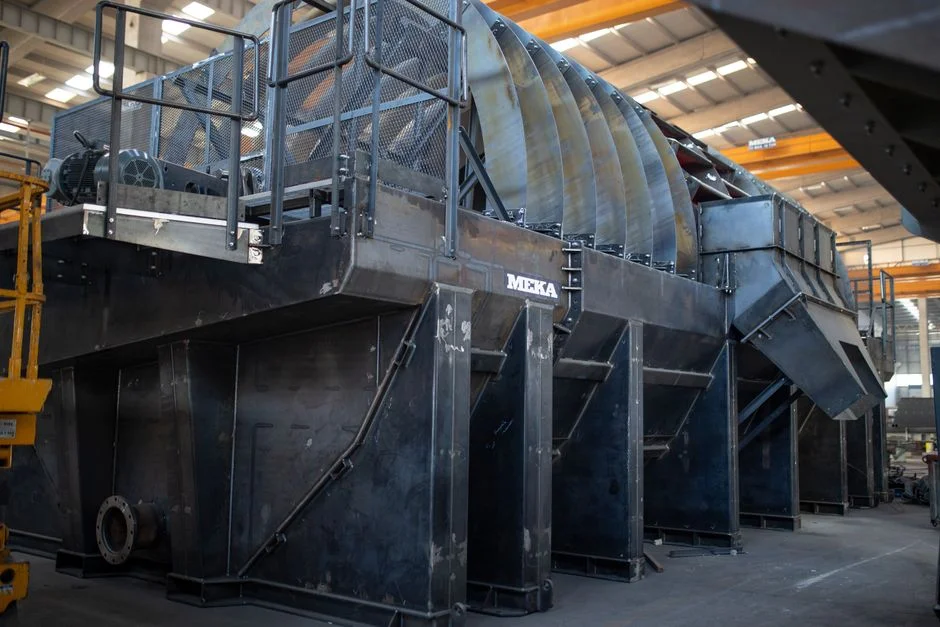
The table below provides a direct comparison of performance metrics for Sheboygan process engineers to use in CAPEX review memos. Every number is drawn from vendor data, EPA design references, or HydropureWater field installations.
| Parameter | DAF | Lamella Clarifier | |
|---|---|---|---|
| Hydraulic residence time | 3–5 min (Krofta, 2026) | 2–4 hr | |
| Hydraulic surface loading rate | 5–15 m/h | 20–40 m/h (HydropureWater catalog, 2026) | |
| TSS removal efficiency | 90–97% (WastewaterMachinery, 2025) | 50–80% | |
| COD removal | 60–80% (WastewaterMachinery, 2025) | 30–50% | |
| Footprint vs equivalent flow | Baseline | 1.2–1.5× larger (Krofta, 2026) | |
| Relative CapEx (same flow) | 1.0× baseline | 0.4–0.6× of DAF | |
| Polymer consumption | Baseline | ~20–30% more flocculant (HydropureWater catalog, 2026) | |
| Energy use | +1–3 kWh/m³ (recycle pump + compressor) | Baseline | |
| Fiber recovery | Yes — saleable float, 4–8% consistency | No — dilute underflow, 1–2% consistency | |
| Winter (2–10°C) performance | Minimal change — bubble buoyancy dominates | Noticeable degradation — viscosity rises | |
| Sludge dewatering downstream | Float dewaters readily on a plate and frame filter press | Underflow is dilute, harder to cake |
Three factors are critical for a Sheboygan reader. First, the CapEx advantage of a lamella clarifier — typically 40–60% of an equivalent DAF — is partially offset by higher polymer doses and the absence of a fiber-recovery revenue stream. Second, the footprint is often the deciding factor for older mill buildings: retrofitting a DAF inside a structure that already struggles to house a clarifier is often mechanically simpler than expanding the clarifier bay. Third, only DAF produces a float thick enough to dewater economically on a HydropureWater plate and frame filter press, which shortens filter press cycle time and reduces cake-handling cost. The HydropureWater lamella clarifier remains the right answer in a narrow set of scenarios spelled out in the decision framework below.
Matching Technology to 40 CFR 430 Subcategory in Wisconsin
The compliance driver, not the equipment catalog, should dictate the technology choice. 40 CFR 430 subpart B covers integrated pulp, paper, and paperboard mills; subpart E covers tissue; both impose BPT effluent limits for TSS, BOD, and in some subcategories color. For a typical Sheboygan tissue mill operating under subpart E, a well-run DAF alone routinely meets the BPT TSS ceiling, which is why the Krofta Supracell DAF with dual Air Dissolving Tubes is specified for the variable solids loads of tissue and towel machines (source: Krofta, 2026). Fine paper and deink mills under subpart B usually need DAF followed by biological polishing (aerated lagoon, MBBR, or activated sludge) to meet BPT and to position for any future BAT review.
Wisconsin adds two regulatory overlays. WDNR ch. NR 101 antidegradation review applies whenever a mill expands production or changes its discharge character, and ch. NR 216 WPDES permit triggers can require "Best Available Demonstrated Control Technology" — in 2026 this effectively means DAF or DAF followed by biological treatment for most sub-300 mg/L BPT scenarios. Mills in the Sheboygan River watershed also have TMDL allocations for TSS and BOD, so a single excursion becomes both a compliance and a surcharge event. The table below maps the 2026 decision.
| Mill subcategory | Typical 40 CFR 430 driver | 2026 Wisconsin technology default |
|---|---|---|
| Tissue (subpart E) | BPT TSS, BOD | DAF alone (Krofta Supracell-class) |
| Fine paper (subpart B) | BPT + possible BAT review | DAF + biological polishing |
| Deink / recycled fiber (subpart B) | BPT, color, BOD | DAF primary + biological + possible tertiary |
| Capacity expansion triggering ch. NR 101 | Antidegradation | DAF + lamella polishing OR DAF + biological |
If your mill sits in a subcategory that already trends toward BAT, a lamella clarifier alone is rarely a defensible 2026 answer. WDNR reviewers expect to see why a higher-removal primary was not selected, and a DAF-vs-clarifier tradeoff memo serves as a permit-shield document.
A 2026 Decision Framework for Sheboygan Mills
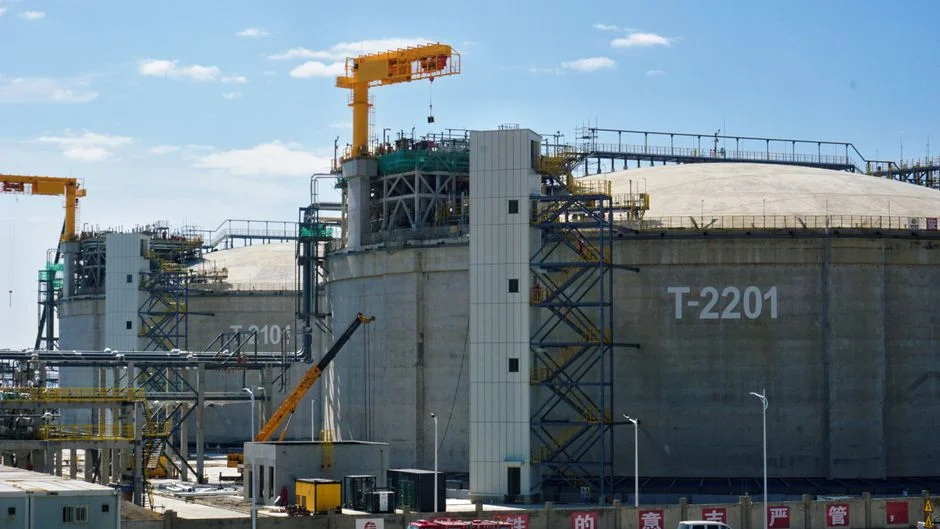
Procurement committees can use these four questions to evaluate the majority of real-world cases.
- Is average influent TSS consistently above 800 mg/L, or is fiber recovery a revenue line? If yes, specify DAF — the high removal efficiency and float recovery are necessary.
- Is the available footprint constrained by an existing building column grid or a tight brownfield site? If yes, DAF saves 20–50% of plan area at equivalent flow (Krofta, 2026); a lamella retrofit may require civil work that negates equipment savings.
- Is the flow above 200 m³/h with settleable (not buoyant) solids and stable chemistry, and is CapEx the binding constraint? If yes, a HydropureWater lamella clarifier is the rational pick — for example, a greenfield deink mill on a tight 2026 budget.
- Do you need both BAT-class effluent quality and high throughput? Specify DAF followed by a lamella clarifier: DAF for bulk removal and fiber recovery, lamella as a polishing and sludge-thickening step.
Ensure the sizing is feasible for your specific site. The HydropureWater dissolved air flotation system covers 4–300 m³/h across 13 standard models, which spans a small tissue line and a large integrated mill without custom engineering — useful when the permit renewal clock is shorter than the equipment lead time.
2026 Economics: Fiber Recovery, Polymer, and ROI
The financial case is required for CAPEX approval. Recovered fiber in 2026 trades in a wide band — $80–300 per dry ton depending on grade, cleanliness, and whether it goes back to the mill's own furnish or to a recycled-fiber broker. A 50,000 tpy tissue mill recovering 10–20 tpd of fiber through a DAF float will typically see DAF payback in 12–30 months on fiber revenue alone, before counting avoided surcharges and lower polymer cost (HydropureWater field data, 2026).
On the cost side, a lamella clarifier's 40–60% CapEx advantage is partially offset by 20–30% higher flocculant consumption (HydropureWater lamella clarifier catalog, 2026) and by the absence of a fiber revenue line. DAF adds 1–3 kWh/m³ of energy for the recycle pump and air compressor, but the energy penalty is usually smaller than the polymer and sludge-handling savings it displaces. A downstream benefit that is often overlooked: DAF float dewaters readily on a filter press, reducing cycle time versus a clarifier underflow, which extends filter cloth life and lowers cake disposal cost. A properly sized DAF on a fiber-rich stream typically wins on 5-year total cost of ownership, while a lamella clarifier is better suited for a low-fiber, high-flow, capital-constrained project.
Frequently Asked Questions
When should a Sheboygan pulp or paper mill choose DAF over
Frequently Asked Questions
Should a pulp and paper mill in Sheboygan choose DAF or a clarifier in 2026?
The choice depends on your specific fiber recovery goals and space constraints. In 2026, DAF is generally preferred for mills prioritizing high-efficiency suspended solids recovery and rapid process water reuse, as it occupies approximately 60-80% less footprint than conventional gravity clarifiers. However, if your facility processes high-density mineral fillers or heavy sludge loads exceeding 5% solids, a gravity clarifier remains the more robust mechanical choice for long-term operational stability.
What TSS removal can a DAF achieve for paper mill whitewater?
A properly optimized Dissolved Air Flotation (DAF) unit typically achieves Total Suspended Solids (TSS) removal efficiencies ranging from 90% to 98% for whitewater applications. When utilizing appropriate cationic polymers and maintaining a saturation pressure of 60-80 psi, effluent TSS levels can be consistently maintained below 50 mg/L, facilitating direct reuse in shower systems or decker operations.
Does a lamella clarifier meet 40 CFR 430 effluent limits on its own?
A lamella clarifier alone is rarely sufficient to meet the stringent secondary treatment standards required by 40 CFR 430 for pulp and paper discharges. While it is highly effective at reducing primary TSS, it does not address the dissolved organic load measured by BOD5. To achieve full regulatory compliance, a lamella clarifier must be integrated as a primary pretreatment step ahead of an activated sludge process or a biological treatment plant.
How does cold Lake Michigan water affect clarifier vs DAF performance?
Cold water increases viscosity, which significantly hinders the settling velocity of particles in gravity clarifiers according to Stokes' Law, requiring larger surface areas to prevent solids carryover. Conversely, DAF systems are less sensitive to temperature-related viscosity changes; however, cold influent requires higher air-to-solids ratios to maintain bubble-particle buoyancy, necessitating increased energy consumption for the dissolved air saturation system during winter months in Sheboygan.
What is the typical ROI on a DAF installation for a tissue mill?
For a tissue mill, the Return on Investment for a DAF system typically ranges between 18 and 30 months. This is driven primarily by the recovery of high-value fiber that would otherwise be lost to waste, combined with the reduction in freshwater makeup costs and lower sewer surcharges. Mills operating at high production capacities often see accelerated ROI due to the immediate reduction in chemical oxygen demand (COD) loading on downstream biological treatment systems.