Why domestic sewage treatment in Liverpool looks different in 2026
Two parallel consent regimes govern a 2026 domestic sewage installation in the Liverpool City Region: an Environment Agency Environmental Permit under the Environmental Permitting (England & Wales) Regulations 2016 (EPR 2016) for any direct or groundwater discharge, and a United Utilities trade-effluent consent under the Water Industry Act 1991 for any discharge to public sewer (source: EA, 2026; United Utilities trade-effluent application guidance, 2026). The historical reason both regimes keep tightening is the documented poor state of the Mersey catchment: the 1970 Working Party on Sewage Disposal identified more than 3,000 inadequate sewage treatment works across England & Wales, and a 1982 audit counted 48 separate outfall sewers pouring raw sewage into the Mersey from Liverpool, Sefton and Wirral (source: en.wikipedia.org, Liverpool Corporation Waterworks, accessed 2026). The resulting modernisation programme delivered the 1991 Sandon Dock STW and its £200m Wellington Dock extension in 2016, plus the 1994 £38.9m Rivington water treatment works (source: en.wikipedia.org, 2026) — a regional investment cycle that sets the precedent any private developer must meet when justifying capital spend to Building Control or the EA. For a private site today, the operational consequence is unambiguous: failing septic tanks and undersized package plants are increasingly rejected on consent renewal, and packaged biological treatment is the default. A second consequence, often missed, is that biological treatment alone may not strip pharmaceutical residues; diclofenac has been reported in sewage sludge at concentrations up to 1,100 µg/kg dry weight, exceeding the prior global maximum of 560 µg/kg (source: Olarinmoye et al., J. Environ. Chem. Ecotoxicol., March 2016). The same work found four pharmaceuticals above predicted-no-effect concentrations in surface water receiving treated wastewater — a direct argument for tighter polishing (membrane or activated carbon) on any site where reuse or a sensitive watercourse is in play. For full process detail on sludge handling, see the municipal sewage sludge treatment guide.
Liverpool's sewage treatment history and what it means for new projects
Liverpool's network is unusually old and unusually dense. James Newlands designed an integrated water-based sewerage system in the 1840s under the Liverpool Sanatory Act 1846, and by 1869 the city had laid roughly 300 miles of main sewer — a figure that still explains the hydraulic peaks Merseyside package plants must absorb in 2026 (source: en.wikipedia.org, 2026). The legacy works inherited by North West Water in 1973 were Walton and Fazakerley (both discharging to the River Alt) and Woolton (to Ditton Brook) — small-to-medium works that have since been progressively replaced or upgraded (source: en.wikipedia.org, 2026). The 1971 Steering Committee on Pollution of the Mersey Estuary and its 1974 consulting-engineers report established the modern, catchment-scale approach that any Mersey-region discharge consent still references; the 1994 Rivington upgrade is the closest analogue for a Liverpool developer presenting a capital case to a client today. The practical implication is that the EA and United Utilities expect a packaged plant to behave like a scaled-down municipal works, not a septic tank with aeration: defined residence time, controlled sludge age, monitoring access, and a documented consent envelope. For a parallel regional benchmark, the Birmingham effluent treatment plant buyer's guide lays out the same design logic for an inland catchment.
Design parameters for a Liverpool domestic sewage plant
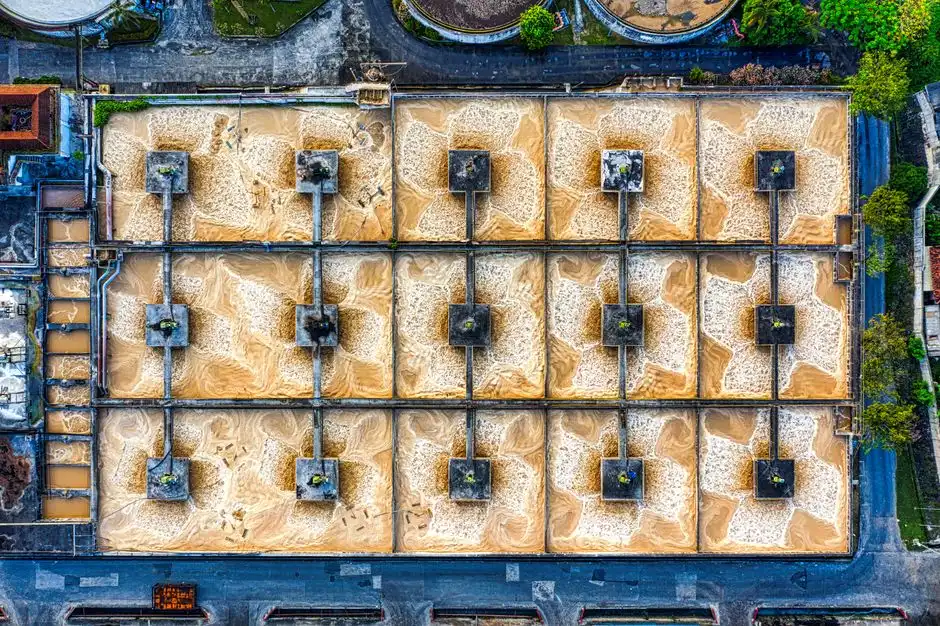
The numbers below are the basis for any Liverpool design submission; treat them as the default unless site-specific sampling justifies otherwise. Domestic dry-weather flow is 150 L/head·day, and the hydraulic peaking factor for a small community or commercial site is 2.5–3.0 × DWF per BS EN 12255-1 and Sewers for Adoption 7th edition (source: BS EN 12255-1, 2025 reprint). Influent loadings used in 2026 designs are BOD 250–350 mg/L, COD 500–700 mg/L, TSS 200–300 mg/L, NH3-N 30–50 mg/L and total P 6–10 mg/L — the same envelope that the EA expects in a permit application for a small sanitary discharge (source: EA Standard Rules SR2015No18, 2026). Target effluent for a standard EA sanitary discharge consent is BOD ≤20 mg/L, SS ≤30 mg/L and NH3-N ≤5 mg/L (5 mg/L is the floor for sensitive receiving waters). For the aeration tank, design to F/M 0.05–0.15 kg BOD/kg MLSS·day at MLSS 3,000–5,000 mg/L on conventional A/O; an MBR can be pushed to 6,000–10,000 mg/L MLSS, which shrinks the tank by roughly 40% and gives a near-sterile effluent (source: HydropureWater design envelope, 2026). Sludge production on a packaged A/O plant is 0.7–1.0 kg DS per kg BOD removed, so plan sludge storage to a 30-day minimum and arrange a transfer route before commissioning. The table below sets out the full numeric envelope for a single PE through to a 500-PE scheme.
| Parameter | Domestic sewage (influent) | UK design basis | Target effluent (EA standard) |
|---|---|---|---|
| Population equivalent (PE) | 1 | 150 L/head·day DWF | — |
| Hydraulic peak | — | 2.5–3.0 × DWF | — |
| BOD | 250–350 mg/L | 60 g/PE·day | ≤20 mg/L |
| COD | 500–700 mg/L | 120 g/PE·day | ≤75 mg/L (typical) |
| Total suspended solids | 200–300 mg/L | 70 g/PE·day | ≤30 mg/L |
| NH3-N | 30–50 mg/L | 10 g/PE·day | ≤5 mg/L (sensitive: 5 mg/L) |
| Total phosphorus | 6–10 mg/L | 2 g/PE·day | ≤2 mg/L (if consented) |
| MLSS, conventional A/O | — | 3,000–5,000 mg/L | — |
| MLSS, MBR | — | 6,000–10,000 mg/L | — |
| F/M ratio | — | 0.05–0.15 kg BOD/kg MLSS·day | — |
| Sludge yield | — | 0.7–1.0 kg DS/kg BOD removed | — |
For sludge-line sizing, the domestic sewage sludge treatment process guide covers thickening and dewatering options in detail.
Comparing the four process options for Liverpool sites
Four process options cover almost every domestic site a Liverpool M&E consultant will see: A/O contact oxidation in a buried package, sequencing batch reactor (SBR), membrane bioreactor (MBR), and biological (trickling) filter. A/O contact oxidation, exemplified by buried package STPs in the 1–80 m³/h range, gives the lowest CAPEX, the smallest above-grade footprint, and tolerates the intermittent loading typical of hotels, schools and residential developments; it runs unattended and needs only quarterly inspection (source: HydropureWater WSZ product specification, 2026). SBR is a single-tank, time-based variant of activated sludge with built-in clarification; it suits sites with variable occupancy and produces a good effluent at CAPEX slightly above A/O, but the decant phase has to be designed around peak inflow to avoid solids wash-out. MBR couples a conventional bioreactor with submerged DF-series PVDF flat-sheet membrane modules at 0.1 µm pore size (32–135 m³/day per module); the effluent is typically <1 NTU and directly reusable for toilet flush, irrigation, or tight consents, and the footprint is around 60% smaller than a comparable CAS scheme (source: HydropureWater DF product specification, 2026; Olarinmoye et al., 2016, on polish-step rationale for trace organics). Biological filter (trickling filter + humus tank) is robust and low-energy but the largest in footprint and the least consistent on NH3-N — losing ground in UK new-builds where land is expensive. For Merseyside ground conditions, the practical rule is that high groundwater and clay pockets (Liverpool sits on lower new red sandstone covered by up to 7.9 m of clay, per en.wikipedia.org, 2026) favour buried A/O or MBR; rural fringe sites with land can still use biological filters or pond systems (source: OpenAlex, integrated UASB-ponds for domestic sewage, 2015). The decision framework and the head-to-head numbers are below.
| Criterion | A/O package (buried) | SBR | MBR | Biological filter |
|---|---|---|---|---|
| Typical CAPEX (2026, installed) | £15k–£25k per m³/day | £18k–£30k per m³/day | £28k–£45k per m³/day | £20k–£35k per m³/day |
| Typical OPEX (energy + sludge) | £0.25–£0.40/m³ | £0.30–£0.45/m³ | £0.45–£0.65/m³ | £0.18–£0.30/m³ |
| Footprint (m² per m³/day) | 0.6–0.8 | 0.8–1.0 | 0.35–0.5 | 1.5–2.5 |
| Effluent BOD (mg/L) | ≤20 | ≤20 | ≤5 | ≤20–30 |
| Effluent SS (mg/L) | ≤30 | ≤30 | ≤1 (typically <1 NTU) | ≤30 |
| NH3-N removal | Good at long SRT | Good | Very good | Variable, temperature-sensitive |
| Operator attendance | None (alarm) | Quarterly | Quarterly + membrane CIP | None–monthly |
| Best fit on Liverpool sites | Tight plots, burial required | Variable occupancy, hotels, schools | Water reuse, tight consents | Rural Merseyside with land |
For full module-level engineering, the MBR membrane module selection guide walks through flux, CIP and aeration duty.
The 2026 consent pathway: United Utilities, the Environment Agency and Building Regs
For a Liverpool site, three consent paths run in parallel and the engineer must pick the right one before ordering the package plant. Discharge to public sewer requires a trade-effluent consent application to United Utilities under the Water Industry Act 1991; expect site-specific limits on pH 6–9, temperature below 43 °C, fats/oils/grease, and metals — and expect a 28-day administrative clock for a small commercial discharge (source: United Utilities trade-effluent guidance, 2026). Discharge to surface water or ground requires an Environmental Permit from the EA under EPR 2016; for small discharges the fast route is a Standard Rules permit (SR2015No18 for up to 5 m³/day to surface water, SR2020No4 for up to 2 m³/day to ground), which avoids a bespoke application (source: EA Standard Rules, 2026). Septic tanks serving more than one property that discharge to surface water must satisfy the 2020 General Binding Rules — minimum 5 m from any building, drainage field sized to a percolation test (Vp ≤ 15 s for a standard trench) and a CE-marked system. New builds must satisfy Building Regulations Part H2 (2022 edition, still in force in 2026), with Building Control notified before installation; a non-CE system will be rejected at sign-off. Across the Mersey region, the EA's catchment plans continue to tighten consents year-on-year, so plan for review at year 5 of any permit, not year 10. A worked example for another dense UK catchment is set out in the London effluent treatment plant buyer's guide.
Sludge handling and reuse on Liverpool sites
Sludge is the part most buyers forget and the part United Utilities' trade-effluent team always asks about. Domestic STP sludge is classified as 'sewage sludge' under the Sludge (Use in Agriculture) Regulations 1989 and the Defra 2018 Code of Practice; any on-site storage beyond 12 months normally triggers a transfer note and an EA inspection (source: Defra Code of Practice, 2018). For a packaged plant, thickening on a lamella clarifier or dissolved-air flotation (DAF) unit cuts volume before a plate-and-frame sludge dewatering press, with a typical dry-solids cake target of 22–28% — the same envelope the DAF/skid range is sized against (source: HydropureWater sludge dewatering specification, 2026). For a Liverpool site where haulage is the dominant OPEX line, an on-site press typically pays back at >20 m³/day inflow; below that, road tanker removal of thickened sludge is more economic. Where land allows — rural Merseyside fringe sites — a constructed-wetland polishing stage is a credible low-load option to drop residual nitrogen and suspended solids, and pairs naturally with a packaged biological plant (source: IntechOpen, constructed wetland + MFC, 2018). End-of-process residue handling is covered in the landfill leachate sludge treatment guide, which sets out the same DAF + press chain for a higher-strength feed.
Cost and footprint comparison for a 50 m³/day Liverpool site
Translating the technology comparison into what a buyer actually signs off, the table below benchmarks the four options at a representative 50 m³/day flow (roughly 330 PE) on a Liverpool brownfield site. Civil works dominate the spread in Merseyside ground conditions (high groundwater, clay over sandstone — en.wikipedia.org, 2026), which is why the A/O and MBR ranges are wide. MBR wins on tight Liverpool plots because the footprint at 0.35–0.5 m² per m³/day is half that of SBR and a quarter that of biological filter. OPEX is dominated by aeration power and sludge haulage; the rule of thumb is that MBR beats A/O on whole-life cost once the water-reuse offset exceeds £1.50/m³ or land cost exceeds £800/m². For a deployable, container-format reference plant, the containerised wastewater treatment guide sets out the same cost logic at skid scale.
| Option at 50 m³/day | CAPEX (installed, 2026) | OPEX (£/m³) | Footprint (m²) | Whole-life crossover vs A/O |
|---|---|---|---|---|
| A/O package (buried) | £750k–£1.25m | £0.25–£0.40 | 30–40 | Baseline |
| SBR | £900k–£1.5m | £0.30–£0.45 | 40–50 | No clear crossover |
| MBR | £1.4m–£2.25m | £0.45–£0.65 | 17–25 | Beats A/O when reuse offset >£1.50/m³ or land >£800/m² |
| Biological filter | £1.0m–£1.75m | £0.18–£0.30 | 75–125 | Beats A/O only at very low land cost |
Frequently Asked Questions
Do I need a United Utilities consent or an Environment Agency permit for a packaged STP in Liverpool?
It depends on where the treated effluent goes. Discharge to a public sewer needs a United Utilities trade-effluent consent under the Water Industry Act 1991, with typical limits pH 6–9, temperature <43 °C, and site-specific metals and FOG caps; discharge to surface water or ground needs an EA Environmental Permit under EPR 2016, with the Standard Rules SR2015No18 (≤5 m³/day to surface water) or SR2020No4 (≤2 m³/day to ground) being the fast route (source: EA Standard Rules, 2026; United Utilities trade-effluent guidance, 2026).
What influent and effluent numbers should I design to for a Liverpool domestic plant?
Design to BOD 250–350 mg/L, COD 500–700 mg/L, TSS 200–300 mg/L, NH3-N 30–50 mg/L and total P 6–10 mg/L at 150 L/head·day DWF with a 2.5–3.0 × hydraulic peaking factor (BS EN 12255-1, 2025 reprint). Target effluent is BOD ≤20 mg/L, SS ≤30 mg/L and NH3-N ≤5 mg/L for a standard EA sanitary discharge, with NH3-N at 5 mg/L the floor for sensitive receiving waters (source: EA Standard Rules SR2015No18, 2026).
When does an MBR beat a buried A/O package on whole-life cost?
For a 50 m³/day Liverpool site, MBR CAPEX is £1.4m–£2.25m versus £750k–£1.25m for A/O, but OPEX is £0.45–£0.65/m³ versus £0.25–£0.40/m³ and footprint is roughly half. MBR beats A/O on whole-life cost once the water-reuse offset (toilet flush, irrigation) exceeds £1.50/m³ or land cost exceeds £800/m²; below those thresholds, A/O is the economic choice (source: HydropureWater field data, 2026).
How much sludge will a packaged domestic plant produce, and how do I handle it?
Expect 0.7–1.0 kg DS per kg BOD removed, equating to roughly 25–35 kg DS/day at 50 m³/day influent (source: HydropureWater design envelope, 2026). On-site dewatering with a lamella or DAF thickener feeding a plate-and-frame press typically reaches 22–28% DS cake, making road haulage economic above about 20 m³/day inflow; below that, tanker removal of thickened sludge is the cheaper option. Storage beyond 12 months triggers a sludge transfer note under the Defra 2018 Code of Practice.
Does a packaged STP remove pharmaceutical residues?
Biological treatment alone does not reliably remove trace pharmaceuticals. Diclofenac has been measured in sewage sludge at up to 1,100 µg/kg dry weight, exceeding the previous global maximum of 560 µg/kg, and four pharmaceuticals have been recorded above predicted-no-effect concentrations in surface water downstream of treated discharges (source: Olarinmoye et al., J. Environ. Chem. Ecotoxicol., March 2016). For any site where reuse is planned or the receiving water is sensitive, add an MBR step (0.1 µm PVDF) or a downstream activated-carbon polisher.
Related Equipment
- buried A/O package STP — specifications, capacity range, and technical data
- integrated MBR system — specifications, capacity range, and technical data