The Two-Layer Compliance Stack Every Roanoke Mill Faces
Pulp and paper plants near Roanoke meet pretreatment limits by operating under a two-layer compliance stack: the federal categorical effluent standards in 40 CFR Part 430 (1974/1977, amended 1982/1986, with the 1998 toxic-pollutant amendment adding AOX, chlorinated organics, and color), layered with site-specific POTW local limits developed under 40 CFR 403.5(c). The standard 2026 train is fiber recovery → DAF → biological treatment (activated sludge or MBR) → AOX/color polishing, with sludge dewatered above 30% cake dryness before sewer discharge.
The federal layer applies to every pulp, paper, and paperboard point source in the U.S., whether the mill discharges to a river or to a municipal sewer. EPA promulgated the original categorical standards in 1974 and 1977, amended them in 1982 and 1986, and added the major toxic-pollutant amendment in 1998 covering AOX, chlorinated organics, and color (per EPA, 2026). For mills sending wastewater to the Western Virginia Water Authority or a similar regional POTW, the second layer is the National Pretreatment Program at 40 CFR Part 403, which governs every industrial user discharging to a publicly owned treatment works.
Two statutory terms drive enforcement. Under 40 CFR 403.3(p), pass-through is "a discharge which exits the POTW in quantities or concentrations which, alone or in conjunction with other discharges, is a cause of a violation of any requirement of the POTW's NPDES permit." Interference is "a discharge which, alone or in conjunction with other discharges, inhibits or disrupts the POTW, its treatment processes or operations, or its sludge processes, use or disposal, and is a cause of a violation of any requirement of the POTW's NPDES permit or of the prevention of sewage sludge use or disposal." Either trigger gives the POTW enforcement authority against the industrial user. Roughly half of U.S. pulp and paper facilities discharge to POTWs rather than directly to surface waters (IWA Publishing, 1988), which is why the sewer-connection layer is the one that actually bites for a Roanoke-area mill.
Local limits under 40 CFR 403.5(c) are POTW-specific numeric or narrative effluent limits applied at the end-of-pipe discharge — the point of connection to the collection system. Once EPA approves them, they are enforceable as federal pretreatment standards, which is what gives the local-limit letter from a regional POTW real teeth (per EPA, 2026).
Roanoke-Area Mill Mix: Which 40 CFR Part 430 Subpart Applies
Subpart selection is the first decision on the critical path: it determines the regulated pollutant parameter set, and equipment selection is downstream of that step. EPA's official subpart list runs from Subpart A (dissolving pulp at kraft mills) through Subpart L (tissue, filter, non-woven, and paperboard from purchased pulp), and each subpart carries its own parameter envelope (per EPA Effluent Guidelines, 2026). Bleached kraft and dissolving sulfite use chlorine dioxide in the bleach plant, which drives AOX and color — Subparts B and C are the strictest for that reason. A Roanoke-area mill running unbleached kraft linerboard, unbleached kraft–NSSC cross-recovery, or paperboard from wastepaper with some deink fiber maps to a different subpart and a different equipment train than a bleached market-pulp mill.
The regional mill mix is dominated by unbleached kraft linerboard under Subpart D, paperboard and tissue from wastepaper under Subpart J, and a smaller subset of deink mills producing fine paper, tissue, or newsprint under Subpart I. Subparts D, I, and J are the controlling subparts for the Roanoke service area. A recycled-fiber mill under Subpart I or J faces high TSS, ink, fillers, and FOG, and the train should center on DAF rather than gravity clarification (per EPA, 2026). The regulated pollutant envelope is shorter than for a bleached kraft market-pulp mill, but the solids and BOD load is heavier, and color/AOX are typically not a pretreatment driver.
| Subpart | Mill type | Roanoke relevance | Key regulated parameters |
|---|---|---|---|
| A | Dissolving kraft | None expected | AOX, color, high BOD |
| B | Bleached papergrade kraft and soda | None expected | AOX, color, chlorinated organics, high BOD |
| C | Dissolving sulfite (nitration, viscose, cellophane, acetate) | None expected | AOX, color, high BOD |
| D | Unbleached kraft (linerboard, bag paper); unbleached kraft–NSSC cross-recovery | Primary | High BOD, TSS, sulfides |
| E | Papergrade sulfite (blow pit, drum wash) | Limited | BOD, TSS |
| F | Semi-chemical (ammonia or sodium base) | Limited | High BOD, TSS, sulfides |
| G | Groundwood, TMP, chemi-mechanical, newsprint | Limited | High TSS, BOD, wood extractives |
| H | Non-wood chemical pulp | None expected | Variable |
| I | Deink mills (fine paper, tissue, newsprint) | Secondary | High TSS, ink, fillers, FOG, BOD |
| J | Wastepaper mills without deinking (paperboard, tissue, molded products) | Primary | High TSS, FOG, fillers, BOD |
| K | Fine and lightweight papers from purchased pulp | Limited | BOD, TSS |
| L | Tissue, filter, non-woven, paperboard from purchased pulp at nonintegrated mills | Limited | BOD, TSS |
For a Roanoke mill, the practical effect is that the train should be sized for BOD and TSS, not AOX and color. The AOX/color polishing step is still specified in the design as a contingency, but it is the local-limit layer — zinc, copper, lead, sulfides, oil/grease, and temperature — that drives the day-to-day compliance risk.
Raw Influent Envelope by Subpart
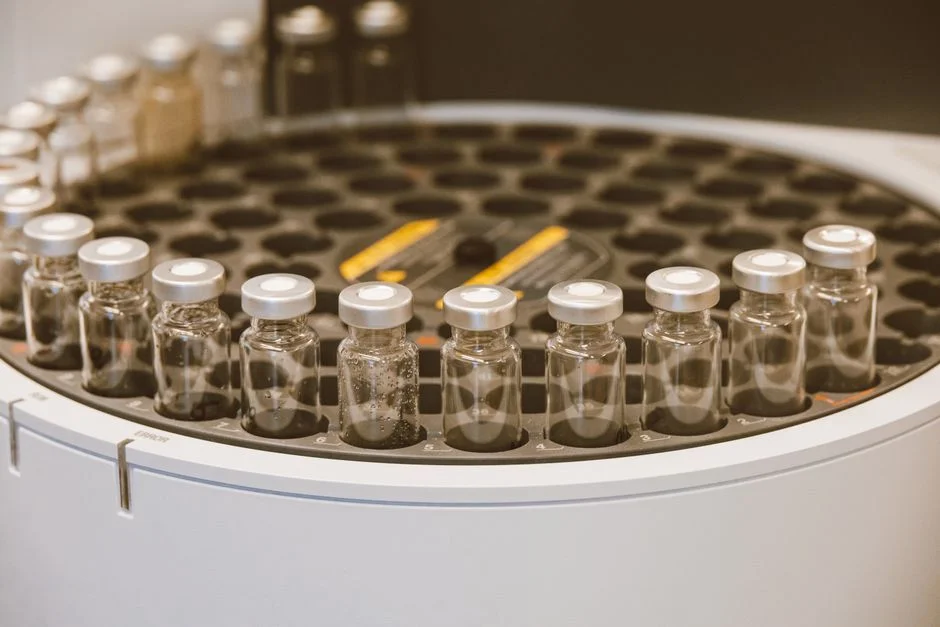
Raw pulp and paper wastewater is highly variable, but the parameter envelope is well documented. Mills that benchmark their own influent against industry-typical ranges will catch design gaps before the POTW does (per EPA Effluent Guidelines, 2026). Bleached kraft market pulp and dissolving pulp operations carry the highest AOX and color loading, which is why subparts B and C have the strictest categorical parameters; for a Roanoke-area mill running Subpart D, I, or J, AOX is typically in the low single digits and color is in the hundreds of Pt-Co units, not the multi-thousand range seen at a dissolving pulp mill.
| Parameter | Subpart D (unbleached kraft, NSSC) | Subpart F (semi-chemical) | Subpart I (deink) | Subpart J (wastepaper, no deink) |
|---|---|---|---|---|
| BOD (mg/L) | 250–600 | 500–1,500 | 300–800 | 200–600 |
| COD (mg/L) | 800–2,500 | 2,000–5,000 | 1,000–3,000 | 800–2,500 |
| TSS (mg/L) | 500–1,500 | 700–2,000 | 1,000–3,000 | 800–2,500 |
| AOX (mg/L) | <1–3 | <1 | <1–2 | <1 |
| Color (Pt-Co) | 200–800 | 200–600 | 300–1,000 | 200–700 |
| Sulfides (mg/L) | 2–20 | 5–30 | <2 | <2 |
| pH | 6–9 | 6–9 | 6–9 | 6–9 |
| Temperature (°C) | 25–45 | 30–50 | 25–45 | 25–40 |
Subparts F and D (high-BOD streams) often justify an anaerobic front-end to bring aeration power down. Equalization with 4–8 hour retention is required across all subparts because batch digesters, periodic bleach-plant discharges, and broke-system spills drive hydraulic and load swings that destabilize downstream biology if not buffered (per EPA, 2026).
The Standard 2026 Treatment Train for an Indirect Discharger
The treatment train for an indirect discharger is a sequence of unit operations, each justified by the pollutant fraction it removes. Train complexity scales with subcategory: an unbleached kraft linerboard mill under Subpart D typically runs fiber recovery → primary clarification → DAF → activated sludge, while a bleached kraft market pulp mill adds equalization, an anaerobic/aerobic combination, and an AOX/color polishing step (per EPA Effluent Guidelines, 2026). The seven steps below cover a Subpart D mill at the low end and a bleached Subpart B mill at the high end.
Step 1 — Fiber recovery and save-all. The first move on any pulp-mill wastewater train is reclaiming fiber from the white-water loop. A save-all (dissolved-air or drum-filter type) cuts TSS to the primary clarifier and reduces the load on downstream biological treatment (per BioResources, S5). Fiber recovery is also a revenue line — recovered fiber is reused in the furnish, which is why the save-all almost pays back before the rest of the train is built.
Step 2 — Primary clarification and equalization. Equalization with 4–8 hour retention smooths hydraulic and load swings before DAF, which is essential on mills with batch digesters or periodic bleach-plant discharges.
Step 3 — DAF as the default primary clarifier. Colloidal and fine-fiber fractions do not settle well, so a DAF for pulp and paper primary treatment is the standard unit. The DAF line is offered in 13 standard models covering 4–300 m³/h, with hydraulic-loading rates of 15–25 m³/m²·h typical for paper-mill service.
Step 4 — Biological treatment. Activated sludge remains the workhorse at most U.S. mills, but a submerged PVDF MBR for pulp and paper biological treatment is now the default where footprint is constrained or where the polishing TSS target sits below 10 mg/L. MBR systems routinely deliver 95–99% BOD removal. Anaerobic reactors (UASB or IC) suit high-strength BOD streams from dissolving pulp or NSSC operations and can offset aeration power. For an overview of why mills in the U.S. pick DAF and MBR as the workhorses, see our national overview of U.S. pulp and paper pretreatment compliance.
Step 5 — AOX and color polishing. Required for bleached kraft and dissolving subcategories. Options include activated-carbon adsorption, ozone or UV/hydrogen peroxide advanced oxidation, and membrane filtration. PLC-controlled chemical dosing for coagulants and pH adjustment is needed to hold performance under variable load.
Step 6 — Sludge handling. A plate-and-frame filter press for pulp-mill sludge with lime or polymer conditioning achieves cake dryness above 30%, directly lowering haul cost. Selecting the press is the last equipment decision, not the first — sludge volume is a function of upstream chemistry.
Step 7 — Tertiary polishing. Multi-media filtration for pretreatment polishing typically follows biological treatment when RO or reuse is targeted. MBR membrane service life of 5–8 years is realistic with proper cleaning protocols. For a 2026 view of DAF tradeoffs, see our DAF system advantages and disadvantages in 2026.
Pass-Through, Interference, and the Local-Limit Triggers That Actually Get Enforced
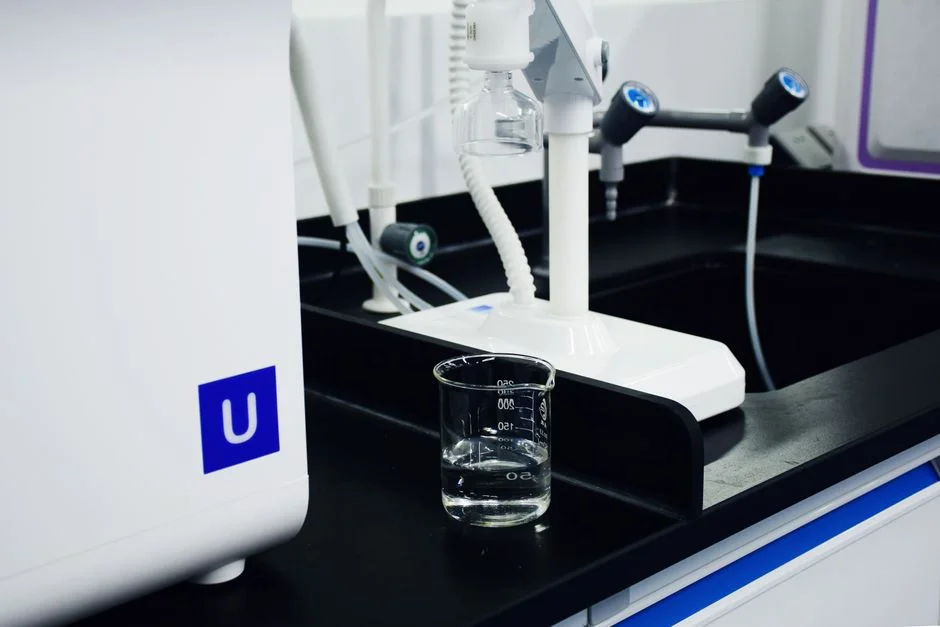
Local limits are site-specific numeric or narrative effluent limits applied at the end-of-pipe discharge from an industrial user — the point of connection to the POTW's collection system (per EPA, 2026). They are not a federal uniform number. Each POTW must evaluate its own treatment capability, the quality of its receiving waters, and the impact on its sludge, and then derive limits that prevent pass-through and interference.
Pollutants most often constrained tighter than Part 430 by POTW local limits include heavy metals (zinc, copper, lead) that disrupt biotreatment, sulfides that release hydrogen sulfide in collection systems, high-temperature discharges that shift basin biology, and oil/grease that creates slug-loading at the headworks. A local limit of, for example, 1 mg/L sulfide and 2–3 mg/L zinc at the connection is common at U.S. mills discharging to secondary POTWs (per EPA, 2026). A sulfide slug or a zinc pulse from a process upset — not a slow drift in BOD — is the typical enforcement trigger on a mill-to-POTW sewer. The Western Virginia Water Authority's pretreatment program follows the same 40 CFR 403.5(c) framework, with site-specific numeric limits and the right to impose BMPs, sampling frequency, and self-monitoring as conditions of discharge acceptance.
Under 40 CFR 403.3(p), pass-through is a discharge that exits the POTW in quantities or concentrations that cause a violation of the POTW's NPDES permit. Interference is a discharge that inhibits or disrupts POTW treatment processes, sludge processes, or sludge disposal, again causing a permit or sludge violation. Both are independent enforcement triggers, and either one is enough for a regional POTW to open an enforcement file.
2026 Cost Reality: CAPEX, OPEX, and the Reuse Shift
Order-of-magnitude 2026 CAPEX bands for an indirect-discharge train at a pulp and paper mill: small mill (≤50 m³/h) $0.8–1.5M; mid-size (50–200 m³/h) $1.5–4M; larger mill with polishing and reuse $4–8M. These are planning estimates only — verify against a vendor proposal for the actual flow, load, and discharge limits. OPEX typically falls in the $0.15–0.45/m³ range, dominated by aeration power, polymer, and sludge haul; the plate-and-frame press at >30% cake dryness is the single biggest OPEX lever because every point of cake dryness gained directly cuts the tonnage hauled to disposal. The full breakdown is in our 2026 effluent treatment plant CAPEX and OPEX breakdown.
The 2024–2026 capital-budget shift has been toward in-mill reuse. The polishing step that holds a mill under the POTW cap is the same step that qualifies the effluent for brown-stock washing or shower water reuse (per ACS ES&T Engineering, 2021), and several mills have re-scoped 2024–2026 capex projects from "POTW-only" designs to MBR + multi-media + RO polishing trains sized for brown-water reuse. Regional POTWs around Roanoke are sized for municipal flow rather than industrial reuse demand, so a mill that needs brown-water reuse for brown-stock washing, shower water, or boiler feed typically builds the polishing step itself. Reverse osmosis for pulp-mill reuse polishing is the unit operation that closes that loop, and RO concentrate plus brine streams may still need separate handling even when the main train hits reuse quality — a common designer mistake is to bury the brine line item inside overall CAPEX rather than calling it out separately.
Frequently Asked Questions
Does a Roanoke pulp and paper mill discharging to the Western Virginia Water Authority still have to meet 40 CFR Part 430 categorical limits?
Yes. A mill discharging to a POTW is an indirect discharger under the National Pretreatment Program (40 CFR Part 403) and remains subject to the categorical effluent standards in 40 CFR Part 430. Both layers apply, and the controlling number is whichever is tighter for any given parameter (per EPA, 2026).
Which 40 CFR Part 430 subpart applies to a recycled-fiber paperboard mill near Roanoke?
Paperboard and tissue from wastepaper without deinking fall under Subpart J; deink mills producing fine paper, tissue, or newsprint fall under Subpart I. Both are high-TSS streams with FOG and filler loading, and the train should center on DAF rather than gravity clarification (per EPA Effluent Guidelines, 2026).
What AOX reduction can a bleached kraft mill expect from biological treatment plus polishing before sewer discharge?
Bleached kraft and dissolving-sulfite mills routinely achieve 70–90% AOX reduction across a well-operated biological step plus activated-carbon or advanced-oxidation polishing, taking the discharge from a raw 10–30 mg/L range down into the low single digits required at most U.S. POTWs (per EPA Effluent Guidelines, 2026).
Is MBR effluent suitable for in-mill reuse such as brown-stock washing or shower water?
MBR effluent at <10 mg/L TSS and <5 mg/L BOD is suitable for brown-stock washing and shower water in most mills. For boiler-feed-grade reuse, multi-media filtration plus RO polishing is required; MBR membrane life of 5–8 years is realistic with proper cleaning.