Why Galvanizing Rinse Water Needs Ion Exchange Polishing
A hydroxide precipitation clarifier typically leaves 2–10 mg/L residual zinc and copper in the overflow — well above the 1–2 mg/L daily-composite ceiling that 2026 EU and US permits enforce on hot-dip and electrogalvanizing lines (MDPI 2025 review, Sustainability 17(19):8562). That gap between bulk precipitation and permit is exactly where an ion exchange system for galvanizing wastewater earns its place: it polishes low-concentration rinse water (typically <50 mg/L total heavy metals) down to <1 mg/L, recovers Zn, Cu, and Ni as a concentrated regenerant for recycle, and supplies demineralized water that can be returned to the rinse cascade.
The MDPI 2025 review is explicit on the scope: "the processes of ion exchange and adsorption can be used only for wastewater characterised by a low heavy metal concentration, with organic matter preliminarily removed" (MDPI 2025, Sustainability 17(19):8562). Translation for the engineer: if your feed is a spent ammonium-chloride galvanizing bath at 30,000 mg/L Zn, ion exchange is the wrong tool — evaporative crystallization or precipitation is. If your feed is a counter-current rinse cascade overflow at 5–20 mg/L Zn, IX is the right finishing step.
Real-effluent data confirms the need for a polishing step after bulk sorption. A March 2026 study on apricot-stone biosorbent for Zn-rich galvanic effluent reported 95% Zn removal in clean aqueous solution but only 55% in real industrial galvanic wastewater (Molecules 31(7):1143, 2026). Matrix interference — co-ions, complexing agents, suspended solids — is what makes the difference between a lab result and a permit-compliant discharge, and it is what an IX polisher downstream of precipitation and filtration is designed to close out.
How the Four Galvanic Wastewater Streams Map to Resin Choice
Galvanic wastewater is not one stream — it is four, and each demands a different treatment logic before any resin sees it (MDPI 2025). The four-stream classification from the Sustainability review is: chromium wastewater (Cr(VI) and etch bath carryover), cyanide wastewater (free CN⁻ and metal-cyanide complexes), acidic-alkaline wastewater (the dominant rinse stream carrying Zn, Cu, Ni, Fe, plus mineral acids and surfactants), and oily wastewater (degreasing wash water). An IX polisher is a poor fit for streams 1, 2, and 4 unless they are pre-treated.
Cyanide streams need oxidative destruction of free CN⁻ — alkaline chlorination to <1 mg/L CN⁻ — before any chelating resin is exposed. Residual free cyanide poisons iminodiacetate functional groups by forming stable Cu(CN) complexes that block the active sites, and the resulting resin loses 60–80% of its working capacity within a few cycles. Cr(VI) is not captured by standard cation resins either; it requires reduction to Cr(III) at pH ~2 (typically with NaHSO₃ or FeSO₄) before the trivalent cation can be exchanged. The MDPI 2025 review notes that non-selective sorbents achieve only ~50% Cr(VI) removal on raw feed, versus ~99% for Cr(III) after reduction — so reduction-first is non-negotiable.
The acidic-alkaline rinse stream is where IX belongs. The resin envelope for cation exchange is narrow: feed TSS <10 mg/L, free Cl₂ <0.1 mg/L, temperature <60 °C, oil & grease <5 mg/L — figures consistent with Condorchem's guidance on resin sensitivity to oxidants and organic fouling (condorchem.com, 2025). Hitting these targets usually means a multi-media filter upstream of the ion exchange bed plus, on water-recovery loops, a UF guard.
Resin Selection Matrix: SAC, WAC, Iminodiacetate, and AMP
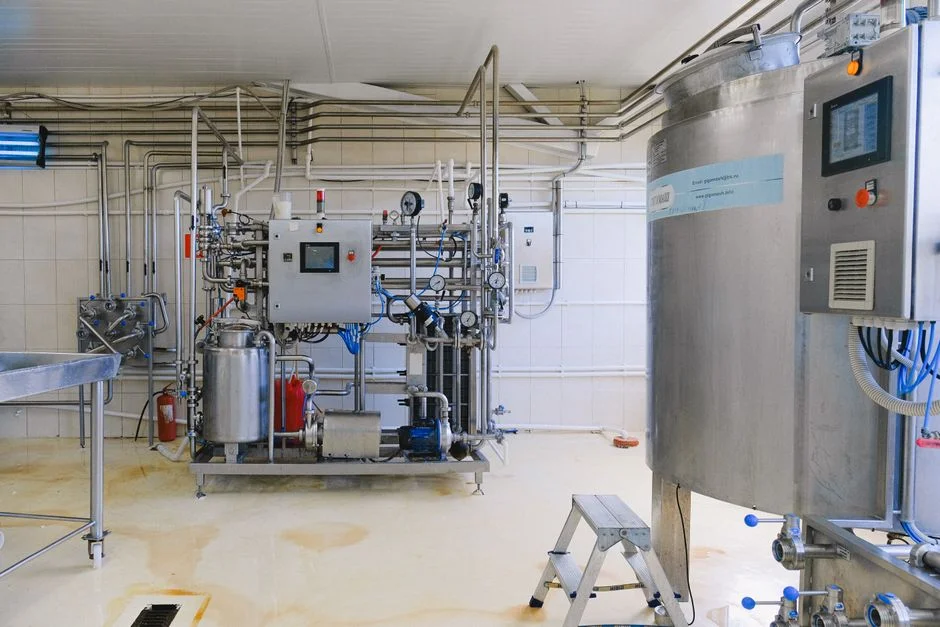
Resin selection on a Zn-dominant rinse stream is dominated by one question: do you need selectivity for heavy metals over calcium and sodium, or just bulk polishing? The four functional groups in routine galvanizing service answer that question differently.
| Resin type | Functional group | Target metal affinity (selectivity order) | Operating pH window | Regenerant | Typical capacity (eq/L) |
|---|---|---|---|---|---|
| Strong-acid cation (SAC) | Sulphonic acid | Non-selective; follows typical water-softening order (Cu²⁺ > Zn²⁺ > Ni²⁺ > Ca²⁺ > Na⁺) | 0–14 | NaCl (softening) or HCl/H₂SO₄ (demin) | 1.8–2.2 |
| Weak-acid cation (WAC) | Carboxylic acid | Divalent-selective; Ca²⁺ ≈ Mg²⁺ ≈ Zn²⁺ when alkalinity is high | 4–14 (must be above pKa ~4.5) | HCl or H₂SO₄ | 3.0–4.0 (theoretical) |
| Iminodiacetate (chelating) | –CH₂N(CH₂COO⁻)₂ | Cu²⁺ > Zn²⁺ > Ni²⁺ > Ca²⁺ (high divalent selectivity at pH 2–5) | 2–5 for service; 12–14 for full acid conversion | H₂SO₄ (10–15%) | 1.0–1.2 (working) |
| Aminomethylphosphonic (AMP) | –CH₂NHCH₂PO₃²⁻ | Fe³⁺ > Al³⁺ > Cu²⁺ > Zn²⁺; tolerates high Ca²⁺ background | 0–7 (functional); 1–3 for Fe/Al loading | H₂SO₄ or HCl | 0.8–1.0 (working) |
For a hot-dip or electrogalvanizing rinse water where Zn is the dominant metal and Ca/Mg is moderate, iminodiacetate chelating resin is the workhorse: it loads preferentially on divalent heavy metals in the 2–5 pH window and is regenerable with 10–15% H₂SO₄, yielding a concentrated ZnSO₄ stream that can be sent to an evaporator or back to the galvanizing bath. SAC is the cheap fallback when the stream is essentially a dilute salt solution and selectivity is irrelevant — but expect to waste capacity on Na⁺ and Ca²⁺ breakthrough ahead of Zn. WAC earns its slot when the feed alkalinity is high (200+ mg/L as CaCO₃) and partial dealkalization is acceptable. AMP is the specialist choice when Fe³⁺ and Al³⁺ from pickling carryover crowd the iminodiacetate resin.
Two operating realities from Condorchem's engineering note (2025) are worth flagging here: the practical resin working capacity is approximately 50 g CaCO₃ per litre of resin as the economic upper bound for IX service, and resins are damaged by free chlorine and by sustained temperatures above 60 °C — both common in hot-dip rinse cascades. Treat both as hard design constraints.
Process Flow: Where Ion Exchange Fits in a Galvanizing Treatment Train
The canonical BAT-aligned train for a hot-dip galvanizing rinse water is a six-step sequence: collection/equalization → pH adjustment and Cr(VI) reduction (if hexavalent chromium is present) → hydroxide precipitation with coagulant → multimedia filtration → cartridge or UF guard → two-stage cation IX → final pH adjustment → discharge or reuse. The MDPI 2025 review confirms the core of this: using 10% polyaluminium chloride (PAC) at pH 5.5 removes ~98% iron and ~93% aluminium from the precipitation stage (MDPI 2025, Sustainability 17(19):8562), and up to 60% of the treated water is returned to circulation on a BAT-aligned train — IX is the step that makes that recovered water metal-free enough to feed back to the rinse cascade.
Two pieces of equipment upstream of the IX vessel are not optional. The multi-media filter upstream of the ion exchange bed drops the feed to <10 mg/L TSS and an SDI below 5, preventing resin bed fouling and runaway pressure drop. On water-recovery loops, a UF membrane guard before the ion exchange polisher further reduces SDI to <2 and removes any colloidal carryover from the clarifier, which dramatically extends IX run length between regenerations. pH swings around the precipitation stage are the most common cause of IX underperformance, so an automatic chemical dosing for pH adjustment and resin regeneration skid is the third piece most plants retrofit within 12 months of commissioning.
Placement matters: IX must sit after precipitation and filtration, not before. Putting IX first would force the resin to handle the bulk of the metal loading plus all the suspended solids, exhausting the bed in hours rather than days and fouling it with hydroxide precipitate. The two-vessel cation train — a lead vessel that exhausts first and a lag vessel that polishes — gives a service-to-regeneration cycle that operators can run on shift, and a conductivity or pH break-through trigger on the lag vessel outlet that calls the regeneration step before the lead vessel starts sloughing metals downstream.
Sizing and Operating Parameters (Worked Example)
The governing benchmark for a first-pass resin volume is the ~50 g CaCO₃/L practical capacity cited by Condorchem (2025). On a Zn-dominant stream, convert the metal loading to CaCO₃ equivalent using 1 mg/L Zn ≈ 1.53 mg/L as CaCO₃, then size the bed for an 8–24 hour service cycle between regenerations.
| Parameter | Value (worked example) |
|---|---|
| Rinse flow | 20 m³/h |
| Influent Zn | 10 mg/L (≈ 15.3 mg/L as CaCO₃) |
| Target effluent Zn | < 1 mg/L |
| Zinc loading | 20 m³/h × 10 g/m³ = 200 g Zn/h ≈ 306 g CaCO₃/h |
| Resin volume (16-h cycle, 50 g CaCO₃/L) | (306 g/h × 16 h) ÷ 50 g/L ≈ 98 L per vessel |
| Recommended vessel size | 100–120 L (round up for bed-depth ≥ 900 mm) |
| Service flow rate | 8–40 BV/h (1.3–6.7 m³/h per 100 L vessel) |
| Regenerant (iminodiacetate resin) | 10–15% H₂SO₄, 2–3 BV per vessel per cycle |
| Regeneration frequency | Every 14–18 h of service on this loading |
Standard cation-exchange skid sequencing has five steps: service → backwash (50–60% bed expansion, 10–15 min) → regenerant downflow (H₂SO₄ for chelating, NaCl for softening) → slow rinse (1 BV at regenerant flow) → fast rinse (2–3 BV at service flow) → return to service. On a Zn-dominant chelating-resin system, route the spent regenerant to a small vacuum evaporator for zero-liquid-discharge metal recovery, as Condorchem (2025) describes for IX regeneration effluents.
The trigger to switch from IX to membrane polishing is straightforward: when feed total dissolved metals exceed ~500 mg/L, or when the monovalent ion fraction (Na⁺ + K⁺) is high enough that the resin exhausts in under 8 hours per cycle, an industrial water softener as a monovalent-ion guard upstream of a chelating polisher buys back cycle length, and beyond that threshold, RO becomes the more economic polish.
2026 Compliance and Economics: When IX Beats Membrane Polishing
Three regulatory frames converge on sub-2 mg/L metals in galvanizing discharge in 2026: the EU Industrial Emissions Directive (2010/75/EU) BREF for Surface Treatment of Metals, US EPA categorical pretreatment standards under 40 CFR 413/433 (with Zn, Cu, Ni daily-maximum limits in the 1–4 mg/L range), and China's GB 21900-2008 electroplating pollutant standard. The MDPI 2025 review frames the same conclusion in BAT terms: "up to 60% of the treated water is returned into circulation and … heavy metals are removed from the wastewater" (MDPI 2025, Sustainability 17(19):8562). 2026 US categorical pretreatment compliance for metals plants follows the same logic — a precipitation + IX polish is the BAT-recommended combination for sub-2 mg/L discharge.
Economically, IX wins for low-flow, low-concentration, water-recovery duty. The recovered Zn/Cu stream has resale value as a feedstock; the regenerant volume is small enough (2–3 BV per cycle) to route to a vacuum evaporator; and the alternative — running a polishing RO on the same stream — wastes energy concentrating Zn that could have been exchanged and recovered. For spent regenerant handling, see the broader discussion of metal-bearing sludge handling downstream of IX regeneration, and for upstream bulk reduction consider electrocoagulation alternatives for metal finishing wastewater as a feed-side option.
IX loses to membrane polishing at high salinity (>500 mg/L TDS), high monovalent fraction, or when the water-recovery credit is small because the discharge point is a non-potable sewer. In those cases, an RO polishing step or an EDI demineralization skid replaces the IX polisher as the final stage. The one-sentence selection rule: pick ion exchange when feed metals are <50 mg/L and water reuse is part of the CAPEX case; pick RO when feed TDS is >500 mg/L or water recovery is not monetized.
Frequently Asked Questions
Which resin should I pick for a Zn-dominant galvanizing rinse water?
Iminodiacetate chelating resin in the 2–5 pH window is the workhorse, with a selectivity order of Cu²⁺ > Zn²⁺ > Ni²⁺ > Ca²⁺ and regeneration on 10–15% H₂SO₄ at 2–3 BV per cycle. Switch to AMP only when Fe³⁺/Al³⁺ from pickling carryover crowd the bed.
Can ion exchange treat Cr(VI) directly?
No. Standard cation resins do not capture Cr(VI); reduce it to Cr(III) at pH ~2 with NaHSO₃ or FeSO₄ first, then polish on a chelating cation resin. The MDPI 2025 review reports ~99% Cr(III) removal versus only ~50% for Cr(VI) on non-selective sorbents.
When does IX lose to RO for galvanizing wastewater polishing?
When feed total dissolved metals exceed ~500 mg/L, or when Na⁺/K⁺ dominate the matrix and exhaust the bed in under 8 hours per cycle. Below that threshold, IX is cheaper per m³ treated and yields a recoverable metal stream.
What pretreatment does an IX polisher require?
Feed TSS <10 mg/L, free Cl₂ <0.1 mg/L, temperature <60 °C, and oil & grease <5 mg/L. A multi-media filter plus a UF guard on water-recovery loops is the standard way to meet these limits.
How long does IX resin last on a galvanizing duty?
3–5 years is typical for iminodiacetate resin on a well-pretreated Zn/Cu rinse stream, assuming oxidant breakthrough is prevented. Chlorine and sustained >60 °C temperatures are the two failure modes that shorten service life.
How is IX regenerant handled safely?
Route the spent H₂SO₄ or HCl regenerant to a small vacuum evaporator for zero-liquid-discharge metal recovery, as Condorchem (2025) describes. The concentrate is reusable feedstock; the distillate returns to the rinse cascade.