Why the Malaysian ETP Is the Largest Hidden Liability in the Deal
API plant inlet COD typically runs 1,000–10,000 mg/L, and synthesis lines frequently exceed 10,000 mg/L (per pharma ETP engineering data, 2025). Malaysia's Eighth Schedule caps effluent at 100 mg/L COD — a 10–100× reduction that has to land in a single ETP train. When a deal team treats wastewater as an EHS footnote, the inlet-to-outlet gap silently becomes the largest line item they did not price. Mid-cap API plant legacy cleanup, an AMR monitoring program, and CTO re-issue typically run $20–60M, equal to 5–12% of deal value (HydropureWater field data, 2026). The 2024–2025 enforcement pattern saw 8–15% price chips and $5–20M escrow holdbacks tied to legacy antibiotic-residue exceedances in groundwater (per trade-press reporting, 2025). The ETP is the single largest hidden liability in pharma M&A because the inlet-to-outlet gap is wider than any other unit operation on site.
Malaysia's Binding Wastewater Framework: DOE, IER 2009, and the Eighth Schedule
The binding instrument is the Industrial Effluent Regulations 2009 (P.U.(A) 434), made under Section 25 of the Environmental Quality Act 1974 and enforced by the Department of Environment (DOE) Malaysia. Discharges from any premises that discharge trade effluent fall under the IER 2009 regime, and a pharmaceutical plant is squarely in scope. The Eighth Schedule sets the parameter envelope: Standard A applies to effluent discharged to inland waters, Standard B applies to effluent discharged to a sewer upstream of a municipal STP. Standard A is the relevant ceiling for any plant that has its own outfall or discharges to a receiving water body; Standard B relaxes some parameters but still caps COD at 250 mg/L and O&G at 50 mg/L, and the receiving STP operator (the state water utility such as Air Selangor, SAJ, or PBAPP) may impose tighter site-specific limits on top of the regulatory floor. The CTO and any Written Approval are issued to a specific legal entity — that is the root of the change-of-control problem in the next section.
| Parameter | Unit | Standard A (inland waters) | Standard B (to sewer) |
|---|---|---|---|
| Temperature | °C | 40 | 45 |
| pH | — | 5.5–9.0 | 5.5–9.0 |
| COD | mg/L | 100 | 250 |
| BOD₃ | mg/L | 50 | — |
| Suspended solids | mg/L | 100 | 200 |
| Oil & grease | mg/L | 50 | 50 |
| Ammoniacal nitrogen (NH₃-N) | mg/L | 20 | — |
| Mercury (Hg) | mg/L | 0.05 | 0.05 |
| Cadmium (Cd) | mg/L | 0.10 | 0.10 |
| Lead (Pb) | mg/L | 0.50 | 0.50 |
| Hexavalent chromium (Cr⁶⁺) | mg/L | 0.20 | 0.20 |
| Copper (Cu) | mg/L | 1.00 | 1.00 |
| Zinc (Zn) | mg/L | 5.00 | 5.00 |
| Nickel (Ni) | mg/L | 1.00 | 1.00 |
| Phenols | mg/L | 0.50 | — |
Arsenic (As) sits in the IER 2009 metals panel at 0.50 mg/L; the table above is a working subset of the parameters that govern most retrofit decisions. Any plant that holds itself to Standard A on its existing outfall is meeting one of the tighter envelopes in Southeast Asia — the retrofit budget is correspondingly heavier than a comparable Indian SPCB 250/30/6.5–8.5 envelope (per pharma ETP engineering data, 2025).
Permit Transfer and Change-of-Control Mechanics at DOE Malaysia

The CTO, the Scheduled Waste Licence under the Scheduled Wastes Regulations 2005, and any Written Approval for construction or capacity expansion are issued to a specific legal entity named on the DOE file. A share purchase that changes the controller of that entity does not by itself extinguish the permit, but the new controller is required to notify DOE and apply for the CTO to be reissued in the name of the acquiring entity. In practice the re-application window runs 60–180 days, during which the plant either operates under a continuation letter from DOE or halts discharge — both of which must be pre-negotiated in the SPA or closing itself becomes a deal-killer. Pre-Operating Approval (also called Pre-Occupation Approval) is required before commissioning new process lines; a retrofit that adds biological or RO capacity typically requires a fresh Written Approval even when the CTO is transferred cleanly.
| Step | Owner | Trigger | Typical duration |
|---|---|---|---|
| Notify DOE of change of control | Buyer's EHS counsel | Within 30 days of share purchase | 1–4 weeks |
| File CTO re-issue application | Buyer | DOE notification accepted | 60–180 days |
| Obtain DOE continuation letter | Seller (pre-close) / Buyer (post-close) | Application filed | 2–8 weeks |
| File Written Approval for retrofit scope | Buyer / EPC | Capacity expansion or new process line | 60–120 days |
| Obtain Pre-Operating Approval | Buyer | Written Approval granted | 30–60 days |
For context, the US NPDES name-transfer window is shorter at 30–90 days, and India SPCB CTO transfer sits at 60–180 days — Malaysia is mid-range for permit transfer risk, and the AMR enforcement overlay now lengthens the effective review window because the application is no longer a pure paper exercise.
AMR and Antibiotic-Residue Risk Under Malaysia's National Action Plan
Malaysia's National Action Plan on AMR (MyAP-AMR 2022–2026) is being operationalized through DOE's pharmaceutical-sector monitoring, and antibiotic-residue exceedances in effluent or downstream drinking water sources are now treated as enforcement triggers even where the existing permit is silent on antibiotics (HydropureWater field data, 2026). The global context reinforces the direction of travel: the EU IED 2010/75/EU BAT conclusions were updated in 2022 and remain in force through 2026, and the US EPA PFAS/PPCP framework updates published in 2025 treat specific API residues as candidate pollutants with monitoring triggers. India's draft pharmaceutical effluent norms notified in 2024 propose antibiotic-residue limits at ng/L levels, mirroring EU practice. The 2024–2025 deal-finance impact is concrete: pharma M&A saw price chips of 8–15% and $5–20M escrow holdbacks specifically tied to legacy antibiotic-residue exceedances in surrounding groundwater (per trade-press reporting, 2025). The diligence step that closes this gap is to add antibiotic and hormone residue assays to the outlet panel even where the existing permit does not require them — the buyer's future permit re-issue will.
Phase II Effluent ESA: What to Sample and Where
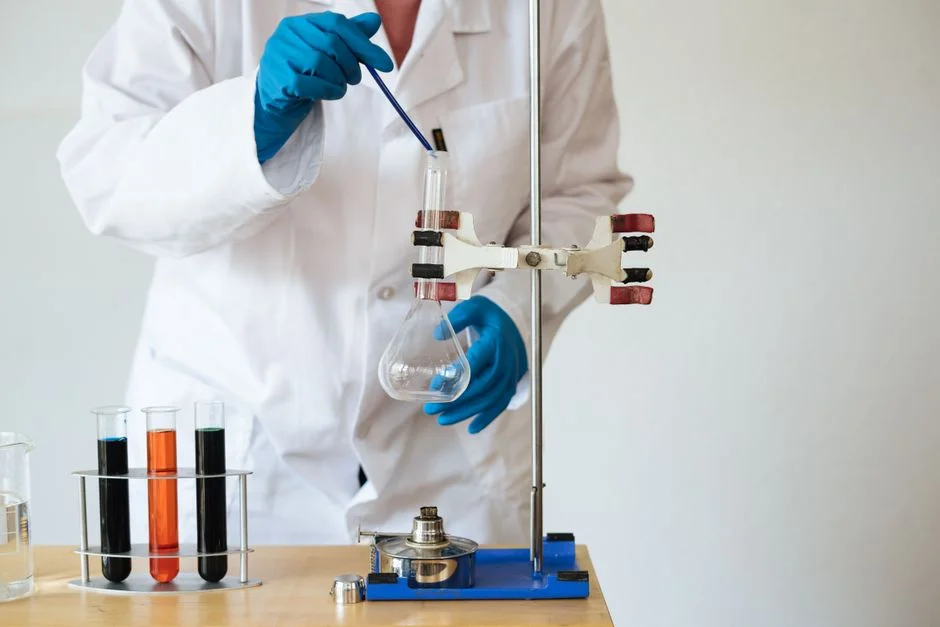
Per ASTM E2247-16 practice (cited in 2025 EHS audit guides), the Phase II effluent ESA should pull 24-hour composite samples at three points: the ETP inlet, the secondary clarifier outlet, and downstream of any polishing stage. The minimum parameter set is COD, BOD, TSS, pH, O&G, total nitrogen, plus a target API list covering the site's manufacturing portfolio — solvents, antibiotics, hormones, and any SVHC-listed compounds. Groundwater monitoring wells, sludge storage pads, and historical API spill areas must be sampled, and the results should be cross-referenced to the historical API-spill map in the seller data room. Run a 5–7 day sampling campaign through a 3rd-party lab with the parameters above, alongside 30 days of recent operating data pulled from the seller's SCADA — inlet flows, DO, pH, return-activated-sludge rates, and chemical dosing setpoints. A campaign shorter than five days will not catch a batch cycle; a campaign longer than seven days is rarely funded at the LOI stage.
Malaysia-Specific Retrofit Cost Matrix (2026 Estimates)
Each retrofit line below is mapped to a specific Eighth Schedule parameter so the deal team can underwrite the CAPEX against a measured failure mode, not a generic compliance envelope. The figures are order-of-magnitude 2026 estimates for greenfield-equivalent installed cost, sized to inlet load and discharge objective, and should be validated by an EPC advisor before being written into the SPA (per internal engineering benchmarks, 2026).
| Unit operation | Eighth Schedule limit it addresses | 2026 CAPEX (USD) | Notes |
|---|---|---|---|
| Equalization (HRT 6–24 h) + neutralization | pH 5.5–9.0 | $0.3–0.8M | Buffer batch dumps; CaO dose ~0.56 mg/L per 1 mg/L acidity, jar-test validated |
| Lamella clarifier retrofit (surface loading 20–40 m/h) | SS 100 mg/L | $0.4–1.0M | Footprint-constrained TSS cut; ~30% coagulant reduction |
| MBBR / SBR biological upgrade (DO 2–4 mg/L, SRT 5–15 d) | COD 100 / BOD 50 mg/L | $1.0–2.5M | Higher biomass, footprint-neutral BOD cut |
| Integrated MBR membrane bioreactor system with PVDF flat-sheet MBR module (0.1 μm) | COD 100 / BOD 50 / SS 100 mg/L | $1.5–3.0M | Single-pass compliance, 60% smaller footprint than CAS |
| Industrial RO system (recovery up to 95%) | Dissolved salts, residual APIs | $1.0–2.0M | Needed for cooling-tower reuse and antibiotic-residue removal |
| AOP skid (O₃/H₂O₂ or UV/H₂O₂) | Antibiotic residues (MyAP-AMR) | $0.8–2.0M | Polish train only where Phase II panel shows API non-attainment |
| Cooling-tower makeup reuse loop | Water reuse economics | $0.5–1.5M | RO permeate to cooling tower; cuts freshwater draw 30–60% |
The mapping rule the deal team should underwrite against: spending under $1M typically buys consent renewal; $1–3M buys modern compliance against the 100/50/100/5.5–9.0 envelope; $2–6M buys full compliance retrofit (lamella + MBR + RO) on a 500–2,000 m³/day API plant; $6–15M is required for ZLD or cooling-tower makeup reuse scope (HydropureWater field data, 2026). A useful cross-check on MBR sizing and cost is the broader pharma ETP due-diligence framework; the brackish water RO for pharmaceutical plants guide is a useful sizing reference for the reuse loop.
Liability Allocation: Escrow, Indemnity, and Environmental Insurance
The standard pharma ETP liability structure runs as follows. The buyer holds 5–10% of equity value in escrow for 18–36 months against ETP retrofit cost over-run, consent revocation, and any third-party API claim (HydropureWater field data, 2026). The seller gives a specific indemnity for known historical spills, documented non-attainment events, and any pending enforcement action disclosed in the data room. Environmental insurance — Pollution Legal Liability plus Cleanup Cost Cap — covers unknown legacy conditions up to a stated limit, typically $10–50M for mid-cap deals (per M&A insurance market practice, 2025). Quantified triggers for drawdown beat vague language: any non-attainment of the 100 mg/L COD, 50 mg/L BOD, or 5.5–9.0 pH envelope measured against a 30-day rolling average; any API-in-effluent exceedance against the target list; any show-cause or closure notice from DOE. A well-structured indemnity and escrow package typically reduces the buyer's effective ETP retrofit cost by 30–50% versus a clean-balance-sheet assumption.
30/60/90-Day Post-Close Execution Plan
Day 0–30 is stabilization, not construction. Install online telemetry (pH, flow, COD/TOC) at the inlet and outlet; run a 30-day compliance confirmation campaign against the 100/50/100/5.5–9.0 Eighth Schedule envelope; lock the operator shift roster and confirm the PLC-controlled chemical dosing skid calibration. A reliable baseline is the only way to measure the retrofit's impact against the deal model. Day 31–60 is the priority retrofit window. Execute neutralization upgrades and PLC-controlled dosing skids for jar-test-validated coagulant dose, install a lamella clarifier retrofit where primary clarification is the bottleneck, and tune return-activated-sludge controls to a sludge age of 5–15 days with DO at 2–4 mg/L. Day 61–90 is the polish train. Install an MBR membrane bioreactor system with a PVDF flat-sheet MBR module for secondary polishing, an industrial RO system for reuse-grade water, and an AOP skid for residual API breakdown. Commission a reuse line to the cooling tower. A lime dosing system for pharmaceutical wastewater covers the neutralization step in more detail. Experienced EPCs deliver these as skid-mounted, pre-wired, factory-tested modules so the 90-day window holds inside the DOE continuation-letter envelope.
Frequently Asked Questions
What wastewater permit does a Pfizer-acquired Malaysian plant need?
A Consent to Operate under the Industrial Effluent Regulations 2009, transferred to the new legal entity within 60–180 days of closing, plus a fresh Written Approval if any biological or RO capacity is being added.
What are Malaysia's Eighth Schedule effluent limits for pharmaceutical plants?
Standard A (inland waters): COD 100 mg/L, BOD₃ 50 mg/L, SS 100 mg/L, O&G 50 mg/L, NH₃-N 20 mg/L, pH 5.5–9.0, plus heavy metals (Hg 0.05, Cd 0.10, Pb 0.50, Cr⁶⁺ 0.20, Cu 1.00, Zn 5.00, Ni 1.00 mg/L) and phenols 0.50 mg/L. Standard B (to sewer) caps COD at 250 mg/L and O&G at 50 mg/L, with the receiving STP operator free to impose tighter site-specific limits.
How much does an ETP retrofit cost for a Malaysian API plant?
$2–6M for a 500–2,000 m³/day compliance retrofit covering lamella clarifier, MBR biological polishing, and RO; $6–15M if cooling-tower reuse or ZLD is in scope (HydropureWater field data, 2026).
Are antibiotic residues regulated in Malaysian pharma effluent?
Under MyAP-AMR 2022–2026 they are treated as enforcement triggers by DOE even where existing permits are silent, and detected exceedances in groundwater or downstream drinking-water sources have triggered 8–15% price chips and $5–20M escrow holdbacks in 2024–2025 pharma deals.
Can the plant discharge during the 60–180 day CTO transfer window?
Only under a DOE continuation letter — this must be pre-negotiated in the SPA, or the plant halts discharge at closing and the deal model breaks.