
How Halifax Treats Its Domestic Sewage Today
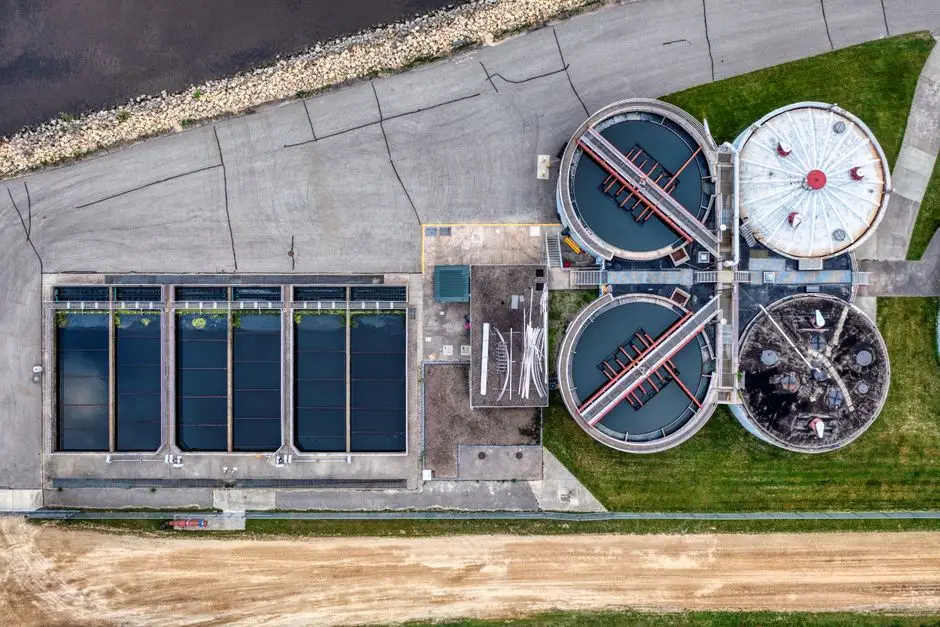
Domestic sewage treatment in Halifax is anchored by the three Harbour Solutions plants — Halifax, Dartmouth, and Herring Cove — which together replaced roughly 200 million litres per day of untreated discharge into Halifax Harbour. The CAD $333 million programme, built between the early 2000s and 2010, closed the historic combined-sewer outfalls and redirected sanitary flow to three secondary-treatment plants with disinfection (Wikipedia, Harbour Solutions). For two and a half centuries prior to commissioning, raw sewage was discharged untreated directly into Halifax Harbour, enough to fill 25 Olympic-size swimming pools every day (per Wikipedia, Harbour Solutions).
The commissioning sequence matters for anyone sizing redundancy in 2026: the Halifax plant came online on 11 February 2008, the Dartmouth plant on 10 July 2008, and Herring Cove in late fall 2008 (per Wikipedia, Harbour Solutions). On 9 July 2008 HRM re-opened Black Rock Beach and Dingle Park for swimming, the first time in living memory. A cascade of electrical and mechanical failures followed, culminating in a January 2009 wet-well incident at the Halifax plant. A Nova Scotia Power outage forced two backup generators online; the load split unevenly, one generator overloaded, the floodgate transfer switch failed, and all four sewage pumps in the 85-foot wet well shorted out. The electrical control room above the wet well flooded, destroying the controls. The Halifax Wastewater Treatment Plant did not return to full operation until 25 June 2010 (per Wikipedia, Harbour Solutions).
The 2026 reader needs to register one further fact from the same article, flagged on Wikipedia in December 2025: "Untreated sewage continues to be discharged into Halifax harbour due to severed sewer lines during construction of the new treatment plant" (Wikipedia, Harbour Solutions, December 2025 update). For any 2026 project in HRM — a hotel on the waterfront, a hospital expansion, a campus redevelopment, a remote lodge outside the trunk — that sentence defines the live operational risk during the construction window and is the reason process redundancy and equalisation are non-negotiable in your spec. The operating utility is Halifax Water, formed after the 1996 amalgamation of the Halifax Regional Water Commission with the former city systems, and it remains the approval and discharge counterparty for any new connection in 2026.
The 2026 Regulatory Envelope for Domestic Sewage in Nova Scotia
Three approval layers govern a 2026 domestic sewage project in Halifax: federal Wastewater Systems Effluent Regulations (WSER) under the Fisheries Act, the CCME National Strategy for Municipal Wastewater Effluent as the harmonised Canadian benchmark, and the Nova Scotia Environment Act Section 22 approval at the provincial gate. A fourth, often-overlooked layer sits with Halifax Water: a separate discharge permit is required for any flow above the residential allocation entering the trunk system, and that permit is the most common bottleneck for hotel and campus redevelopments.
WSER sets the non-negotiable baseline: carbonaceous BOD₅, total suspended solids, and total residual chlorine limits, with monitoring and reporting obligations for any facility discharging to a watercourse frequented by fish. The CCME strategy overlays the broader Canadian effluent quality framework and is what NS Environment typically references when it issues industrial and institutional approvals. Nova Scotia Environment Act Section 22 is the provincial instrument that authorises construction and operation of a new domestic sewage works or a discharge to a watercourse or municipal sewer in HRM; the application pack must include design criteria, effluent characterisation, and a compliance plan tied to those federal and CCME limits.
On top of that, Halifax Water reviews any new connection for hydraulic capacity in the receiving trunk. For a 120-room waterfront hotel at typical Canadian design flows, peak discharge can demand a downstream capacity confirmation that the utility will not issue without a phased connection agreement. The practical effect: your 2026 RFQ cannot be written until you have a written indication from Halifax Water on trunk capacity and an NS Environment scoping opinion on the discharge point, because either of those two letters can change the technology short-list from packaged MBR to a buried A/O package or to a holding-tank-plus-truck haul. Plan a minimum 90-day lead on those two items before equipment procurement.
Process Options for Halifax Projects: MBR, WSZ A/O, SBR, and Vermifiltration
Four technology families cover virtually every domestic sewage spec a Halifax consulting engineer will see in 2026. The table below summarises operating envelopes; the narrative after it covers the matching use cases.
| Technology | Flow envelope | Footprint | Operator touch | Best-fit Halifax use case |
|---|---|---|---|---|
| MBR (submerged PVDF, <1 μm) | 10–2,000 m³/day | ~60% of CAS | Low (automated) | Urban hotel retrofits, hospital expansions, tight harbourfront sites |
| WSZ buried A/O contact-oxidation | 1–80 m³/h | Smallest visual (buried) | Very low (automated) | Suburban infill, small institutions, remote HRM sites outside trunk |
| SBR (sequencing batch) | 20–5,000+ m³/day | Larger civil footprint | Moderate | Tourism-peaked flows, cruise-day surges |
| Vermifiltration / septic + drainfield | 1–50 m³/day | Land-intensive | Periodic | Off-grid HRM cabins, decentralised clusters, rural lots |
An integrated MBR system (10–2,000 m³/day) with submerged PVDF membranes at nominal pore size below 1 μm produces near-reuse-quality effluent and runs at roughly 60% of the footprint of a comparable conventional activated-sludge plant. For a tight Halifax urban site — a hotel on the waterfront, a hospital expansion with a constrained service yard, a campus redevelopment with a one-storey equipment room allowance — MBR is usually the lowest-risk 2026 choice. The trade-off is membrane replacement on a 10–15 year cycle and a higher unit CapEx than the buried alternatives.
A buried WSZ A/O package plant (1–80 m³/h) combines anoxic/aerobic biological contact oxidation with sedimentation and disinfection in a single buried unit, fully automated and rated 1–80 m³/h (HydropureWater product data, 2026). It is the workhorse for Halifax suburban infill, small institutions, and remote HRM sites outside the trunk sewer: installed below grade with landscaping above, or trailer-mounted for temporary deployment. Where the visual constraint is the dominant design driver — a heritage waterfront, a residential infill, a lodge — the buried envelope is decisive.
SBR (sequencing batch reactor) gives you a fill-react-settle-decant cycle in a single tank, which is genuinely useful when the influent is erratic. For a Halifax summer hotel with cruise-day surges, an event-driven campus, or any site where the peaking factor runs 5–6×, the SBR's batch hydraulic handling absorbs the peak without the washout risk of a continuous-flow biological stage. The cost is a larger civil footprint than MBR or WSZ and more operator touch per week.
Vermifiltration — earthworm-augmented filtration on a septic-tank effluent — and conventional septic-tank-plus-drainage-field systems are documented for decentralised domestic applications (Kyriienko et al., 2018, doi:10.32347/2411-4049.2018.3.59-67; IntechOpen, 2022, doi:10.5772/intechopen.103920). For off-grid HRM cabins, rural lots outside the trunk, and small decentralised clusters, these remain a defensible low-CapEx option, but they are land-intensive and NS-approval-sensitive: the Section 22 reviewer will want a soil assessment, a nitrification capacity demonstration, and a defined replacement interval for the drainage field.
Cold-climate caveat that applies to every option above: biological kinetics slow materially below 10 °C, and Halifax winter effluent temperatures will sit in the 6–10 °C band for extended periods. Specify diffused aeration with enclosed reactors, heated enclosures for MCCs and instrumentation, and equalisation sized for at least 8 hours of average flow to buffer diurnal and tourism-driven peaks against the slower winter biology.
Sizing a Domestic STP for a Halifax Development
The Canadian design envelope for domestic flow in 2026 runs 225–280 L/cap·day, with a peaking factor of 2.5–4.0× for residential populations and 5–6× for short-stay tourist accommodation. Design influent BOD₅ sits at 50–80 g/cap·day and TSS at 60–90 g/cap·day — those are the load numbers to put into your biological-stage sizing, not the textbook defaults.
Worked example for a 120-room Halifax waterfront hotel: assume 2.0 guests/room average occupancy, 250 L/cap·day, and a 5× peaking factor for short-stay tourist accommodation. Average daily flow = 120 × 2.0 × 250 = 60,000 L/day, or 60 m³/day. Peak flow = 60 × 5 = 300 m³/day. That envelope sits squarely inside the MBR 10–2,000 m³/day range and at the lower end of the WSZ 1–80 m³/h band (≈24 m³/h on a 24-hour average, rising to ≈120 m³/h on instantaneous peak). For an equivalent hospital expansion sized at 250 beds at 600 L/bed·day with a 2.5× peaking factor, you are at 150 m³/day average and 375 m³/day peak — still inside MBR envelope, but you would want a duty/standby cassette arrangement to handle maintenance without losing treatment capacity.
For tourism-peaked sites, specify equalisation volume of at least 8 hours of average flow — 20 m³ for the 60 m³/day hotel above — to absorb the morning check-out plus midday event surge without driving the biological stage into washout. Designers often forget that the peaking factor is applied to instantaneous flow, not to the 24-hour average, and the equalisation tank is what reconciles the two. For a remote HRM lodge outside the trunk sewer, design for a smaller population but a wider peaking range (weekend occupancy 100% vs weekday 10%) and an effluent that can be reused for subsurface irrigation where soil and setback conditions allow.
Cost, Footprint, and Compliance: A 2026 Comparison
The table below frames the technology short-list on procurement-relevant axes. CapEx is given as a qualitative band — low / mid / high — because site conditions, effluent targets, and Halifax Water connection fees swing the absolute number more than the equipment cost does. For a sized quote, request a package from HydropureWater on the MBR line or on the WSZ buried A/O package.
| Technology | CapEx band | Footprint per 100 m³/day | Operator hours/week | WSER alignment |
|---|---|---|---|---|
| MBR | High | Smallest | Low | High (sub-1 μm membranes, low TSS) |
| WSZ A/O buried | Mid | Smallest visual (buried) | Very low | Good with tertiary polish if needed |
| SBR | Low–Mid | Largest civil | Moderate | Good with tertiary polish |
| Vermifiltration / septic + drainfield | Low | Land-intensive | Periodic | Site-specific; NS-approval-sensitive |
For sites inside the Halifax trunk sewer with a confirmed Halifax Water connection, a packaged MBR is the lowest-risk 2026 choice: highest CapEx per m³, smallest above-grade footprint, lowest operator time, and the cleanest pass on WSER-aligned BOD₅ and TSS limits. For sites outside the trunk or with tight landscaping or heritage constraints, the buried WSZ unit is usually preferred — mid CapEx, essentially zero above-grade visual impact, very low operator touch. SBR wins where the load is genuinely variable and you have the civil footprint to absorb it. Vermifiltration and septic-plus-drainfield remain defensible for off-grid HRM sites, but you should expect a longer NS Section 22 review and a defined drainfield replacement schedule in the approval.
What to Spec into the RFQ for a Halifax Domestic Sewage Plant
An RFQ that vendors can respond to apples-to-apples has to tie every line item to an approval document, an operating envelope, or a documented Halifax failure mode. The 2009 wet-well electrical failure is not a historical footnote — it is the reason process redundancy belongs in your spec.
Spec these items as a minimum: effluent targets of BOD₅ ≤25 mg/L, TSS ≤30 mg/L, and total residual chlorine ≤0.02 mg/L, aligned to the WSER baseline that NS Environment applies; process redundancy in the form of dual aeration blowers, duty/standby disc filters or MBR cassettes, and a UPS on the control panels; cold-weather provisions including a heated and enclosed MCC room, insulated or buried tanks, freeze-rated above-grade pipework, and aeration diffusers rated for sustained sub-10 °C operation. Documentation deliverables should be explicit: an NS Environment Act Section 22 approval submission pack, an O&M manual calibrated to the actual equipment supplied, a 12-month performance guarantee tied to effluent parameters rather than to uptime, and a 5-year spare-parts schedule with part numbers and lead times. For a comparable cross-jurisdictional view of process and compliance framing, the Domestic Sewage Treatment in Edmonton — 2026 Process & Compliance Guide covers a similar envelope under Alberta framework requirements.
Frequently Asked Questions
Who operates the centralised sewage system in Halifax in 2026?
Halifax Water, the regional water, wastewater, and stormwater utility formed after the 1996 municipal amalgamation, operates the three Harbour Solutions plants (Halifax, Dartmouth, Herring Cove) and the trunk sewer network. Any new or expanding facility that connects to the trunk requires a Halifax Water discharge permit in parallel with an NS Environment Act Section 22 approval.
What is the typical 2026 effluent target for a packaged domestic sewage plant in Nova Scotia?
NS Environment typically applies a WSER-aligned envelope of BOD₅ ≤25 mg/L, TSS ≤30 mg/L, and total residual chlorine ≤0.02 mg/L for facilities discharging to a watercourse. Halifax Water may impose tighter or site-specific limits through the discharge permit, particularly for coastal discharges in the harbour watershed.
Which packaged technology is the best fit for a 120-room Halifax hotel?
An integrated MBR system in the 10–2,000 m³/day range covers the average (~60 m³/day) and peak (~300 m³/day) envelope of a 120-room hotel at typical Canadian design flows. For sites where above-grade equipment is constrained, a buried WSZ A/O package in the 1–80 m³/h band is the leading alternative.
Is untreated sewage still being discharged into Halifax harbour?
Wikipedia's Harbour Solutions article, updated in December 2025, states that untreated sewage continues to be discharged into Halifax harbour due to severed sewer lines during construction of the new treatment plant. For any 2026 project, this is the live operational risk and is the reason equalisation, standby power, and process redundancy belong in the spec.
Can a vermifiltration or septic-plus-drainfield system be approved in HRM?
Yes, but they are reviewed site-by-site under NS Environment Act Section 22 and are most defensible for off-grid HRM cabins, rural lots outside the trunk, and small decentralised clusters (Kyriienko et al., 2018, doi:10.32347/2411-4049.2018.3.59-67). Expect a soil assessment, a nitrification capacity demonstration, and a defined drainfield replacement interval in the approval. For a broader cold-climate packaged-plant perspective outside NS, the Domestic Sewage Treatment in Calgary — 2026 Engineering & Compliance Guide covers a comparable envelope under Alberta framework requirements, and the MBR vs Conventional Activated Sludge — 2026 Engineering Guide compares MBR against conventional activated sludge at process level.