Why the closing date, not the permit date, triggers Hyundai's exposure
When Hyundai acquires a Malaysia manufacturing plant in 2026, the new owner inherits full environmental liability on closing under the Environmental Quality Act 1974 (Act 127) and the Environmental Quality (Industrial Effluent) Regulations 2009, administered by the Department of Environment (DOE) (per Malaysia's 2026 wastewater compliance framework). A new DOE discharge permit, engineering plan submission, and EIA where the activity is prescribed are mandatory before the plant can lawfully discharge under the Hyundai name. Hyundai's own Environmental Management Policy §7 separately requires environmental due diligence for any M&A activity (per Hyundai Motor Company Environmental Management Policy, 2022-06 update).
Under Malaysian law, environmental liability follows the operator, not the asset. Section 34A of the EQA 1974 prohibits the discharge of untreated sludge or effluent into inland waters, and that prohibition binds the entity operating the plant on the day effluent leaves the site — not the entity that owned the asset when the permit was first issued. A share purchase that closes on 30 September means Hyundai owns the Section 34A exposure from 1 October, even if the seller's permit is still in force and the DOE has not yet issued a replacement in Hyundai's name.
The practical consequence for any 6–12 month M&A runway: permit design, EIA scoping, and engineering must begin before closing, not after. Treating the deal as a financial transaction and the environmental re-issuance as a post-closing item collapses the legal pathway, the ETP design, and the SPA indemnity into a single compressed window the deal team will not recover from. The Hyundai ETP due-diligence checklist for 2026 M&A maps this same 6–12 month runway for Korea, the US, and India, and the Malaysian variant is no shorter.
The binding legal pathway: EQA 1974, E(I)E Regulations 2009, and the DOE
Two statutory instruments govern industrial wastewater in Malaysia, and the Department of Environment is the sole enforcer. The Environmental Quality Act 1974 (Act 127) sets the framework, the prohibition in Section 34A, and the penalty floor in Section 25. The Environmental Quality (Industrial Effluent) Regulations 2009 set the numerical discharge envelope, the prescribed-activity list for EIA, the sampling and reporting cadence, and the IEQIS electronic submission mechanism (per Malaysia's 2026 wastewater compliance framework, 2026-02). There is no parallel state-level industrial discharge permit that displaces the DOE — Selangor and Johor enforce through the federal DOE, even where state environmental departments run their own monitoring pilots.
The DOE permit sequence is fixed and largely non-negotiable:
- Pre-application consultation with the relevant DOE state office to confirm activity classification and EIA scope.
- Submission of engineering plans, including process flow diagrams, mass balance, ETP P&ID, and sludge handling.
- Environmental Impact Assessment for prescribed activities under the Environmental Quality (Prescribed Activities) (Environmental Impact Assessment) Order 2015.
- DOE site inspection of the proposed ETP and discharge point.
- License issuance, typically with site-specific conditions tighter than the Standard B envelope.
- Time-limited renewal with periodic reassessment; high-risk facilities may be moved to monthly or continuous monitoring.
The seller's existing permit does not automatically transfer with the share purchase. A change in process profile, throughput, or waste-stream character is a permit re-issuance event, and an automotive target with a paint shop, a phosphating/e-coat line, and stamping operations is by definition a different process profile from the air-conditioning or electronics plant the original permit was written for. A new EIA (where the activity is prescribed), a new engineering package, and a new IEQIS operator profile are all required before the acquired plant discharges under the Hyundai name (per hydropurewater.com, 2026-02). Two activities routinely extend the timeline: the EIA scope (a paint line or e-coat process change is more likely to attract a full EIA than a discrete addition), and the acquired site's prior compliance history, which DOE will pull before issuing a transfer.
What Hyundai's ETP must hit: Standard B and the broader inland-water envelope
Standard B is the binding numerical envelope for industrial discharges upstream of water intakes and outside the most sensitive catchments. Reproduced from the Chemkimia design basis for Panasonic Appliances Air-Conditioning Malaysia (2007-12), the parameter set is:
| Parameter | Standard B limit | Inland-water framework | Notes |
|---|---|---|---|
| pH | 5.5–9.0 | 6.0–9.0 | Site-specific tightening common |
| COD | ≤ 100 mg/L | ≤ 100 mg/L | — |
| BOD₅ (20 °C) | ≤ 50 mg/L | ≤ 50 mg/L | — |
| TSS / SS | ≤ 100 mg/L | ≤ 50 mg/L | Framework is the binding line on SS |
| Oil & grease | ≤ 10 mg/L | ≤ 10 mg/L | — |
| NH₃-N | — | ≤ 15 mg/L | Often set in site-specific conditions |
| Temperature | — | < 40 °C | — |
| Mercury (Hg) | 0.05 mg/L | — | — |
| Cadmium (Cd) | 0.02 mg/L | — | — |
| Hexavalent Cr (Cr⁶⁺) | 0.05 mg/L | — | — |
| Copper (Cu) | 1.0 mg/L | — | — |
| Nickel (Ni) | 1.0 mg/L | — | — |
| Zinc (Zn) | 2.0 mg/L | — | — |
| Boron (B) | 4.0 mg/L | — | — |
Standard A is stricter still — BOD 20 mg/L — and applies to discharges into the most sensitive catchments. The broader inland-water framework sets slightly different boundaries: BOD ≤ 50 mg/L, COD ≤ 100 mg/L, SS ≤ 50 mg/L, NH₃-N ≤ 15 mg/L, pH 6.0–9.0, temperature < 40 °C, and oil & grease ≤ 10 mg/L (per hydropurewater.com, 2026-02). The DOE will set site-specific conditions inside the issued permit, so the table values are the floor, not the ceiling. The engineering rule: build the ETP to the stricter of Standard B and any site-specific condition the DOE is likely to impose on an automotive process change.
Compliance is verified through quarterly 24-hour composite sampling, analyzed at STANDARDS MALAYSIA-accredited labs under MS ISO/IEC 17025, with electronic submission via the Integrated Environmental Quality Information System (IEQIS). High-risk facilities may be moved to monthly or continuous monitoring. For an automotive target, paint-shop effluent alone is usually enough to push the facility into the high-risk band, and the 2026 pilot real-time effluent monitoring in Selangor and Johor signals the direction the DOE is heading (per hydropurewater.com, 2026-02).
The automotive twist: paint, phosphating, e-coat and stamping-oil chemistry
An automotive target is not an air-conditioning plant. The four distinct wastewater streams a Hyundai target actually discharges are paint-shop overspray and washwater (high COD, solvent residues, high pH variability from cleaning cycles), phosphating and e-coat rinse water (heavy-metal envelope — Zn, Ni, Mn, plus fluoride-bearing pretreatment chemistry), stamping oils and drawing compounds (very high FOG, typically 200–600 mg/L on the raw stream), and legacy fire-suppression residuals where pre-2010 AFFF systems are still on site (per S5, 2026). The combined envelope drives pH excursions outside the 5.5–9.0 window, FOG spikes well past the 28–34 mg/L of the 2007 Chemkimia baseline, and a heavy-metal profile that includes Zn, Ni, Mn, and Fe rather than the Cu/Ni/Mn/B/Fe profile of an electronics plant.
The most-cited Malaysia design baseline remains the 2007 Chemkimia proposal for the Subang air-conditioning plant: pH 9.02–9.06, COD 740–850 mg/L, BOD₅ 280–310 mg/L, TSS 86–110 mg/L, oil & grease 28–34 mg/L, copper 0.18–0.36 mg/L, nickel 0.21–0.23 mg/L, manganese 1.65–2.34 mg/L, boron 8.46–12.4 mg/L, iron 2.54–2.66 mg/L, and phenol 0.1–0.2 mg/L. That dataset is honest about its own design duty — 85–88% COD removal, 85% BOD removal, 63–90% O&G removal, pH correction from ~9 into the 5.5–9.0 window, and selective removal of boron and manganese — and it is also explicitly a 2007 air-conditioning plant. An ETP sized only against the 2007 influent will under-design for an automotive line, particularly for the heavy-metal envelope, the FOG load, and any pH excursion outside the 5.5–9.0 window. The deal-team consequence: paint-and-plating automotive targets should be modeled at the upper end of the $2M–$18M reserve range for undisclosed ETP non-compliance and 18–36 month remediation (per S5, 2026), not the midpoint.
The defensible process train for a Hyundai Malaysia ETP
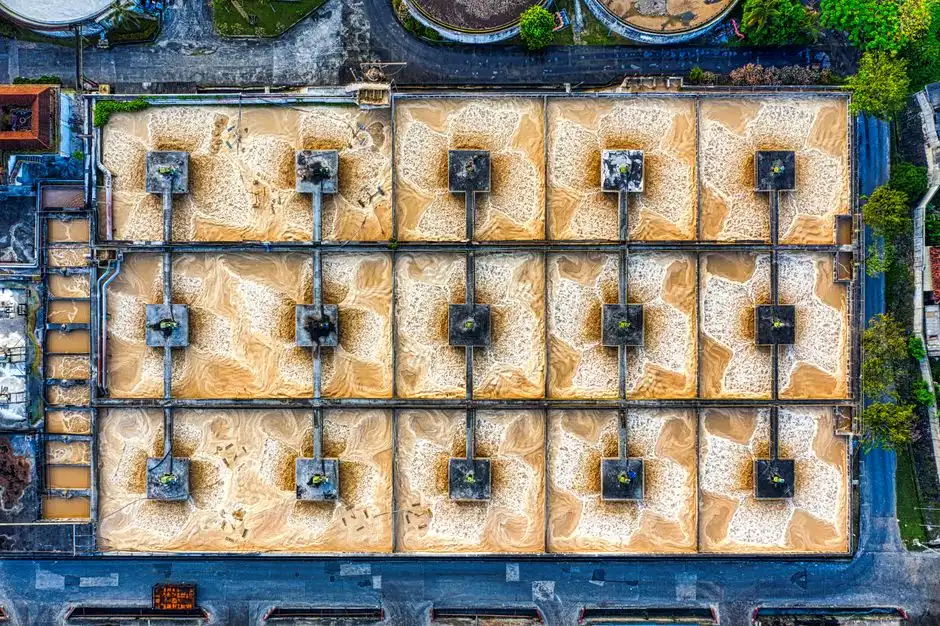
The reference train is a defensible skeleton at the DOE pre-application consultation. Starting from the Chemkimia design, the sequence is: equalization sump → oil & grease trap → coagulation (pH-corrected) → flocculation → dissolved air flotation system → biological aeration → sedimentation → activated carbon filter → continuous microfiltration (0.2 µm) → sludge thickener → plate-and-frame filter press (per S3, Chemkimia design). Dissolved air flotation is the workhorse for FOG and TSS, and the design documentation reports clarification rates of 97% or more for fats, oils, greases, and suspended solids (S3 verbatim). For an automotive influent, expect FOG on the raw stream to be 5–10× the 2007 baseline; the DAF stage has to be sized for that, not for the air-conditioning duty.
When footprint is constrained and effluent SS must land below 10 mg/L — which Standard B practically demands once the tighter 50 mg/L SS inland-water limit is accounted for — the standard upgrade path is an integrated MBR membrane bioreactor in place of the conventional aeration-sedimentation block. Chemical handling is the third piece most paint-shop ETP trains under-specify: a PLC-controlled chemical dosing skid for pH correction, coagulant, flocculant, and any zinc/Ni precipitation reagent should be specified at the front of the train, not added later. The 2026 pilot real-time effluent monitoring in Selangor and Johor signals the near-term direction — designing IEQIS-ready PLC/SCADA and MS ISO/IEC 17025-compatible sampling ports in now is cheaper than retrofitting. The train has to be extended for phosphating-line residuals: zinc and nickel precipitation with pH swing, and a fluoride-bearing stream check before any RO polishing stage is added.
Sludge handling, capex bands, and SPA language for the deal team
Sludge handling is regulated: dewatered cake must go to a licensed disposal facility, and inland disposal is prohibited (per hydropurewater.com, 2026-02). A plate-and-frame press typically reaches 22–28% dry solids on this kind of waste — enough to pass the paint-filter test and to move by container. F⁻-rich cake from any phosphating-line precipitation needs a separate handling protocol because disposal windows are tighter and licensed receivers fewer.
For planning-level 10–50 m³/h Malaysian industrial ETPs, the order-of-magnitude capex bands (excluding civil works and contingency) sit as follows:
- Equalization + DAF + biology (SBR/MBR): mid-band anchor for an automotive influent.
- + Ca²⁺ precipitation + sludge handling surcharge: where phosphating-line fluoride is present.
- + chemical dosing skid + fluoride/nickel precipitation: paint-and-plating surcharge.
- + RO/UF polishing: where the 60% reuse target applies or where site-specific conditions force it.
The penalty floor is in Section 25 of the EQA 1974: fines up to RM 500,000, imprisonment for responsible parties, and license revocation on repeat offence (per hydropurewater.com, 2026-02). Operating without a valid permit under the new owner between closing and re-issuance is not a defensible position. Two forward-looking rules to price in now: the 2020 zero-liquid-discharge direction for high-risk sectors and the 2027 circular-economy signal for industrial parks make 60% reuse the safe minimum to avoid stranded capex; vendor selection should require IEQIS-ready PLC/SCADA, MS ISO/IEC 17025-compatible sampling ports, and a documented OPEX model in MYR. On the SPA side, the 2026 trend is specific environmental indemnities displacing basket-and-cap general indemnities for industrial targets, because the basket-and-cap approach exposes Hyundai to the seller's insurance limits and deductible erosion (per S5, 2026). Hyundai's group Environmental Insurance (EIL) endorsements should be confirmed against the SPA's 5-year R&W survival period and a 24–36 month escrow window. For comparison, the Panasonic Malaysia plant acquisition wastewater playbook and the BMW Vietnam plant acquisition wastewater playbook walk the same EIL-and-escrow logic for parallel automotive-adjacent acquirers.
Frequently Asked Questions
What are the binding wastewater statutes and enforcer when Hyundai acquires a plant in Malaysia?
The Environmental Quality Act 1974 (Act 127) and the Environmental Quality (Industrial Effluent) Regulations 2009 are the binding instruments, with the Department of Environment (DOE) as the sole enforcer. Section 34A prohibits discharge of untreated sludge or effluent into inland waters, and that liability transfers to the new operator on closing (per hydropurewater.com, 2026-02).
What numerical envelope must the ETP be designed to meet?
Under Standard B the binding values are pH 5.5–9.0, COD ≤ 100 mg/L, BOD₅ ≤ 50 mg/L, TSS ≤ 100 mg/L, oil & grease ≤ 10 mg/L, Hg 0.05 mg/L, Cd 0.02 mg/L, Cr⁶⁺ 0.05 mg/L, Cu ≤ 1.0 mg/L, Ni ≤ 1.0 mg/L, Zn ≤ 2.0 mg/L, and B ≤ 4.0 mg/L (Chemkimia/Panasonic Appliances Air-Conditioning Malaysia design basis, 2007-12). The broader inland-water framework tightens SS to ≤ 50 mg/L and adds NH₃-N ≤ 15 mg/L. Site-specific permit conditions may tighten any of these.
Does the seller's DOE permit transfer automatically with the share purchase?
No. The seller's permit does not automatically transfer with the share purchase. A new DOE discharge permit, engineering plan submission, EIA where the activity is prescribed, and site inspection are required before the acquired plant can discharge under the new owner's name (per hydropurewater.com, 2026-02). The acquired site's prior compliance history materially affects review duration.
What is the penalty floor for non-compliance under Malaysian law?
Under Section 25 of the EQA 1974, violations can attract fines up to RM 500,000, imprisonment for responsible parties, and license revocation on repeat offence (per hydropurewater.com, 2026-02). The DOE conducts regular and unannounced audits, so the operating risk is not theoretical.
What does a defensible ETP train look like for a Hyundai automotive target?
The defensible envelope is equalization → oil & grease trap → coagulation/flocculation (pH-corrected) → DAF (target ≥ 97% FOG/TSS clarification) → biological stage (MBR where SS < 10 mg/L is required) → polishing (activated carbon + 0.2 µm microfiltration, optionally RO/UF for reuse) → sludge thickener → plate-and-frame filter press to 22–28% dry solids, with a PLC-controlled chemical dosing skid front-end and a separate F⁻ precipitation stage where phosphating-line residuals are present.