Why the Permit Trap Is the First Thing BMW's Deal Team Has to Understand
Under Article 39 of the 2020 Law on Environmental Protection (No. 72/2020/QH14), a new operating entity must file an environmental permit application within 30 days of the ownership-change effective date — and that effective date is the share-transfer registration, not the SPA signing. Operating between closing and re-issuance is non-compliant even when the underlying treatment system is unchanged, because the permit travels with the legal entity, not with the asset. The 30-day clock therefore starts on day one of BMW's ownership, and MONRE processing calendars rarely align with M&A closing calendars; the only control is to file on day one, not day 30.
BMW Group's own environmental KPIs (publicly reported in the BMW Group Sustainability Report) and the benchmarks BMW's EHS team applies under EU Industrial Emissions Directive 2010/75/EU are typically tighter than the local QCVN numbers, but the binding limit for enforcement at the Vietnam site is the value MONRE writes into the re-issued permit. Counsel must brief the deal committee that the local permit — not BMW's internal standard — is what governs enforcement, and any gap between BMW's internal KPI and the QCVN limit is a discretionary voluntary commitment, not a compliance obligation. Treat wastewater as a deal-level issue from the bid model onward, not an operational afterthought for the plant manager six months after closing.
The Three-Layer Wastewater Stack BMW Inherits on Closing
Vietnam's wastewater compliance sits on three concentric layers, and a deal team that briefs only the top layer will miss the layer that actually drives retrofit scope.
Layer 1 — National statute and standards. The Law on Environmental Protection 2020 (No. 72/2020/QH14) and its implementing Decree 08/2022/NĐ-CP govern environmental permits, EIA disclosure, and inspection. The headline discharge standard is QCVN 40:2011/BTNMT for industrial effluent, with Column A limits of BOD₅ ≤ 50 mg/L, COD ≤ 150 mg/L, TSS ≤ 100 mg/L, plus 34 additional parameters covering pH, temperature, salinity, nutrients, and a long list of heavy metals.
Layer 2 — Sector and operating permits. QCVN 13-MT:2015/BTNMT covers battery manufacturing as an analog reference for sector-specific parameters, and QCVN 14:2008/BTNMT governs domestic wastewater where applicable. For an automotive assembly site, provincial DONRE applies vehicle-manufacturing sector guidance on top of QCVN 40, particularly for phosphate, zinc, and nickel from coating lines. The operating instrument is the MONRE-issued Environmental Permit, which under Article 39 must be re-issued to a new operating entity within 30 days of an ownership change.
Layer 3 — Local and basin-level conditions. The provincial Department of Natural Resources and Environment (DONRE) layers site-specific conditions on top of national QCVN. Inside an industrial park, the centralized WWTP operator adds inlet specifications (flow, pH window, banned substances). Outside an industrial park, the receiving-water basin plan controls: the World Bank explicitly recommends allowing flexibility tied to receiving-water classification, meaning the same QCVN 40 number can be tightened or loosened depending on the basin's assimilative capacity (World Bank, Vietnam Urban Wastewater Review). BMW deal teams often brief only Layer 1 and miss the basin plan; this is where retrofit scope gets quietly enlarged.
Automotive-Specific Effluent Chemistry: What BMW Plants Actually Discharge
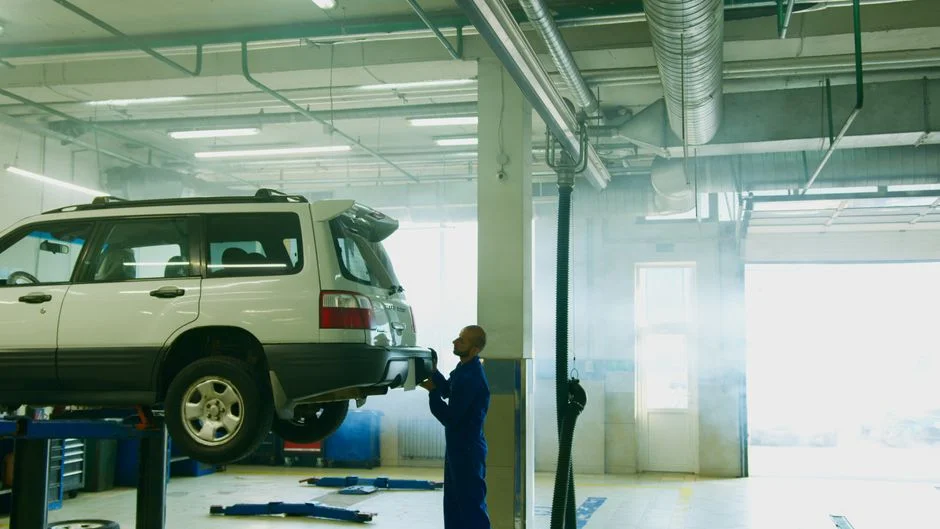
A brownfield site designed for textiles, food-and-beverage, or general electronics almost certainly does not have the unit operations needed for automotive effluent. The five process streams below are the ones that consistently surprise German OEM acquirers during Phase II sampling because no top-ranking page maps them to QCVN 40 Column A limits.
Stamping and body shop produces high TSS, tramp oils, and metalworking fluids; controlled via TSS ≤ 100 mg/L and the oil/grease envelope. Standard pre-treatment is a DAF pre-treatment for stamping and paint-overspray streams followed by a coalescer.
Phosphating and conversion coating generates phosphate, zinc, nickel, manganese, and fluoride in rinse waters. Zinc and nickel limits under QCVN 40 Column A (1 mg/L and 0.2 mg/L respectively) are tight enough that chemical precipitation alone will not pass robust sampling; an MBR polishing train for e-coat and coating-line effluent or ion-exchange polishing is required.
Cathodic electrodeposition (e-coat) line produces low-COD, high-TDS water with solvent carryover; controlled via the TDS/salinity envelope plus COD ≤ 150 mg/L. Equalization plus biological oxidation (SBR or MBR) is standard.
Paint shop discharges paint overspray, solvent-bearing rinse water, and high-COD effluent. DAF pre-treatment plus biological oxidation is the default train; many brownfield Vietnamese paint shops look hydraulically oversized but underperform the moment a new e-coat bath is connected because the legacy biological stage cannot absorb the solvent mass load.
Assembly and final flush produces low-COD water with possible surfactant load; equalization with the rest of the plant is usually sufficient. The ETP bottleneck is the front of the train, not the back.
| Process stream | Key parameters | QCVN 40 Column A limit (mg/L) | Typical influent range | Treatment unit |
|---|---|---|---|---|
| Stamping / body shop | TSS, oil & grease | TSS ≤ 100; oil/grease ≤ 10 | TSS 200–800; O&G 50–300 | DAF + coalescer |
| Phosphating / conversion coating | PO₄³⁻, Zn, Ni, Mn, F⁻ | Zn ≤ 1; Ni ≤ 0.2; Mn ≤ 0.5; F⁻ ≤ 10 | Zn 5–30; Ni 0.5–5; F⁻ 20–150 | Chemical precipitation → ion exchange or MBR polish |
| Cathodic electrodeposition (e-coat) | COD, TDS, solvent carryover | COD ≤ 150; TDS envelope | COD 200–600; TDS 1,500–3,500 | Equalization → SBR or MBR |
| Paint shop (overspray + rinse) | COD, suspended solids, solvents | COD ≤ 150; TSS ≤ 100 | COD 800–3,000; TSS 300–900 | DAF → biological oxidation (SBR/MBR) |
| Assembly / final flush | COD, surfactants | COD ≤ 150; pH 6–9 | COD 80–250 | Equalization only |
For regional context on how brownfield Southeast Asian ETPs get sized against receiving-water basin plans, see the regional compliance framing for Southeast Asian brownfield ETPs.
The Three-Phase Due-Diligence Sequence That Closes on Time
Wastewater is the only EHS workstream where the diligence clock can blow the closing date. The three-phase structure below is what outside counsel and an EHS consultant can run in parallel without stepping on each other.
Phase I — Regulatory baseline (before SPA). Collect the EIA report, current MONRE environmental permit, 24-month self-monitoring logs, sludge manifests, prior non-compliance notices, prior inspection reports, and the IP park WWTP discharge contract. Run by outside EHS counsel plus a local consultant; deliverables are the compliance baseline memo and the SPA representations-and-warranties package.
Phase II — Baseline characterization (2–4 weeks, one full operating cycle). Seven-day composite sampling at influent, mid-stream, final effluent, and receiving water; full panel including F⁻, Zn, Ni, Mn, phosphate, COD, NH₃-N, TDS, temperature, and pH. The 7-day composite must stride a full production week — paint shops and e-coat lines often idle on weekends, and a Monday-only sample underestimates the true mass load. Deliverable is the influent/effluent data set and a preliminary retrofit scope and rough order of magnitude.
Phase III — Pilot treatability. Mobile DAF + MBR skid pilot (often 1–5 m³/day), jar tests for fluoride and metals precipitation, and settleability tests. The pilot report must contain a side-by-side table of measured influent vs. measured pilot effluent against the relevant QCVN column; this is the single document the board asks to see when retrofit CAPEX goes for sign-off. Run all three phases in parallel with financial and legal workstreams; the wastewater clock can blow the closing date if started after SPA signing. For a precedent framework, see the M&A ETP retrofit case study for an energy major.
Retrofit CAPEX, OPEX and the Brownfield-Site Reality for BMW Vietnam
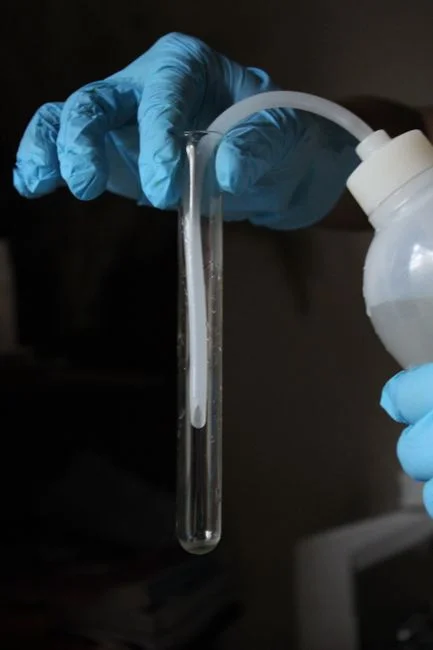
A brownfield automotive ETP retrofit in the 500–2,000 m³/day envelope typically lands in a $1.5M–$5.5M CAPEX range, with OPEX of $0.40–$0.90/m³. The wide bands reflect influent variability, drawing from analogous brownfield retrofits in Vietnam's industrial parks and adjusted for auto-coating influent variability (HydropureWater field data, 2026).
A site converting from low-COD general manufacturing to a paint-and-e-coat line sits at the upper end because it needs both biological capacity (SBR or MBR) and a DAF pre-treatment front end, plus a metal-finishing sludge handling train. A site with a functioning biological stage and existing chemical precipitation may sit at the lower end; the binding retrofit is then the polishing train — ion exchange or MBR membrane — to meet nickel and zinc limits reliably.
Sludge handling is the line item most deal teams forget. Metal-finishing sludges from phosphating and e-coat pretreatment are often classified as hazardous under Vietnamese rules, and disposal routing must be inside the permit application. A plate-and-frame filter press for metal-finishing sludge is the standard dewatering train, typically sized to bring the sludge cake above 30% dry solids for licensed disposal.
Treatment direction of travel matters. The World Bank estimated Vietnam's sewerage financing need at US$8.3 billion through 2025 to serve an urban population of 36 million, while average annual sanitation investment over the prior decade was only US$150 million — 0.45% of GDP (World Bank, Vietnam Urban Wastewater Review). The political pressure is to tighten, not loosen, which means QCVN limits and basin-specific conditions will trend more conservative over the next 24–36 months. The retrofit is the floor, not the ceiling. For a cross-border ROIC framework, see the ROIC framework for cross-border ETP investments.
The 90-Day Post-Signing Plan BMW Needs Before Operations Takes the Keys
Day 1–30. File the MONRE permit transfer on day one; commission Phase I document review; open a data room for EIA, permit, monitoring logs, and sludge manifests. Output: compliance baseline memo; SPA representations and warranties package finalized.
Day 30–60. Run Phase II 7-day composite sampling; deliver the ETP gap analysis against QCVN 40 and provincial DONRE conditions; build a 60-day community-relations buffer. EIA reports and environmental permits are published on the MONRE portal, and NGO scrutiny of cross-border OEM acquisitions is now standard practice, particularly in the Dong Nai and Red River basins where most Tier-1 industrial parks sit. Output: influent/effluent data set; preliminary retrofit scope and rough order of magnitude.
Day 60–90. Run Phase III mobile DAF + MBR pilot; jar tests for fluoride and metals precipitation; finalize CAPEX/OPEX for board; financing decision; integrated closure plan ready for handover to operations. Output: board-level retrofit sign-off; financing decision; integrated closure plan.
Public disclosure compounds the timeline: heavy metals and emerging-contaminant disclosure expectations are tightening across the region; build the community buffer into the post-signing plan from the SPA, not as an afterthought.
Frequently Asked Questions
Does the MONRE permit automatically transfer to BMW on closing?
No. Under Article 39 of the 2020 Law on Environmental Protection (No. 72/2020/QH14), the new operating entity must file an environmental permit application within 30 days of the ownership-change effective date, and MONRE re-issues the permit to the acquirer. Operating between closing and re-issuance without a live permit is non-compliant, because the permit travels with the legal entity, not with the asset.
What are the headline QCVN 40:2011/BTNMT Column A limits an automotive plant must meet?
QCVN 40:2011/BTNMT Column A sets the headline industrial effluent limits: BOD₅ ≤ 50 mg/L, COD ≤ 150 mg/L, TSS ≤ 100 mg/L, plus sector parameters including phosphate, zinc ≤ 1 mg/L, nickel ≤ 0.2 mg/L, manganese ≤ 0.5 mg/L, and fluoride ≤ 10 mg/L. Provincial DONRE can tighten any limit based on the receiving-water basin plan.
Does Vietnam's civil-law successor liability apply to historic contamination?
Yes. Vietnam's civil-law successor liability doctrine transfers historic contamination liability at closing, so a Phase I/II environmental site assessment must be inside the SPA representations and warranties, and any pre-closing non-compliance should be reflected in the purchase-price mechanism.
What CAPEX range should BMW model for a brownfield automotive ETP retrofit in Vietnam?
A $1.5M–$5.5M CAPEX range for a 500–2,000 m³/day envelope, with OPEX of $0.40–$0.90/m³. Sites converting from low-COD general manufacturing to a paint-and-e-coat line sit at the upper end; sites with a functioning biological stage and existing chemical precipitation sit at the lower end.
Which Vietnamese basin plans most affect auto-assembly sites?
The Dong Nai and Red River basin plans cover most Tier-1 industrial parks. Provincial DONRE tightens QCVN 40 limits based on receiving-water classification, and the World Bank explicitly recommends allowing flexibility tied to receiving-water assimilative capacity, so the basin plan should be read before the retrofit is sized.
Related Equipment
- DAF pre-treatment for stamping and paint-overspray streams — specifications, capacity range, and technical data