Why a Battery-Plant Acquisition in Vietnam Is a Wastewater Transaction
When Panasonic Energy (or any battery OEM) acquires a Vietnam plant, the acquirer inherits three wastewater obligations on closing: (1) the existing discharge permit under Vietnam's Law on Environmental Protection 2020 and QCVN 40:2011/BTNMT industrial effluent limits, which MONRE re-issues to the new operating entity within 30 days of ownership change; (2) a baseline Phase I/II environmental site assessment, because historic contamination liability transfers at closing under Vietnam's civil-law successor liability doctrine; and (3) industry-specific controls for fluoride, NMP solvent, and heavy metals if the site is converted to lithium-ion cell or pack assembly.
The strategic stakes are easy to underweight. World Bank data shows that although roughly 60% of Vietnamese households discharge through a public sewer, only about 10% of sewered municipal wastewater is actually treated, and only 4% of septage from on-site systems reaches a treatment plant. Industrial pre-treatment is therefore the de-facto compliance boundary, not the publicly owned treatment works downstream. For a battery deal, the ETP is the permit (World Bank, Vietnam Urban Wastewater Review).
FDI context reinforces the urgency. Registered FDI in Vietnam's renewable-energy and adjacent manufacturing sectors reached approximately US$41.9 billion by the end of 2024, equivalent to 8.3% of cumulative national FDI, with EVFTA, CPTPP, and JETP frameworks continuing to channel Japanese, Korean, and European capital into cell, pack, and component facilities (per Ministry of Planning and Investment, 2024-12, reported in IJHRSSS, 2025). Every one of those transactions now runs through the same MONRE permit pipeline, and the bottleneck is wastewater, not land. Treat it as a deal risk from day one of the bid model, not a back-office item resolved by operations after closing.
The Three-Layer Regulatory Stack Panasonic Energy Must Navigate
Vietnam's wastewater compliance sits on three concentric layers, and a deal team that briefs only the top layer will miss the layer that actually drives retrofit scope.
Layer 1 — National statute and standards. The Law on Environmental Protection 2020 (No. 72/2020/QH14) and its implementing Decree 08/2022/NĐ-CP govern environmental permits, EIA disclosure, and inspection. The headline discharge standard is QCVN 40:2011/BTNMT for industrial effluent, with headline limits of BOD₅ ≤ 50 mg/L, COD ≤ 150 mg/L, TSS ≤ 100 mg/L, plus 34 additional parameters covering pH, temperature, salinity, nutrients, and a long list of heavy metals. The companion China GB 8978 effluent standard 2026 guide is a useful cross-check for deal teams that benchmark against PRC facilities.
Layer 2 — Sector and operating permits. QCVN 13-MT:2015/BTNMT covers battery manufacturing specifically, while QCVN 14:2008/BTNMT governs domestic wastewater where applicable. The operating instrument is the MONRE-issued Environmental Permit, which under Article 39 of the 2020 Law must be re-issued to a new operating entity within 30 days of an ownership change. The permit travels with the legal entity, not with the asset, and the acquirer is the new legal entity the moment the share transfer registers.
Layer 3 — Local and basin-level conditions. The provincial Department of Natural Resources and Environment (DONRE) layers site-specific conditions on top of the national QCVN. Inside an industrial park, the centralized WWTP operator adds inlet specifications (flow, pH window, banned substances). Outside an industrial park, the receiving-water basin plan controls: the World Bank explicitly recommends allowing flexibility tied to receiving-water classification, meaning the same QCVN 40 number can be tightened or loosened depending on the basin's assimilative capacity. Deal teams must read the basin plan before sizing the ETP retrofit.
Battery-Specific Effluent Parameters That Catch Acquirers Off Guard
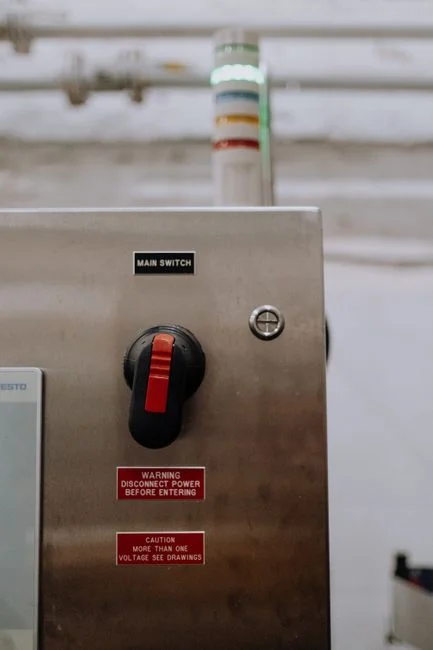
A brownfield site designed for textiles, food-and-beverage, or general electronics almost certainly does not have the unit operations needed for lithium-ion effluent. The four parameter families below are the ones that consistently surprise Japanese and Korean acquirers during Phase II sampling.
| Parameter | Source in Li-ion cell/pack line | Typical process-stream range | Treatment train commonly retrofitted | QCVN 40:2011/BTNMT (A column, mg/L) |
|---|---|---|---|---|
| Fluoride (F⁻) | LiPF₆ electrolyte, HF cleaning baths | 50–500 mg/L process; rinse waters variable | Ca/Al coagulation → defluoridation resin skid for LiPF6 streams | 10 |
| NMP (N-methyl-2-pyrrolidone) | Electrode coating solvent, drying-condensate | High-COD, several thousand mg/L COD-equivalent | DAF pre-treatment → biological oxidation (SBR or MBR) | Not directly listed; controlled via COD ≤ 150 |
| Cobalt (Co) | LCO/NMC cathode active material, rinsing | Trace to tens of mg/L in process streams | Chemical precipitation (pH 9–10) → sand filter → ion-exchange polishing | 0.05 (industrial, Column A) |
| Nickel (Ni) | NMC cathode, current collector rinses | Trace to tens of mg/L | Precipitation → ion exchange or MBR polishing | 0.2 |
| Manganese (Mn) | NMC cathode | Variable | Oxidation + precipitation | 0.5 |
| Lithium (Li) | Electrolyte spills, formation cycling drains | Variable | Lime precipitation → ion exchange for recovery-grade polishing | Not specifically listed; falls under TDS / salinity envelope |
| COD / NH₃-N | Coating organics, binder carryover | COD often several hundred to a few thousand mg/L in equalization | Equalization → SBR or MBR membrane bioreactor system → RO if reuse targeted | COD 150; NH₃-N 10 |
Three engineering points to brief counsel on. First, fluoride is rarely the limiting parameter at the influent end; it is the limiting parameter at the polishing end, because the resin skid determines whether the ETP meets 10 mg/L day after day. Second, NMP is biodegradable but strips the aeration basin of legacy capacity, which is why many brownfield ETPs look hydraulically oversized on paper and underperform the moment a coating line is connected. Third, cobalt and nickel limits are tight enough (0.05 and 0.2 mg/L respectively) that precipitation alone will not pass a robust sampling program — ion exchange or MBR polishing is mandatory, not optional. For deep-dive removal-train sizing, the 2026 defluoridation resin engineering specs reference gives the resin-life and regeneration-water numbers your consultant will need.
ETP Due-Diligence Workstream: Phase I, II, and III
Wastewater is the only EHS workstream where the diligence clock can blow the closing date. The three-phase structure below is what an outside counsel and an EHS consultant can run in parallel without stepping on each other. For a precedent framework, the ETP due-diligence checklist for LG Energy Solution M&A walks the same sequence.
| Phase | Objective | Key deliverables | Typical duration | Owner |
|---|---|---|---|---|
| Phase I — Document review | Establish the regulatory and compliance baseline before the SPA is signed | EIA report, current MONRE environmental permit, 24-month self-monitoring logs, sludge manifests, prior non-compliance notices, prior inspection reports, IP park WWTP discharge contract | 2–3 weeks | Outside EHS counsel + local consultant |
| Phase II — Baseline characterization | Quantify the gap between the existing ETP effluent and the parameters a battery line will impose | 7-day composite sampling at influent, mid-stream, final effluent, and receiving water; full panel including F⁻, NMP, Co, Ni, Mn, Li, COD, NH₃-N, TDS, temperature, pH | 2–4 weeks (one full operating cycle) | Accredited Vietnamese lab + ETP engineer |
| Phase III — Pilot treatability | Validate the retrofit design and quantify the discharge-permit compliance margin | Mobile DAF + MBR skid pilot (often 1–5 m³/day), jar tests for fluoride resin, settleability tests for metals precipitation; report with design basis for full-scale retrofit | 4–8 weeks | ETP EPC + technology vendor |
Two practical points. First, the 7-day composite must stride a full production week; Li-ion lines often idle on weekends, and a Monday-only sample underestimates the true mass load. Second, the Phase III pilot is the single document the board will ask to see when the retrofit CAPEX goes up for sign-off, so the report must contain a side-by-side table of measured influent vs. measured pilot effluent against the relevant QCVN column. Anything less and the CAPEX line will be re-opened in the 90-day plan.
Permit Re-Issuance, Public Disclosure, and the 30-Day Trap
Article 39 of the 2020 Law on Environmental Protection is the clause that creates the most closing-to-operations risk in the entire deal. The new operating entity must file an environmental permit application within 30 days of the ownership-change effective date, and operating without a re-issued permit during the intervening window is non-compliant even if the underlying treatment system has not changed. The trap is that share-purchase closings and MONRE processing calendars rarely align, and the acquirer cannot accelerate MONRE; the only control is to file on day one.
Public disclosure compounds the timeline. EIA reports and environmental permits are published on the MONRE portal, and community and NGO scrutiny of cross-border battery acquisitions is now standard practice, particularly in the Red River and Dong Nai basins where most Tier-1 industrial parks sit. Disclosure expectations on heavy metals and emerging contaminants are tightening across the region; the global benchmarking case is captured in the microplastics and heavy-metal compliance guidance. Build a 60-day community-relations buffer into the post-signing plan; the permit is not the only thing the public can comment on.
Retrofit CAPEX, OPEX, and the 30/60/90 Post-Signing Plan
A brownfield battery ETP retrofit in the 500–2,000 m³/day envelope typically lands in the $1.2M–$4.5M CAPEX range, with OPEX of $0.35–$0.80/m³. The wide bands reflect influent variability: a site converting from low-COD electronics to a coating-and-formation line will sit at the upper end because it needs both biological capacity (SBR or MBR) and a dissolved air flotation pre-treatment front end, plus a dedicated MBR membrane bioreactor system for polishing, and a fluoride resin skid sized to the LiPF₆ load. A site with an existing robust biological stage may sit at the lower end.
| Post-signing milestone | Owner | Key action | Decision output |
|---|---|---|---|
| Day 0–30 | CD lead + local EHS counsel | File MONRE permit transfer; commission Phase I document review; open data room for EIA, permit, monitoring logs, sludge manifests | Compliance baseline memo; SPA representations and warranties package finalized |
| Day 31–60 | EHS lead + accredited lab | Run Phase II 7-day composite sampling; deliver ETP gap analysis against QCVN 40 and QCVN 13-MT | Influent/effluent data set; preliminary retrofit scope and rough order of magnitude |
| Day 61–90 | ETP engineer + EPC partner | Run Phase III mobile DAF + MBR pilot; jar tests for fluoride resin; finalize CAPEX/OPEX for board | Board-level retrofit sign-off; financing decision; integrated closure plan ready for handover to operations |
One more reference point to size the regulatory direction of travel. The World Bank estimated Vietnam's sewerage financing need at US$8.3 billion through 2025 to serve an urban population of 36 million, and the average annual sanitation investment over the prior decade was only US$150 million, or 0.45% of GDP (World Bank, Vietnam Urban Wastewater Review). The political pressure is to tighten, not loosen, which means QCVN limits and basin-specific conditions will trend more conservative over the next 24–36 months. The 90-day plan should treat the retrofit as the floor, not the ceiling, of compliance.
Frequently Asked Questions
Does closing the share purchase automatically transfer the Vietnam wastewater discharge permit?
No. Under Article 39 of the 2020 Law on Environmental Protection, the new operating entity must file an environmental permit application within 30 days of the ownership-change effective date, and MONRE re-issues the permit to the acquirer. Operating between closing and re-issuance without a live permit is non-compliant, and the permit travels with the legal entity, not with the asset.
Which QCVN numerical limits govern a battery-plant ETP retrofit in Vietnam?
QCVN 40:2011/BTNMT Column A sets the headline industrial effluent limits: BOD₅ ≤ 50 mg/L, COD ≤ 150 mg/L, TSS ≤ 100 mg/L, fluoride ≤ 10 mg/L, cobalt ≤ 0.05 mg/L, nickel ≤ 0.2 mg/L, manganese ≤ 0.5 mg/L, NH₃-N ≤ 10 mg/L. QCVN 13-MT:2015/BTNMT layers battery-sector conditions on top, and the provincial DONRE can tighten any limit based on the receiving-water basin plan.
What is the typical CAPEX range for retrofitting a brownfield 500–2,000 m³/day ETP for lithium-ion assembly?
Industry experience points to a $1.2M–$4.5M CAPEX range covering DAF pre-treatment, MBR polishing, and a fluoride resin skid, with OPEX of $0.35–$0.80/m³. Sites converting from low-COD electronics with no existing biological stage sit at the upper end; sites with a functioning biological stage sit at the lower end.
Why is the ETP a deal-team issue rather than a post-closing operations issue?
Because Vietnam's civil-law successor liability doctrine transfers historic contamination liability at closing, and the MONRE permit re-issuance window starts on the ownership-change effective date. Retrofit scope, CAPEX, and the 30-day filing must be modelled into the SPA, representations and warranties, and the post-signing budget before the bid is submitted, not after the asset is on the balance sheet.