Wastewater Treatment Plant Cost in USA: What a First Budget Must Cover
Wastewater treatment plant cost in USA runs from about $200,000 for a small industrial package to over $50 million for a large municipal plant. Municipal work often tracks near $12 million per MGD, while industrial trains price by GPM and contaminant load.
A usable budget covers CAPEX, a 20-year OPEX view, and payback. Cost estimation usually runs at three levels. First-order costs compare whole plants for early feasibility. Second-order costs compare unit processes, such as a clarifier versus a membrane train. Third-order costs isolate components like excavation, piping, and instrumentation.
Capacity does not scale in a straight line. A 1 MGD plant may sit near the $12M/MGD mark, yet a 10 MGD plant often shows a lower unit cost from economies of scale (per EPA guidelines). Regional labor and material gaps also move the total. RSMeans 2024 data shows high-regulation states such as California or New York can run 20–30% above Texas or Florida.
CAPEX alone misleads many budgets. Lifecycle cost needs OPEX over a typical 20-year life, because a cheaper first build can burn more energy and chemicals later. Most plants we screen at concept stage still stop at equipment price, and that number ages badly.
Wastewater Treatment Plant Cost by Capacity MGD
Municipal construction commonly tracks about $12 million per million gallons per day for average-flow plants, and many screening sheets still use a $12M per MGD benchmark. A 100,000 GPD plant does not cost one-tenth of a 1 MGD plant. The table below is the screening band used in this guide. Most plants we size under 1 MGD land in the upper half of that band.
| Plant Capacity (Municipal) | Estimated CAPEX Range (USD) | Cost per Gallon/Day (GPD) |
|---|---|---|
| 100,000 GPD | $1,200,000 – $2,500,000 | $12.00 – $25.00 |
| 1,000,000 GPD (1 MGD) | $10,000,000 – $14,000,000 | $10.00 – $14.00 |
| 10,000,000 GPD (10 MGD) | $80,000,000 – $110,000,000 | $8.00 – $11.00 |
National need, not a single bid, is what the EPA publishes. The 2022 Clean Watersheds Needs Survey results page lists total reported needs of $630.1 billion, with secondary wastewater treatment at $66.6 billion and advanced wastewater treatment at $83.6 billion. Those are program-level needs, so treat the capacity table above as the plant-level screening band. A 10 MGD job is usually an upgrade with documented costs, not a curve output.
What Is the Industrial Wastewater Treatment Cost per GPM USA?
Industrial wastewater treatment cost per GPM in the USA is priced as $/GPM, and the band falls as flow rises. A 50 GPM system is listed at $150,000 – $350,000, or $3,000 – $7,000 per GPM. High TSS or FOG can raise equipment cost by 20–40% when extra pre-treatment is required. Waste stream chemistry matters more on industrial sites than on a municipal average.
Semiconductor rinse water and food-process effluent rarely share the same train or budget. Design for a peak at 2x average flow can lift tankage and pumps by about 30% (HydropureWater field data, 2025). Production cycles drive peak loads, and most food plants we size sit nearer that 30% adder than a second full train.
| Industrial Flow Rate | Estimated System Cost (USD) | Cost per GPM |
|---|---|---|
| 50 GPM | $150,000 – $350,000 | $3,000 – $7,000 |
| 200 GPM | $400,000 – $750,000 | $2,000 – $3,750 |
| 500 GPM | $900,000 – $1,800,000 | $1,800 – $3,600 |
Municipal Wastewater Treatment Plant CAPEX Breakdown 2026
Public-plant capital planning in 2026 still starts from the 2022 Clean Watersheds Needs Survey, because the EPA CWNS page, updated August 17, 2026, still lists that survey as the latest results. Total reported needs are $630.1 billion. Secondary wastewater treatment is $66.6 billion and advanced wastewater treatment is $83.6 billion. Conveyance repair and new conveyance are $151.1 billion.
National totals are not a bid for one plant. The same page lists combined sewer overflow correction at $36.5 billion, water reuse at $7.7 billion, and decentralized systems at $74.7 billion. Stormwater at $115.3 billion and nonpoint source control at $94.4 billion sit inside the $630.1 billion total, yet they are not process-plant line items. The survey counted 17,544 publicly owned treatment works serving 270.4 million people.
EPA also published a news page titled New EPA Survey Highlights Wastewater Infrastructure Needs to Protect Waterbodies in Communities Across the Country. That release says the survey shows that at least $630 billion will be needed over the next 20 years, notes it is the 17th survey since the Clean Water Act, and that the last survey was conducted in 2012. The dollar split quoted here comes from the CWNS results table on the survey site.
Which Treatment Process Drives Plant CAPEX?
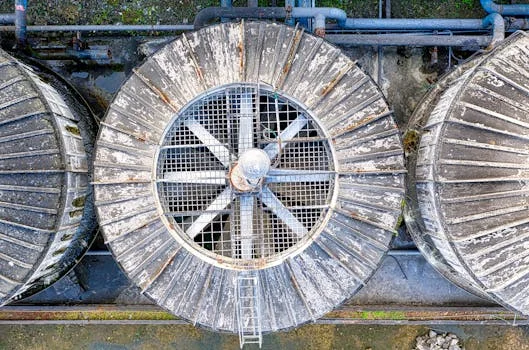
Process choice can steer up to 60% of CAPEX and much of long-term OPEX. Membrane bioreactors, dissolved air flotation, and conventional activated sludge trade footprint, effluent quality, and spend. MBR integrated wastewater treatment reaches reuse-grade effluent in a small footprint, yet the train usually carries higher CAPEX than secondary clarifiers. Most municipal plants we review spend more on tanks, yard piping, and power than on the named process skid.
The stage structure is standard across bids. According to Wikipedia's sewage treatment overview, sewage treatment often involves two main stages, called primary and secondary treatment, and the purpose of tertiary treatment (also called advanced treatment) is to provide a final treatment stage before discharge or reuse. Primary tanks in that reference typically have a hydraulic retention time (HRT) of 1.5 to 2.5 hours and remove about 50–70% of the suspended solids. Budget each stage separately and the breakdown stops hiding money.
| Treatment Technology | Avg. CAPEX (per MGD) | Avg. OPEX (per MGD) | Relative Footprint |
|---|---|---|---|
| Activated Sludge (Conventional) | $8M – $12M | Moderate | Large |
| Membrane Bioreactor (MBR) | $12M – $18M | High (Energy/Membranes) | Very Small |
| Dissolved Air Flotation (DAF) | $0.5M – $1.5M* | Moderate (Chemicals) | Small |
| Sequencing Batch Reactor (SBR) | $9M – $13M | Low-Moderate | Moderate |
*Note: DAF is typically a pre-treatment or specialized process, not a standalone municipal plant.
Influent quality sets the train. High FOG often needs DAF before biology. Operators can see how DAF systems remove 95%+ TSS and FOG from industrial wastewater, which protects downstream membranes. For a 100K GPD plant, a packaged MBR near $450,000 can beat a $600,000 activated sludge layout on land and staffing.
When teams compare polishing stages, hand tertiray wastewater treatment current cost details to the dedicated secondary-versus-tertiary guide rather than stretching this municipal and industrial CAPEX overview.
Hidden Costs That Blow Your Wastewater Treatment Plant Budget
Permitting and impact studies alone can run $50,000 to $200,000. State rules change both cost and schedule. California Title 22 work versus Texas TCEQ review can differ by more than 12 months, which also inflates material prices. Most permits we file slip on the study, not on the tank drawing.
- Site Work and Excavation: Grading, soil remediation, and foundation work can add 10–25% to the total CAPEX, according to RSMeans 2024 data. Poor soil stability or high water tables significantly increase these figures.
- Labor Discrepancies: Union labor in the Northeast or Midwest can be 30–50% more expensive than non-union labor in rural Southern regions.
- Contingency Funds: Engineering best practices suggest a 10–20% contingency buffer to account for unforeseen issues like material shortages or weather-related delays.
- Pilot Studies: For complex industrial waste, a pilot study costing $20,000–$100,000 is often required to prove treatment efficacy to regulators before full-scale deployment.
Missed soft costs drive overruns. Specialized wastewater treatment for healthcare facilities adds disinfection and pharmaceutical residue steps that standard municipal budgets omit. Site assessment and regulatory mapping should finish before equipment purchase. Most healthcare scopes we review add a disinfection step the municipal sheet never carried.
What Is the Ballpark Cost for a Wastewater Primary Screen in the USA?
Primary screening is only one line item, yet it sits early in every headworks package. Published plant totals in this article start near $1.2M–$2.5M for a 100,000 GPD municipal plant and $150,000–$350,000 for a 50 GPM industrial system. Screening share moves with solids load, channel depth, and automation level. Treat the screen as part of site work and pre-treatment, not as a stand-alone plant price.
For industrial FOG or TSS spikes, pair screens with DAF or equalization before biology. That sequence protects clarifiers and membranes and keeps the later OPEX line from drifting. Most headworks we size stay a small slice of the plant total until rag load forces a washer and a deeper channel. Buy the screen after the solids profile, not before it.
Lifecycle Costs: Why the Cheapest Option Isn't Always the Best
A 20-year view often shows energy and chemicals overtaking purchase price. Total cost of ownership then becomes the deciding metric. Activated sludge may win on day-one CAPEX, yet a larger footprint and lower automation can raise long-run OPEX. The table compares that 20-year pattern for three common trains.
| Cost Component (20-Year) | Conventional Activated Sludge | MBR System | DAF (Pre-treatment) |
|---|---|---|---|
| Energy Use (kWh/m³) | 0.3 – 0.6 | 0.5 – 1.0 | 0.1 – 0.2 |
| Chemical Costs | Moderate | Low | High (Coagulants) |
| Maintenance/Parts | Moderate | High (Membranes) | Low-Moderate |
| Labor Requirements | High | Low (Automated) | Moderate |
Energy remains the largest recurring line for most plants. Wikipedia's sewage treatment overview puts it plainly: around 30 percent of the annual operating costs is usually required for energy on activated sludge plants. MBR air scouring raises kWh use, but reuse credits can offset it. Automatic chemical dosing reduces OPEX by 20–30% when reagent use stays on target. One mini-case in the source data: a $1M MBR can save $300,000 over 20 years versus an $800,000 activated sludge plant when reuse displaces city water.
Membrane replacement every 5–10 years can add $50,000–$200,000 and must be amortized. Most MBR plants we track need that replacement inside the 5–10 year window, so leave it in the model on day one. A low CAPEX train with high labor can pass this membrane line and still lose the 20-year test. Put energy, chemicals, parts, and labor on one sheet before you pick a winner.
Financing Your Wastewater Treatment Plant: CAPEX vs. OPEX and Beyond
Leasing and public-private partnerships now compete with design-bid-build when cash is tight. Many municipalities still pursue Clean Water State Revolving Fund loans. The EPA survey release notes that EPA's Clean Water State Revolving fund has supported over $160 billion in infrastructure since its inception in 1987, that WIFIA has issued over $43 billion in financing since 2018, and that the Bipartisan Infrastructure Law provides a $50 billion water investment. Smaller towns and industrial sites often lease equipment to move spend into OPEX and protect cash flow. Most small towns we advise price the loan before they price the lease.
A small Ohio town cut upfront CAPEX by 40% on a 500K GPD plant through a P3 model. Package plants also help. Skid-mounted builds are why package plants reduce CAPEX by 30–50% for small communities, with less field labor than a cast-in-place yard. The Ohio figure is one town in the source article, not a national P3 promise.
Polishing-stage budgets belong in the secondary and tertiary cost comparison beside this plant-level guide. Factories often weigh in-house treatment against sewer surcharges. If surcharges sit at $0.05 per gallon and drop to $0.01 after an $800,000 system, payback can fall under three years. That comparison is a screening test, not a rate case.
Some buyers also open a side page on industrial wastewater treatment costs in the USA vs. South Korea. Keep discharge limits, permits, and labor rules for this decision inside the United States. The side page is context for overseas bid chatter, not a second code to design to. Most US industrial paybacks we run are driven by the surcharge gap above, not by a foreign permit.
How Long Is the Wastewater Treatment Plant ROI Calculator Payback Period?
A wastewater treatment plant ROI calculator payback period compares CAPEX with avoided fines, lower purchased water, and any byproduct recovery. Boards usually ask for payback first. The practical sequence uses four steps. Net benefit is annual savings minus annual OPEX, and payback is CAPEX divided by that net.
- Estimate Total CAPEX: Include equipment, site work, and permitting.
- Estimate Annual OPEX: Include energy, chemicals, labor, and maintenance.
- Calculate Annual Savings: Include avoided municipal sewer surcharges, avoided environmental fines, and the value of reclaimed water.
- Payback Period: Divide Total CAPEX by (Annual Savings - Annual OPEX).
Example: a 1 MGD MBR at $2,000,000 CAPEX and $50,000 annual OPEX. If reuse displaces $150,000 per year in water purchases and avoids $50,000 in fines, net annual benefit is $150,000. Payback is about 13.3 years. Southwest scarcity markets often clear faster, and local drivers appear in the wastewater treatment plant cost in Orlando breakdown.
Most boards we brief want a single payback year, so the sheet stays at four lines. The example already subtracts the $50,000 annual OPEX from water plus fines and states a $150,000 net. Dividing the $2,000,000 CAPEX by that net is what produces about 13.3 years. Leave the OPEX line in, or the year looks shorter than the plant will deliver.
Who This Is For / Who Should Look Elsewhere / Next Step
Municipal engineers, industrial EHS managers, and owners sizing USA plants by MGD or GPM are the readers this guide serves. The page is less useful for agricultural fungicide tools or food-calorie calculators, which sit outside wastewater CAPEX. If the waste is municipal sewage or an industrial process sewer in the United States, the bands above apply. If the question is a pesticide ROI sheet or a menu calculator, look elsewhere.
Bring these seven items before you lock a process:
- Average flow in MGD or GPM, plus the peak factor.
- Influent TSS, BOD, FOG, or metals, and the discharge limit.
- Reuse standard versus a secondary-only limit.
- Land area, soil condition, and the power feed.
- State permit path, and whether a pilot study is likely.
- A 20-year allowance for energy, chemicals, membranes, and labor.
- The financing path: cash, a CWSRF loan, a lease, or a P3.
Share flow, influent data, and discharge limits when you request a scoped plant budget from an applications engineer. One set of those three inputs is enough to move from the bands on this page to a real equipment range.
Frequently Asked Questions
Do wastewater treatment plants make money?
Municipal plants generally do not make a net profit. They run as public services funded by utility fees. They can still improve cash position by avoiding EPA fines and by selling reclaimed water or biosolids as fertilizer. Industrial plants can show a return when they recover biogas or metals from electronics wastewater, and when sewer surcharges fall. Treat a profit claim as avoided cost unless a contract pays for the reclaimed water.
How much does it cost to set up a sewage treatment plant?
Setup cost runs from about $200,000 for a small skid-mounted industrial system at 100 GPM to over $50 million for a large municipal facility at 50 MGD. Capacity, effluent limits, and local labor move the total more than the process name. This article's municipal table puts 100,000 GPD at $1,200,000 – $2,500,000 and 1 MGD at $10,000,000 – $14,000,000. Use those bands for screening, then price the actual site.
What is the cost per gallon for wastewater treatment?
For municipal plants, combined CAPEX and OPEX typically range from $0.002 to $0.01 per gallon. Industrial treatment is usually higher because contaminant loads are heavier, at $0.01 to $0.05 per gallon. Those ranges are planning figures, not one city's utility bill. A plant with high FOG, metals, or a tight reuse limit will sit at the top of the band. Divide annual OPEX by annual gallons before quoting a unit price.
How do I reduce my wastewater treatment plant's operating costs?
Variable frequency drives on pumps and aerators can reduce energy use by up to 30%. Automatic dosing holds reagents to the set point so chemical spend does not drift. Predictive maintenance avoids many emergency repairs and the downtime that follows. Energy is still the largest recurring line on most plants, so fix the blower or air scour before chasing a cheaper screen. Log kWh per cubic meter for a month first.
What is the cheapest wastewater treatment technology?
Conventional activated sludge usually shows the lowest CAPEX on large plants, at $8M – $12M per MGD in the technology table. On a tight site, an MBR at $12M – $18M per MGD or DAF pre-treatment at $0.5M – $1.5M can cost less once land and civil work are in the budget. The cheapest day-one bid can still lose on a 20-year energy and labor total. Price the footprint before you name a winner.