Why Glass Plant Wastewater Is a Different Problem for Evaporators
Four wastewater streams dominate the water balance at container, float, and fiberglass plants: container-glass washing rinse water, cerium-oxide (ce) polishing and edge-grinding slurry, borosilicate/fiberglass rinse water, and furnace scrubber blowdown. Each of them carries a high total dissolved solids (TDS) load, suspended silica, and — in the borate-containing streams — dissolved alkalis that defeat conventional biological and membrane treatment. The polishing slurry alone routinely pushes suspended solids above 1,000 mg/L and carries sub-100 µm glass particles that abrade pump impellers and cut heat-exchanger tube life in half if the wrong circulation architecture is selected (HydropureWater field data, 2026).
Glass wastewater is also a temperature problem, not just a chemistry problem. Scrubber blowdown discharges at 60–80 °C, washing rinse exits the lehr at 40–55 °C, and ce slurry is the only cold stream. That thermal head start is the single biggest lever a concentration step has — and the reason MVR, which captures latent heat from the vapor it compresses, fits glass wastewater better than steam-driven multi-effect evaporation (MEE) for most plants that do not already have surplus low-pressure waste steam.
The forced-circulation flash principle is the architecture glass plants should default to. In this design, the circulation loop runs at a pressure high enough to suppress boiling inside the heat exchanger; flashing is forced through an orifice plate into a separation tank, so the tubes never see a two-phase mixture and scaling is dramatically reduced (per evaporator.com). Biological MBR, DAF, and conventional MEE all have well-documented weaknesses on these streams: MBR fouls on silica and boron, DAF produces a wet sludge that still has to be hauled, and rising-film MEE needs live steam that most container lines do not have. MVR sits upstream of zero-liquid-discharge (ZLD) crystallization as the energy-efficient concentration step.
How an MVR Evaporator Handles Silica, Borates and High TDS
The mechanical vapor recompression cycle is straightforward to defend in a capex review. Feed is preheated against hot condensate, mixed into the circulation loop, and pumped through the main heat exchanger. On the heating side, vapor from the compressor condenses and gives up its latent heat; on the process side, the liquid stays subcooled relative to the local pressure, so no boiling occurs in the tubes. An orifice plate downstream of the heater drops the pressure, the superheated liquid flashes into a vapor/liquid mixture, and the vapor travels to the compressor while the concentrate returns to the circulation pump (per evaporator.com).
The economic case rests on the latent-heat recycle. Compressing secondary vapor from a low saturation temperature to a slightly higher one takes a fraction of the energy required to generate fresh steam at the same conditions from liquid water, and that delta is what makes MVR cost-effective on high-TDS streams that would otherwise need a steam supply (per evaporator.com). The compressor does the work; the steam boiler is removed from the loop.
Heat-exchanger selection is where most glass-plant mistakes happen. Plate-and-frame (P&F) units give the highest heat-transfer area per square foot of footprint, but the narrow channels foul rapidly on ce slurry and silica-saturated rinse water. Shell-and-tube (S&T) heat exchangers carry a 30–60% larger footprint penalty but tolerate suspended silica and periodic scale events far better; for any stream with measurable suspended solids or silica above ~150 mg/L, S&T should be the default (per evaporator.com).
Four anti-scaling design levers are available on a properly specified MVR. First, the forced-circulation loop holds tube-side velocity at 1.8–2.5 m/s, which keeps silica particles in suspension rather than letting them deposit. Second, periodic VaporDrain-style blow-downs of the heater shed the soft scale that does form. Third, automated clean-in-place (CIP) cycles using inhibited acid or caustic flush the loop without opening the vessel. Fourth, materials of construction can be upgraded from 316L stainless to duplex 2205 or higher nickel alloys for chloride- or fluoride-bearing scrubber blowdown (HydropureWater field data, 2026; design envelope per evaporator.com).
Sizing an MVR for a Glass Plant: Flow Rate, Compressor Type, Materials
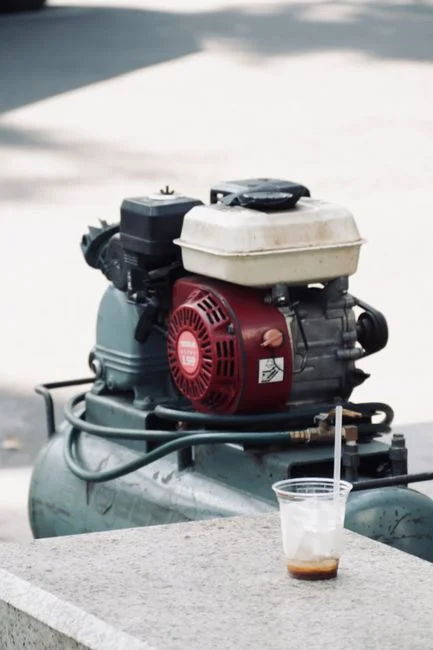
The table below is the spec sheet an engineer should bring to a vendor. Match your plant data against the ranges before you request a quote; if your numbers fall outside the "standard" column, you are in custom-skid territory and the lead time, not the unit price, will dominate the capex schedule (per evaporator.com).
| Parameter | Standard skid (500–1,350 gph) | Custom skid (>1,350 gph) | Glass-plant reference value |
|---|---|---|---|
| Design flow | 500–1,350 gph (1.9–5.1 m³/h) | 1,350–5,000+ gph | Mid-size container line: 800–1,200 gph combined rinse + slurry |
| Influent TDS | 5,000–80,000 mg/L | Up to 200,000 mg/L | Scrubber blowdown: 15,000–40,000 mg/L; ce slurry supernatant: 2,000–8,000 mg/L |
| Target concentrate TDS | 200,000–300,000 mg/L | 300,000+ mg/L (crystallizer feed) | Match to ZLD crystallizer solubility limit |
| Distillate quality | <50 mg/L TDS typical | <50 mg/L TDS | Send to RO polishing if reuse spec is <10 mg/L |
| Blower / compressor | High-alloy rotary lobe (Roots) | Duplex or high-alloy centrifugal | Rotary lobe for <1,350 gph; centrifugal above |
| Main HX | Shell-and-tube, 316L or duplex | Shell-and-tube, duplex 2205 / 904L | S&T strongly preferred over P&F for glass streams |
| Vessel code | ASME Section VIII with rupture disk | ASME Section VIII, PED on EU builds | Non-negotiable for any pressurized evaporator |
| Footprint | ~6 × 2.5 m skid | Larger, often multi-skid | Confirm HVAC and roof-load ratings before placement |
| Power draw | ~25–75 kW per 1,000 gph | Scales with ΔT and flow | Confirm electrical service at 480 V / 3-phase |
| Controls / instrumentation | Allen-Bradley PLC, Rosemount / Endress+Hauser instruments | Same platform, expanded I/O | Vendor quote should list component brands, not generic "industrial instruments" |
The blower selection rule is the second decision that drives both capex and operating cost. Rotary-lobe (Roots) compressors are positive-displacement machines; they hold flow stable across a wide range of operating conditions and are well suited to smaller units where turndown and surge margin matter. Centrifugal compressors are continuous-flow machines with a spiral housing and rotating impeller, and they win on specific energy at higher flow rates (per evaporator.com). The cross-over sits around 1,350 gph for most glass-plant streams.
For procurement due diligence, every quote should name the controls platform (Allen-Bradley is the de facto standard), the instrument brands (Rosemount, Endress+Hauser, Ashcroft), the pump supplier (Sulzer is common), the vessel code stamp (ASME Section VIII with mechanical safeties), and the materials of construction. A vendor that substitutes unspecified "industrial-grade" components for named brands is the single most reliable predictor of long-term downtime (per evaporator.com).
Energy and Operating Cost: What a Glass Plant Should Actually Budget
Vendor operating-cost claims for MVR cluster in the $0.01–$0.02 per gallon of treated water band (per evaporator.com). That figure is useful for screening but it excludes feed preheat, depends heavily on influent temperature, and assumes the unit is running near its design point. A glass furnace scrubber stream already at 60–80 °C will cost noticeably less to concentrate than a cold polishing slurry drawn fresh from a sump, because the feed preheater recovers more sensible heat in the first case.
The only published industrial retrofit analogue for MVR replacing MEE in a high-TDS scaling service is the Gotsu mill installation in Japan, which converted a multi-effect vacuum evaporator train on sulfite-pulp black liquor to MVR in 2019. After a commissioning year that included heater fouling and compressor vibration issues (both resolved with VaporDrain blow-downs and open cleaning), the plant documented a 13% energy-cost reduction and a 111% throughput uplift against the MEE baseline (Japan Tappi Journal, Vol. 74, 2020). The stream chemistry is not glass, but the scaling problem is comparable and the retrofit is the closest published reference point available to a glass-plant engineer today.
A defensible budget for a 1,000 gph MVR running 6,000 hours per year: the unit treats roughly 22.7 million L/yr, which at $0.015/gallon lands at approximately $380,000/yr in direct operating cost. Hauling and disposal for a comparable wastewater volume in most U.S. regions runs $0.10–$0.30/gallon, or $2.3M–$6.8M/yr at the same flow. Even after electricity, CIP chemicals, and compressor maintenance, the disposal-cost-reduction headroom is large enough to justify a 2–4 year simple payback on most container and float glass lines (HydropureWater field data, 2026). The three line items most often underestimated in vendor quotes are compressor bearing and seal maintenance, CIP chemical consumption during scale events, and lost-production cost during cleaning cycles.
MVR vs Multi-Effect, MVR + RO, and When MVR Is the Wrong Choice
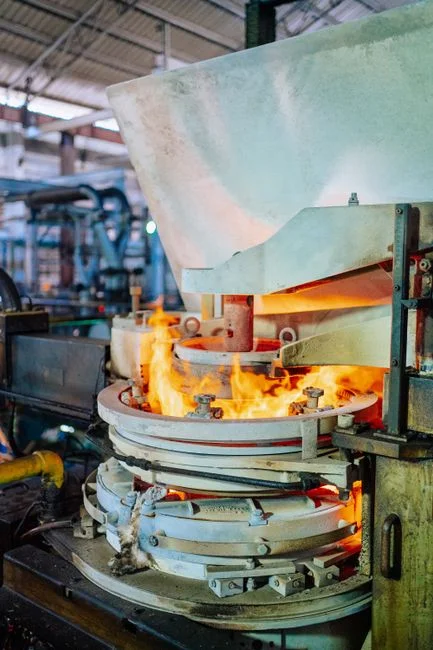
Not every glass plant should buy an MVR. The table below compares the three architectures a process engineer will most often be choosing between. Match it against your plant's flow rate, steam availability, and discharge permit before you write a capex justification.
| Selection axis | MVR (forced circulation) | Multi-effect vacuum (MEE) | DAF + chemical precipitation + RO |
|---|---|---|---|
| Capex intensity | High (compressor + HX + vessels) | Medium (no compressor) | Low to medium (skidded, modular) |
| Energy per m³ distillate | Lowest (~10–20 kWh/m³, electrical) | Moderate (needs live or waste steam) | Moderate (pumps + RO membranes) |
| Fit for scaling streams | Strong (forced circulation, S&T HX, VaporDrain) | Weak on silica, moderate on TDS | Pre-treatment only; cannot reach ZLD |
| Achievable concentrate TDS | 200,000–300,000+ mg/L | 150,000–250,000 mg/L | ~70,000 mg/L (RO brine limit) |
| Best-fit flow range | >500 gph, especially >1,000 gph | >2,000 gph with on-site steam | <500 gph or where ZLD is not required |
| ZLD compatibility | Direct feed to crystallizer | Direct feed to crystallizer | Cannot reach ZLD without downstream evaporator |
The cross-over flow below which MVR capex is hard to justify sits at roughly 500 gph for most U.S. glass plants; below that, a packaged MEE or a DAF plus chemical precipitation and RO train is usually cheaper over a 10-year life cycle, especially if the site already pays a hauler to remove a dilute brine (HydropureWater field data, 2026). MEE still has a defensible niche where low-pressure waste steam is already available on-site — a fiberglass line with a waste-heat boiler, for example — because then the compressor premium does not have to be repaid through electricity savings alone.
For plants facing discharge-tightening permits or a formal ZLD mandate, MVR is the concentration step and a downstream crystallizer is the endpoint. Pairing MVR with ultrafiltration pre-treatment for high-solids industrial wastewater ahead of the compressor extends tube life materially on streams with high suspended glass fines, and a downstream RO polishing of MVR distillate step can deliver reuse-quality water at <10 mg/L TDS if the process needs it. For the upstream end of the train, DAF pre-treatment for glass polishing slurry removes the bulk of suspended solids and cuts compressor loading, while automated pH and antiscalant dosing keeps borate and silica in solution. A lamella clarifier for high-solids industrial wastewater is a cheaper alternative to DAF where the stream is mostly settleable fines rather than colloidal silica.
Frequently Asked Questions
What is the operating cost of an MVR for glass wastewater?
Operating cost for a properly specified forced-circulation MVR typically falls in the $0.01–$0.02 per gallon of treated water band, exclusive of feed preheat and CIP chemicals (per evaporator.com). The Gotsu mill MVR retrofit achieved a 13% energy-cost reduction against a multi-effect vacuum baseline (Japan Tappi Journal, Vol. 74, 2020); a comparable 1,000 gph glass-line MVR running 6,000 h/yr at the midpoint of the vendor cost band lands at roughly $380,000/yr in direct cost, against a $2.3M–$6.8M/yr hauling baseline (HydropureWater field data, 2026).
Can MVR handle silica and borate scaling?
Yes — provided the unit is a forced-circulation design with shell-and-tube heat exchangers and high tube-side velocity. The forced-circulation flash architecture suppresses boiling inside the heater, which is the dominant scaling mechanism on silica-saturated glass streams (per evaporator.com). Periodic VaporDrain-style blow-downs and duplex-stainless materials upgrades extend run time on borosilicate and fluoride-bearing scrubber blowdown (HydropureWater field data, 2026).
What size MVR do I need for a mid-size glass plant?
Standard packaged MVR units cover 500–1,350 gph and fit most mid-size container and float glass lines without custom engineering (per evaporator.com). Above 1,350 gph the compressor architecture switches from rotary-lobe (Roots) to centrifugal, and the skid becomes a custom multi-module build with a longer lead time (per evaporator.com).
Is MVR suitable for zero-liquid-discharge?
MVR is the concentration step immediately upstream of a ZLD crystallizer. It cannot reach true ZLD on its own — the concentrate has to go to a forced-circulation or draft-tube crystallizer for solids separation — but it is the lowest-energy way to bring a high-TDS glass stream up to crystallizer feed concentration (per saidelichem.com and evaporator.com).
How does MVR compare to multi-effect evaporation for glass wastewater?
MVR and MEE reach similar concentrate TDS, but MVR uses electrical compression of secondary vapor while MEE needs live or waste steam. Where electricity is cheap and steam is not, MVR wins on energy cost — the Gotsu retrofit documented a 13% energy-cost reduction and 111% throughput uplift against an MEE baseline (Japan Tappi Journal, Vol. 74, 2020). MEE retains a niche where low-pressure waste steam is already on-site or where installed capex is constrained.