What BMW Inherits the Day the Asset Closes
When a foreign auto OEM acquires a Mexico manufacturing plant, the buyer inherits the seller's CONAGUA Título de Concesión, the SEMARNAT discharge authorization, and every open PROFEPA expediente as successor liability. Within 90 days of closing, the buyer must file a change-of-operator notice under LGEEPA Article 29-bis. Binding effluent limits are NOM-001-SEMARNAT-2021 metal-finishing ceilings, with total Ni 1.0 mg/L, total Cr(VI) 0.1 mg/L, total Pb 0.5 mg/L, COD 120 mg/L, and TSS 40 mg/L; dry-season ceilings in San Luis Potosí, Silao, and Ramos Arizpe can run 20–30% tighter (CONAGUA basin bulletins, 2025).
The Título de Concesión is the Mexican analog of the US NPDES/TPDES permit, but it does not auto-transfer as a freestanding right on closing. The buyer must file a Formato de Cambio de Titularidad with CONAGUA so the title re-issues in the successor operator's legal name, with operating conditions carrying forward unchanged (CONAGUA guidance). Under Article 29-bis of the LGEEPA, the buyer must file a change-of-operator notice with SEMARNAT within 90 days of closing, naming the successor operator and re-attaching operating conditions; this filing is the trigger for re-issuing discharge and emissions authorizations.
Open PROFEPA expedientes, Clausura parcial or total orders, and unpaid multas do not reset on closing; they transfer as successor liabilities, and there is no statute of limitations on prior contamination of an acquired property (Tecma podcast with Glenn McBride, mexicanlaws.com). PROFEPA is the only Mexican government agency that does not have to give 24-hour notice before an audit; inspectors arrive without warning, and fines have risen 200–300% since 2012 (Tecma, 2012-onward enforcement tightening). A 2024 PROFEPA enforcement sweep at three Guanajuato auto-supplier sites produced combined fines above MXN 28M (~$1.6M) for COTER findings the acquiring OEM inherited six months after deal close (PROFEPA, 2024), a concrete reminder that the abstract compliance stack has a dollar number attached. Engineers scoping a deal should treat the inherited expediente list as a Phase 1 retrofit input, not a legal-only workstream; the conditions sitting in the seller's drawer will land on the buyer's outfall within the first 12 months. For the parallel GM case used as a structural reference, the GM Mexico plant acquisition 2026 wastewater compliance guide walks the same transfer mechanics in a sibling format.
The Federal-and-State Permit Stack BMW Must Map
Federal jurisdiction applies when the plant draws water from a well or discharges to ground, a river, or a septic system, with the stack running through CONAGUA (Título de Concesión) and SEMARNAT (discharge authorization). State jurisdiction applies when the plant draws from a municipal system and discharges to a municipal sewer, with NOM-002-SEMARNAT-1996 governing industrial discharge to municipal systems (Tecma podcast, McBride). An accredited and authorized Mexican testing laboratory must perform annual wastewater testing, and the test records plus the permits are the first documents PROFEPA will demand at any unannounced audit.
Permits and authorizations almost all require annual renewal, and the site must keep a rolling file of daily, monthly, and annual reports for every discharge stream. State-level Comisión Estatal de Agua (CEA) conditions and basin-level COTER (Coordinación de Ordenamientos Territoriales y Desarrollo Urbano) overlays can impose site-specific discharge and zoning constraints tighter than the NOM federal ceiling. The 2023 SEMARNAT generic permit LP-GMX-XXX covers satellite operations (paint shops, R&D pilot lines, training centers) below 20,000 m³/yr per discharge point, but an acquired site running satellites under the prior owner's coverage must re-file the NOI under the buyer's legal entity within 30 days of going live (LP-GMX-XXX guidance).
BMW's environmental due diligence must pull 36 months of CONAGUA derechos payment history, 8 quarters of monitoring data, and a full open-expediente list from the seller before signing. That paper trail is the only honest basis for sizing Phase 1 retrofit CAPEX; a missing quarter of monitoring data is a red flag that the seller's own outfall may have been drifting toward non-compliance, and that drift becomes the buyer's first 100 days on the job. A second diligence check that frequently gets missed is the basin-level water-stress reporting schedule; COTER and CONAGUA basin bulletins can add sub-basin-specific discharge windows on top of the federal NOM, and those windows only surface in the seller's COTER correspondence file, not in the headline permit.
NOM-001-SEMARNAT-2021 Effluent Limits: The Binding Federal Floor

NOM-001-SEMARNAT-2021 is the binding federal effluent-quality standard, and the annual-average ceilings for the metal-finishing subcategory are nearly identical to the US 40 CFR 433 metal-finishing ceiling a US-trained engineer already knows. The table below is what an integration engineer can paste into a pre-deal compliance memo without re-deriving any number; parameter values are from NOM-001-SEMARNAT-2021 and CONAGUA basin bulletins (2025).
| Parameter | NOM-001-SEMARNAT-2021 annual avg (Type C surface water) | US 40 CFR 433 metal-finishing ceiling |
|---|---|---|
| Total Ni | 1.0 mg/L | 1.0 mg/L |
| Total Co | 1.0 mg/L | — |
| Total Cr(VI) | 0.1 mg/L | 0.1 mg/L |
| Total Pb | 0.5 mg/L | 0.5 mg/L |
| Total Cu | 1.0 mg/L | 1.0 mg/L |
| Total Zn | 2.0 mg/L | 1.0 mg/L |
| Total CN | 1.0 mg/L | 0.65 mg/L |
| BOD | 30 mg/L | — |
| COD | 120 mg/L | — |
| TSS | 40 mg/L | — |
| FOG | 15 mg/L | — |
| Total N | 25 mg/L | — |
| Total P | 10 mg/L (5 mg/L to reservoir/lake) | — |
Total P tightens to 5 mg/L for discharges to reservoir or lake use-types per NOM-001 Table 2, and Type B (coastal/estuarine) discharges carry a fecal coliform limit below 1,000 NMP/100 mL. Sanitary and industrial streams must stay segregated under NOM-001-ECOL-1996; mixing them forces the whole biological train into a different design envelope and inflates CAPEX the same way the US equalization-channel rule does. The receiving-stream classification drives site-specific limits, and the dry-season carve-out in San Luis Potosí, Silao, and Ramos Arizpe can impose 20–30% tighter ceilings on the same parameters during November–May (CONAGUA basin bulletins, 2025). Paint-shop phosphate limits are tighter than US defaults; the 5 mg/L total-P reservoir/lake case is the first design check on any retrofit that feeds paint-shop wastewater toward a public reservoir.
The Corporate Overlay: BMW Group ISO 14001 and Water-Stress Basins
Under the equivalent of GM EPC S4 §5.1.1 (cited here as the corporate-EMS pattern, since BMW publishes an analogous structure), a new manufacturing operating unit, including an acquired Mexico plant, must reach ISO 14001 conformance within 24 months of acquisition. The EMS must identify every relevant Mexican federal, state, and basin legal requirement in the register. The EMS environmental calendar (S4 §4.1.2) must cover periodic sampling, monitoring, reporting, and permit/license renewal dates, and serves as the day-to-day evidence the EMS auditor pulls.
The 100% regulated-discharge measurement expectation (per the OEM Water Security 2022 disclosure) translates into near-continuous flow-paced monitoring on the Mexican side from Day 1, not annual grab sampling. The San Luis Potosí, Silao, and Ramos Arizpe plants sit in >80% water-stressed basins per WRI Aqueduct and the OEM's own analysis; the Ramos Arizpe paint retrofit (completed April 2022) and the planned reuse increase set a corporate precedent the buyer cannot legally or reputationally lower after acquisition. An annual Self Declaration Audit must be scheduled between 10 and 14 months from the prior cycle, with the first full external EMS audit triggered by any Major Non-Conformance found in year one (S4 §5.5.6). The US-side analogue, including how EV and auto plants design pretreatment trains to corporate standards, is covered in how EV and auto plants in the U.S. meet pretreatment limits.
Reference Retrofit Train for a 1,500 m³/day Mexico Plant
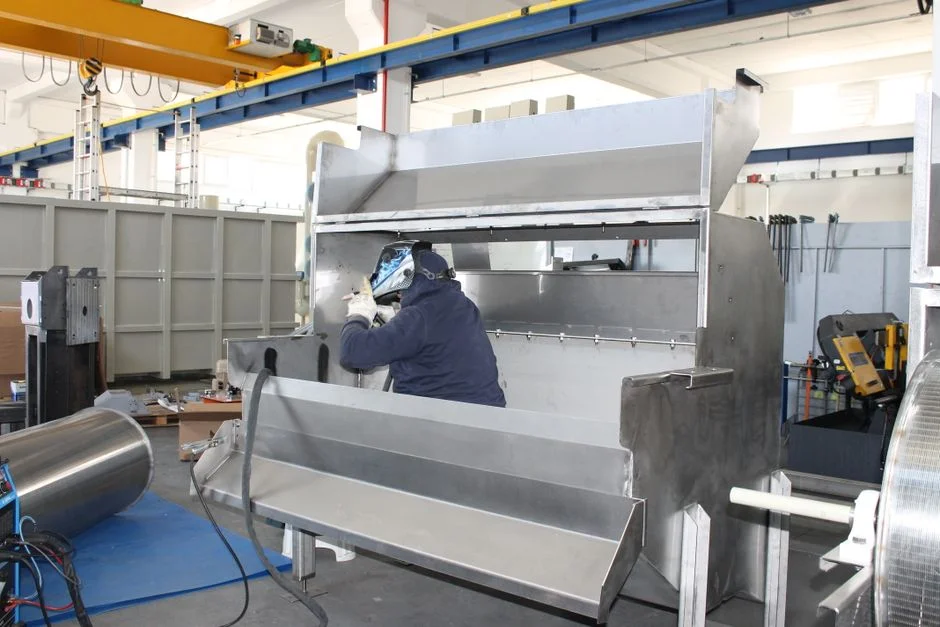
The reference P&ID below is reverse-engineered from CONAGUA Título de Concesión structures, public OEM Impact Report disclosures, and documented best practice at comparable auto and EV sites. It handles the four influent streams a Mexico auto-assembly site generates: body-in-white (Ni, Co, drawing compounds, lubricant emulsions), paint shop (phosphate, E-coat, detackifier COD), general assembly (low-contamination rinse, cooling-tower blowdown), and the EV/battery overlay (NMP from cathode coating, graphite slurries, electrolyte salt flushes).
- Equalization: 6–12 hour hydraulic buffer sized to peak shift flow, with PLC-controlled pH dosing bringing mixed pH into a 6.5–7.5 envelope. Body-shop and paint streams can swing pH 2 to 11, and the basin must absorb that or downstream metals precipitation fails.
- DAF: The dissolved air flotation (DAF) system in the 4–300 m³/h skid range delivers 80–95% FOG removal and drops TSS below 100 mg/L downstream, the workhorse unit for body-shop streams.
- Coagulation + lamella clarifier: Ferric chloride or polyaluminum chloride at pH 9–10 precipitates dissolved Ni, Co, and Li as hydroxides, and a HydropureWater high-efficiency sedimentation tank (lamella clarifier) at 20–40 m/h surface loading handles solids separation.
- NMP vacuum distillation: Closed-loop column recovers NMP from cathode-coating concentrate for reuse. Plants outsourcing cathode production to a Tier-1 cell supplier skip this stage entirely.
- Submerged MBR: An MBR membrane bioreactor wastewater treatment system with PVDF hollow-fiber modules runs at MLSS 8,000–12,000 mg/L, effluent turbidity below 1 NTU, reactor volume sized to peak flows near 5,000 m³/day at full EV scale. The design envelope is detailed in the MBR system for sewage specifications and design parameters selection guide.
- Two-pass industrial RO: An industrial reverse osmosis (RO) water treatment system at 70–85% recovery, permeate conductivity below 50 µS/cm, aligned with the reuse-not-discharge norm in the three stressed basins.
- Disinfection: A chlorine dioxide (ClO₂) generator in the 50 g/h to 20,000 g/h range, or a UV bank, at the final reuse or discharge point.
Retrofit CAPEX, OPEX, and Brine Disposal: The Numbers
Base-train CAPEX for a 1,500 m³/day Mexico retrofit, covering DAF, MBR, RO, no NMP distillation, and no evaporator, fits a $1.5M–$6M envelope, or roughly $1,000–$4,000 per m³/day of design capacity ($4–$16 per gallon). A ZLD-ready configuration with an evaporator/crystallizer adds 1.5x–2.5x to the base-train number, which aligns with 2030 reuse targets and the basin-level pressure on the three stressed-basin sites. Adding NMP vacuum distillation for in-house cathode coating pushes spend to the upper end or above the range, because it is a separate process column, not a treatment stage.
At 15–30% reject on a 1,500 m³/day plant, that is 225–450 m³/day of liquid leaving the site, with Mexican disposal tariffs of $0.40–$0.90 per 1,000 gallons depending on state and hazardous classification. A worked example: 300 m³/day reject at a $0.60/1,000-gal avoided-disposal credit captures roughly $48/day, or about $17,500/year, not enough to retire an evaporator CAPEX, but enough to make brine minimization a real lever in the financial model. Sludge dewatering belongs as a discrete budget line because NOM-052-SEMARNAT-2005 hazardous-waste classification routes MX-Class I hydroxide sludge to a hazardous-only landfill; a plate and frame filter press for sludge dewatering and an automatic chemical dosing system for polymer conditioning are the matching unit operations for that line item.
Day 0–720 Post-Close Action Checklist
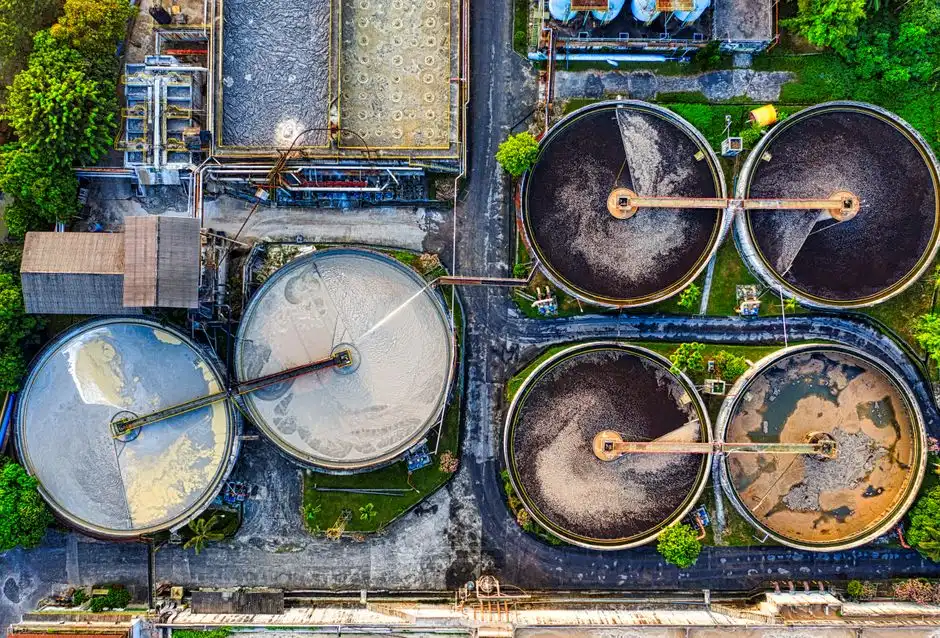
The 24-month ISO 14001 conformance clock and the Mexican federal filing windows run in parallel. The calendar below is the sequence the integration team actually executes; each bracket ends with a verifiable deliverable.
- Days 0–30: File the CONAGUA Formato de Cambio de Titularidad and the LGEEPA Art. 29-bis notice. Pull every open PROFEPA expediente from the seller (inspection minutes, Clausura orders, multas) and log them in the EMS register.
- Days 30–60: Verify the NOM-001 monitoring plan currency, identify the receiving-stream use-type (Type B, C, or reservoir/lake), confirm COTER and any prior COTER finding travels with the asset, pull 8 quarters of CONAGUA-reported monitoring data, and flag any parameter within 80% of its limit.
- Days 60–90: Confirm LP-GMX-XXX NOI coverage for satellite operations (paint shops, R&D pilots) and the basin-level water-stress reporting obligations; confirm the environmental calendar is built, populated, and assigned an owner (S4 §4.1.2).
- Days 90–180: Commission the equalization-basin influent channel count as a one-hour visual diagnostic. One channel implies the prior owner never segregated streams, and retrofit CAPEX roughly doubles. Five or more channels mean segregation discipline is already in place, and the Phase 1 CAPEX number holds.
- Days 0–720: Track the 24-month ISO 14001 conformance clock, the EMS environmental-calendar build-out, and the 100% regulated-discharge measurement expectation. Schedule the first Self Declaration Audit between months 10 and 14, and the first external EMS audit if any Major Non-Conformance surfaces in year one (S4 §5.5.6).
Frequently Asked Questions
What is the Título de Concesión and does it transfer automatically on closing?
The Título de Concesión is the federal grant issued by CONAGUA authorizing both wastewater discharge and groundwater extraction. It is the Mexican analog of the US NPDES/TPDES permit. The title does not auto-transfer as a freestanding right; the buyer must file a Formato de Cambio de Titularidad so the title re-issues in the successor operator's legal name, and operating conditions carry forward unchanged. Open CONAGUA derechos and prior non-compliance travel with the asset as successor liabilities.
What is the LGEEPA Article 29-bis filing window?
Under Article 29-bis of the LGEEPA, the buyer must file a change-of-operator notice with SEMARNAT within 90 days of closing an industrial asset operating under an environmental authorization. The notice names the successor operator, re-attaches operating conditions, and triggers re-issuance of discharge and emissions authorizations. Open PROFEPA expedientes, inspection findings, and unpaid multas do not reset on closing.
What are the NOM-001-SEMARNAT-2021 metal-finishing annual-average effluent ceilings?
The binding annual-average ceilings for the metal-finishing subcategory are: total Ni 1.0 mg/L, total Co 1.0 mg/L, total Cr(VI) 0.1 mg/L, total Pb 0.5 mg/L, total Cu 1.0 mg/L, total Zn 2.0 mg/L, total CN 1.0 mg/L. Conventional parameters for Type C surface-water discharge: BOD 30 mg/L, COD 120 mg/L, TSS 40 mg/L, FOG 15 mg/L, total N 25 mg/L, total P 10 mg/L. Total P tightens to 5 mg/L for reservoir/lake discharges, and dry-season basin-level tightening can run 20–30% tighter.
What is the ISO 14001 conformance deadline after acquiring a Mexico plant?
Under the corporate-EMS pattern (S4 §5.1.1), a new manufacturing operating unit, including an acquired Mexico plant, must reach ISO 14001 conformance within 24 months of acquisition. The EMS must include a documented environmental calendar (S4 §4.1.2) and must identify every relevant Mexican federal, state, and basin legal requirement in the register. The 100% regulated-discharge measurement expectation applies from Day 1, which translates into near-continuous flow-paced monitoring under the CONAGUA Título de Concesión.