Why Vancouver's Sewer Use Bylaw Drives the Process Choice
In Metro Vancouver, any domestic sewage treatment in Vancouver discharging to the regional trunk must meet Metro Vancouver Sewer Use Bylaw No. 299 (2026 consolidated): BOD₅ ≤ 200 mg/L, TSS ≤ 350 mg/L, total phosphorus ≤ 10 mg/L, FOG ≤ 100 mg/L, and a 60 mg/L total nitrogen guideline at the approved sampling point (per Metro Vancouver Sewer Use Bylaw No. 299, 2024 update). These are the numbers the design must hit, not the federal CCME municipal values, and the bylaw officer will compare them against the last 12 months of compliance samples before a sewer use permit is renewed. Anything stronger than ~200 mg/L BOD needs flow equalization or pre-treatment, because the regional interceptor is sized for municipal-strength sewage, not industrial spikes.
The 2026 enforcement focus has shifted toward PFAS source control and stricter FOG monitoring for food-service tie-ins, even though PFAS does not yet carry a numerical discharge cap. Designers should expect FOG sampling at the kitchen line rather than only at the plant outlet. Off-sewer sites — rural lots, First Nations communities, and remote worker camps outside the GVRD — fall instead under the B.C. Sewerage System Regulation administered by the B.C. Ministry of Health, which uses Type 1/2/3 dispersal-receptor standards rather than a sewer bylaw. If the site is on municipal sewer, the bylaw is the binding document; if not, the Health Authority's Authorized Person register is.
What Counts as Domestic Sewage in a Vancouver Project
Domestic sewage in B.C. is not just residential blackwater. The Metro Vancouver design default for combined sewer areas is roughly 280 L per capita per day at BOD₅ ≈ 200 mg/L and TSS ≈ 250 mg/L — the benchmark a designer should use, not textbook figures of 150 L/c·d. Hotels, hospitals, and food-and-beverage tie-ins add FOG loads that routinely exceed the 100 mg/L bylaw ceiling, which is why Bylaw 299 carves out a separate FOG limit and requires a properly sized grease interceptor upstream of the biological stage. A 120-seat restaurant discharging 8 m³/d with 400 mg/L FOG will fail at the sampling manhole if pretreatment is skipped.
Staff camps and modular housing built during 2025–2026 across Metro Vancouver — including temporary worker accommodation in Burnaby, Surrey, and the North Shore — push peaking factors to 4–5× average dry-weather flow because morning and end-of-shift usage cluster tightly. A package plant rated only on average flow will wash out during these peaks. Inflow and infiltration is the second amplifier: Metro Vancouver I&I studies show peak wet-weather flows can double the dry-weather baseline, and the biological stage must absorb the surge without losing nitrification. For sites with high FOG or high I&I, a headworks stage with a dissolved air flotation unit ahead of the biological reactor is the standard 2026 pretreatment train.
Four Realistic Process Options for Vancouver Sites
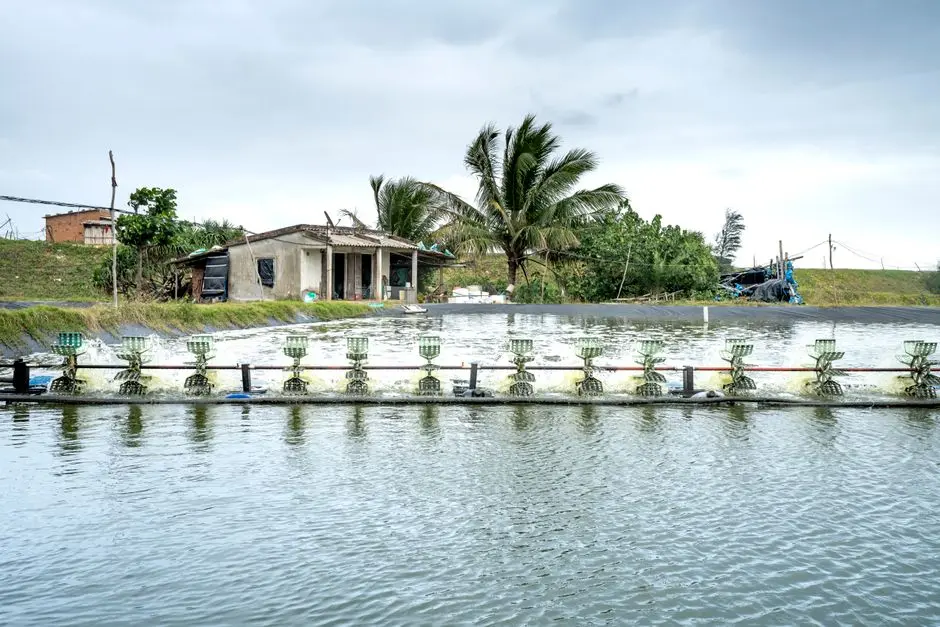
For flows between 1 m³/d and 500 m³/d — the realistic small-to-mid-scale envelope in greater Vancouver — four process families actually get specified and built. Each has a 2026-specific position.
A/O packaged plant (WSZ-class). A buried unit that combines anoxic and aerobic contact oxidation, sedimentation, and a chlorination or UV stage in a single FRP or carbon-steel tank. Rated 1–80 m³/h, fully automatic, no operator required. Effluent is typically 20–30 mg/L BOD and 20–30 mg/L TSS, which clears Bylaw 299 with margin but is borderline for tight TP limits without chemical precipitation. The WSZ underground A/O package plant is the lowest-CAPEX option and the default for residential communities, schools, and small hotels.
SBR (sequencing batch reactor). A timed fill–react–settle–decant cycle in a single tank. Works well where 8–16 hours of flow equalization is available and where operation is intermittent (seasonal resorts, training camps). Footprint is large — typically 2–3 m² per m³/day — and a dedicated blower room is required. Cold-climate performance below 10 °C is poor unless the tank is buried and insulated.
MBR (membrane bioreactor). Submerged PVDF flat-sheet membranes at 0.1–0.4 μm pore size retain virtually all suspended solids and most bacteria. Typical effluent: BOD < 5 mg/L, TSS near zero, turbidity < 1 NTU, which makes downstream disinfection and reuse straightforward. Footprint is ~60% smaller than an equivalent CAS plant, and the higher MLSS (8,000–12,000 mg/L) gives cold-climate resilience that A/O and SBR cannot match. The integrated MBR package plant and the DF series PVDF flat sheet membrane module cover the 10–2,000 m³/d range. Higher CAPEX and membrane replacement every 7–10 years are the trade-offs.
Constructed wetland / vermifiltration. Field vermifilters have demonstrated 80–90% removal of BOD, COD, TSS, and TDS in tropical and subtropical settings (per IntechOpen, 2021). In B.C. the cold-season performance drops sharply from November to March when water temperatures fall below 6 °C, and the land area required — 5–10 m² per m³/day — rules out urban infill. Wetland fits only large rural lots and treatment-train polishing duty, not the primary reactor for a Bylaw 299 site.
Head-to-Head: A/O Package Plant vs MBR vs SBR vs Wetland
The table below is the one to lift into a design memo. Numbers are 2026 typical values for the 10–500 m³/d band, anchored to Bylaw 299 compliance and Metro Vancouver winter conditions.
| Parameter | A/O package (WSZ) | SBR | MBR (PVDF) | Constructed wetland |
|---|---|---|---|---|
| Effluent BOD₅ | 20–30 mg/L | 15–25 mg/L | < 5 mg/L | 15–30 mg/L |
| Effluent TSS | 20–30 mg/L | 15–25 mg/L | < 1 mg/L | 15–25 mg/L |
| Effluent TN | 30–50 mg/L | 20–40 mg/L | 5–15 mg/L | 15–25 mg/L |
| Effluent TP (no chem.) | 5–8 mg/L | 4–7 mg/L | 3–6 mg/L | 4–7 mg/L |
| Footprint (m²/m³/d) | 1.0–1.5 | 2.0–3.0 | 0.4–0.8 | 5.0–10.0 |
| CAPEX (CAD/m³/d) | 800–1,800 | 1,200–2,400 | 2,500–5,500 | 200–600 + land |
| OPEX (CAD/m³) | 0.20–0.50 | 0.30–0.60 | 0.35–0.85 | 0.05–0.15 |
| Cold-climate fit (≤ 10 °C) | Marginal (enclose tank) | Marginal (extend SRT) | Strong (high MLSS) | Poor Nov–Mar |
| Operator skill | Low | Medium | Medium-high | Low |
For urban infill, buried installations, and sites where PFAS source control and a GAC polishing stage are on the 2026 horizon, an MBR is the safer default — the clean effluent and the higher MLSS handle 10 °C winter mixed liquor without an enclosed tank. For cost-driven greenfield residential and small institutional sites, the A/O package plant is the workhorse. For remote sites with 2 ha to spare, a constructed wetland with seasonal polishing is defensible, but it is not a Bylaw 299 solution on its own during a Vancouver winter. A GX rotary mechanical bar screen at the headworks protects whichever reactor is selected.
Sizing a Domestic Sewage Plant for a B.C. Community
The sizing math is straightforward but is where 2026 design reports keep failing. Three steps:
- Average dry-weather flow (ADWF). Population × 280 L/c·d. A 400-person staff camp at 280 L/c·d gives 112 m³/d ADWF.
- Peak hourly flow (PHF). Apply a peaking factor of 2.5–3.0 for residential communities and 4.0–5.0 for staff camps, modular housing, and event venues. The same 400-person camp at factor 4.5 gives 504 m³/d PHF.
- Stage rating. Size the biological reactor on PHF, but rate the clarifier, disinfection, and sludge handling on ADWF. Rating disinfection on PHF is the most common 2026 under-design mistake and is what causes chronic coliform failures in summer sampling.
Worked selection: 400-person camp, ADWF 112 m³/d, PHF 504 m³/d → in the HydropureWater standard range this maps to a WSZ-100 (rated to 100 m³/h, A/O contact oxidation) for the cost-driven option, or an MBR-200 (200 m³/d nominal, ~5 m³/h peak with the higher MLSS headroom) for the tight-footprint option. Add a chemical dosing system for phosphorus precipitation if Bylaw 299 TP sampling is being approached — alum at 50–150 mg/L typically pulls TP to 1–2 mg/L at the reactor outlet.
Sludge, Disinfection and Reuse in 2026
Sludge handling is the section engineers underestimate. Small B.C. plants typically use a plate-and-frame filter press to reach 22–28% dry solids cake, which is then hauled under the regional biosolids management plan; the plate-and-frame filter press is the standard 2026 selection for 5–50 m³/d sludge volumes. Supernatant returns to the headworks and must be accounted for in the hydraulic balance — typically 3–5% of treated flow.
Disinfection in 2026 is moving away from legacy chlorine at hotels, hospitals, and food-and-beverage sites. UV is the default: chemical-free, no DBPs, no dechlorination contact tank, and instant dose confirmation. A pipeline UV sterilizer sized at 30–40 mJ/cm² will deliver < 200 CFU/100 mL fecal coliform at MBR effluent turbidity. For Bylaw 299 sites that are also pursuing non-potable reuse — toilet flush, landscape irrigation, cooling-tower makeup — the standard train is MBR + UV + 5 μm cartridge polishing, which the regional Liquid Waste Management Plan explicitly encourages to reduce peak loading on the trunk sewer.
2026 Cost Bands and Permitting Checklist
Defensible 2026 cost bands in CAD for the Metro Vancouver market:
| Item | Low | High | Notes |
|---|---|---|---|
| WSZ-class A/O package, 1–20 m³/h | 25,000 | 80,000 | Buried FRP, no civil works |
| MBR skid, 10–100 m³/d | 60,000 | 250,000 | PVDF flat sheet, with blowers |
| Constructed wetland | 30/m² bed | 60/m² bed | Excludes land acquisition |
| OPEX WSZ | 0.20/m³ | 0.50/m³ | Power + chemical + sludge haul |
| OPEX MBR | 0.35/m³ | 0.85/m³ | Membrane replacement dominates 7–10 yr cycle |
| OPEX Wetland | 0.05/m³ | 0.15/m³ | Seasonal vegetation upkeep |
Permits to line up before ordering equipment: a Metro Vancouver Sewer Use Permit under Bylaw 299 (with compliance sampling schedule) for any municipal discharge; a B.C. Ministry of Health Letter of Authorization for on-site systems under the Sewerage System Regulation; a City of Vancouver or municipal building permit for the buried installation; and seismic Zone 4 anchorage designed to the B.C. Building Code 2024 — the 2024 edition tightened tank-anchorage and buoyancy requirements after the 2023 experience. Lead-time risk in 2026: PVDF membrane element supply remains volatile at 12–16 weeks for replacement modules, so the membrane spec must be locked at least six months ahead of commissioning. For a cross-jurisdictional cost reference, the industrial wastewater treatment in Calgary 2026 guide uses the same OPEX band logic, and the MBR vs conventional activated sludge footprint guide documents the 60% footprint reduction cited above. For institutional sites, the hospital wastewater treatment 2026 engineering guide covers the high-FOG pretreatment train that Metro Vancouver hospitals also need.
Frequently Asked Questions
What are the Metro Vancouver Sewer Use Bylaw No. 299 discharge limits in 2026?
BOD₅ ≤ 200 mg/L, TSS ≤ 350 mg/L, total phosphorus ≤ 10 mg/L, FOG ≤ 100 mg/L, and a 60 mg/L total nitrogen guideline, measured at the approved sampling point (per Metro Vancouver Sewer Use Bylaw No. 299, 2024 update).
Which process is the default 2026 choice for a small B.C. community on municipal sewer?
A buried A/O package plant (WSZ-class) at 1–80 m³/h is the cost-driven default; an MBR is the safer choice when footprint is tight, winter effluent drops below 10 °C, or non-potable reuse is planned.
How much does a small domestic sewage treatment plant cost in Metro Vancouver in 2026?
A WSZ-class A/O package plant runs CAD $25,000–$80,000 for 1–20 m³/h; an MBR skid runs CAD $60,000–$250,000 for 10–100 m³/d; OPEX runs CAD $0.20–$0.50/m³ for WSZ and CAD $0.35–$0.85/m³ for MBR, with membrane replacement every 7–10 years as the dominant MBR cost driver.
What permits are required for a buried package plant in Metro Vancouver?
A Metro Vancouver Sewer Use Permit under Bylaw 299 for municipal discharge, a B.C. Ministry of Health Letter of Authorization for on-site systems, a City of Vancouver or member-municipality building permit, and seismic Zone 4 anchorage designed to the B.C. Building Code 2024.