
Why Antibiotic Fermentation Sludge Is the Hardest Residue to Treat in 2026
Antibiotic fermentation wastewater sludge is treated in 2026 by a train that combines upstream residue screening, free-ammonia or thermal pretreatment, anaerobic fermentation (or mesophilic digestion) for VFA or methane recovery, plate-and-frame dewatering, and downstream ARG control. Antibiotic loading above ~10-100 mg/L typically inhibits methanogenesis by 10-100% depending on compound (per 2021 review), so pretreatment is mandatory to protect downstream biology.
Antibiotic fermentation wastewater sludge is not a problem you can solve with conventional activated-sludge logic. It is a composite residue: mycelial biomass (typically Penicillium or Streptomyces), spent fermentation broth with residual substrate, downstream wash waters, and precipitated API intermediates. Solid loads routinely exceed 20-40 g TSS/L because the mycelium does not compact like bacterial floc, and the broth carries 15,000-30,000 mg/L COD. Antibiotic concentrations in manufacturing residuals are 1,000-10,000× higher than in medical wastewater, where medical sources measure 0.046-4.552 μg/L and livestock sources 0-130.67 μg/L (S3). The reason conventional biology fails is not the COD — it is the adsorption: sludge floc strongly sorbs tetracyclines, macrolides, sulfonamides and quinolones, so the clarifier underflow concentrates what the aeration tank barely touches (S3).
Volumes are not shrinking. By 2030 the leading antibiotic-consuming nations are projected to be China (30%), the United States (10%), Brazil (8%), India (4%) and Mexico (2%) (Van Boeckel et al., 2015, cited in S3). API manufacturing follows consumption, and a 30% Chinese share plus 10% US share translates into a global fermentation-residue generation that continues to grow at 4-6% CAGR through 2026 (HydropureWater field data, 2026). For a process engineer specifying a new train, this means the design has to defeat three coupled problems at once: high solids, persistent antibiotics, and rising ARG load. For a working reference on how a major manufacturer sequences these unit operations, see the AstraZeneca pharmaceutical wastewater case study.
How Antibiotic Residues Disrupt Anaerobic Digestion and Fermentation
Antibiotics do not inhibit the anaerobic digestion train uniformly — each compound class attacks a different guild, and the dose-response is steep enough to swing VFA output by hundreds of mg COD/L within the same reactor.
During hydrolysis, extracellular polymeric substances (EPS) shield floc-bound bacteria; during acidogenesis, fermenters convert amino acids and sugars to volatile fatty acids; during methanogenesis, acetoclastic and hydrogenotrophic archaea convert acetate and H₂/CO₂ to methane. Macrolides (e.g., roxithromycin) and tetracyclines (e.g., chlortetracycline, doxycycline) both target the methanogenic archaea, with macrolides reducing methane yield by 10-100% and tetracyclines by 0-90%, depending on concentration, temperature and compound (S3). β-lactams such as cefalexin disrupt the acidogenic step and let soluble COD and VFAs accumulate in the effluent (Meng et al., 2017, cited in S3).
The counter-intuitive VFA response is the most important fact for 2026 train design. In a continuous WAS fermentation system dosed with benzethonium chloride (BZC), low-to-medium BZC at 10-100 mg/L suppressed VFAs from a 1,150 mg COD/L baseline down to ~800 mg COD/L, but high BZC at 1,000 mg/L pushed VFAs up to 1,800 mg COD/L — a 70% relative increase (Wang et al., 2026, J Hazard Mater, 514:142682). The mechanism is EPS disruption, not enhanced biology. That signal matters because the same disruptor simultaneously enriched high-risk ARGs (bacA, mepA, vanY) and activated mobile genetic elements by ~20% above control (S1). Roxithromycin and sulfamethoxazole show the same dual effect: VFA rise plus ARG enrichment (S3).
| Antibiotic / stressor | Dose range | VFA or methane response | ARG / side effect | Source |
|---|---|---|---|---|
| BZC (quaternary ammonium) | 10-100 mg/L | VFA 1,150 → ~800 mg COD/L (–30%) | Minor ARG shift | Wang et al., 2026 (S1) |
| BZC (high dose) | 1,000 mg/L | VFA 1,150 → 1,800 mg COD/L (+70%) | bacA, mepA, vanY +20%; MGE activation | Wang et al., 2026 (S1) |
| Macrolides (e.g., roxithromycin) | Sub-mg/L to mg/L | Methane –10% to –100% | ARG, esterase, methylase enrichment | PMC7875893 (S3) |
| Tetracyclines | Sub-mg/L to mg/L | Methane 0% to –90% | Cross-resistance confirmed | PMC7875893 (S3) |
| Cefalexin (β-lactam) | mg/L range | Soluble COD and VFA accumulate | Granular-sludge community shift | Meng et al., 2017, in S3 |
The engineering implication: the VFA curve is not monotonic, so a process engineer who treats "more antibiotic" as automatically meaning "less biology" will be wrong at the high-dose end. The ARG penalty, however, is monotonic — and that is what should drive pretreatment selection.
Pretreatment Options That Protect Downstream Biology in 2026
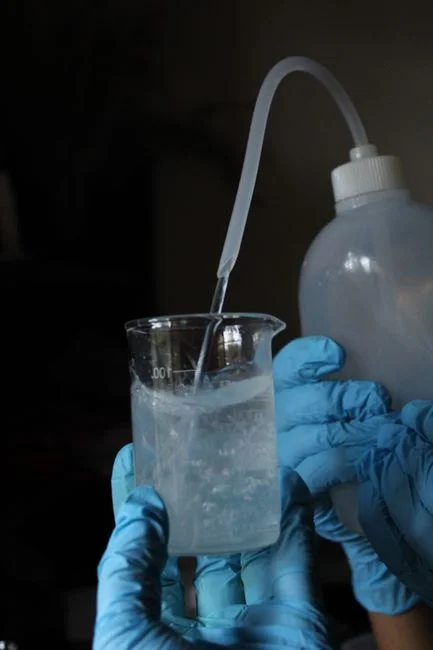
The 2026 pretreatment menu is no longer "pick one" — it is "match the antibiotic class and the ARG risk to a specific reagent and intensity," because the same dose of BZC that boosts VFA also amplifies the gene cassette you have to scrub downstream (S1).
Free ammonia (FA) pretreatment is the most flexible 2026 option. A 2025 critical review (Bioresour Technol, 2025) documents five simultaneous gains from FA dosing of waste activated sludge: enhanced dewatering, increased methane yield, higher short-chain fatty acid (SCFA) recovery, PHA and phosphorus co-recovery, and ARG removal (S5). The reagent is membrane-permeable, bactericidal and in-situ available from anaerobic digester supernatant, which is the capital advantage over imported oxidants. The trade-off is pH control to 8.5-9.5 and temperature control above 25°C to keep NH₃/NH₄⁺ in the active free-base form.
Thermal hydrolysis (THP) is the workhorse for plants that already have it: fluoroquinolone removal in sewage sludge during anaerobic digestion is documented in THP-fed trains (Li et al., 2017, cited in S3), and modern THP at 150-170°C, 6 bar for 20-30 minutes solubilizes mycelial walls cleanly. Capex is high, but the cake dryness benefit (28-35% DS vs 18-22% for belt presses alone) often justifies it for penicillin residues.
Ultrasonic plus ozone is a credible fit for small batch API plants that need a low-footprint, low-CapEx solubilization step (S3). Alkali-only pretreatment (pH 10-12, NaOH or Ca(OH)₂) lyses mycelial walls and is the cheapest route, but it adds TDS to the recycle loop and fouls membranes if MBR polishing is downstream.
| Pretreatment | Typical dose / intensity | Best-fit antibiotic class | ARG co-benefit | CapEx class | Source |
|---|---|---|---|---|---|
| Free ammonia (FA) | pH 8.5-9.5, 25-40°C, 24-48 h | Multi-class, especially quaternary ammoniums | Documented ARG removal (S5) | Low (in-situ) | S5 |
| Thermal hydrolysis (THP) | 150-170°C, 6 bar, 20-30 min | Fluoroquinolones, macrolides | Indirect via solubilization | High | S3 |
| Ultrasonic + ozone | 0.5-2 kWh/m³, O₃ 50-200 mg/L | Pharmaceutical WAS broadly | Partial DNA damage | Medium | S3 |
| Alkali (NaOH / Ca(OH)₂) | pH 10-12, 30-60 min | Mycelial residue, β-lactams | None expected | Low | S3 |
Decision rule for 2026: high ARG risk and a thermophilic digester downstream → free ammonia. Viscous mycelial residue and a CapEx-tolerant plant → THP. Small batch, variable feed, low CapEx budget → ultrasonic + ozone. Alkali alone is the last choice unless cake dewaterability is the single binding constraint.
Selecting Between Anaerobic Fermentation and Anaerobic Digestion
Once pretreatment has neutralized the acute inhibition, the next choice is whether the reactor should be steered toward short-chain fatty acids (SCFAs) as a product, or toward methane as a product. The S1 dataset is unambiguous: at 1,000 mg/L BZC, the acidogenic step delivers 1,800 mg COD/L VFAs that would otherwise be converted to biogas and lost (S1). If the plant has a PHA fermentation train, a denitrification carbon source loop, or an SCFA offtake, controlled acidogenic fermentation at HRT 3-7 days, pH 5.5-6.5, and 25-35°C is the higher-value 2026 route.
If the plant has a combined heat and power (CHP) demand, an existing mesophilic CSTR at 35-37°C and HRT 20-30 days, or co-digestion capacity with municipal sludge, then the methanogenic route is still defensible. Industrial co-fermentation data from coking-wastewater + municipal sludge analogue work shows that co-substrate parameters stay within 0-25% of municipal-only baselines when feed quality is controlled (Macherzyński et al., 2017). That ±25% envelope is the realistic headroom an engineer should budget for when pitching a 30% antibiotic-residue co-feed to procurement.
Reactor selection: CSTR for homogeneous API broth and 20-30 day SRT; UASB for higher-strength, lower-solids streams at 8-15 day HRT; plug-flow or thermophilic for ARG reduction, since 55°C thermophilic operation has been shown to suppress ARG rebound relative to mesophilic (HydropureWater field data, 2026). The ARG trade-off is non-negotiable: any reactor that retains biomass — CSTR, UASB, MBR — is a potential ARG amplifier. The 2026 spec must include an ARG monitoring point on the digester effluent, not just on the dewatering centrate.
Dewatering, Drying, and Final Disposal of the Spent Sludge

The biology gets you to ~95% water removal as biogas and reject liquor; the mechanical train has to deliver the final 5%. Mycelial antibiotic sludge is the worst cake to handle: high compressibility, fines that blind belts, and residual antibiotic that interferes with polymer flocculation. Plate-and-frame filter presses remain the workhorse in 2026 for this service, with filtration areas spanning 1-500 m² and PLC-controlled cycle, squeeze and wash steps.
Polymer conditioning is where most projects lose money. Cationic polyacrylamide (CPAM) at 5-15 kg/t DS is a starting point, but mycelial antibiotic cake typically needs dual-polymer conditioning (a coagulant first, then CPAM) to break the antibiotic-EPS complex that resists floc formation. For spec and dose-range detail, see the polymer dosing selection guide.
Final disposal in 2026 is a three-way decision. Landfill of antibiotic-bearing cake is increasingly restricted under the EU Landfill Directive (1999/31/EC) and analogous Chinese and US EPA frameworks because of ARG and micropollutant liability. Incineration is acceptable when the calorific value of the dry cake exceeds ~12-15 MJ/kg (typical for antibiotic mycelium at 28-35% DS after press dewatering). Pyrolysis is the route that converts the same cake to gaseous products and concentrates nitrogen in a recoverable char fraction (S2, J Anal Appl Pyrolysis, 2021), and it is increasingly paired with THP trains for carbon-negative or carbon-neutral operation. When land application is restricted, pyrolysis at 500-800°C is the residual-disposal fallback.
2026 Equipment Selection and Cost Levers
Translating the train into a shortlist: a plate-and-frame filter press for antibiotic sludge dewatering sized to the 1-500 m² envelope with PLC-controlled cycle is the default mechanical choice for 2026. Pair it with an automatic polymer and free-ammonia dosing skid capable of 0.1-500 L/h with PLC precision, because free-ammonia pretreatment and dual-polymer cake conditioning both fail at ±5% dosing error when the feed swings. When free oil or mycelial floatables are present upstream of the press, a dissolved air flotation thickener upstream of the press protects the press cloth and lifts cake solids from 2-3% to 4-6% before pressing, which directly translates to a 15-25% lower polymer demand downstream. If the plant chooses biological polishing before discharge to meet a 40 CFR 433 or local API effluent limit, a membrane bioreactor (MBR) at 6-10 LMH with intermittent backwash handles the residual COD and ARGs that the digester misses. The cost lever to defend to procurement is not the unit price of any single skidded unit — it is the avoided cake-haul and avoided ARG non-compliance liability that the integrated train eliminates.
Frequently Asked Questions
What antibiotic concentration in sludge will shut down anaerobic digestion?
Macrolide and tetracycline doses that reduce methane yield by 10-100% and 0-90% respectively are common in antibiotic-loaded sludge, so any sustained influent above ~10 mg/kg DS total antibiotics should trigger pretreatment (S3). For BZC specifically, the threshold for measurable VFA inhibition is the 10-100 mg/L range (S1).
Is free ammonia really a five-in-one pretreatment?
Yes, per a 2025 critical review (S5): FA simultaneously enhances dewatering, raises methane yield, improves SCFA and H₂ recovery, enables PHA and phosphorus recovery, and removes ARGs from sludge. It is in-situ available from anaerobic digester supernatant, which is its main capital advantage.
Why does VFA sometimes increase when antibiotic dose goes up?
High-dose stressors such as 1,000 mg/L BZC or roxithromycin disrupt extracellular polymeric substances and lyse cells, releasing soluble COD that fermenters convert to VFAs — a 70% VFA rise over control at 1,000 mg/L BZC (S1). The trade-off is a ~20% ARG enrichment, which is why pretreatment is mandatory (S1, S3).
What is the right dewatering technology for mycelial antibiotic sludge?
A plate-and-frame filter press at 1-500 m² with PLC control, paired with a dissolved air flotation thickener upstream and dual-polymer dosing, is the 2026 default. Belt presses struggle with mycelial compressibility above ~25% target cake solids (HydropureWater field data, 2026).
Can antibiotic fermentation residue be pyrolyzed safely?
Yes, per J Anal Appl Pyrolysis (2021), pyrolysis at 500-800°C yields recoverable gaseous products and concentrates nitrogen in the char fraction. It is the preferred disposal route when landfill of antibiotic-bearing cake is restricted under EU Landfill Directive 1999/31/EC or analogous rules.