What 'Treating Wastewater' Actually Means at a Ford EV Plant
Ford treats wastewater at its EV and assembly plants with a multi-stage process: segregated chrome and electrocoat streams are routed to chemical precipitation for heavy-metal removal, dewatered with filter presses, and the clarified effluent is polished biologically before discharge to a Publicly Owned Treatment Works (POTW). At its Louisville Assembly Plant, Ford added a paint pre-treatment reuse loop that recycled more than 5 million gallons in its first year—about 22 gallons per vehicle—cutting both freshwater intake and discharge volumes.
Three wastewater streams fall under a Ford final-assembly site's operating scope. The first is industrial process wastewater from body-in-white stamping, the paint shop, and final assembly—the dominant stream at a Louisville-class plant, where the bulk of the load comes from chrome-free or zinc-phosphate pretreatment baths and electrodeposition (e-coat) rinse overflow. The second is sanitary wastewater from plant occupants. The third is site stormwater, which is typically segregated and discharged under a separate NPDES industrial stormwater permit. Engineers should be careful not to confuse the cell-chemistry wastewater generated upstream at battery cell suppliers (NMP solvent, LiPF6-derived fluorides, lithium salts) with assembly-plant streams; that effluent is handled at the gigafactory level, not at Ford's final assembly buildings.
The Louisville project sits inside a company-wide water program that has saved more than 12.5 billion gallons of water since 2000 across conservation and recycling initiatives (Ford, 2022-02).
The Louisville Paint-Shop Reuse Case: Ford's Most Documented Plant
Louisville Assembly Plant launched its paint pre-treatment reuse loop in 2020, providing the most concrete public dataset an engineer can cite. The project routes treated wastewater back into the paint pre-treatment process instead of sending the entire stream to the local POTW, which simultaneously cuts freshwater intake and reduces discharge volume.
In year one, the program reduced city water use by more than 5 million gallons, equating to over 22 gallons per vehicle produced and approximately $50,000 in cost avoidance (Ford, 2022-02). For a plant producing roughly 225,000–250,000 vehicles annually, the 22-gallon-per-vehicle figure is consistent with the 5-million-gallon total.
The 2021 EPA Region 4 Pollution Prevention Award was issued for this water-recycling initiative, validating the engineering approach at a federal level (Ford, 2022-02). The program supports Ford's aspiration to reserve freshwater for human consumption and contributes to the company's CDP A-List water-security posture; Ford has held an A-List rating for water security for seven consecutive years (Ford, 2022-02). For a Tier-1 supplier benchmarking its own paint-shop reuse loop, Louisville is the primary case study in the public record.
Inside the Treatment Train: From Segregated Streams to Reusable Effluent
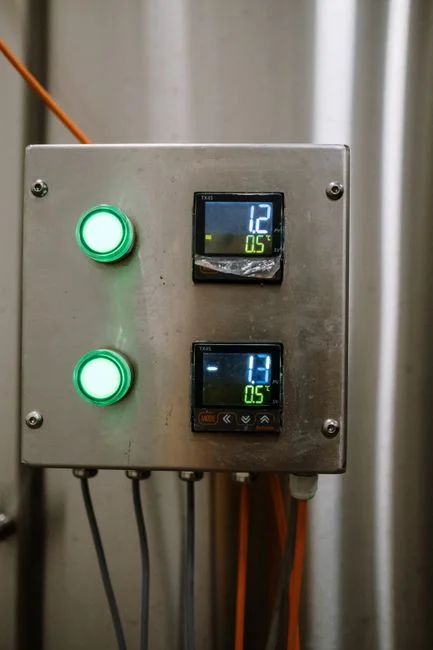
Ford's wastewater trains at both legacy Wixom and current Louisville-class plants follow the same architectural principle: segregate the hard-to-treat streams at the source, run each through its own optimized chemistry, then consolidate for polishing and reuse or discharge.
- Source segregation. Chrome-bearing rinses and electrocoat (e-coat) paint waste are kept apart from the general waste stream because they require different precipitation chemistries—chrome needs reduction (Cr(VI) to Cr(III)) followed by hydroxide precipitation; e-coat paint waste responds to coagulant dosing and pH adjustment. Segregation prevents one waste stream from contaminating another and is the foundational design choice in the Wixom plant (HRC).
- Equalization and batch treatment. Ford's Wixom plant runs in batch mode, which homogenizes the waste stream, reduces chemical consumption versus continuous treatment at variable influent strength, and gives operators tighter effluent control (HRC).
- Chemical precipitation for heavy metals. Hydroxide or sulfide precipitation removes Ni, Zn, Cr(III) (post-reduction), Pb, and other metals to concentrations consistent with the stringent NPDES limits that would otherwise apply to direct discharge to surface water (HRC). For a current reference frame on metals limits, see the heavy metal discharge limit compliance guide.
- Lamella or plate clarification. Precipitated metals and coagulated paint solids settle in a high-rate clarifier. A lamella clarifier for paint-shop wastewater is a direct analogue for this duty, with typical overflow rates of 3–5 m/h and underflow solids concentrations of 3–5% by weight.
- Sludge dewatering. A filter press for hazardous-metal sludge dewatering converts the metal-rich sludge to a dry cake (typically 30–45% dry solids) for shipment to a licensed hazardous-waste facility. Wixom was built with two filter presses sized for the 1 MGD design flow (HRC).
- Biological polishing. Residual organics from paint and degreasing operations are removed in an activated-sludge or membrane bioreactor stage. An MBR system for biological polishing before reuse typically achieves effluent COD below 50 mg/L and TSS below 5 mg/L—clean enough for either POTW discharge or paint pre-treatment reuse.
- Disinfection and reuse routing. Low-level chlorination or UV polishing protects reuse piping and paint-bath integrity from microbial fouling. The polished effluent is then split: a fraction goes to the POTW, and the remainder is sent back to the paint pre-treatment process, as documented at Louisville (Ford, 2022-02).
| Unit Process | Typical Inlet Quality | Target Effluent | Reuse / Discharge Destination |
|---|---|---|---|
| Chrome reduction + precipitation | Cr(VI) 5–50 mg/L; pH 2–4 | Total Cr < 0.5 mg/L (typical NPDES pretreatment limit) | Consolidates to general waste stream |
| E-coat coagulation + precipitation | TSS 500–2,000 mg/L; paint solids 1–5% | TSS < 50 mg/L | Consolidates to general waste stream |
| General chemical precipitation (Ni, Zn, Pb) | Ni 2–20 mg/L; Zn 5–50 mg/L | Ni < 1.0 mg/L; Zn < 2.0 mg/L (per EPA categorical standards) | Forward to clarification |
| Lamella / plate clarification | TSS 200–800 mg/L | TSS < 30 mg/L | Forward to biological polishing |
| Filter press sludge dewatering | Sludge 2–4% dry solids | Cake 30–45% dry solids | Licensed hazardous-waste disposal |
| MBR biological polishing | COD 200–600 mg/L; TSS 30 mg/L | COD < 50 mg/L; TSS < 5 mg/L | Split: POTW discharge + paint pre-treatment reuse |
| Disinfection (UV or chlorination) | Microbial count variable | Free Cl residual 0.2–0.5 mg/L (chlorination) or equivalent UV dose ≥ 40 mJ/cm² | Paint pre-treatment reuse loop |
Legacy Versus Current: What Changed From Wixom to Louisville
The Wixom and Louisville plants represent two eras of Ford wastewater engineering—one driven by contaminant removal to meet stringent surface-water discharge limits, the other driven by closing the water loop at a final assembly site. Understanding both helps a Tier-1 supplier position its own plant on the same timeline.
| Parameter | Wixom (Legacy Lincoln Assembly) | Louisville (Current EV-Era Assembly) |
|---|---|---|
| Design flow | 1 MGD industrial pretreatment | Not publicly disclosed; reuse volume 5M gal/yr (year one) |
| Treatment mode | Batch chemical precipitation | Continuous biological polishing + reuse loop |
| Stream segregation | Chrome and e-coat segregated from general waste (HRC) | Stream segregation standard practice; reuse return to paint pre-treatment |
| Sludge handling | Two filter presses; cake to licensed hazardous-waste facility (HRC) | Filter press or equivalent; cake to licensed disposal |
| Discharge route | To City of Wixom POTW (no direct discharge to Norton Creek / Huron River) | To local POTW, with reduced volume via reuse (Ford, 2022-02) |
| Capital cost | $11M (under budget, per HRC project record) | Not publicly disclosed |
| Regulatory driver | EPA-RCRA deadlines + stringent NPDES limits on Huron River | EPA Pollution Prevention Award (2021); CDP A-List water security |
| Primary KPI | Wixom | Louisville |
| Annual water savings | Eliminated direct surface-water discharge | 5M gallons (year one); 22 gal/vehicle; ~$50K avoided cost (Ford, 2022-02) |
| Risk profile | Contaminant removal to meet limits | Closing the loop without contaminating e-coat / pretreatment baths |
The shift from Wixom to Louisville represents a transition from meeting local discharge limits to reducing overall water consumption.
Where Ford Stops: What's Not Yet a Closed Loop
Ford's public disclosures describe reuse loops for paint pre-treatment, sanitary water, and general process water, but not a full zero-liquid-discharge (ZLD) system. The publicly stated endpoint is reduced freshwater use, with an aspiration to reserve freshwater for human consumption (Ford, 2022-02). No Ford final assembly plant has, to public knowledge, achieved full ZLD.
EV battery cell wastewater is a separate problem set. NMP solvent recovery, fluoride management, and lithium-bearing brine handling occur at the cell-making facilities—the joint-venture gigafactories—not at Ford's final assembly buildings. An engineer evaluating gigafactory effluent should review the cell maker's own disclosures; for a comparable reference, see the LG Energy Solution battery plant wastewater treatment guide.
Ford's forward commitments frame where plant-level water investment is headed: 100% local renewable energy at U.S. facilities by 2035, carbon neutrality by 2050, and Better Climate Challenge greenhouse-gas cuts of 25–50% over 10 years (Ford, 2022-02). Water reuse fits that trajectory; the Louisville project is a proof point rather than an endpoint.
Frequently Asked Questions
How much wastewater does Ford's Louisville Assembly Plant reuse?
Ford's Louisville Assembly Plant reused more than 5 million gallons of treated wastewater in the first year of its 2020 paint pre-treatment reuse program, equating to over 22 gallons per vehicle and approximately $50,000 in cost avoidance (Ford, 2022-02). The project earned a 2021 EPA Region 4 Pollution Prevention Award.
What unit processes make up Ford's EV plant wastewater treatment train?
The train includes source segregation of chrome and e-coat streams, batch equalization, chemical precipitation for heavy metals, lamella or plate clarification, filter-press sludge dewatering, biological polishing (activated sludge or MBR), and disinfection before POTW discharge or paint pre-treatment reuse (HRC, project record; Ford, 2022-02).
Where does Ford send the metal-rich sludge from its assembly plants?
Filter-pressed metal sludge is shipped to a licensed hazardous-waste disposal facility. The Wixom plant was designed with two filter presses sized for a 1 MGD industrial pretreatment flow, and the resulting cake is transported off-site for licensed disposal (HRC, project record).
Does Ford operate a zero-liquid-discharge system at any EV plant?
No Ford final assembly plant has achieved full zero-liquid discharge to public knowledge. The publicly stated endpoint is reduced freshwater use, with an aspiration to reserve freshwater for human consumption. The Louisville reuse loop is the largest documented closed-loop segment (Ford, 2022-0