What Hyundai Discharged at Metaplant America and Why It Mattered
Hyundai Motor Group Metaplant America (HMGMA) brought its first vehicles off the line in September 2024, and within weeks the City of Savannah measured copper in the discharge at more than six times the allowable limit and zinc at more than twice the limit, with conductivity self-reporting gaps stretching as long as 19 hours (per Savannah civil engineer Shawn Rosenquist, reported by The Current, 2025-03-06). The two process streams that generated the load were metal finishing (electroplating rinsewaters, conversion-coating baths) and car wash (the final body rinse that captures residual metal fines and surfactants). Both streams fall under the industrial pretreatment program (IPP) the City of Savannah administers under delegated authority from the Georgia Environmental Protection Division (EPD) within the National Pollutant Discharge Elimination System (NPDES) framework.
Wastewater first reached the Travis Field Water Reclamation Facility on September 3, 2024, after traveling 24 miles of pipeline from the Ellabell megasite. Savannah's IPP permit set ceilings on copper, zinc, total conductivity, and other metal-finishing parameters; when those ceilings were exceeded, the city issued a Notice of Violation on October 1, 2024, and stopped accepting flow on September 26—a date that coincided with the pre-emptive shutdown for Hurricane Helene, but effectively ended the Travis Field arrangement (The Current, 2025-03-06). Copper and zinc act as chelation/precipitation inhibitors that disrupt biological phosphorus removal; Savannah's Ron Feldner flagged rising effluent phosphorus at Travis Field as a direct consequence of the elevated metals loading.
Inside the On-Site Pretreatment System That Failed
HMGMA's on-site pretreatment train follows a standard metal-finishing process flow: source segregation, equalization, pH adjustment with caustic or acid dosing, coagulant/flocculant addition, clarification or lamella settling, sand/carbon polishing, conductivity monitoring, and discharge to the receiving utility. While no public P&ID exists, the four parameters Savannah enforces (copper, zinc, total conductivity, pH) align with a hydroxide-precipitation system design, and the phosphorus-impact analysis confirms the metals caused the failure rather than biological issues.
The single root cause Hyundai identified in its March 2025 communications was zinc-bearing piping in the pretreatment skid (per HMGMA spokesperson Joe LaMuraglia, The Current, 2025-03-06). Newly installed onsite pretreatment piping leached zinc into both the industrial and domestic wastewater streams, bypassing the segregation logic the system required. Once zinc enters the mixed stream, hydroxide precipitation at pH 9–10 removes it only if the dose is precise and contact time is sufficient; continuous online conductivity monitoring acts as the early-warning signal for operators. HMGMA's conductivity data had gaps of up to 19 hours, and Savannah's IPP requires continuous self-reporting, meaning the monitoring gap and the metal exceedance converged on the same compliance failure.
Pipe replacement remains the primary variable in returning to full compliance. Hyundai's March 2025 statement targeted Q4 2025 for completion, and a subsequent September 2025 update (WJCL, 2025) reaffirmed an interim milestone of September 2025. Until the new pipe is in service and the conductivity monitoring gap is closed, the on-site system cannot demonstrate compliance to Savannah or the Georgia EPD, necessitating the DAF procurement described below.
The DAF Retrofit Hyundai Is Installing to Close the Domestic Gap
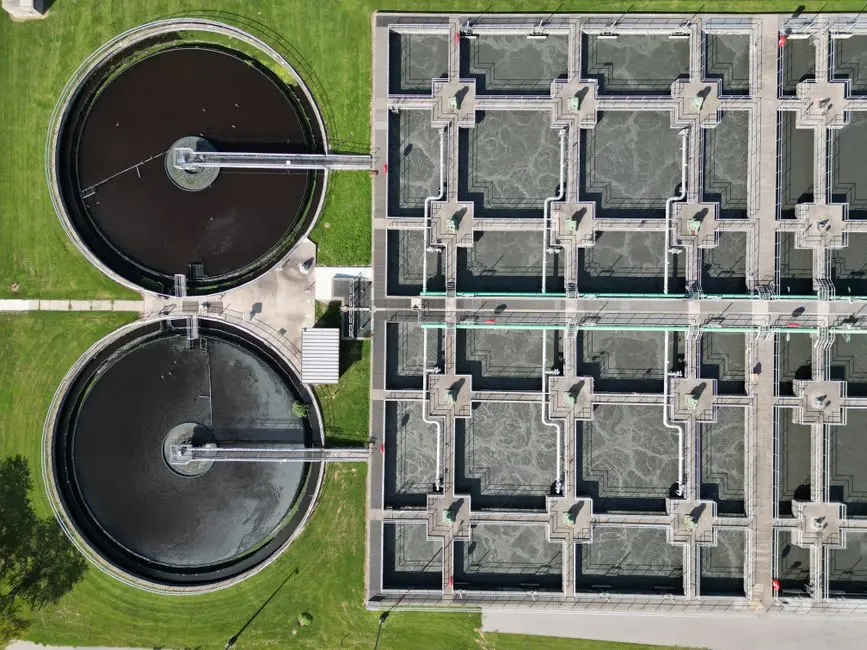
HMGMA acknowledged that the site previously lacked a dedicated means to treat domestic wastewater and has procured a dissolved air flotation (DAF) system to ensure all discharges meet permit levels (HMGMA spokesperson statement, WJCL, 2025). DAF is the standard unit operation for removing suspended solids, emulsified oil and grease, and colloidal metal hydroxides from mixed automotive wastewater. The mechanism uses a saturator to pressurize a side stream of clarified effluent at 4–6 bar with air; the stream is released into the flotation tank at atmospheric pressure, generating 10–80 µm micro-bubbles that attach to floc particles, lifting them to the surface as a floating sludge blanket. Operators dose coagulant (typically PAC or ferric chloride) and flocculant (cationic or anionic polymer) upstream to build the floc.
For an automotive plant, DAF sits downstream of coagulation/flocculation and upstream of biological or membrane polishing. The relevant duty window for the HMGMA application is roughly 4–80 m³/h given a 5 MGD future plant, and a comparable specification class is the HydropureWater dissolved air flotation system range (4–300 m³/h across 13 models, proven in metalworking and automotive pretreatment service). EPD's enforcement logic treats the DAF as a precondition for returning to Travis Field discharge. The unit operations on either side of the DAF are summarized below.
| Position in Train | Unit Operation | Function | Typical Parameter |
|---|---|---|---|
| Upstream of DAF | Coagulation / flocculation | Build floc from colloidal metals and O&G | PAC 50–150 mg/L; anionic polymer 1–5 mg/L |
| DAF vessel | Micro-bubble flotation | Remove floated sludge; clarify effluent | Surface loading 5–15 m³/m²·h; recycle ratio 20–30% |
| Downstream of DAF | Sand/carbon filter or MBR | Polish residual TSS and metals | Effluent TSS <10 mg/L; Cu <0.5 mg/L; Zn <1.0 mg/L |
| Across the train | Online conductivity + pH analyzers | Continuous compliance signal | Conductivity alarm at permit ceiling; pH 6.5–9.0 |
From Travis Field to 5.2 Million Gallons of Pump-and-Haul
HMGMA pivoted to pump-and-haul by holding wastewater in on-site sewage tanks and trucking it to off-site facilities after Savannah stopped accepting flow. Over the last four months of 2024, more than 5.2 million gallons of wastewater were transported to third-party sites (per HMGMA correspondence with Georgia EPD, reported by The Current, 2025-03-06). The receiving facilities and their status are listed below.
| Receiving Facility | Location | Type | Issue / Status |
|---|---|---|---|
| Liquid Environmental Solutions | Jacksonville, FL | Private industrial | Accepting; IPP-permitted |
| ReWorld | Augusta, GA | Private industrial | Accepting; IPP-permitted |
| ReWorld | Asheboro, NC | Private industrial | Accepting; IPP-permitted |
| Shamrock Environmental Corp | Browns Summit, NC | Private industrial | Accepting; IPP-permitted |
| Shamrock Environmental Corp | Oxford, GA | Private industrial | Accepting; IPP-permitted |
| US Water Recovery | Goose Creek, SC | Private industrial | Accepting; IPP-permitted |
| Richmond Hill WWTP | Richmond Hill, GA | Public, domestic-only | Notice of Violation 2025-01-27; halted November 2024 |
The Richmond Hill case demonstrates the risks of improper waste disposal. Georgia EPD issued a Letter of Concern on December 6, 2024, followed by a Notice of Violation on January 27, 2025, for disposing of wastewater at a government-owned facility without a permit (per The Current, 2025-03-06). Hyundai disclosed that in late October 2024, a third-party contractor delivered waste to a plant permitted only for domestic wastewater, not industrial (HMGMA statement to WJCL, 2025). That incident triggered a $30,000 consent order covering a 143-day violation window (October 1, 2024 – February 21, 2025), against a statutory maximum of $7.15 million (The Current, 2025-05-12). Capacity does not equal authorization; every receiving facility must hold an industrial pretreatment permit, and the generator must verify this status for all contractors.
The $129 Million North Bryan County Membrane Bioreactor Plant
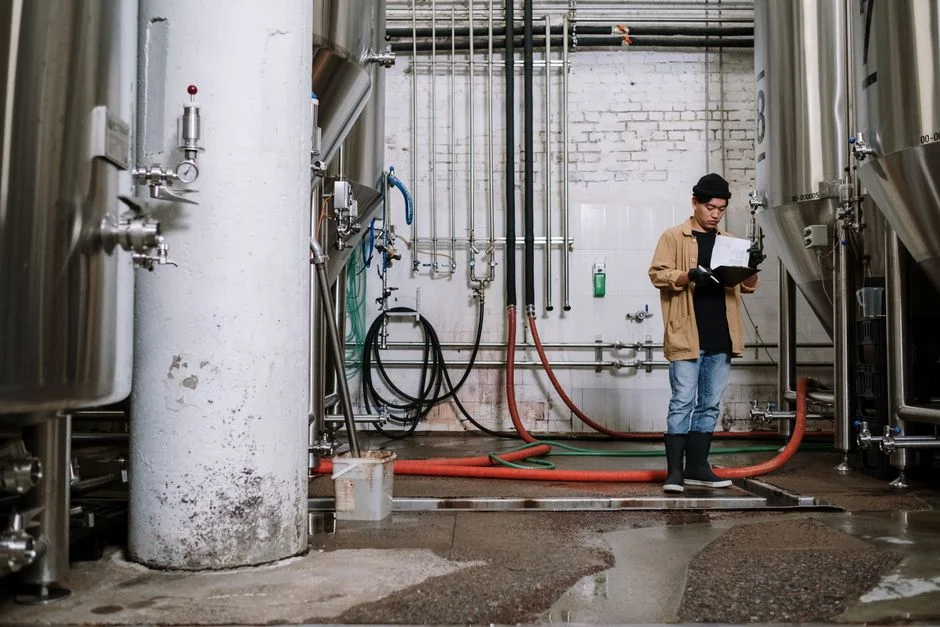
The long-term solution is the North Bryan County Water Reclamation Facility, a $129 million, 5 MGD membrane bioreactor (MBR) plant currently under construction near the Hyundai site. Bryan County spokesman Nicholas Beard set the operational target for Q3 2025 (August–October), with broader reporting projecting a Q4 2025 opening (The Current, 2025-03-06). The MBR process combines activated-sludge biology with submerged PVDF ultrafiltration membranes (0.03–0.1 µm), delivering effluent with suspended solids below 1 mg/L, turbidity below 1 NTU, and a tight log-removal envelope for pathogens. A representative spec class for comparable duty is the HydropureWater MBR membrane bioreactor system, which combines biological treatment with PVDF membrane filtration in a single skid with a smaller footprint than conventional systems.
The MBR plant provides a definitive end date for the pump-and-haul operation. Once the Bryan County facility is commissioned and the EPD approves Hyundai's Corrective Action Plan, on-site wastewater will move by pipeline, and the 24-mile haul to Travis Field will transition to a backup route. The MBR is the unit operation that allows an EV megasite to operate within its discharge envelope without intensive polishing, and it should be specified during front-end engineering design rather than retrofitted under enforcement pressure. For a broader process-flow reference, the integrated wastewater treatment plant process guide details how biological, membrane, and polishing stages are typically combined.
What Other Auto Plants Should Learn from the HMGMA Case
Four engineering and compliance items apply directly to new EV plant or Tier-1 supplier pretreatment specifications. First, prioritize pretreatment parameters: copper, zinc, total conductivity, and phosphorus-impact monitoring. Savannah's Ron Feldner identified biological phosphorus removal as sensitive, using rising effluent phosphorus as a canary for metals breakthrough (per The Current, 2025-03-06). Second, hauler vetting must be permit-based: every receiving facility must hold an industrial pretreatment permit, and the generator is responsible for confirming that status. Hyundai's October 2024 incident serves as a warning against relying on capacity alone (HMGMA statement, WJCL, 2025). For a side-by-side look at how this compares to other contexts, see the DAF vs clarifier for fabricated metals wastewater factory guide.
Third, ensure monitoring continuity: 19-hour gaps in conductivity self-reporting triggered enforcement scrutiny because the IPP requires continuous data. Redundant online analyzers with local data logging and cellular uplinks turn a 19-hour blind spot into a five-minute alarm. Fourth, select pipe materials carefully: the HMGMA root cause involved zinc-bearing pipe leaching into the wastewater stream, a metallurgical choice that should be locked at the design stage. Low-zinc alloys, HDPE-lined steel, or PVDF-lined ductile iron are the conservative defaults for new pretreatment skids. These items translate the $30,000 EPD settlement into a specification any Tier-1 supplier can write into a procurement package. For an adjacent battery-plant data point, the LG Energy Solution battery plant wastewater treatment guide covers similar pretreatment priorities in a different process context.
Frequently Asked Questions
When did Hyundai's Metaplant America start producing wastewater?
Vehicle assembly and the associated industrial wastewater discharges began in September 2024, with the first 24-mile pipeline delivery to Savannah's Travis Field Water Reclamation Facility received on September 3, 2024 (per Savannah civil engineer Shawn Rosenquist, The Current, 2025-03-06).
Why was Hyundai fined $30,000 by Georgia EPD?
The April 25, 2025 consent order cited
Frequently Asked Questions
How does Hyundai treat wastewater at its Metaplant America plant?
The Metaplant utilizes a multi-stage industrial wastewater treatment system designed to process process-water from vehicle manufacturing, including painting and assembly operations. The facility employs physical, chemical, and biological treatment processes, including oil-water separation, pH neutralization, and advanced membrane filtration to meet stringent National Pollutant Discharge Elimination System (NPDES) permit requirements before discharge.
Why was Hyundai fined for wastewater violations in Georgia?
Hyundai faced civil penalties due to unauthorized discharges and exceedances of permitted limits related to sediment-laden stormwater runoff during the initial construction phases of the Metaplant. These violations were primarily attributed to failures in the site's erosion and sediment control measures, which allowed high levels of total suspended solids (TSS) to enter local watersheds during heavy rainfall events.
What contaminants were found in Hyundai's wastewater at Savannah's Travis Field?
Monitoring reports identified elevated levels of total suspended solids (TSS) and turbidity in discharge water originating from the construction site’s drainage basins. These contaminants were the direct result of large-scale land disturbance activities that overwhelmed existing silt fences and sediment basins, leading to non-compliance with the site’s stormwater pollution prevention plan (SWPPP).
When will the North Bryan County water reclamation facility open?
The North Bryan County water reclamation facility is scheduled to be fully operational by mid-2026. This municipal infrastructure project is designed to provide the necessary capacity to handle the increased industrial and domestic wastewater loads generated by the Metaplant and the associated regional population growth in the surrounding area.
What is a dissolved air flotation system used for in automotive plants?
A dissolved air flotation (DAF) system is utilized in automotive wastewater treatment to remove suspended solids, oils, greases, and other contaminants that have a specific gravity close to or lower than water. By injecting micro-bubbles into the wastewater, the system causes particulate matter to float to the surface, where it is mechanically skimmed off, allowing for the effective treatment of emulsified oils typically found in automotive coating and machining fluids.