Industrial Wastewater Treatment in Minneapolis: 2026 Process & Compliance Guide
Industrial wastewater treatment in Minneapolis in 2026 is governed by MPCA-issued NPDES permits layered on top of the federal 40 CFR Part 403 pretreatment framework, with category-specific categorical standards (e.g., Part 433 metal products, Part 437 metal finishing, Part 469 electrical components). Most Twin Cities facilities between 10 and 500 m³/day converge on a three-stage train — rotary screening, DAF or lamella clarification, then MBR or SBR biological treatment with chemical dosing and UV or chlorine dioxide disinfection — sized for winter mixed-liquor temperatures of 5–7 °C, which typically requires 1.8–2.2× the textbook 20 °C hydraulic retention time to hold effluent BOD below 30 mg/L and TSS below 30 mg/L.
This memo is written for the engineer who walked into the headworks last January, chipped ice off the bar screen, and found the MPCA pretreatment compliance letter waiting on the desk. The pages below map the regulatory box, the chemistry of the waste, three working process trains, a CAPEX/OPEX envelope, a cold-climate derating worked example, and a 90-day implementation plan you can hand to procurement.
The Minneapolis Regulatory Stack Industrial Dischargers Must Clear in 2026
Federal authority flows from the Clean Water Act through EPA's 40 CFR Part 403 general pretreatment regulations, which delegate enforcement to the Minnesota Pollution Control Agency (MPCA) under an approved state program. MPCA then issues an individual NPDES permit — or, for non-domestic discharges to the Metro Plant, a Significant Industrial User (SIU) permit — that adopts the federal limits verbatim and layers Minnesota-specific local limits on top under Minn. R. ch. 7041. Categorical standards under 40 CFR Parts 413–471 are selected by SIC code, and a single facility can carry more than one (e.g., a metal finisher with a printed-circuit-board line often triggers both Part 437 and Part 469).
Three categorical standards dominate Twin Cities enforcement: 40 CFR Part 433 (metal products) carries a daily-maximum of 2.13 mg/L Cu, 0.69 mg/L Ni, and 0.43 mg/L Zn; 40 CFR Part 437 (metal finishing) layers cyanide and additional metals onto the same logic; 40 CFR Part 469 (electrical/electronic components) sets 0.16 mg/L Cd, 0.32 mg/L Cu, and 0.65 mg/L Pb at the daily-max ceiling. MPCA's 2025–2026 enforcement summaries increasingly flag ammonia-nitrogen, mercury, and PFAS as add-on criteria that sit on top of the federal limits, and a 2025 life-cycle assessment in Water Environment Research shows that the removal-versus-destruction decision for PFAS now carries documented environmental trade-offs that auditors are willing to challenge (Water Environ Res, 2025). The pattern is the same as the broader 40 CFR Part 403 pretreatment framework discussion: federal floor, state ceiling, categorical ceiling, and local-limit additions — all enforceable in the same week.
| Standard | Scope | Daily Max Limits (mg/L) | Source |
|---|---|---|---|
| 40 CFR Part 403 | General pretreatment (all SIUs) | Local limits set by MPCA | EPA, 40 CFR §403 |
| 40 CFR Part 433 | Metal products | Cu 2.13 / Ni 0.69 / Zn 0.43 | EPA categorical standard |
| 40 CFR Part 437 | Metal finishing | Metals + cyanide, see standard | EPA categorical standard |
| 40 CFR Part 469 | Electrical/electronic components | Cd 0.16 / Cu 0.32 / Pb 0.65 | EPA categorical standard |
| Minn. R. ch. 7041 | Minnesota local limits | Hg, NH3-N, PFAS additions | MPCA fact sheet, 2025 |
Two operational notes worth keeping on the desk: PFAS monitoring is now an MPCA emphasis item for 2026, and ammonia limits are applied as a function of the receiving water's summer low flow — a Twin Cities facility discharging warm effluent to a small tributary can be capped below 1.0 mg/L NH3-N in July even though its winter BOD/TSS numbers look fine.
Mapping Your Waste Stream: What Minneapolis Plants Are Actually Discharging
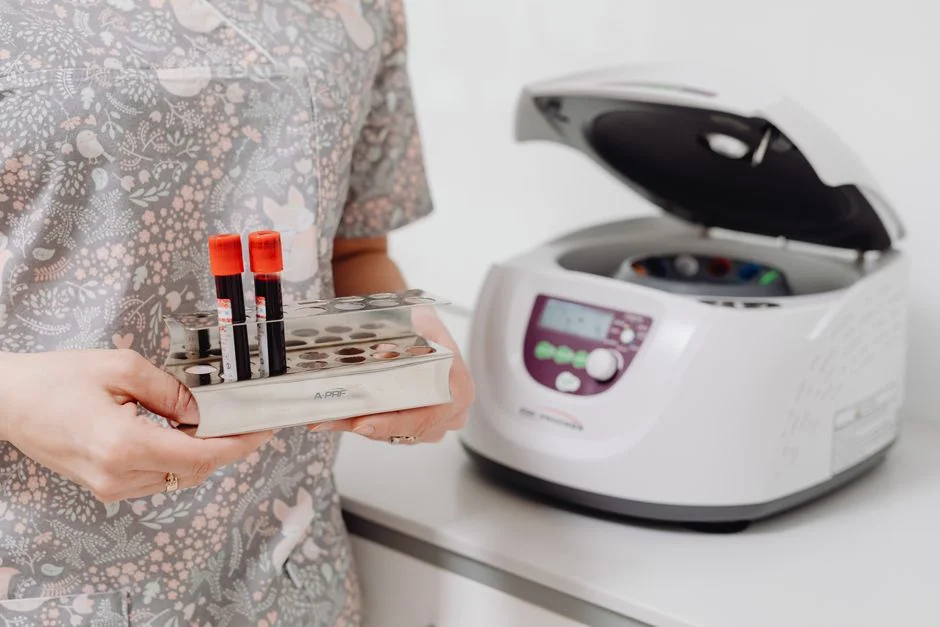
Twin Cities plants cluster into four waste-stream signatures that drive equipment selection. Metal finishers generate low-BOD, low-flow waste with high metals and intermittent cyanide — a chemistry train dominated by precipitation and sludge handling. Food, dairy, and meat processors generate the opposite problem: very high BOD/COD, high FOG, and high TSS, where a DAF or lamella clarifier carries most of the load. Medical-device and healthcare facilities run lower flows but elevated QAC concentrations from disinfectants, with BOD/COD ratios that often exceed 0.5, which is unusual for industrial streams. Printed-circuit-board fabs combine complexed metals, formaldehyde, and very low flow — a difficult matrix for biological treatment alone.
Light manufacturing (assembly, packaging, light fabrication) typically sits in the middle: neutral pH, moderate TSS, low metals, and a BOD/COD ratio that lets biological treatment do most of the work. The University of Minnesota Department of Civil, Environmental and Geo-Engineering (500 Pillsbury Dr SE) published a 2025 study showing that 0.5–76% of quaternary ammonium compound (QAC) load in four Minneapolis-area rivers was wastewater-derived — a locally authored, citable KPI that any healthcare, food, or laundry facility can use to justify adding QAC to its 2026 sampling list rather than relying on the conventional BOD/COD/TSS/pH panel alone (Environ Sci Process Impacts, 2025). PFAS and metals speciation should also be on the panel; the 2025 Water Environment Research life-cycle study confirms that the speciation and chain-length distribution of PFAS drives removal-versus-destruction decisions that auditors will read (Water Environ Res, 2025).
For a worked example of SBR performance, a 5,760 L full-scale SBR at a 100-cow dairy hit 94.6% BOD removal and 100% NH4-N removal on a 12-hour cycle — but that was a dairy stream, not a metal-finishing stream, and metals performance should not be extrapolated from it (ASABE, 2007).
Three Process Trains a Minneapolis Plant Should Compare
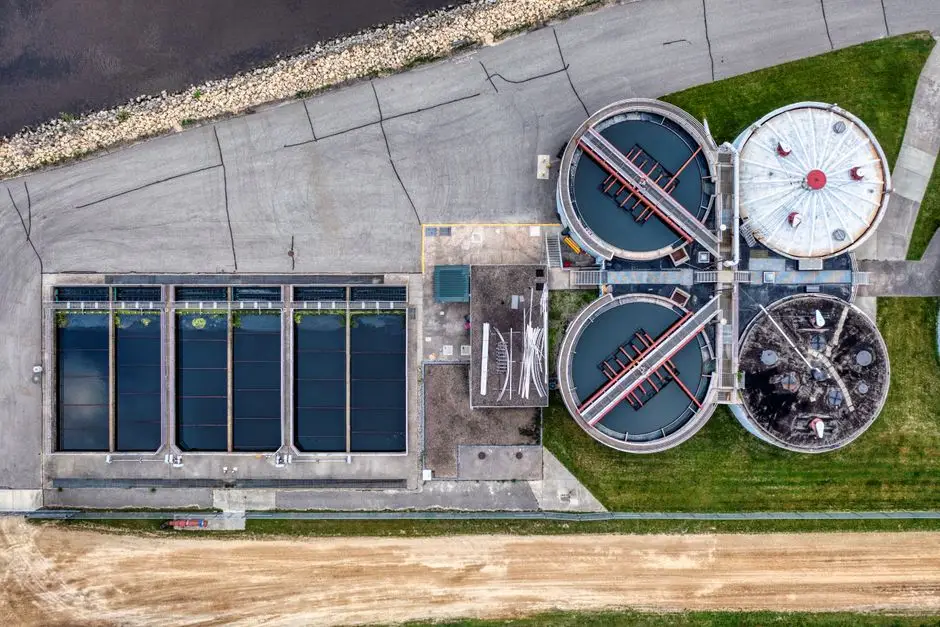
Train 1 — DAF-led. Rotary screen → equalization → dissolved air flotation system for FOG/TSS → SBR for BOD and nitrification → sand/anthracite polishing → UV or ClO2 disinfection. This is the workhorse for Twin Cities food, dairy, and meat processors. The DAF leg typically operates at 4–25 m³/h hydraulic loading with 50–80% TSS removal and 60–90% FOG removal; the SBR leg, sized per the ASABE dairy data above, can hit 94.6% BOD and 100% NH4-N at a 12-hour cycle. Sizing 0.6–0.9 m² of plate area per m³/h of flow is a safe starting band, with chemical dosing on a PLC-controlled chemical dosing system for coagulant and polymer.
Train 2 — MBR-led. GX series rotary mechanical bar screen for coarse screening → fine screen (1–2 mm) → equalization → DAF or lamella primary → integrated MBR membrane bioreactor with submerged PVDF flat-sheet membranes at <1 μm pore → UV disinfection. Best for space-constrained inner-ring industrial sites and water-reuse targets. The DF flat-sheet membrane module typically delivers 32–135 m³/day per module at 0.1 μm nominal pore, and the integrated MBR skid covers 10–2,000 m³/day at roughly 60% of the footprint of an equivalent conventional activated-sludge basin. Membrane replacement cadence for PVDF is typically 5–8 years under proper maintenance, and that number belongs in the OPEX line of the CAPEX sheet.
Train 3 — Lamella + MBBR hybrid. Rotary screen → lamella clarifier at 20–40 m/h surface loading → MBBR nitrification/denitrification → DAF polishing → ClO2 disinfection. Best for metal finishing and light industrial where footprint, biological robustness, and metals-sludge handling dominate. MBBR biofilm tolerates 5–7 °C mixed liquor with 1.8–2.2× the 20 °C HRT, which is exactly the Minneapolis winter envelope. A complete reference for the biofilm side of this train is the MBBR engineering explainer; for the DAF sizing logic, the DAF selection guide covers the engineering numbers in detail.
| Train | Best Fit | Typical Effluent BOD (mg/L) | Typical Effluent TSS (mg/L) | Footprint vs CAS | Cold-Climate Note |
|---|---|---|---|---|---|
| DAF + SBR + UV | Food, dairy, meat | < 30 | < 30 | ~70% | SBR blower sized for 5–7 °C |
| DAF + MBR + UV | Space-constrained, reuse | < 5 | < 1 | ~40% | Enclosure heat to ≥10 °C |
| Lamella + MBBR + ClO2 | Metal finishing, light industrial | < 30 | < 30 | ~55% | Biofilm tolerates 5–7 °C |
The cold-climate derating is the single number most Twin Cities bids get wrong. The standard first-order BOD removal rate at 20 °C uses k ≈ 4–6 d⁻¹; at 5–7 °C, the Arrhenius correction θ^(T−20) with θ = 1.056 collapses that to k ≈ 1.3–1.8 d⁻¹. Holding effluent BOD at 30 mg/L from a 1,200 mg/L influent therefore requires an HRT of roughly 15–18 hours at 5–7 °C versus the textbook ~8 hours at 20 °C — a 1.9–2.2× multiplier, not 1.2–1.3×. That is the figure the engineer should pin to the bid form, not the textbook number.
The 2026 Cost Envelope: What Minneapolis Plant Owners Are Actually Spending
CAPEX in 2026 spans roughly a factor of 2.5–3.5 between the lowest-cost train and the premium tier for the same 100 m³/day design flow. The DAF-plus-SBR train sits at the low end — packaged equipment, less civil work, no membrane replacement reserve. The MBR-led train sits in the mid-range — packaged integrated MBR membrane bioreactor skid at 10–2,000 m³/day, plus enclosure heat, plus a 5–8 year membrane replacement reserve that should be capitalized. The lamella-plus-MBBR with full metals precipitation and cyanide destruction sits at the premium end for metal finishers, where the chemistry train drives cost more than the reactor volume.
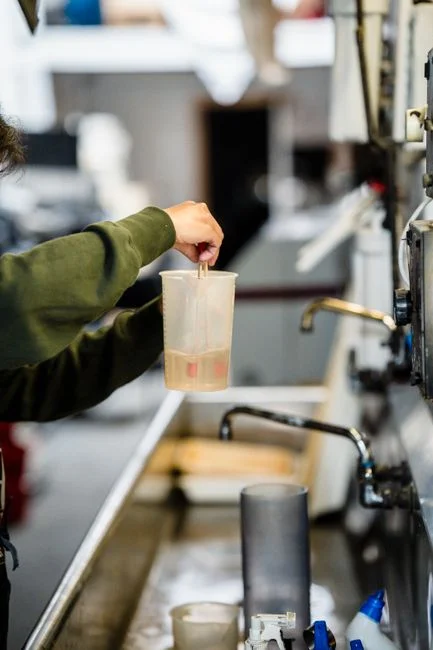
OPEX is dominated by three line items, and the engineer should put a number on each before the vendor meeting. Energy per m³ treated: MBR aeration plus permeate pump runs the highest single number, SBR blower the lowest on a comparable load, and MBBR blower sits in the middle. Chemical dosing — coagulant, polymer, pH adjustment, ClO2 precursor — is governed by influent loading and tracked on a PLC-controlled chemical dosing system; a carbon-source dosing OPEX playbook covers the denitrification methanol/acetate trade-off. Sludge hauling is the third number, and for Minneapolis metal finishers it routinely equals 30–50% of total OPEX — a number that flips the cost-of-ownership conversation if it is not pulled out of the "miscellaneous" line early. The sludge side is handled by a plate-and-frame filter press at 1–500 m² filtration area, with cake dryness typically 30–40% DS for metal-finishing hydroxide sludge.
| Cost Driver | DAF + SBR | MBR-Led | Lamella + MBBR |
|---|---|---|---|
| Equipment package | Lowest of the three | Mid-range | Premium tier for metals train |
| Membrane replacement reserve | None | 5–8 yr cadence (PVDF) | None |
| Energy intensity | Lowest | Highest | Mid |
| Sludge handling (% of OPEX) | 15–25% | 10–20% | 30–50% (metal finishers) |
Cold-Climate Engineering: Designing for a Minneapolis Winter
Minneapolis–Saint Paul design winter mixed-liquor temperature is 5–7 °C; ambient air drops below –30 °C in a typical January, and headworks, screening, and chemical dosing lines must be heat-traced and insulated. The simplest engineering answer is a buried WSZ underground package plant, which keeps the biological reactor above freezing using ground heat and landscaping above; the catalog lists below-grade installation as a standard configuration. Above-grade MBRs and DAFs require enclosure heat to a 10 °C minimum to keep membrane permeability and biological kinetics on spec.
The cold-weather failure mode that recurs in 2024–2026 MPCA inspection reports is not biological — it is mechanical. Ice bridging in rotary bar screens, frozen chemical dosing lines, and polymer lines that turn to gel below 5 °C are the dominant non-compliance drivers, not effluent quality. The defensible engineering response is redundant heat tracing, glycol-protected dosing loops, and a documented cold-weather SOP. The 2007 ASABE wetland study (doi:10.13031/2013.23018) demonstrated ammonia below 2.0 mg/L and phosphorus below 0.5 mg/L in cold-climate passive systems — useful as evidence that cold-climate biology works, but not as a recommended process train for industrial sites subject to categorical pretreatment.
Selecting a Vendor and Locking the 2026 Implementation Timeline
Build a shortlist of three vendors, ranked by documented MPCA permit history in Minnesota, in-house piloting capability (or a willingness to run a 30–60 day trailer-mounted pilot on your actual waste), and a service depot within roughly four hours of the metro for emergency callout. A vendor that has not closed a categorical-standard permit in Minnesota in the last 36 months is a vendor that will learn on your dime. Demand a written cold-climate derating calculation with their bid — if it shows a 1.2× multiplier at 5 °C, send it back. The due-diligence pattern that protects acquisitions of legacy facilities is laid out in the ETP due diligence guide; the same documentation logic applies to a 2026 capital project.
The 90-day implementation sequence: month 1 is waste-stream characterization, with 12 months of influent/effluent data, slug-load events, the current MPCA permit, and the categorical-standard applicability memo handed to the vendor before the bid walk-down. Months 2–3 are piloting and final train selection. Months 4–6 are detailed engineering and the MPCA permit amendment. Months 7–10 are fabrication and installation. Months 11–12 are commissioning and the performance test that the permit is going to be written against.
Print this five-point checklist for the procurement file: (1) compliance — federal categorical standard + MPCA local limits both cleared on the bid form; (2) cold-climate — winter mixed-liquor at 5–7 °C, with a stated HRT multiplier of 1.8–2.2×; (3) footprint — sized to the actual site, not the textbook site; (4) OPEX — energy, chemicals, and sludge hauling broken out separately; (5) service — depot distance and 24-hour callout SLA in writing.
Frequently Asked Questions
What MPCA permit does a Minneapolis metal finisher need in 2026?
A metal finisher discharging to the Metro Plant service area needs an SIU permit from MPCA, with the categorical standards under 40 CFR Part 437 (and often Part 433 or 469 layered on by SIC code) adopted verbatim, plus Minnesota local limits under Minn. R. ch. 7041 for mercury, ammonia, and PFAS. The compliance table in this article lists the relevant federal and state layers a single facility can carry.
MBR vs SBR for a Minneapolis industrial site — which is cheaper to operate?
For the same 100 m³/day design flow, the SBR blower draws less energy per m³ treated than the MBR aeration plus permeate pump, and the SBR carries no membrane replacement reserve. The MBR returns a sharper effluent (typically under 5 mg/L BOD and under 1 mg/L TSS) at roughly 60% of the conventional activated-sludge footprint, but the OPEX premium is real and the membrane replacement reserve at 5–8 years should be capitalized up front.
What CAPEX band should a Minneapolis plant expect in 2026?
For 10–500 m³/day flows, CAPEX spans roughly a factor of 2.5–3.5 between the lowest-cost train and the premium tier, with DAF-plus-SBR at the low end, MBR-led in the mid-range, and lamella-plus-MBBR with full metals precipitation at the premium tier for metal finishers. The CAPEX/OPEX table above maps the cost drivers to each train.
How does a Minneapolis winter change biological treatment design?
Design winter mixed-liquor at 5–7 °C, and apply an Arrhenius correction (θ ≈ 1.056) to the 20 °C BOD removal rate. The 1.8–2.2× HRT multiplier — 15–18 hours instead of the textbook ~8 hours at 20 °C — is the figure to pin to the bid form, not the textbook number. Above-grade reactors need enclosure heat to 10 °C; buried package plants use ground heat instead.
Does PFAS need to be on the 2026 sampling list?
Yes. PFAS monitoring is a current MPCA emphasis item, and a 2025 Water Environment Research life-cycle study shows that removal-versus-destruction decisions carry documented environmental trade-offs that auditors are willing to challenge (Water Environ Res, 2025). For QAC, the University of Minnesota study (Environ Sci Process Impacts, 2025) found 0.5–76% of QAC load in four Minneapolis-area rivers was wastewater-derived — a locally authored, citable KPI for healthcare, food, and laundry facilities.
Related Equipment
- ClO2 generator — specifications, capacity range, and technical data