
Why Port Saint Lucie Transportation Equipment Plants Are Re-evaluating Activated Sludge in 2026
A typical Port Saint Lucie transportation equipment plant — fabricating truck bodies, marine hardware, or rail car components — runs a parts washer, a phosphate or alkaline cleaning line, and a final assembly rinse. The combined wastewater stream carries tramp oils, metalworking fluids, surfactant cleaners, and dissolved metals, with BOD/COD commonly in the 500–3,000 mg/L range and episodic oil and grease (O&G) spikes when a wash tank turns over. The discharge point matters: St. Lucie County falls under the FDEP Industrial Pretreatment Program, with practical daily-maximum limits near BOD/TSS <30 mg/L and O&G <100 mg/L for streams classified like metal finishing. The receiving-water sensitivity is set by the Indian River Lagoon, an estuarine system already on FDEP's impaired waters list for nutrients and turbidity — a fact that tightens what the permit engineer will accept in 2026 reviews.
Two operational drivers are pushing these plants to reopen their treatment train specification. First, several facilities are pursuing closed-loop rinse water reuse to cut sewer surcharges and reduce draw on the surficial aquifer, which under MBR conditions can hit reuse-grade quality without a separate tertiary filtration train. Second, available footprint inside an existing industrial park in Port Saint Lucie is often constrained, which disadvantages conventional activated sludge (CAS) trains that need both an aeration basin and a secondary clarifier plus sludge handling. The combined effect is that 2026 bid lists in St. Lucie County increasingly ask vendors to price both an MBR and a CAS baseline — and the choice now depends on influent profile, reuse obligation, and consent limits more than on first-cost alone. For a broader pretreatment framing, the transportation equipment plant pretreatment compliance guide walks through the same drivers at similar Mid-Atlantic facilities.
What Each System Actually Is: MBR and CAS in Plain Engineering Terms
Conventional activated sludge (CAS) is a two-stage biological process. An aeration tank holds mixed liquor at 2,000–5,000 mg/L MLSS where heterotrophic bacteria oxidize BOD into biomass and CO₂; the mixed liquor then flows to a secondary clarifier where gravity settling separates the clarified effluent from the biomass. Settled sludge is split into return activated sludge (RAS) pumped back to the aeration basin and waste activated sludge (WAS) sent to solids handling. The clarifier is the single point of failure — sludge bulking, rising sludge, or hydraulic overload all collapse the system in the same way.
Membrane bioreactor (MBR) is the same biological reactor with the secondary clarifier removed and replaced by submerged MF/UF membranes at 0.1–0.4 μm pore size, typically PVDF hollow fiber or flat sheet cassettes. Mixed liquor is drawn through the membrane under vacuum; permeate exits as the treated effluent, and the rejected biomass stays in the aeration basin at much higher concentration. Per the HydropureWater 2026 MBR-vs-CAS guide, CAS operates at 2,000–5,000 mg/L MLSS while MBR operates at 8,000–12,000 mg/L MLSS, with MBR running F/M ratios of 0.05–0.15 d⁻¹ and SRT typically 20–60 days. The engineering consequence is that MBR decouples HRT from SRT more aggressively than CAS, which is why MBR absorbs the shock loads a parts-washer batch creates. The full HydropureWater 2026 MBR vs conventional activated sludge engineering comparison works through the operating envelopes in detail.
Side-by-Side Process Parameters: MLSS, SRT, Effluent Quality, Footprint
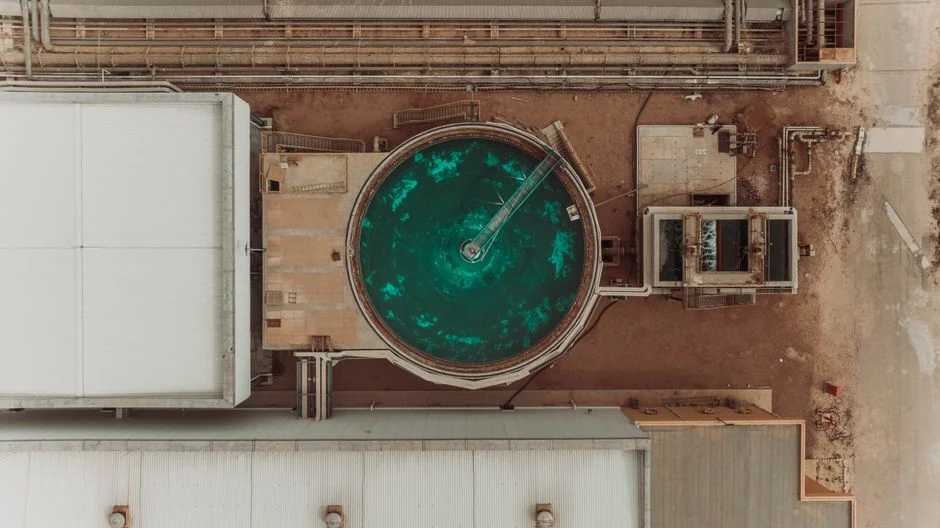
The table below consolidates the design basis an engineer would put into a 2026 P&ID for a 50–500 m³/d Port Saint Lucie transportation equipment plant. All values are typical operating envelopes from the HydropureWater 2026 guide for municipal and light-industrial service; high-strength oily streams push MBR toward the upper MLSS and SRT limits.
| Parameter | CAS (extended aeration) | MBR (submerged PVDF) |
|---|---|---|
| MLSS | 2,000–5,000 mg/L | 8,000–12,000 mg/L |
| SRT | 5–15 d | 20–60 d |
| F/M ratio | 0.2–0.5 d⁻¹ | 0.05–0.15 d⁻¹ |
| HRT | 6–12 h | 4–8 h |
| Effluent TSS | 10–30 mg/L | <5 mg/L |
| Effluent BOD | 10–30 mg/L | <5 mg/L |
| Effluent turbidity | 5–20 NTU | <1 NTU |
| SDI (for RO feed) | >5 (needs polishing) | <3 |
| Sludge yield (Yobs) | 0.3–0.5 kg TSS/kg BOD | 0.2–0.35 kg TSS/kg BOD |
| Footprint (relative) | 1.0× | 0.4–0.6× |
Two rows in the table drive the reuse-versus-tertiary decision. MBR's effluent envelope — TSS <5 mg/L, BOD <5 mg/L, turbidity <1 NTU, SDI <3 — sits below the threshold at which RO membranes can be fed without additional clarification, which is why MBR has become the standard RO pretreatment for industrial reuse loops (per HydropureWater field data, 2025-Q4). CAS effluent at 10–30 mg/L TSS typically needs a downstream cloth-media disc filter, denitrifying sand filter, or DAF polishing to reach reuse criteria — a CAPEX line that should be priced into the CAS baseline before declaring MBR more expensive. On a transportation equipment influent with episodic O&G spikes, the long SRT in MBR is the parameter that does the work: the Banu et al. 2009 A2O-MBR study ran a reactor at industrial scale for 270 days at high MLSS without clarification failure, demonstrating that high-MLSS MBR is stable where CAS would wash out.
How Each System Handles Oils, Grease, and Metalworking Fluids
Metalworking fluid wastewater is the contaminant class that decides which biological train a transportation equipment plant can run. The Applied Water Science review of advanced oily wastewater treatment (Yuliwati et al. 2012, summarized in the Springer review) reports MBR oily-wastewater removals of 97.5% COD, 97.2% TOC, and 98.9% O&G; a separate submerged MBR refinery study reported 75% COD, 55% BOD, 92% TS, 96% TDS, and 30% TSS reduction, while a restaurant-wastewater MBR study hit 98.3–99.1% total COD at influent oil concentrations of 5–100 mg/L. These are the numbers a process engineer should put on a slide when FDEP asks how the plant will treat a parts-washer dump.
CAS struggles with the same influent for a structural reason. High FOG and high COD shift the biomass toward filamentous organisms, which trap air and create floating scum and rising sludge in the clarifier; the resulting solids washout collapses the system within hours. The MBR membrane physically retains the biomass regardless of settleability, so a bulking sludge does not wash out the reactor — it stays in the aeration basin and keeps metabolizing until influent quality recovers.
In a 2026 bid, neither MBR nor CAS is fed raw parts-washer wastewater. A dissolved air flotation unit upstream cuts O&G to <50 mg/L before biology, and a DAF is the standard front end in current transportation equipment plant designs. The dissolved air flotation system is the typical front-end match for either downstream train. Where the streams are mostly oily and the FOG load is sustained above ~200 mg/L, a DAF is non-negotiable upstream of either biological stage.
Decision Matrix: When MBR Wins, When CAS Still Wins in Port Saint Lucie
For a 50–500 m³/d Port Saint Lucie transportation equipment facility, the default depends on five site-specific questions. The matrix below maps each answer to a recommended train.
| Site condition | Default to MBR | Default to CAS |
|---|---|---|
| Average daily flow | <50,000 m³/d | >50,000 m³/d greenfield |
| Influent COD | >1,500 mg/L, variable, or shock-prone | <1,000 mg/L, steady |
| Footprint | Urban infill, indoor retrofit, no laydown | Ample land, low land cost |
| Effluent requirement | Reuse obligation, or <10 mg/L TSS consent | Standard 30 mg/L secondary discharge |
| Operator skill base | Trained on membrane CIP and scour air control | Trained on activated sludge microscopy and SVI |
For most 2026 Port Saint Lucie transportation equipment plants, the answers trend toward MBR: flows are 50–500 m³/d, influent is variable, the site is footprint-constrained, and a reuse loop for rinse water is on the project list. CAS still wins at the high end — a large greenfield municipal train above ~50,000 m³/d with no reuse obligation is the case where CAS plus a denitrifying sand filter remains the lowest-cost compliant option (per HydropureWater 2026 guide, decision matrix). The hybrid path is often the right answer for an existing plant: repurpose the existing CAS aeration basin as the MBR aeration zone, add submerged membrane cassettes, and remove the clarifier. Per the HydropureWater 2026 guide, this retrofit pattern wins on schedule because the basin, blowers, and slab stay in place. The HydropureWater integrated MBR membrane bioreactor system ships as a skid-built package sized to retrofit into an existing CAS basin, and the DF series PVDF flat sheet membrane module is the cassette that drops into the converted aeration zone. For plants comparing flat sheet against alternative membrane geometries, the hollow fiber MBR vs flat sheet, tubular, and ceramic alternatives piece walks through the same fouling and CIP trade-offs.
2026 Cost Envelope for a 50–500 m³/d Port Saint Lucie Plant
Per the HydropureWater 2026 MBR-vs-CAS guide, indicative 2026 turnkey CAPEX for skid-integrated, EPC-scope plants runs $80–$220 per m³/d for CAS and $180–$420 per m³/d for MBR; OPEX lands at $0.10–$0.22/m³ for CAS and $0.18–$0.42/m³ for MBR. The CAPEX gap is wide because cost varies sharply with influent strength and with stainless versus carbon steel material selection — a high-COD oily stream and a 304SS material spec each push both systems upward in their respective ranges. Translating to a 250 m³/d worked example: a CAS baseline at the low end is ~$20,000 turnkey, while an MBR baseline runs $45,000–$105,000 turnkey; the annual OPEX delta is ~$20,000–$50,000, partially offset by 20–40% lower waste activated sludge volume at matched SRT.
The MBR premium pays back in 3–6 years when any one of three conditions holds (HydropureWater 2026 guide, payback section): (1) the project needs reuse water and the CAS baseline includes a tertiary filtration train, (2) land acquisition cost is high enough that the 40–60% footprint saving changes the site economics — common in Port Saint Lucie industrial parks where infill pads are priced per square foot, or (3) the discharge consent requires <10 mg/L TSS and the CAS baseline needs cloth-media disc filters to meet it. If none of those apply — large greenfield, no reuse, no tight TSS — CAS remains the lower-cost compliant option. Skid-mounted MBR packages are particularly competitive at the 50–250 m³/d scale, where factory build and plug-and-play commissioning compress the installed cost curve that custom concrete-basin CAS plants cannot match.
Site Readiness Checklist Before You Pick
Before locking in either train, run a 2-week site readiness check. First, pull a 24-hour composite influent profile — peak COD, oil, pH, temperature, and any surfactant or phosphate excursion from the cleaning line; without this, MLSS and SRT targets are guesses. Second, confirm what the FDEP permit and any reuse obligation require: the consent limit on TSS, O&G, and total phosphorus, plus any Indian River Lagoon–specific nutrient language, decides whether CAS plus polishing is feasible or MBR is required. Third, identify whether footprint or operator skill is the binding constraint — if the site is a tight infill pad inside an existing shed and the operations team is comfortable with CIP and scour air control, MBR is the default; if land is cheap and the team is a conventional activated sludge shop, CAS plus tertiary filtration should be priced in parallel.
Two practical steps before bid award: run a jar test on the DAF effluent to confirm biology sizing, and audit compressed-air capacity — 30–50% of MBR energy is membrane scouring air (HydropureWater 2026 guide, OPEX section), separate from biological oxygen demand, so a 250 m³/d MBR will draw more blower kW than a CAS train at the same flow. For a procurement-ready package, the HydropureWater integrated MBR membrane bioreactor system covers the skid scope and pairs with the DF series PVDF flat sheet membrane module for the cassette detail; the HydropureWater 2026 MBR vs conventional activated sludge engineering comparison is the supporting engineering reference.
Frequently Asked Questions
What is the main difference between MBR and conventional activated sludge for a Port Saint Lucie transportation equipment plant?
MBR replaces the secondary clarifier with 0.1–0.4 μm PVDF membranes, operating at 8,000–12,000 mg/L MLSS versus 2,000–5,000 mg/L for CAS, and delivers TSS <5 mg/L, BOD <5 mg/L, and turbidity <1 NTU effluent suitable for direct reuse (HydropureWater 2026 guide). CAS still produces 10–30 mg/L TSS effluent and almost always needs a tertiary filtration train to meet reuse or sub-10 mg/L TSS consent.
How much does an MBR system cost versus CAS for a 250 m³/d plant in 2026?
2026 turnkey CAPEX ranges are $80–$220 per m³/d for CAS and $180–$420 per m³/d for MBR (HydropureWater 2026 guide). For 250 m³/d, that is roughly $20,000–$55,000 for CAS and $45,000–$105,000 for MBR, with OPEX at $0.10–$0.22/m³ for CAS and $0.18–$0.42/m³ for MBR.
Can MBR handle metalworking fluids and oily rinse water from a transportation equipment plant?
Yes. The Applied Water Science review reports MBR oily-wastewater removals of 97.5% COD, 97.2% TOC, and 98.9% O&G (Yuliwati et al. 2012). A DAF upstream cutting O&G to <50 mg/L before biology is standard in 2026 transportation equipment bids, and the dissolved air flotation system is the typical front-end match for either downstream train.
When does CAS still make sense over MBR in 2026?
CAS still wins on greenfield municipal trains above ~50,000 m³/d with no reuse obligation, where the MBR premium is not justified and the existing operator base is trained on activated sludge rather than membrane maintenance (HydropureWater 2026 guide, decision matrix). For most 50–500 m³/d Port Saint Lucie transportation equipment sites, those conditions do not hold.