
Why textile and dyeing wastewater breaks conventional activated sludge
Dyehouse effluent is a moving target: the same plant discharges destarching rinses (high BOD, ~neutral pH), mercerization baths (pH 12–14, high alkalinity), hot dye-bath overflows (60–95 °C, color-saturated), and cold wash water in a single shift. That mix makes biological treatment difficult compared with municipal sewage. Conventional activated sludge (CAS) is designed for a relatively narrow envelope — 150–400 mg/L COD, 20–30 °C, modest salinity, and a BOD:COD ratio above 0.4 — and textile streams routinely fall outside every one of those parameters (per MDPI 2020, textile wastewater characterization).
Reactive and azo dyes carry chromophores that resist oxidative cleavage in a standard aeration basin, which is why the MDPI 2020 case study recorded only 55% color removal and 83% COD removal in CAS, with effluent averaging 350 mg/L COD and visible color at the outfall. The structural mismatch is not a tuning problem: CAS relies on biomass washout, clarifier settling, and short solids retention times (SRT) of 3–7 days. Azo and reactive dyes are slowly biodegradable, so they need long SRT and high mixed-liquor suspended solids (MLSS) — exactly what an open clarifier cannot keep in the tank. The result at a Cleveland dyehouse is permit-visible: TSS swings of 30–80 mg/L, persistent color units, and occasional bulking events that send sludge over the weir.
For plants on the Cuyahoga–Lake Erie watershed, the Ohio EPA NPDES permit (issued under OAC 3745-40) treats textile discharges as industrial contributors to a sensitive receiving stream. Even if numeric limits for color are framed qualitatively, the operator must demonstrate "no visible color" or meet a use-discharge aesthetic narrative at the outfall — and CAS, on reactive-dye streams, usually cannot.
How an MBR actually treats dyehouse effluent
An MBR functions as an activated-sludge reactor coupled to a submerged ultrafiltration cassette rather than a clarifier. The membrane performs the physical separation that gravity settling does in CAS, but it does so at a defined pore size regardless of how poorly the sludge settles. A typical 0.1 μm flat-sheet MBR module in PVDF holds back biomass, most colloids, and a meaningful fraction of high-molecular-weight dye aggregates, so the permeate TSS is essentially zero.
Three engineering details drive the textile benefit. First, decoupling the solids retention time from the hydraulic retention time (HRT) lets the operator push SRT past 20–30 days without losing biomass, which is what slowly biodegradable azo chromophores need. Second, MLSS in an MBR is decoupled from clarifier hydraulics, so the reactor can run at 8–12 g/L versus the 2–4 g/L ceiling of CAS — providing more catalyst per cubic meter. Third, the membrane modules sit in a coarse-bubble air-scour zone; that air lifts water across the membrane surface, scrubs foulants, and supplies process oxygen, which is why integrated submerged systems draw 10–20× less pumping energy than external cross-flow designs (per HydropureWater product catalog).
Dyehouse streams carry fiber, hair, and hydrophobic dye aggregates that foul membranes faster than municipal MBRs, so every MBR retrofit needs upstream fine screening (≤1 mm) and a chemical cleaning-in-place (CIP) protocol — typically a weekly sodium hypochlorite soak and a monthly acid wash. Operator burden shifts from "watch the clarifier" to "log transmembrane pressure, run the CIP, integrity-test the cassette." A packaged submerged PVDF MBR system ships with that controls layer pre-built, which is beneficial for plants without in-house instrumentation staff.
MBR vs CAS: side-by-side data on real textile effluent
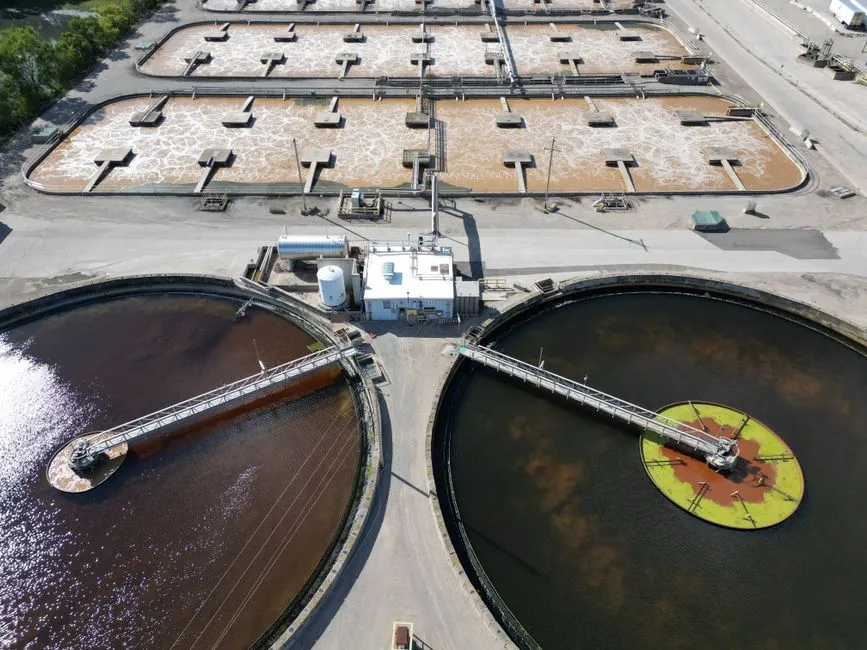
The MDPI 2020 study ran CAS, MBR, and MBBR in parallel on real Bangladeshi textile wastewater — destarching, mercerization, dyeing, and washing combined — which is the closest published anchor to a Cleveland reactive/azo dye mix. The numbers below are the study's reported averages for use in CapEx justification memos.
| Parameter | CAS | MBR | MBBR |
|---|---|---|---|
| COD removal (%) | 83 | 91 | 82 |
| TSS removal (%) | 66 | 99.4 | — (no membrane) |
| Color removal (%) | 55 | 80 | 61 |
| HRT (days) | 2.0 | 1.3 | 1.0 |
| OLR (kg COD/m³·d) | 1.0 | 1.5 | 2.0 |
| Reactor MLSS (g/L) | 3.0 | 2.3 (in reactor; biomass retained fully) | 3.5 (biofilm carriers) |
Three numbers move a permit decision. TSS at 99.4% versus 66% is the difference between a permit excursion and a clean DMR, as the membrane physically prevents biomass escape during bulking. Color at 80% versus 55% is the line between "outfall looks like iced tea" and "outfall looks like diluted tea." And HRT at 1.3 days versus 2.0 days, on a footprint-constrained Cleveland parcel, is roughly 35% more daily throughput per cubic meter of basin volume. MBBR is shown for completeness: it beats CAS on color (61% vs 55%) but cannot match MBR on TSS variability because it lacks a physical barrier downstream of the biofilm carriers.
The MDPI data are from a 15 L/d pilot on a single mill's stream. Cleveland dyehouses running heavier reactive-dye loads, salt peaks above 5 g/L, or seasonal indigo runs should expect the MBR color number to land between 70% and 85% on real plant effluent; downstream polishing (ozone or wastewater color removal technologies) is designed to close the remaining gap.
What MBR changes at a Cleveland dyehouse site
The lab numbers above translate into three site-level differences that an Ohio plant owner can evaluate.
| Site factor | CAS (baseline) | MBR retrofit on same site |
|---|---|---|
| Footprint at equal throughput | 100% (aeration basin + clarifier + sand filter) | ~40% (clarifier and sand filter eliminated, basin reused) |
| Effluent TSS stability | 30–80 mg/L swings with SVI | <1 mg/L, controlled by membrane integrity |
| Reuse eligibility | Sand-filtered only, marginal for RO | Direct RO feed; near-zero SDI in practice |
| Operator routine | SVI/MLSS monitoring, sludge wasting, clarifier skimming | TMP logging, weekly CIP, monthly integrity test |
| Upstream needs | Bar screens | Bar screens + fine screening ≤1 mm + DAF unit for FOG/fiber |
Footprint is the primary challenge on a legacy Cleveland industrial parcel. The Cuyahoga Valley's older mills were designed for steam, water, and rail rather than a 40,000 ft² aeration train, so an MBR retrofit that reuses the existing basin and retires the secondary clarifier and sand filter often clears the CapEx hurdle on land alone. The typical retrofit flow is: existing aeration basin becomes the MBR biological reactor → a cassette rack and permeate pump skid are dropped in → the secondary clarifier is decommissioned and its footprint becomes a buffer or sludge-storage tank.
Reuse provides a significant long-term advantage. MBR permeate at <1 μm is a viable feed for reverse osmosis or direct process-water reuse in dyeing and printing. For Great Lakes industrial users facing periodic intake-restriction pressure and rising Cleveland Water surcharges, reuse is often a larger 5-year OPEX lever than the avoided discharge fee. Operators should expect to add membrane-integrity testing, periodic CIP, and air-scour control, but they eliminate the daily sludge-settling troubleshooting that drives most CAS service calls.
How to choose between MBR, CAS and a CAS-to-MBR retrofit
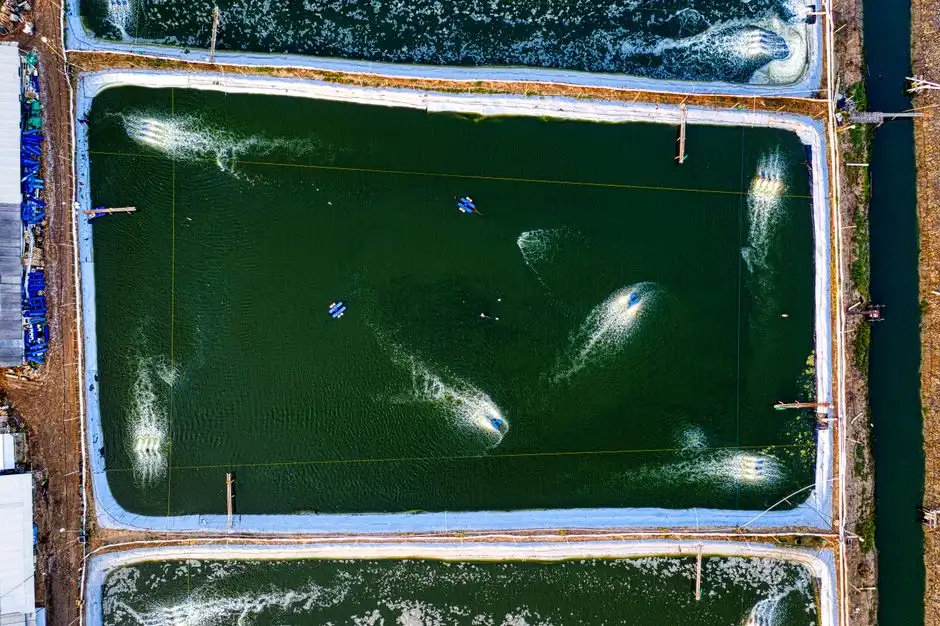
The right call depends on which constraint is binding at the site. A defensible decision framework follows:
- Stay with CAS (and add a polishing step) when: the existing aeration basin has 5+ years of useful life, the dye mix is dominated by disperse dyes (which respond better to CAS than reactive dyes), color is a soft aesthetic concern rather than a numeric permit limit, and capital is constrained. Adding a small ozone or UV stage downstream is often cheaper than an MBR transition if the bottleneck is residual color, not TSS.
- Pick MBR when: color is a permit issue, the site is land-constrained in a Cuyahoga Valley industrial corridor, process-water reuse is on the 3–5 year roadmap, or TSS variability is already causing sludge-recycling and SVI problems.
- Pick MBBR as the middle path when: biofilm biology is desired for the color improvement over CAS but membrane CapEx cannot be justified, and the operator can accept the ~61% color ceiling. MBBR is also a useful bolt-on to an overloaded CAS basin where extra biology is needed without more clarifier capacity.
- Pair MBR with upstream and downstream polishing when: discharge goes to a sensitive Cuyahoga tributary. A DAF unit upstream cuts FOG, fiber, and particulate color; ozone or UV sterilization downstream polishes residual chromophores and disinfects for reuse. This chain is standard on European dyehouse retrofits and is the right reference design for a Cleveland plant with a tight color limit.
When pricing MBR against CAS, consider the 10-year OPEX horizon rather than hardware costs alone. Include the avoided clarifier maintenance and the reuse credit, and stress-test the result against the cost of a single permit excursion that could trigger a consent order.
Frequently Asked Questions
Does MBR really remove more color than CAS on reactive and azo dyes?
Yes. On real textile effluent, the MDPI 2020 study measured 80% color removal in MBR versus 55% in CAS at the same hydraulic retention time, because the membrane holds back dye aggregates and the long SRT allows biomass to slowly reduce azo bonds. Residual color past MBR is typically addressed with ozone polishing.
What hydraulic retention time should I expect from an MBR on dyehouse wastewater?
Around 1.3 days is a defensible design point based on the MDPI 2020 pilot, versus 2.0 days for CAS at the same organic load. Industrial full-scale MBRs in textile service commonly run 18–36 hours of HRT, with OLR around 1.5 kg COD/m³·d.
Can a CAS basin be retrofitted to an MBR without building a new tank?
Yes. The standard retrofit reuses the existing aeration basin as the MBR biological reactor, installs a submerged membrane cassette rack and permeate pump skid inside it, and retires the secondary clarifier. A fine screen (≤1 mm) and typically a DAF unit are added upstream to protect the membranes from fiber and FOG.
Is MBR effluent reuseable for dyeing without RO?
For non-critical rinse applications, yes — MBR permeate at <1 μm filtration is low enough in TSS and turbidity to feed many wash and rinsing steps directly. For dye-bath makeup, where residual color and dissolved solids matter, RO polishing is normally added to keep the color and salinity contribution under control.