Why Swiftwater Pharma Plants Are Re-Evaluating Primary Solids Removal in 2026
Sanofi Swiftwater, the vaccine and biologics cluster along the I-380 corridor, and the contract manufacturers surrounding it run two very different process trains. Continuous-flow small-molecule API synthesis generates steady, high-strength streams with dense inorganic precipitates (metal catalysts, sulfate-bearing wash water) that settle predictably. Biologics and vaccine production — fermentation, purification, buffer and column wash — release batch slugs of 800–1,500 mg/L TSS, residual solvents, and emulsified oils that arrive in 2- to 8-hour waves tied to the production calendar. The Monroe County wastewater authority and the local POTWs serving the corridor publish site-specific pretreatment ordinances that ride on top of the federal 40 CFR 439 floor (per EPA Development Document S1, the category covers SIC 2831 biological products, 2833 medicinal/botanical chemicals, and 2834 pharmaceutical preparations).
The 2026 driver is enforcement: the EPA's Pharmaceutical Manufacturing ELG is now old enough that the BAT concentration limits (TSS 217 mg/L 30-day, 643 mg/L daily; COD 570 mg/L 30-day, 1,024 mg/L daily) are being applied as the actual permit ceiling rather than the design target, and API-trace stewardship programs are pushing plants to remove colloidal API before it hits the aeration basin. The Development Document explicitly lists activated sludge, rotating biological contactors, metal precipitation, filtration, and clarifier configurations as recognized end-of-pipe options. The decision is no longer whether to treat, it is how to stage primary removal so the biological step isn't a shock absorber for upstream mistakes.
The Compliance Floor: 40 CFR 439 Effluent Limits Every Swiftwater Factory Must Hit
Every direct-discharge permit in the pharmaceutical category is anchored to the 40 CFR 439 BPT/BAT/BCT limitations developed in the 1982 Development Document and still codified today (S1). The numbers a Swiftwater process engineer writes on the P&ID are these:
| Parameter | 30-day average max | Daily maximum | Regulatory tier |
|---|---|---|---|
| TSS | 217 mg/L | 643 mg/L | BPT/BAT |
| COD | 570 mg/L | 1,024 mg/L | BAT |
| Cyanide | 375 µg/L | 643 µg/L | BPT/BAT |
| BOD5 | Per BCT option (S1) | — | BCT |
| pH | 6.0–9.0 (S1) | — | Standard condition |
Indirect dischargers — the majority of Swiftwater's biologics and small-molecule API sites — are governed by the PSES/PSNS pretreatment standards in the same regulation, but the binding number on the discharge permit is usually the local POTW's ordinance, which is often tighter than the federal floor. Always check the Monroe County or local POTW limit before sizing equipment. None of these limits are reached by primary solids removal alone; DAF or a clarifier sits in front of biological polishing (activated sludge or MBR) to strip TSS, FOG, and colloidal API so the downstream biomass doesn't see a 1,200 mg/L slug during a buffer wash. Removing 80–95% of suspended solids upstream directly protects MBR membrane flux and prevents bulking in conventional aeration basins — the Development Document's own cost curves assume an end-of-pipe train that begins with primary clarification (S1, Section VII).
How a DAF System Works in Pharmaceutical Wastewater
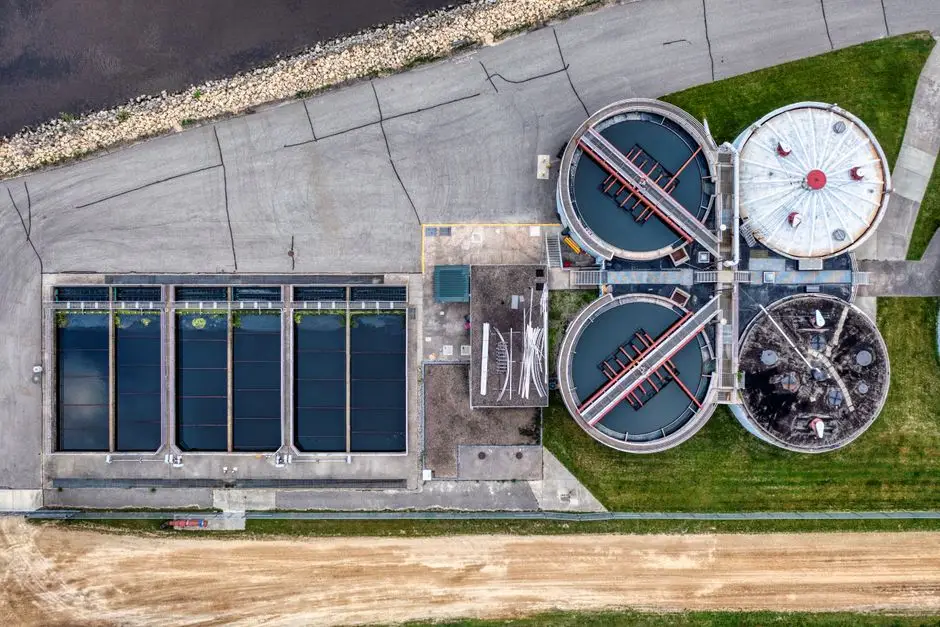
A dissolved air flotation unit conditions the wastewater with coagulant (typically 5–30 mg/L of a ferric or alum salt) and a polymer flocculant (0.5–3 mg/L), then saturates a recycle stream of 20–40% of total flow at 4–6 bar in a pressure vessel. When the saturated recycle is released into the flotation tank at atmospheric pressure, micro-bubbles of 10–100 µm nucleate on the conditioned floc and lift it to the surface, where a mechanical skimmer sweeps the float into a sludge hopper. Hydraulic loading runs 5–25 m³/m²/h, retention is 15–25 minutes, and the air-to-solids ratio is tuned between 0.005 and 0.06 kg air/kg TSS depending on solids character (HydropureWater field data, 2026).
For pharmaceutical streams the unit numbers look like this: 80–95% TSS removal on biologics and fermentation wash, 60–90% FOG on emulsified API residuals, and 30–60% COD reduction on raw API wastewater — the COD lift comes from coagulated colloids and entrained API. Pre-DAF streams downstream of biological polishing have demonstrated membrane flux up to 115 L/m²/h on industrial wastewater (S3, ASABE 2012, applied to analogous protein/colloid streams), which is the relevant proxy for MBR flux protection when a dissolved air flotation system is specified upstream. DAF is the right call when batch intervals are short, when streams carry fermentation broth residuals, suspended API crystals, or trace oils that won't settle, and when the unit must recover from a 2–3× flow spike inside minutes. The trade-off is real: it needs a chemical dosing skid, a compressed-air supply, a skilled operator, and a sludge handling train that can take a 2–5% dry-solids float — which is why the train should end with a MBR membrane bioreactor as the downstream biological polishing step rather than a clarifier when biologics are in the mix.
How a Lamella Clarifier Works in Pharmaceutical Wastewater
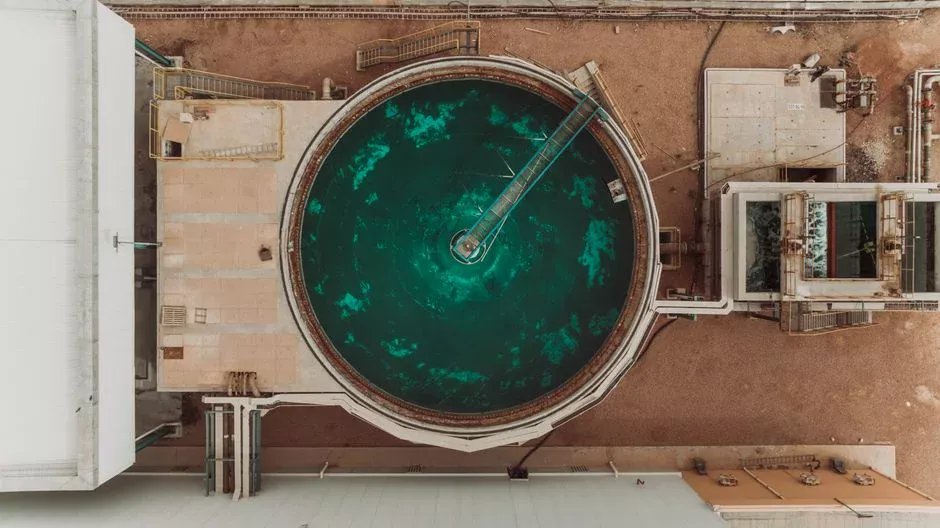
A lamella (inclined-plate) clarifier is a high-rate sedimentation tank: coagulation and flocculation happen in a mixed reaction zone, the flow rises through a stack of plates inclined at 55–60° with 50–80 mm spacing, and settled solids slide counter-current down the plate face into a sludge hopper while clarified water overflows the top launder. Surface loading runs 20–40 m/h — roughly an order of magnitude above a conventional clarifier — and total hydraulic retention is 1–2 hours. Chemical consumption is typically lower than a DAF: most lamella installations need only a coagulant, with polymer added selectively during upset events (HydropureWater field data, 2026).
On settleable pharmaceutical solids, a well-conditioned lamella clarifier removes 50–80% TSS; on colloids and emulsified API the number falls sharply because those particles do not nucleate a dense enough floc to overcome the cross-flow on the plate surface. For a Swiftwater plant running continuous small-molecule API synthesis with dense sulfate or metal-bearing precipitates, the HydropureWater high-efficiency sedimentation tank configuration is the right call: low chemical use, no compressed air, simple operator interface, and a small footprint of 2–3 m² per 10 m³/h. The weakness is the long recovery time. A lamella clarifier needs 1–2 hours to stabilize after a hydraulic or load spike, which is a non-starter for buffer-wash slug loads from a biologics line that pulse every 90 minutes. Treat lamella as the right answer when the upstream stream is continuous, mostly inorganic, and the API residuals are dissolved rather than colloidal.
DAF vs Clarifier: Head-to-Head Comparison for Swiftwater Pharma
| Parameter | Dissolved Air Flotation (DAF) | Lamella Clarifier |
|---|---|---|
| TSS removal (typical) | 80–95% | 50–80% (settleable only) |
| COD removal on raw API WW | 30–60% | 10–30% |
| FOG removal | 60–90% | 20–40% |
| Footprint (per 10 m³/h) | ~3–5 m² | ~2–3 m² |
| Hydraulic spike tolerance | 2–3× flow, minutes to recover | 1–1.3× flow, 1–2 h to recover |
| Chemical use | Coagulant + flocculant + polymer | Coagulant only, polymer as needed |
| Operator skill required | Higher (chemistry, recycle tuning) | Lower (mostly sludge draw-off) |
| CAPEX band (relative) | Higher (saturator, recycle pump, skimmer) | Lower (tank + plates only) |
| OPEX band (relative) | Higher (chemicals, compressed air) | Lower (no air, less polymer) |
| Pharma-fit verdict | Biologics, fermentation, emulsion, batch slugs | Heavy inorganic API synthesis, steady flow |
The numbers above are the engineering reality, not marketing copy. DAF wins on removal efficiency, hydraulic tolerance, and the ability to strip emulsified oils that a clarifier will simply pass through. Lamella wins on footprint, OPEX, and operator simplicity. For a Swiftwater retrofit in 2026 the footprint delta (clarifier roughly 1.5× smaller per unit flow) often tips the decision in dense headworks buildings — but only when the upstream stream is settleable. If the stream carries colloid, fermentation residual, or a solvent carry-over, the same footprint buys a clarifier that doesn't actually meet the 40 CFR 439 BAT limit without help from biological polishing, and the plant will end up adding a DAF skid downstream anyway. For a side-by-side view of the same decision in adjacent chemicals sectors, see a related chemicals-sector DAF vs clarifier comparison and another chemicals-sector DAF vs clarifier analysis for parameters outside the biologics envelope.
Which One Should a Swiftwater Factory Choose in 2026?
For a biologics or vaccine plant — Sanofi Swiftwater's footprint, plus the contract manufacturers feeding into the same corridor — the default in 2026 is DAF as the primary solids-removal step, followed by biological polishing. The reason is operational, not regulatory: the slug loads are real, the FOG is real, and a clarifier that takes 1–2 hours to recover will let at least one buffer wash go through untreated every shift. For a continuous-flow small-molecule API synthesis plant with dense inorganic precipitates, the default is a lamella clarifier, polymer-conditioned, followed by activated sludge. The hybrid case is common in multi-product facilities: install a lamella for the steady-state 24/7 flow, then route batch wash-off through a small DAF skid ahead of the clarifier so neither unit is oversized. The decision rule is simple enough to defend in a CAPEX meeting:
| If the influent looks like this | Choose |
|---|---|
| TSS frequently >500 mg/L, FOG >100 mg/L, or batch intervals <4 h | DAF as primary |
| Steady continuous 24/7 flow, mostly dense inorganic, low FOG and colloid | Lamella clarifier as primary |
| Mix of continuous API + biologics wash with >3 batch events per day | Hybrid: lamella on steady stream + DAF on batch skid |
| API residuals in dissolved rather than colloidal form, no slug load | Lamella + biological polishing |
In every case the primary unit sits ahead of biological polishing; neither DAF nor lamella alone meets the 40 CFR 439 BAT limit on COD, and cyanide control is achieved in the biological step or a dedicated destruction unit, not in primary removal (S1, Sections VII and XII).
2026 Implementation Checklist and Total-Cost Reality
A clean 2026 retrofit at a Swiftwater pharmaceutical facility runs through these steps: (1) characterize the raw influent over at least 30 days — TSS, COD, FOG, flow variability by shift, with a sample taken at every batch transition; (2) run parallel jar tests on both DAF and lamella chemistries, not just one; (3) pilot or rent a unit for 4–8 weeks to validate mass-balance accounting under 40 CFR 439; (4) confirm the local POTW pretreatment limit, because it can be tighter than the federal floor; (5) integrate an automatic chemical dosing skid sized for both steady-state and peak dose; (6) specify a plate and frame filter press for float or settled sludge so the mass balance is auditable from influent to dewatered cake. On cost, expect stainless-steel and polymer pricing to have moved both CAPEX bands upward in 2026, with energy and coagulant costs pushing OPEX on DAF specifically. This article deliberately avoids fabricated dollar figures; vendor quotes are the source of truth and should be benchmarked against the EPA Development Document's end-of-pipe cost curves (S1, Section VIII) only as a sanity check, not as a quote.
Frequently Asked Questions
What is the BAT effluent limit for TSS at a pharmaceutical plant?
Per 40 CFR 439, the BAT limitation is 217 mg/L as a 30-day average maximum and 643 mg/L as a daily maximum for direct dischargers, with the equivalent PSES/PSNS pretreatment standards for indirect dischargers (EPA Development Document S1, Section XII).
Can a DAF alone meet 40 CFR 439?
No. DAF is a primary solids-removal step; the 40 CFR 439 BAT limit on COD (570 mg/L 30-day / 1,024 mg/L daily) and cyanide (375 µg/L / 643 µg/L) requires biological polishing — typically activated sludge or an MBR — and in some cases a dedicated cyanide destruction step (S1).
How much space does a DAF need versus a clarifier?
For the same 10 m³/h capacity, a DAF typically requires 3–5 m² of footprint, while a lamella clarifier needs 2–3 m² (HydropureWater field data, 2026). The clarifier's footprint advantage only holds when the upstream stream is genuinely settleable.
Which is cheaper to operate?
Lamella clarifiers generally have lower OPEX when the chemical dose is coagulant-only. DAF OPEX rises with polymer consumption and compressed-air use, but the higher and more consistent TSS removal (80–95% vs 50–80%) often prevents downstream MBR fouling and the cost that comes with it.
Does Swiftwater have a local POTW pretreatment limit that overrides 40 CFR 439?
Yes. Many Swiftwater-area plants are indirect dischargers, and the local POTW pretreatment ordinance is the binding number on the discharge permit — often tighter than the federal 40 CFR 439 floor. The POTW limit must be confirmed before any equipment specification is finalized (S1, Section XIV).