
What Plastics and Rubber Wastewater Actually Looks Like in Hastings
Hastings-area injection molding, extrusion, and rubber goods plants generate four distinct contaminant classes, and buoyancy — not just concentration — drives whether a dissolved air flotation (DAF) system or a clarifier wins. Polymer fines and pellets are the first class: their density sits close to water (polyolefins at 0.85-0.95 g/cm³, nylon at ~1.14, PET at ~1.38), so they linger near the surface or settle only in still tanks. Latex and rubber emulsion are the second class — a stable colloidal suspension held by surfactants that resists gravity settling and produces persistent turbidity. Release agents, plasticizers, mineral oil, and silicone mold-release compounds form the third class: a buoyant FOG fraction that floats on any clarifier surface and re-emulsifies under turbulence. The fourth class is aqueous cleaning washwater spiked with metalworking fluid, vibratory-finishing grit, and mold-flash; this stream carries both organics and dense inorganic fines.
Typical influent TSS for these streams runs 500-5,000 mg/L with frequent FOG spikes, anchored by the 2,000 ppm suspended-solid loading reference that DAF Corp uses for the FC-150 Maximizer sizing (DAF Corp). Hastings facilities discharging to a POTW are governed by 40 CFR 414 (plastics molding and forming point-source category) and frequently co-discharge 40 CFR 433 metal-finishing waste when molds are washed, so categorical standards apply on top of the local sewer FOG/TSS limits. The compliance context matters because a 2026 inspection will look at both the categorical limits and the slug-control provisions — meaning a technology that can ride out a 30-second FOG spike is operationally safer than one that cannot.
DAF and Clarifier Capability Snapshot for 2026
Published vendor data provides an objective basis for comparing these technologies on plastics and rubber feed. The table below pulls from the DAF Corporation FC Maximizer (92-98% TSS removal, 10-11,000 gpm), the RC UniMax rectangular unit (85-90% TSS, 10-1,000 gpm), the H2Flow Alpha/Delta/Gamma/Sigma series (5-1,000 m³/hr, up to 95% TSS+FOG combined), and the HydropureWater lamella clarifier operating at 20-40 m/h surface loading.
| Technology | Model / Series | Flow envelope | TSS / FOG removal | Best-fit plastics/rubber contaminant | 2026 source |
|---|---|---|---|---|---|
| DAF, circular (zero-velocity) | FC Maximizer | 10-11,000 gpm | 92-98% TSS | Polymer fines, latex, FOG | DAF Corp, 2025 |
| DAF, rectangular | RC UniMax | 10-1,000 gpm | 85-90% TSS | FOG + fines in long, narrow equipment rooms | DAF Corp, 2025 |
| DAF, compact skid | H2Flow Alpha | 5-180 m³/hr (22-800 gpm) | Up to 95% TSS+FOG | Skid-mounted retrofits, 20-200 gpm Hastings lines | H2Flow, 2025 |
| DAF, plate-pak compact | H2Flow Delta | 5-180 m³/hr (22-800 gpm) | Up to 95% TSS+FOG | Tight-footprint indoor installations | H2Flow, 2025 |
| DAF, high flow | H2Flow Gamma / Sigma | 225-1,000 m³/hr | Up to 95% TSS+FOG | Multi-line consolidation, large extrusion plants | H2Flow, 2025 |
| Lamella clarifier (inclined plate) | HydropureWater high-efficiency sedimentation tank | 4-300 m³/hr typical | 40-70% TSS on buoyant feed; 80-90% on dense grit | Heavy inorganic grit, mold-flash, sand | HydropureWater, 2026 |
| Conventional gravity clarifier | — | Site-specific | ~50% TSS | Reference only; not recommended for buoyant plastics feed | Engineering standard, 2026 |
Two structural points matter for Hastings plants. DAF sludge thickens to 2-4% dry solids on a continuous basis (DAF Corp), which is roughly four to eight times the underflow of a clarifier at 0.5-1% dry solids — that single fact reshapes the downstream dewatering chain. The H2Flow Delta uses plate-pak internals to compress surface area in a tight footprint, while the HydropureWater lamella clarifier hits 20-40 m/h via inclined plates — both are compact, but a DAF is the only option that captures what floats. For a circular-vessel primary, a HydropureWater DAF system covers the 4-50 m³/hr class; for a settling primary, a HydropureWater lamella clarifier handles dense grit.
Contaminant-by-Contaminant Match: When Each Technology Wins
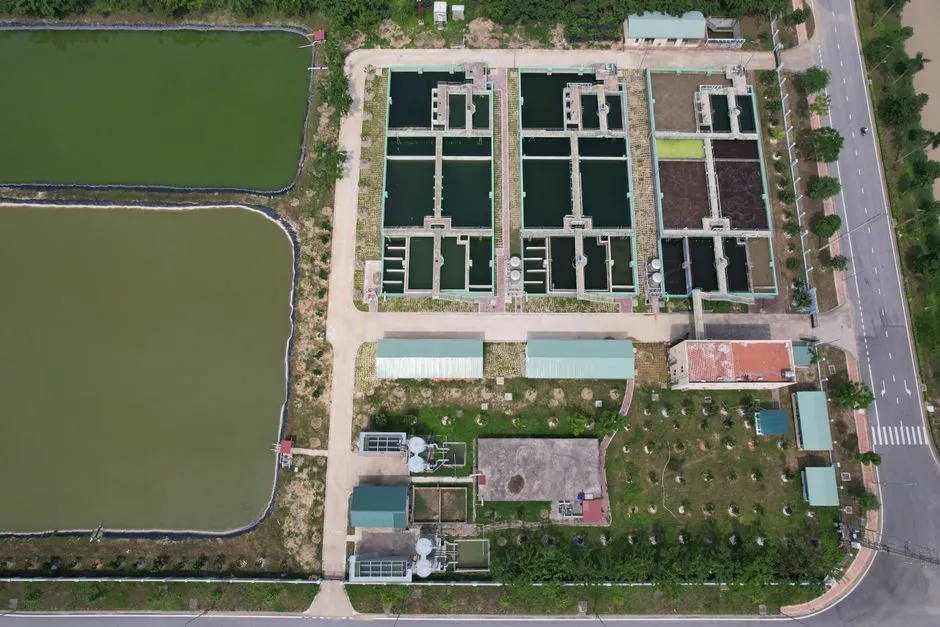
Particle density and the published removal envelopes dictate the selection for most Hastings plastics and rubber streams.
| Contaminant class | Typical examples | DAF performance | Lamella clarifier performance | Winner |
|---|---|---|---|---|
| Low-density polymer fines | Polyolefin, nylon, PET flash, purging dust | 90-98% capture; bubbles attach and lift | 30-50%; particles re-suspend in clarifier effluent | DAF |
| Latex / rubber emulsion | Natural latex dipping, NBR washwater | 90-95% with flocculation; breaks colloidal stability | <40%; turbidity persists | DAF |
| Release agents, plasticizers, mineral oil | Silicone mold release, DOP/DEHP, machine oil | Up to 95% FOG removal | Skim poorly; re-emulsify under cross-flow | DAF |
| Heavy inorganic grit | Vibratory finishing media, mold-flash with steel inserts, sand | Dense particles do not float; DAF air-to-solids ratio is wasted | 80-90% at 20-40 m/h loading | Lamella clarifier |
| Mixed molding + aqueous cleaning + occasional latex | Typical injection molding cell | 85-95% TSS at outlet | Misses the buoyant fraction | DAF as primary, optional lamella polish |
The underlying physics is simple: DAF micro-bubbles (20-40 µm per the DAF Corp Micro Bubble Generator specification) attach to anything with a slightly hydrophobic surface — and polymer fines, latex particles, and oils all qualify. A lamella clarifier only moves particles whose density exceeds water, so a stream of buoyant contaminants leaves a lamella untouched. The mixed-stream case is the most common Hastings scenario, and there a DAF as primary with an optional lamella polish — for example, a HydropureWater DAF system followed by a polishing clarifier if the sewer limit is tighter than the DAF outlet — covers the full contaminant spectrum.
Hastings-Specific Compliance and Siting Considerations for 2026
Plastics and rubber plants in Hastings discharging to a POTW sit under 40 CFR 414 categorical limits, local pretreatment FOG/TSS caps, and slug-control provisions that any 2026 inspection will check. A 2026-era compliance check routinely pairs the categorical standard review with a slug-control plan review, which means the equipment must absorb a process-side FOG or latex spike without bleeding through the outlet. Small-to-mid Hastings plants typically operate in the 20-200 gpm range, which maps cleanly to the H2Flow Alpha class (5-180 m³/hr) and the DAF Corp FC-60 to FC-150 line (48-500 gpm) — capacity scaling rarely pushes a Hastings plant to a custom rectangular tank.
Siting requirements for Hastings plants diverge from warmer climates due to cold Minnesota winters. Containerized DAF packages are preferred, as H2Flow's units are rated for outdoor all-season operation and can treat up to 10 m³/hr from a single container, while the skid-mounted H2Flow Alpha 5 pilot skid handles up to 15 m³/hr (H2Flow, 2025). For a long, narrow equipment room, the rectangular DAF Corp RC UniMax (10-1,000 gpm) is often a better footprint fit than a circular FC Maximizer. The typical Hastings default — a HydropureWater DAF system at 20-200 gpm with optional chemical pretreatment — covers the majority of injection molding, extrusion, and rubber goods operations without custom tank fabrication.
Decision Framework: Pick Your 2026 Equipment in Five Steps
Step 1 — Characterize the effluent. Bucket the stream into polymer fines, latex, FOG, or heavy grit; record average and peak TSS in mg/L and FOG in mg/L. If your plant cannot produce those numbers from a 24-hour composite, run the analysis first.
Step 2 — Check buoyancy. Any contaminant lighter than water — oils, latex, low-density polymer, plasticizer — sends the decision to DAF. If everything sinks and there is no FOG fraction, evaluate a lamella clarifier first. Mixed streams go to Step 3 with a DAF default.
Step 3 — Size by flow. 4-50 m³/h (roughly 18-220 gpm) maps to the DAF series or a compact lamella clarifier. 50-300 m³/h maps to the DAF Corp FC-150 class or the H2Flow Alpha/Delta (5-180 m³/hr) and PWL (200-260 m³/hr) units. Above 300 m³/h, the H2Flow Gamma (225-600 m³/hr) or Sigma (500-1,000 m³/hr) covers a multi-line consolidation, with the rectangular DAF Corp RC UniMax as an alternative footprint.
Step 4 — Match footprint to site. Tight indoor headroom → skid-mounted DAF (48-450 gpm per the DAF Corp skid range) or H2Flow Delta plate-pak. Long, narrow equipment room → RC UniMax rectangular. Outdoor cold site → H2Flow containerized DAF rated for all-season operation (H2Flow, 2025).
Step 5 — Plan the sludge chain. DAF sludge at 2-4% DS feeds directly to a HydropureWater plate and frame filter press with no thickener. Clarifier underflow at 0.5-1% DS typically needs a thickener first, which adds tank volume, polymer, and a second dewatering step. Pair the DAF with a HydropureWater automatic chemical dosing system for stable floc formation across FOG spikes — without it, the DAF outlet TSS drifts during a release-agent surge.
Frequently Asked Questions
DAF vs clarifier for plastics and rubber wastewater — which wins?
DAF wins for buoyant polymer fines, latex emulsion, release agents, and plasticizer oils because micro-bubbles (20-40 µm) attach to those particles and lift them to the surface; published DAF Corp FC Maximizer removal is 92-98% TSS and the H2Flow series quotes up to 95% TSS+FOG. A lamella clarifier wins only when the contaminant is heavy inorganic grit or mold-flash that sinks readily at 20-40 m/h surface loading.
What TSS removal can I expect on a typical injection molding or rubber extrusion feed?
A well-sized DAF removes 85-98% TSS on plastics/rubber feed
Frequently Asked Questions
Should a plastics or rubber factory in Hastings choose a DAF or a clarifier in 2026?
For most modern plastics and rubber facilities in Hastings, Dissolved Air Flotation (DAF) is the preferred technology in 2026 due to its superior efficiency in removing lightweight, non-settleable solids and emulsified oils. While traditional clarifiers are effective for high-density inorganic solids, they often struggle with the low-density polymers and rubber particulates common in local industrial discharge, which frequently require the chemical flocculation and micro-bubble attachment provided by DAF systems to meet current municipal pretreatment standards.
What TSS removal can a DAF achieve on plastics and rubber wastewater?
When properly integrated with coagulant and flocculant dosing, a DAF system can achieve Total Suspended Solids (TSS) removal rates between 85% and 98%. Performance is contingent upon maintaining a consistent bubble-to-particle ratio and managing the surface loading rate, which should ideally be kept between 1.0 and 2.5 gallons per minute per square foot (gpm/ft²) to ensure optimal floatation of low-density rubber crumbs and plastic fines.
Is a lamella clarifier enough to treat injection molding washwater?
A lamella clarifier is typically insufficient for injection molding washwater if the effluent contains significant amounts of hydraulic oils, mold release agents, or synthetic surfactants. While lamella plates increase the effective settling area for heavy grit, they lack the buoyancy-driven separation necessary to remove hydrophobic contaminants; therefore, a DAF or an oil-water separator is almost always required as a secondary treatment step to bring the wastewater into compliance with local Hastings grease and oil discharge limits.
How do you handle latex and rubber emulsion in industrial wastewater?
Handling latex and rubber emulsions requires a multi-stage chemical destabilization process to break the emulsion before mechanical separation. This involves adjusting the pH to the point of zero charge for the particles, followed by the addition of high-molecular-weight cationic polymers to bridge the rubber colloids into larger flocs. Once destabilized, these flocs must be removed via DAF, as their density is often too close to water to settle effectively in a gravity-based clarifier.
What size DAF does a 100 gpm rubber extrusion plant need?
For a rubber extrusion plant processing 100 gallons per minute (gpm), a DAF unit with a surface area of at least 50 to 100 square feet is recommended, depending on the specific loading of rubber fines. This sizing assumes a surface overflow rate of 1.0 to 2.0 gpm/ft² to account for the high hydraulic surge capacity required during equipment washdowns and to ensure adequate residence time for the micro-bubbles to lift the rubber particulates to the surface for skimming.