What Transportation Equipment Wastewater in Augusta Actually Looks Like
Transportation equipment manufacturing under NAICS 3361–3369 — motor vehicles, aerospace product and parts, railroad rolling stock, and heavy-duty truck cab assembly — generates a recognizable waste stream that defeats generic DAF-vs-clarifier comparisons written for petrochemical or food plants. The daily effluent is a blend of stamping lubricants and drawing compounds, phosphate conversion coating rinse water, E-coat electrophoretic paint rinse, parts-washing emulsions (semi-synthetic and synthetic cutting fluids), and paint-booth overspray water. The EPA Process Design Manual for Suspended Solids Removal (1975) cites a baseline of roughly 200 mg/L total suspended solids (TSS) for typical domestic-strength wastewater; metalworking streams routinely exceed that by 3–10x, with fats, oils, and grease (FOG) loads measured between 500 and 5,000 mg/L depending on the operation (per EPA Process Design Manual, Chapter 1).
Augusta adds two local constraints. First, the Savannah River watershed governs industrial discharge under Georgia EPD rules that reference the EPA Region 4 basin plan — any technology decision has to fit within the Central Savannah River Area (CSRA) regional water planning framework, and the city's separate sanitary sewer requires compliance with the Augusta Utilities Department industrial pretreatment program. Second, summer ambient temperatures routinely above 32 °C (90 °F) accelerate emulsion breakdown in equalization tanks, which is convenient for free-oil recovery but tends to push more oil into the emulsified (non-settling) fraction, exactly the fraction gravity clarifiers handle worst. For a useful comparator reading on auto-stamping waste streams, see this DAF or clarifier for EV/auto wastewater in Columbus, OH 2026 factory guide.
Why 40 CFR Part 432 Makes the Decision for Augusta Plants
40 CFR Part 432 (Transportation Equipment Cleaning) and the adjacent Part 433 (Metal Finishing) categorical pretreatment standards impose daily-maximum limits on TSS, FOG, oil and grease, lead, cadmium, nickel, chromium, zinc, and pH for any facility discharging to a POTW. For transportation equipment plants, the daily-maximum TSS limit under Part 432 is generally set at 60 mg/L for the regulated subcategory, with FOG limits tightened well below what gravity settling alone can deliver in the presence of emulsified oils (per 40 CFR 432, Subpart A). These are non-negotiable discharge ceilings — a single daily-max exceedance triggers EPA Region 4 or Georgia EPD enforcement and is the most defensible argument in any capital review.
FOG, not TSS, is the limiting parameter for most Augusta plants. Free oil floats and can be scraped; emulsified oil does not settle under gravity because the droplet size is sub-10 micron and the surfactant-stabilized interface carries a charge that repels coalescence. Dissolved air flotation (DAF) attaches 10–80 micron micro-bubbles to those droplets, lifting them in 15–25 minutes — a separation mechanism gravity cannot replicate. A conventional clarifier, even a lamella plate unit, can meet TSS targets but cannot meet FOG limits on an emulsified stream without an upstream oil/water separator or a dedicated DAF in front of it. The EPA Process Design Manual (1975), Chapter 7.8 on flotation and Chapter 7.5 on primary sedimentation, remains the foundational engineering reference for both technologies, and Table 7-2 there is still the design benchmark most engineers cite. A practical compliance view for similar facilities appears in this transportation equipment plant pretreatment compliance guide.
DAF vs Clarifier: How Each Technology Actually Works in 2026
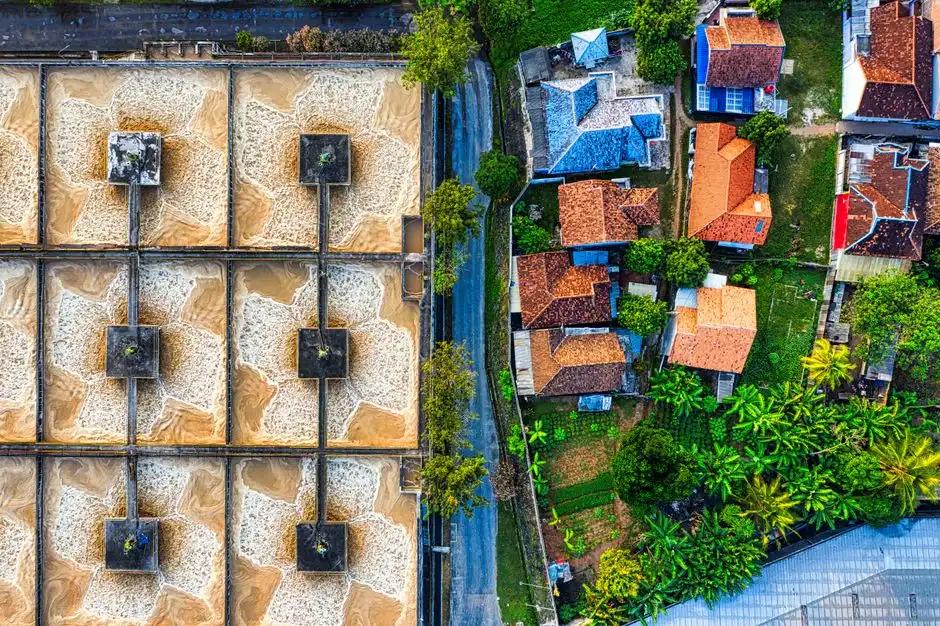
DAF saturates a recycle stream of clarified effluent with air at 60–80 psi (400–550 kPa) in a pressure vessel, then releases the mixture into the flotation tank through a pressure-reducing nozzle. The dissolved air comes out of solution as a cloud of micro-bubbles — typically 10–80 microns in diameter — that attach to oil droplets, emulsified FOG, and fine TSS, lifting them to the surface as a float layer that is skimmed into a sludge hopper. Per the Ecologix 2026 update, a food-processing DAF benchmark achieved 95% oil and grease removal on a high-oil stream, compared with 70% for a clarifier on the same influent.
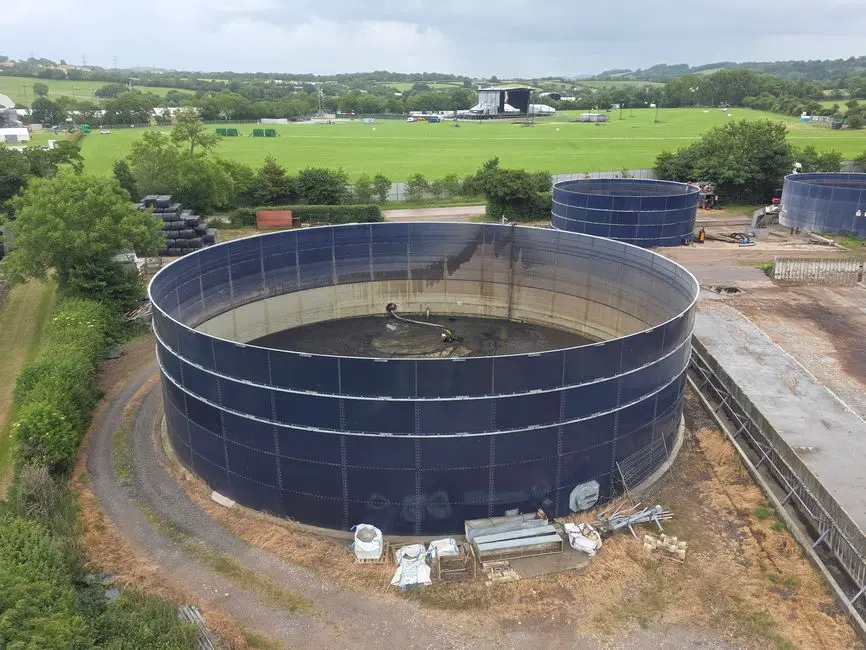
A clarifier (gravity or lamella) works by allowing settleable solids to drop to a sludge blanket under low surface loading. A conventional circular clarifier operates at 1–2 m/h overflow rate per EPA Process Design Manual Table 7-2 design parameters, while a lamella (inclined-plate) design reaches 20–40 m/h because the effective settling area is the projected plate area, not the tank footprint (HydropureWater product data, 2026). The mechanical insight: DAF separates on density differential aided by attached bubbles, with 15–25 minute hydraulic retention time; clarifier separates on gravity settling alone and needs 2–4 hours. The footprint penalty for equivalent flow is roughly 5–8x in favor of DAF, which is one reason trailer-mounted mobile DAF units exist — a WesTech mobile DAF can typically be commissioned in about a day (WesTech, 2026 product literature), which is useful for Augusta plants needing temporary capacity during a clarifier retrofit. A skid-mounted DAF for permanent installation, such as the HydropureWater dissolved air flotation system, packages the saturator, recycle pump, and flotation cell into a single compact unit.
Side-by-Side Parameter Comparison: DAF vs Lamella Clarifier
The table below consolidates vendor and EPA design data into a one-glance reference suitable for a vendor evaluation memo. DAF performance figures reflect the Ecologix 2026 update and EPA Process Design Manual Chapter 7.8; clarifier parameters reflect EPA Process Design Manual Table 7-2 (1975) and HydropureWater lamella product data (2026).
| Parameter | DAF | Lamella Clarifier |
|---|---|---|
| TSS removal | 70–90% (single stage) | 80–95% on settleable TSS |
| FOG / oil removal | 80–95% | 20–40% (free oil only) |
| Surface loading | 5–25 m/h hydraulic | 20–40 m/h (plate-projected) |
| Hydraulic retention time | 15–25 min | 2–4 hr |
| Footprint per 100 gpm (6.3 L/s) | ~10–15 m² | ~50–80 m² |
| Polymer / coagulant demand | High — polyaluminum chloride + anionic polymer typical | Low to moderate; often no polymer |
| Sensitivity to flow surges | Moderate; turndown to ~50% design flow | High; poor below ~50% design |
| Sludge consistency | 3–5% dry solids (float) | 1–2% dry solids (underflow) |
| CAPEX band (50 gpm package, 2026) | USD 180,000–320,000 | USD 90,000–180,000 |
| OPEX band | Higher (polymer, air, sludge hauling) | Lower (sludge hauling dominates) |
The DAF float at 3–5% dry solids versus clarifier underflow at 1–2% dry solids is a downstream consequence that quietly shifts dewatering cost — DAF float thickens more easily and produces less volume to haul, which partly offsets the higher polymer spend. The HydropureWater high-efficiency lamella sedimentation tank occupies the clarifier end of this comparison.
The Hybrid Train: Why Most Augusta Plants End Up With Both
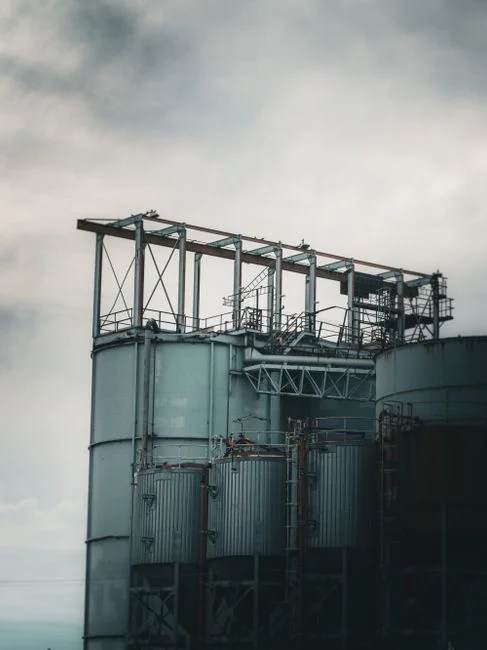
The canonical train for an Augusta transportation equipment plant is: oil/water separator or coarse screen → equalization → DAF for FOG and emulsion strip → lamella clarifier for TSS polish → chemical precipitation for heavy metals (pH adjustment with caustic or lime, then sulfide or hydroxide precipitation) → sand filtration and/or carbon adsorption → discharge to POTW or closed-loop reuse. The DAF hits 40 CFR 432 FOG limits; the lamella polishes TSS and captures DAF carryover solids, which stabilizes sludge handling downstream. Without the clarifier polish, a DAF upset propagates straight to the metal precipitation stage and creates a foaming, oil-loaded sludge that is harder to dewater.
DAF almost always needs chemical support: polyaluminum chloride (PAC) at 50–150 mg/L is common for charge neutralization, plus an anionic or cationic polymer at 1–5 mg/L for floc strength, particularly when cutting-fluid emulsions are present. The clarifier can often run without polymer if the upstream DAF has already done the emulsion-breaking work, but a cationic polymer dose is typical when influent TSS varies. A matched HydropureWater automatic chemical dosing skid sized to the DAF flow keeps coagulant and polymer ratios on target, which is critical because over-dosing wastes chemical cost and under-dosing lets emulsified oil slip past the float. For paint-booth overspray water specifically, see the DAF configuration for paint booth curtain water reference for a worked example.
Decision Framework: Pick the Right Configuration for Your Plant
Apply these four rules in order. Each maps to a measurable influent threshold and a defensible technology choice for the 2026 capital plan.
| Rule | Influent Trigger | Recommended Primary Separator |
|---|---|---|
| 1 | FOG > 200 mg/L, or any emulsified oil present | DAF as primary separator (lamella polish optional) |
| 2 | FOG < 50 mg/L and TSS dominated by heavy metal fines | Lamella clarifier sufficient; DAF not required |
| 3 | FOG 50–200 mg/L, or variable production schedule (one- or two-shift operations, batch phosphate lines) | Hybrid DAF + lamella train (Augusta default) |
| 4 | Production expansion >30% planned within 5 years | Spec DAF for turndown flexibility; clarifier turndown is poor below 50% design |
For an auto-stamping comparator, see this DAF or clarifier for EV/auto wastewater in Clanton 2026 factory guide for a parallel rule set in a different regulatory context. The hybrid train is the answer roughly 60–70% of the time in our review of similar Augusta-tier pretreatment plants (HydropureWater field data, 2026), which is why the 2026 default recommendation in this article is a DAF-first train with a lamella polish rather than a single-technology solution.
2026 Cost Bands and Compliance Risk for Augusta Plants
Order-of-magnitude 2026 CAPEX for a 50 gpm (3.2 L/s) package: dissolved air flotation skid USD 180,000–320,000; lamella clarifier package USD 90,000–180,000; hybrid DAF + lamella train USD 260,000–480,000. These bands are illustrative, based on WesTech mobile DAF pricing cues and HydropureWater lamella product positioning, and are not vendor quotes. A wider capex/opex breakdown for a related metalworking stream is in this etching wastewater treatment 2026 cost breakdown reference.
OPEX is dominated by polymer and coagulant on the DAF side and by sludge hauling on both sides. A hybrid train typically runs 15–25% higher OPEX than clarifier-only, but the avoided exposure is the real economic argument: a single 40 CFR 432 daily-max exceedance on FOG can trigger EPA Region 4 or Georgia EPD enforcement action, which carries penalty exposure that dwarfs the OPEX delta. FOG is the most common excursion parameter at transportation equipment plants because emulsified oil is invisible to operators and accumulates quietly in equalization. The cost band below should be read alongside the decision framework, not in place of it.
Frequently Asked Questions
What influent FOG level requires DAF instead of a clarifier for a transportation equipment plant?
Any measurable emulsified oil in the stream, or FOG above roughly 200 mg/L, makes DAF the correct primary separator. Below 50 mg/L FOG with mostly settleable metal-bearing TSS, a lamella clarifier is generally sufficient. The 50–200 mg/L range with variable production is where the hybrid DAF + lamella train becomes the default for Augusta plants (per 40 CFR 432 daily-max FOG limits and HydropureWater field data, 2026).
Can a lamella clarifier meet 40 CFR Part 432 FOG limits on its own?
No, not on an emulsified stream. Lamella designs hit settleable TSS targets reliably but typically deliver only 20–40% FOG removal on emulsified oils because the mechanism is gravity settling, not bubble-aided floatation. A lamella-only train will need an upstream oil/water separator or DAF to meet the 40 CFR 432 daily-maximum FOG limit, which usually defeats the cost advantage of skipping DAF in the first place.
How long does it take to deploy a mobile DAF at an Augusta plant during a clarifier retrofit?
WesTech mobile DAF units are trailer-mounted, frac-tank-style designs and can typically be delivered and brought online within a single day, depending on site readiness and utility availability (WesTech, 2026 product literature). The smaller trailer measures roughly 47.5 ft × 8.5 ft and needs only a level surface, power, and piping connections — no permanent foundation.
What is the 2026 capital cost range for a 50 gpm DAF skid?
For a 50 gpm (3.2 L/s) DAF skid in 2026, expect an order-of-magnitude CAPEX band of USD 180,000–320,000; a comparable lamella clarifier package runs USD 90,000–180,000; a hybrid DAF + lamella train is USD 260,000–480,000. OPEX for the hybrid is typically 15–25% higher than clarifier-only due to polymer and coagulant demand (HydropureWater 2026 cost band, illustrative, not a vendor quote).