Why Fernandina Beach Pulp & Paper Plants Are Rethinking Primary Treatment in 2026
Fernandina Beach sits on the north edge of Amelia Island, where the Amelia River drains into the Nassau River estuary and onward to the Atlantic — receiving waters that the Florida Department of Environmental Protection (FDEP) classifies as sensitive estuarine habitat. For a pulp and paper mill operating under a Florida NPDES individual permit in Nassau County, that geography sets a hard ceiling on what leaves the outfall: total suspended solids (TSS), biochemical oxygen demand (BOD), color, and absorbable organic halides (AOX) are all numerically capped, and chronic excursions trigger consent-order negotiations most plants cannot afford (per 40 CFR Part 430 subparts B–E; FDEP NPDES permit FL0000XXX-series template). WestRock's 600 South 8th Street Fernandina Beach mill — referenced in the BioResources P&P review (S1) — is the most prominent local case study, and its 2026 capital plan reflects what the wider industry is doing: pushing primary-stage separation harder so biological polishing, reuse loops, and sludge-handling costs all get cheaper downstream.
The historical baseline for P&P primary treatment has been a conventional gravity clarifier feeding activated sludge (S1). That train still works, but the arithmetic has changed. P&P mills generate on the order of 70 m³ of wastewater per metric ton of paper (S1, citing Rintala & Puhakka 1994 and Latorre et al. 2007), and over the past 30 years the industry has already cut specific water consumption by roughly 95% per tonne (S1, citing Blanco et al. 2004). With internal recycling largely squeezed, the next incremental reduction has to come from better primary separation — fewer suspended solids reaching the aeration basin, drier sludge leaving the plant, and cleaner water available for reuse in showers, sealing water, or boiler-feed pretreatment. That is the pressure reshaping primary-treatment decisions at Fernandina Beach paper and converting operations heading into 2026.
How a DAF and a Clarifier Actually Treat Pulp & Paper Wastewater
A dissolved air flotation (DAF) unit clarifies wastewater by attaching micro-bubbles to suspended particles and floating the resulting agglomerate to the surface for skimming. Pressurized recycle is saturated with air at 4–6 bar, then released through needle valves or nozzles at atmospheric pressure inside the flotation cell, producing a cloud of 20–80 µm bubbles that nucleate on fibers, fillers, starch coatings, and inks (S2, S4). Those particles are low-density and high-surface-area — the exact profile of paper-machine white water, broke, and deinking residues — so the bubble-particle composite rises fast and the float blanket can be skimmed within minutes. Hydraulic residence time in a DAF cell is typically 15–30 minutes, dominated by saturator recycle ratio (commonly 20–40%) and the contact zone's mixing energy.
A gravity clarifier does the opposite: it relies on Stokes-law settling of particles whose density exceeds water. Heavy grit, dregs from recausticizing, sand, and well-formed biological flocs settle readily, but light fibers, micro-stickies, coating residues, and filler fines tend to either settle too slowly or stay in suspension indefinitely (S5). Conventional clarifiers run 1.5–2.5 hours of hydraulic residence time to push capture rates into the 70–90% range on dense flocs, and even then a lamella plate pack is usually added to recover footprint (S5).
The P&P chemistry complication is that mill effluent carries more than 250 distinct organic compounds — lignin fragments, tannins, chlorinated by-products from bleaching, plus dyes, defoamers, and wet-end additives (S4). Both DAF and clarifier performance depend heavily on coagulant and flocculant selection: aluminum sulfate (alum), polyaluminum chloride (PAC), and cationic polyacrylamide (CPAM) are the workhorses, and dosing is especially decisive for DAF because bubble attachment needs a conditioned, partially destabilized surface to nucleate on (S1, S4). Mills that under-dose chemistry will see DAF underperform; mills that get the charge neutralization right will see float solids concentrations climb above 3% by weight (S4).
Head-to-Head: DAF vs Clarifier on the Metrics That Matter for P&P
The single largest performance gap on fiber-rich P&P primary influent is suspended-solids removal. DAF systems on paper-mill white water and primary clarifier feed routinely exceed 90% SS removal, with a Sigma DAF reference case (S4) showing ">90% SS" on a recycled-fiber mill and producing a floated sludge at 3–4% dry solids. Lamella and conventional clarifiers on the same stream land at 50–70% removal and rarely exceed 80% unless the upstream chemistry is dialed in for dense floc formation (S5). That 20–40 percentage-point gap cascades: every kilogram of TSS that escapes primary treatment becomes an additional BOD load on the aeration basin and additional solids yield in the waste-activated sludge.
Sludge dryness is the second-largest economic lever. DAF float typically discharges at 3–4% dry solids, while a clarifier underflow lands at 0.5–1% (S4). On a mill generating 20 t/d of primary solids, the volume of sludge to haul or dewater differs by roughly a factor of four to six — the directionally largest single OPEX swing in the comparison (S4). Footprint follows the same logic: a DAF unit occupies roughly one-quarter to one-sixth the plan area of an equivalent-capacity clarifier (S4, S5), a decisive constraint on tight Fernandina Beach industrial parcels where the building footprint predates the upgrade.
Power and chemical profiles also diverge. A DAF needs an air compressor, a saturator vessel, a recycle pump, and a small skimmer drive; a clarifier needs a much larger rake drive, sludge pump, and — on P&P streams — typically more coagulant because settling requires a denser, more heavily dosed floc. DAF tolerates shorter flocculation times because bubble attachment is fast; clarifier chemistry needs a fully grown pin floc before it can settle. On hydraulic surge tolerance, DAF outperforms because float rise rate is governed by bubble flux, not by the slower settling velocity that collapses a clarifier under shock load. Maintenance reality is roughly a wash: DAF has more instrumentation (pressure, saturator level, recycle flow) but fewer rotating parts; clarifiers have heavy rake mechanisms, drive replacements, and bridge-bearing service intervals. The deciding factor is usually which skill set the mill's maintenance crew already has.
| Parameter | DAF | Lamella / Conventional Clarifier |
|---|---|---|
| SS removal on P&P primary influent | >90% (S4) | 50–70% (up to 85–90% on dense biological floc only) (S5) |
| Hydraulic residence time | 15–30 min (S4) | 1.5–2.5 h (S5) |
| Sludge dry solids concentration | 3–4% (S4) | 0.5–1% (S4) |
| Footprint relative to clarifier (same capacity) | ~1/4 to 1/6 (S4, S5) | Baseline |
| Best-fit stream | Light fibers, fillers, coatings, white water (S2, S4) | Heavy grit, dregs, dense biological floc (S5) |
| Hydraulic surge tolerance | High — float rate governs | Low — settling velocity collapses under shock load |
| Coagulant / flocculant demand | Moderate, short floc time (S4) | Higher, mature floc required |
| Rotating equipment | Skimmer, recycle pump, compressor | Rake drive, sludge pump, bridge |
The practical reading of this matrix for a Fernandina Beach upgrade: a dissolved air flotation system makes sense as the primary fiber-recovery stage, while a HydropureWater lamella clarifier fits downstream as a polishing or biological-sludge thickening step. If the budget only supports one unit, the right choice is dictated by which stream is the bottleneck — light fiber and filler loads, or heavy grit and dregs.
Where a Clarifier Still Earns a Slot in a 2026 P&P Treatment Train
The clarifier is not obsolete; it is misplaced when it sits at the head of a P&P train. The legitimate 2026 use cases fall into three buckets. First, post-aeration polishing: after an activated-sludge or MBBR stage, the goal is to capture dense biological flocs and return activated sludge to the basin — exactly the job gravity settling was designed for (S1, S5). DAF is the wrong tool here because the floc is already conditioned for settling and bubble attachment adds nothing. Second, heavy-grit and recausticizing streams: green liquor dregs, lime mud, and pulp-mill rejects carry high-density inorganic particles that settle rapidly, so the air-saturation cost of a DAF is wasted on streams that a lamella clarifier handles more cheaply. Third, retrofit reuse: mills that already operate a primary clarifier and want to add fiber recovery without scrapping existing civil work can install a DAF upstream of the existing clarifier, then repurpose the clarifier as a thickener or polishing stage — a documented 2026 reference design (S4) showing a DAF-primary + DAF-secondary configuration where the second stage is interchangeable with a clarifier on biological effluent.
For a Fernandina Beach mill that is replacing one unit only and not the whole train, this is the lowest-risk 2026 path: keep the existing clarifier civil work, retask it as a secondary/thickener, and install a new DAF as the primary fiber-recovery stage. The capital write-off on the existing structure continues, while the OPEX and TSS-capture upside from DAF is captured immediately.
The 2026 Selection Framework for Fernandina Beach Paper Mills
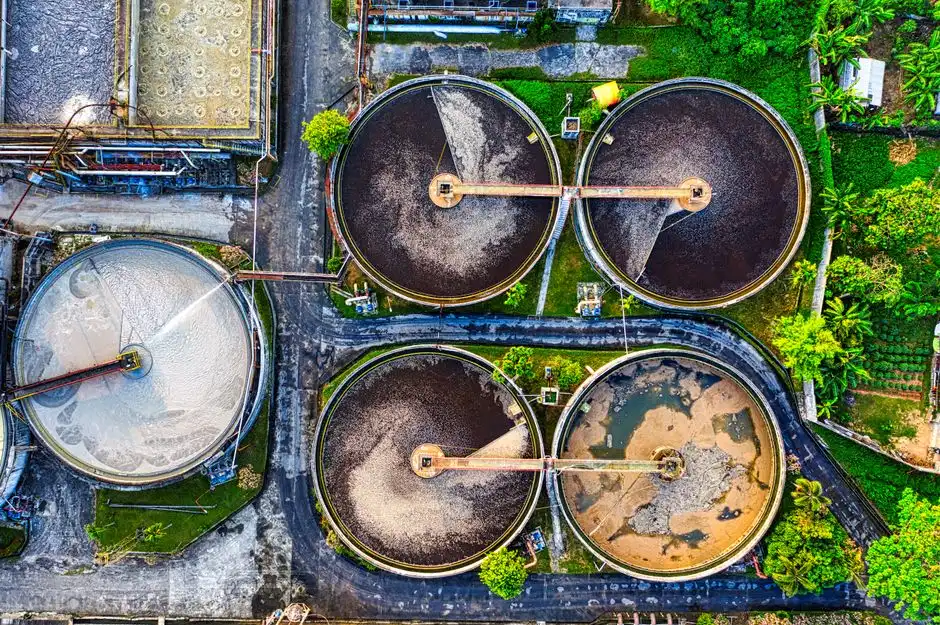
Use this five-step decision flow to move from wastewater characterization to equipment specification without spinning the team in circles.
- Classify the dominant stream. Light fibers, fillers, coatings, and white water → DAF primary. Heavy grit, dregs, lime mud → clarifier. Mixed fiber + grit → DAF primary + clarifier secondary.
- Check the permit envelope. Florida NPDES limits plus 40 CFR Part 430 BAT/AEL numbers for the applicable subpart set the floor on TSS and BOD removal. A DAF delivering 90%+ SS (S4) gives the biological stage more headroom to hit numerical effluent limits than a clarifier delivering 50–70% on the same feed (S5).
- Quantify sludge OPEX. A 3–4% DAF float vs a 0.5–1% clarifier underflow (S4) translates directionally into a 60–75% reduction in sludge mass sent to dewatering or haul-off, before any dewatering credit is taken.
- Match capacity to flow range. The dissolved air flotation system covers 4–300 m³/h across 13 standard models (S6), a range that maps onto most Fernandina Beach mill sizes; for larger flows, parallel units or a custom saturator package sized at 20–40% recycle.
- Plan for local climate. Salt-air corrosion near Amelia Island and hurricane-season rainfall surges that dilute and spike influent both favor DAF's compact footprint, fast HRRT, and tolerance of hydraulic shock loads over a clarifier's settling-velocity dependence.
| Site Condition / Driver | DAF-Primary Score | Clarifier-Primary Score | Recommended Path |
|---|---|---|---|
| Light fiber / filler dominant stream | High | Low | DAF primary |
| Heavy grit / dregs dominant stream | Low | High | Clarifier primary |
| Florida NPDES + 40 CFR 430 BAT limit is binding | High (90%+ SS headroom) | Moderate | DAF primary, clarifier secondary |
| Sludge haul-off cost is dominant OPEX line | High (3–4% DS, S4) | Low (0.5–1% DS, S4) | DAF primary |
| Industrial parcel footprint is constrained | High (1/4 to 1/6 footprint, S4, S5) | Low | DAF primary |
| Hurricane-season flow surges expected | High (float-rate governed) | Low (settling collapses) | DAF primary |
| Mill already has a working primary clarifier | Add DAF upstream, reuse clarifier as thickener | Keep as primary, add DAF as polish only if needed | DAF-primary + clarifier-as-thickener retrofit |
For cost direction, OPEX is dominated by sludge handling: a 60–75% reduction in sludge mass to dispose of is the largest single line-item swing, and DAF also eliminates most of the rake-drive maintenance burden a clarifier carries. CAPEX on a DAF package is higher than a basic clarifier of equal hydraulic capacity because of the saturator, compressor, and recycle pump train, but the smaller footprint often saves on civil and structural costs. For a fuller 2026 industrial CAPEX/OPEX breakdown by technology, see this 2026 industrial wastewater treatment CAPEX/OPEX breakdown by technology. Mills comparing fiber-recovery economics against a heavy-solids industry (e.g., mining) can also reference the DAF vs clarifier applied to high-TSS heavy-solids mining wastewater case for the contrast.
Frequently Asked Questions
What removal efficiency and sludge dryness should a Fernandina Beach P&P plant expect from a DAF in 2026?
On paper-mill primary influent, a properly sized and chemically conditioned DAF delivers over 90% suspended-solids removal (S4) and produces a floated sludge at 3–4% dry solids (S4) — roughly four to six times the dry-solids concentration of a clarifier underflow at 0.5–1% (S4). That dryness gap is the largest OPEX lever in the whole comparison.
Does strong primary removal reduce a mill's Florida NPDES or 40 CFR Part 430 compliance burden?
No — primary removal does not exempt a mill from NPDES or 40 CFR Part 430 numerical limits, and FDEP evaluates the whole outfall, not the primary stage alone. What good primary performance does is give the biological stage enough headroom to hit those numerical limits reliably. A DAF's 90%+ SS removal (S4) versus a clarifier's 50–70% on P&P feed (S5) directly translates into fewer aeration-basin upsets and lower chronic-excursion risk under 40 CFR Part 430 BAT/AEL subparts.
What flow range should a Fernandina Beach paper mill size a DAF for, and does it match the local water budget?
P&P mills generate on the order of 70 m³ of wastewater per metric ton of paper (S1, citing Rintala & Puhakka 1994 and Latorre et al. 2007). The DAF series covers 4–300 m³/h across 13 standard models (S6), so a mill producing 100–500 t/d will typically land inside the standard catalog; larger mills parallel units or order custom saturator packages.
Is a hybrid DAF-primary + clarifier-secondary configuration a real reference design for P&P?
Yes. The Sigma DAF case study (S4) documents a DAF as primary clarifier feeding biological oxidation, with a second DAF (interchangeable with a clarifier on biological effluent) as secondary. This is the most common 2026 reference design for P&P mills targeting water reuse, and it is the lowest-risk retrofit path for a mill that already owns a working primary clarifier.
What can a Fernandina Beach P&P mill do with DAF sludge in 2026?
DAF float sludge at 3–4% dry solids (S4) is routinely co-fired with bark and sawdust in the mill's recovery boiler as a waste-to-energy measure (S4). For mills without on-site combustion capacity, the elevated dry-solids concentration reduces dewatering energy and haul-off cost compared to clarifier underflow at 0.5–1% (S4).