
What a Chemical Plant in Raritan Twp Is Actually Treating in 2026
A specialty or fine-chemicals plant in the Flemington/Raritan Township corridor is rarely treating one consistent stream — it is managing a portfolio of batch swings, pH excursions from 2 to 12, intermittent emulsified oils from reactor cleaning, surfactant-laden cleaner rinses, hexavalent-chromium passivation baths, and quarterly mother-liquor dumps where total dissolved solids (TDS) can climb past 20,000 mg/L. That variability is the single largest design driver for any 2026 primary-treatment decision, and it is exactly what N.J.A.C. 7:14A NJPDES permits are written to capture. New Jersey regulators expect 24-hour composite sampling and mass-based load allocation — not just an instantaneous concentration reading — which means a unit that "passes on the average" can still trigger a permit violation on a single slug of emulsified oil (per N.J.A.C. 7:14A-23.4 effluent monitoring rules).
The regional anchor matters here. Many Hunterdon County chemical manufacturers discharge to the Somerset-Raritan Valley Sewerage Authority (Somerset-Raritan WPCF), the New Jersey facility specifically named in the EPA's Fuel-Efficient Sewage Sludge Incineration report (EPA/600/2-90/038) as a belt-filter-press dewatering site handling combined primary and waste-activated sludge (source: EPA NEPIS, 1990-08). When a Raritan-area plant ships sludge off-site or pays a local-limit surcharge, the receiving POTW's operating envelope is the real constraint — not the federal categorical number alone. The single decision axis that follows from this stream profile is straightforward: oil versus settleable solids. If the contaminant floats, emulsifies, or binds to surfactant, the physics of bubble attachment win; if the contaminant is a dense inorganic crystal that drops out of solution, gravity wins.
How DAF and Clarifiers Remove Contaminants — and Why It Matters for Chemicals
A dissolved air flotation unit saturates a pressurized recycle stream with 4-8 mg/L of air, then depressurizes it inside the flotation tank, releasing a cloud of 10-100 μm microbubbles that attach to oil droplets, floc, and free-floating solids. The bubble-particle agglomerate becomes buoyant and rises to the surface, where a skimmer removes the float layer. Chemical conditioning — typically a coagulant (alum, PAC, or ferric chloride) followed by an anionic flocculant — is almost always required to destabilize emulsions and bridge particles before the bubbles can attach (source: Komline-Sanderson DAF product literature, 2026). Without it, the DAF becomes an expensive aeration basin.
A gravity clarifier — and its higher-rate cousin, the lamella clarifier — relies on Stokes-law settling of denser particles through quiescent water, with inclined plates multiplying the effective settling area inside a compact footprint. Conventional rectangular or circular clarifiers operate at 1-2 m/h surface loading; lamella designs push that to 20-40 m/h by stacking parallel inclined plates, which is why the same flow fits in roughly one-quarter to one-third the floor area (source: Ecologix DAF vs. Clarifier Selection Guide, 2026).
The performance split that matters for chemicals is oil and grease. A DAF removes 90-95% of FOG from a comparable oily stream, versus 60-75% for a clarifier — and the gap widens as oil becomes more emulsified (source: Ecologix, 2026). On the solids side, the relationship inverts: a clarifier cuts heavy sediment by roughly 90% at low operating cost, while DAF thickening duty is generally limited to feed solids of 0.7-0.8% before float quality collapses (source: EPA NEPIS P100PAYY, 1990-08, Upper Blackstone WPCF operating data). For a chemical plant, the practical translation is: emulsified oil and surfactant-bound FOG respond to bubble attachment; crystalline metal hydroxides, silica, and calcium sulfate respond to gravity.
The 2026 Decision Matrix: DAF vs Clarifier for Chemical Wastewater
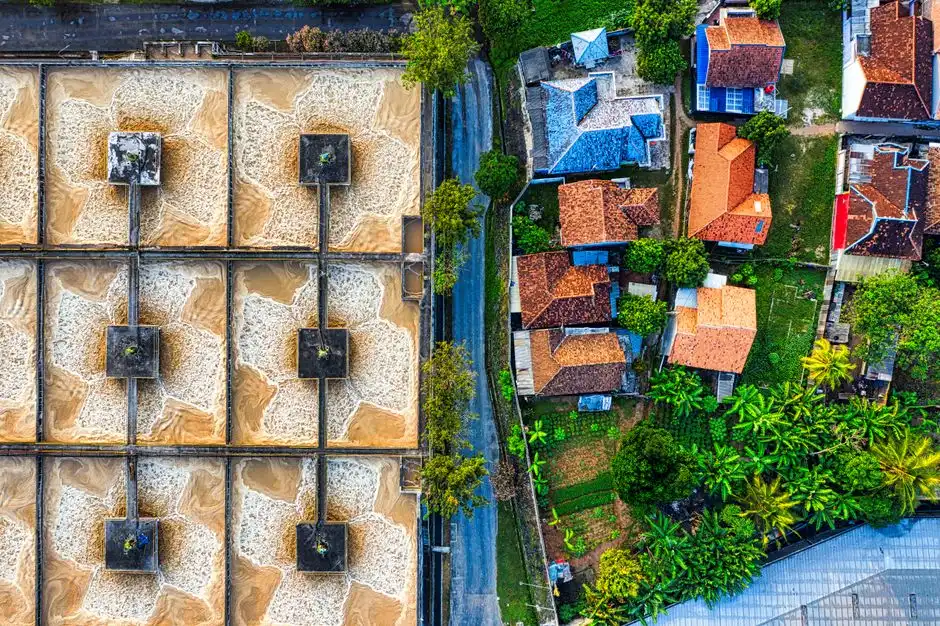
The matrix below is the document an engineer should be able to print, drop into an NJDEP file review folder, and defend on a single page. All bands reflect 2026 packaged-system norms; flow-specific numbers should be verified against the vendor's cut sheet before purchase.
| Parameter | Dissolved Air Flotation (DAF) | Gravity / Lamella Clarifier |
|---|---|---|
| Primary removal mechanism | Microbubble attachment + surface skimming | Stokes-law settling + sludge rake/pump |
| FOG / oil removal | 90-95% on emulsified streams | 60-75%; poor on emulsified oil |
| TSS removal | 70-85% with polymer; limited to 0.7-0.8% feed solids in thickening | 85-95% on settleable inorganic TSS |
| Oil / emulsion handling | Built for free and emulsified oil; tolerates surfactant load | Free oil only; emulsified oil defeats settling |
| Surface loading rate | 5-15 m/h hydraulic (verify against vendor cut sheet) | 1-2 m/h conventional; 20-40 m/h lamella |
| Footprint (m² per m³/h) | ~0.3-0.5 (compact skid) | ~0.8-1.5 conventional; ~0.4-0.6 lamella |
| Typical CAPEX band (2026) | Mid-to-high (skid + compressor + recycle pump) | Low-to-mid (tank + rake + sludge pump) |
| Dominant OPEX drivers | Air compressor kWh, recycle pump kWh, polymer | Sludge pump kWh, lower polymer dose, occasional raking |
| NJ retrofit complexity | Higher (compressor room, saturated recycle, chemical skid) | Lower (tank + pipe tie-ins); lamella drops into existing bays |
For a space-constrained Raritan plant inside an existing masonry building, footprint often becomes a Tier-1 selection criterion. A packaged DAF system typically occupies one-third to one-half the floor area of a comparably rated conventional clarifier, which is frequently the tiebreaker when the building shell cannot be expanded. Where floor area is available and the stream is mostly settleable inorganic TSS, a lamella clarifier delivers lower lifetime OPEX with no compressor electrical load.
What NJ and Federal Rules Force Into the Decision
The compliance envelope is what converts a technology preference into a defensible 2026 decision. Three regulatory layers apply simultaneously to most Raritan-area chemical manufacturers.
40 CFR Part 433 — Organic Chemicals, Plastics, and Synthetic Fibers (OCPSF). Daily maximum categorical limits include BOD5 197 mg/L, TSS 206 mg/L, COD 529 mg/L, oil and grease 56 mg/L, total chromium 7 mg/L, total cyanide 1.2 mg/L, and total phenols 0.53 mg/L (per 40 CFR 433.11, 2026 eCFR). A conventional clarifier alone rarely holds O&G at 56 mg/L on an emulsified stream; that single number is where DAF earns its slot in an OCPSF plant.
40 CFR Part 415 — Inorganic Chemicals. Limits are pH 6.0-9.0 for most subparts, with TSS and metals limits set subpart-by-subpart against the plant's primary SIC/NAICS product code (per 40 CFR 415, 2026 eCFR — confirm subpart-specific values against eCFR before any permit submission). For mixed streams carrying oil carryover from equipment lubrication plus acid/alkali rinsates, both layers apply.
N.J.A.C. 7:14A NJPDES framework and the local-limits layer. New Jersey is a fully delegated NPDES state, and significant industrial users (SIUs) discharging to Somerset-Raritan WPCF are subject to local limits that can be tighter than the federal categorical number. The POTW has the authority to impose mass-based allocation in addition to concentration limits, and it has the right to require jar- or pilot-scale demonstration data before a new primary-treatment unit is approved (per N.J.A.C. 7:14A-19.4 and standard NJDEP guidance, 2026). Komline-Sanderson's own engineering guidance reinforces this: "A simple lab test will generally determine if the use of a DAF is feasible" (source: Komline-Sanderson, 2026). Plan a two-to-four-week jar-test campaign before any CAPEX commitment.
Three Raritan-Realistic Scenarios and the Right 2026 Pick
Scenario A — Batch specialty organics with intermittent emulsifier rinses. A pilot-plant-scale custom-synthesis operation runs three to six campaigns per month, each with a different solvent system and a final emulsifier-containing CIP rinse. FOG spikes above 200 mg/L during CIP and bottoms out near 20 mg/L between batches. Recommendation: DAF first, lamella second, ahead of biological treatment. The DAF absorbs the FOG spikes and prevents them from blowing past the 40 CFR 433 O&G 56 mg/L daily max; the DAF system with an automatic chemical dosing system handles the polymer demand swings without operator babysitting.
Scenario B — Inorganic acids and metal-finishing rinsates (Cr/Ni/Zn). A plating-shop or specialty-acid manufacturer generates rinsewater with Cr(VI) up to 50 mg/L, Ni to 20 mg/L, and pH excursions from 1 to 4. The stream is essentially free of oil, but it carries dissolved metals that need pH adjustment and precipitation. Recommendation: lamella clarifier with pH adjustment and NaHS/FeSO₄ reduction for Cr(VI), no DAF. DAF earns its slot only if the stream is mixed with oily cutting fluids or lubricants from equipment cleanup, in which case a small DAF ahead of precipitation becomes worth the compressor cost.
Scenario C — Surfactant-heavy cleaners and personal-care intermediates. A contract manufacturer producing shampoo bases, degreasers, or surfactant intermediates generates 5-15 m³/h of cleaner rinsewater with surfactant loads that drive COD past 5,000 mg/L. Recommendation: DAF is mandatory, with coagulant dosing to break the emulsion; a clarifier alone emulsifies the surfactant into a stable colloidal layer that defeats settling entirely. The 95% DAF versus 70% clarifier FOG gap (source: Ecologix, 2026) is the widest in this scenario and is not closeable by polymer dose alone.
The 2026 Cost Picture: CAPEX, OPEX, and Pilot Testing
Budget conversations in 2026 are dominated by three line items: packaged equipment, lifetime utilities, and the permit-modification schedule. The table below summarizes relative bands, not vendor-specific quotes — a formal budget requires a P&ID and a site visit.
| Cost line | Packaged DAF (4-300 m³/h) | Lamella clarifier package (4-300 m³/h) |
|---|---|---|
| Skid / tank CAPEX (relative) | Mid-to-high (skid, compressor, recycle pump, controls) | Low-to-mid (tank, plate pack, rake, sludge pump) |
| Electrical load drivers | Air compressor, recycle pump, skimmer drive | Sludge pump, rake drive (low kW) |
| Chemical OPEX | Coagulant + flocculant (continuous) | Polymer only (intermittent) |
| Maintenance hot spots | Compressor service, recycle pump seals, nozzle inspection | Rake bearing service, plate fouling, sludge pump |
| 2026 pilot-test path | Mobile DAF trailer on-site; 1-day setup (per WesTech, 2026) | Jar test + bench-scale column; 2-4 weeks |
On the permit side, NJPDES permit modifications for a new primary-treatment unit typically run 6-12 months end-to-end, and an SIU must coordinate a local-limits review with Somerset-Raritan WPCF in parallel. The fastest defensible 2026 path is to commission a mobile DAF pilot (WesTech's mobile fleet can be delivered and brought online "within a single day" on a 47'-6" or 51'-7" trailer, per the manufacturer's 2026 spec sheet) for two to four weeks of side-by-side operation, then submit the pilot report with the permit modification. A comparable lamella clarifier pilot relies on jar testing plus a small bench column, which is cheaper but slower to defend in a public file.
Building a DAF + Clarifier Hybrid Train for a 2026 Compliance Push
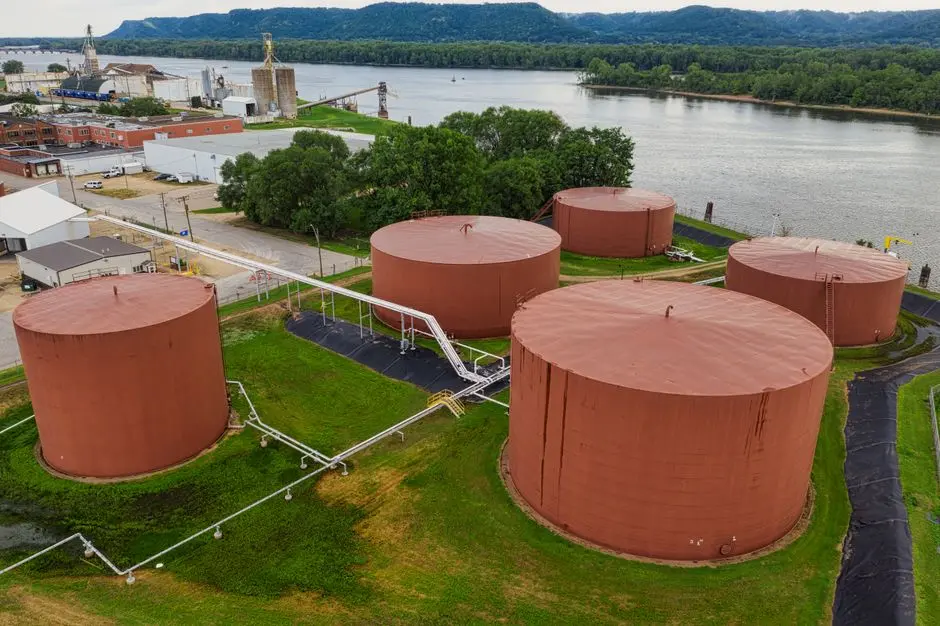
For most Raritan-area chemical plants the realistic 2026 answer is a hybrid train, not a forced either/or. The flow is: equalization → pH adjustment → DAF with coagulant and flocculant dosing → lamella clarifier → biological (MBBR or MBR) → optional RO/UF for reuse or a ZLD finish. The DAF strips emulsified oil, free FOG, and floating solids first so the clarifier is not blinded by an oil sheen; the lamella polishes residual TSS and carries the precipitated metals hydroxide sludge; the downstream biology is shielded from solvent shocks and oil fouling that would otherwise kill an MBBR or foul an MBR. The academic literature supports this sequencing: peer-reviewed work on combined DAF and modified moving-bed biofilm reactors (MMBBR) for synthetic oily wastewater (SSRN 4731382) reports stable operation of the biofilm stage downstream of flotation, consistent with the field practice of using DAF as an oil shield ahead of biology.
Operationally, this train maps to three building blocks: a DAF system for primary oil and FOG removal, an automatic chemical dosing system to hold coagulant/polymer ratios stable across batch swings, and a downstream biological stage such as the MBR integrated wastewater treatment unit for the BOD/COD residual. The clarifier slots in between as a TSS and metals polisher. Engineers sizing this train for a 2026 compliance push should expect to anchor the DAF sizing to the peak FOG event, not the daily average — that is the operating envelope NJPDES permit reviewers will scrutinize first.
Frequently Asked Questions
Is a DAF or a clarifier the right primary unit for an OCPSF chemical plant in 2026?
For a stream governed by 40 CFR 433 with oil and grease above roughly 50 mg/L, a DAF is the correct primary unit because it reliably delivers 90-95% FOG removal and can hold the 56 mg/L daily maximum O&G limit (per 40 CFR 433.11). For a stream below 50 mg/L FOG and dominated by settleable inorganic TSS, a lamella clarifier is usually the lower-OPEX pick.
Can a DAF and a clarifier be used together at a chemical plant?
Yes. A common 2026 configuration is DAF first to strip emulsified oil, then a lamella clarifier to polish TSS and carry precipitated metals, followed by biological treatment. The two units are complementary: the DAF attacks what floats, and the clarifier attacks what sinks (per Ecologix, 2026).
What does NJDEP expect to see in a pilot study for a new DAF or clarifier installation?
Expect NJDEP, working with the receiving POTW, to require jar-test data and ideally a two-to-four-week on-site pilot demonstrating removal rates for the specific categorical parameters — FOG, TSS, and any metals on the local-limits list (per N.J.A.C. 7:14A). Komline-Sanderson's own engineering guidance is that "a simple lab test will generally determine if the use of a DAF is feasible" (source: Komline-Sanderson, 2026), and a mobile DAF trailer can be deployed inside a single day for on-site confirmation (per WesTech, 2026).
How long does an NJPDES permit modification take for a new primary-treatment unit in 2026?
Plan on 6-12 months for a permit modification that includes a new primary-treatment unit, plus a parallel local-limits review with Somerset-Raritan WPCF for SIUs. Starting the pilot work before the modification is filed is the realistic way to hit a 2026 compliance deadline.