HF wastewater treatment requires a multi-stage system to neutralize hydrofluoric acid and remove fluoride ions to meet discharge limits, which typically range from 2–20 ppm. Chemical neutralization with calcium hydroxide (lime) at pH 8.5–9.0 effectively reduces fluoride from 1,000 ppm to 50 ppm, while advanced hybrid DAF-RO systems can achieve concentrations below 2 ppm for zero-discharge compliance in demanding semiconductor and PCB plants. System CAPEX ranges from $200K for basic neutralization setups to over $5M for sophisticated MBR-RO systems, with OPEX primarily driven by chemical consumption, energy demands, and membrane replacement costs.
Why HF Wastewater Treatment Fails: 3 Hidden Risks in Semiconductor and PCB Plants
A 2023 EPA fine of $1.2M was issued to a Texas semiconductor plant for exceeding its 20 ppm fluoride discharge limit (source: EPA Enforcement Database). Hydrofluoric acid (HF) is notoriously corrosive, capable of dissolving glass and causing severe damage to soft tissue, necessitating the use of specialized plastic-lined vessels (e.g., polypropylene/PVC) and stringent personal protective equipment (PPE) for operators. Incomplete neutralization of HF wastewater is a leading cause of scaling in pipes and downstream membrane systems, which can increase operational expenditures (OPEX) by 15–25% due to more frequent cleaning and maintenance interventions. Regional regulatory bodies enforce strict fluoride discharge limits; for instance, the EU Industrial Emissions Directive 2010/75/EU sets limits at 15 ppm, while China’s GB 8978-1996 mandates 10 ppm for new industrial facilities.
HF Neutralization Chemistry: pH Ranges, Chemical Dosing Ratios, and Reaction Kinetics
Effective hydrofluoric acid neutralization relies on precise pH control and chemical dosing to precipitate fluoride ions. Calcium hydroxide (lime) is the most common and cost-effective neutralizer, typically requiring a dosing ratio of 1.5–2.0 kg per kg of fluoride to achieve approximately 95% removal efficiency, reducing influent concentrations from 1,000 ppm to around 50 ppm. The optimal pH range for calcium hydroxide precipitation of calcium fluoride (CaF₂) is 8.5–9.0. For applications requiring higher pH or where lime sludge is undesirable, sodium hydroxide (caustic soda) can be used, though it is more expensive and requires a pH range of 10.0–11.0 for effective fluoride removal (per EPA 2024 guidelines). The chemical reaction for complete CaF₂ precipitation typically requires a reaction time of 30–60 minutes in a well-mixed reactor, followed by 2–4 hours for sedimentation. To enhance floc formation and reduce sludge volume by 30–40%, coagulants like polyaluminum chloride (PAC) are often added. Modern PLC-controlled chemical dosing skid for precise HF neutralization can automate these processes.
| Neutralizer | Primary Reaction | Optimal pH Range | Typical Dosing Ratio (kg/kg F-) | Relative Cost (per kg F- removed) |
|---|---|---|---|---|
| Calcium Hydroxide (Lime) | Ca(OH)₂ + 2HF → CaF₂↓ + 2H₂O | 8.5–9.0 | 1.5–2.0 | Low |
| Sodium Hydroxide (Caustic Soda) | NaOH + HF → NaF + H₂O | 10.0–11.0 | 1.2–1.8 | Medium-High |
| Sodium Carbonate (Soda Ash) | Na₂CO₃ + 2HF → 2NaF + H₂O + CO₂ | 9.0–10.0 | 1.8–2.5 | Medium |
Hybrid DAF-RO Systems for Zero-Discharge Compliance: Engineering Specs and Performance Benchmarks
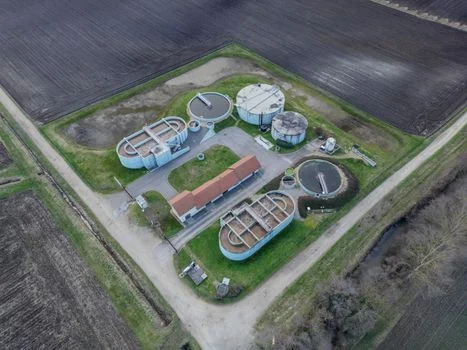
Dissolved Air Flotation (DAF) systems are typically employed as a primary clarification step, effectively removing 70–80% of fluoride as calcium fluoride flocs. This pretreatment reduces the influent fluoride concentration from initial levels of 1,000 ppm down to 200–300 ppm, making the downstream treatment more manageable. A DAF system for fluoride floc removal in semiconductor wastewater is crucial for this initial bulk removal. Following DAF, industrial reverse osmosis (RO) systems are utilized for polishing. High-rejection RO system for fluoride polishing to <2 ppm in zero-discharge plants, such as Dow Filmtec BW30-400 membranes, achieve approximately 98% fluoride rejection, consistently producing permeate with less than 2 ppm fluoride. For detailed PCB wastewater treatment specs for hybrid DAF-RO systems or TFT-LCD wastewater treatment systems with MBR-RO designs, specific considerations for influent variations are critical. A common operational challenge is membrane fouling due to calcium fluoride scaling, which can reduce flux by 20–30% per month. This necessitates regular acid cleaning (pH 2.0–3.0) every 3–6 months. The strategic use of antiscalants, such as phosphonates, can extend membrane life by 25–40% and significantly reduce the frequency of chemical cleaning.
| Parameter | Influent (Pre-DAF) | Effluent (Post-DAF) | Effluent (Post-RO) | Industry Standard (Semiconductor) |
|---|---|---|---|---|
| Fluoride (ppm) | 500–2000 | 50–300 | <2 | <2 |
| TSS (mg/L) | 100–500 | <10 | <1 | <5 |
| COD (mg/L) | 200–800 | 50–200 | <20 | <50 |
| pH | 2.0–7.0 | 8.0–9.0 | 6.5–7.5 | 6.0–9.0 |
CAPEX vs. OPEX: Cost Models for HF Wastewater Treatment Systems (2025 Data)
The capital expenditure (CAPEX) for an HF wastewater treatment system varies significantly based on the required treatment depth and flow rate. For a typical 50 m³/h system, CAPEX can range from $200K–$500K for a basic chemical neutralization system, increasing to $1.5M–$3M for a DAF-RO hybrid system, and reaching $3M–$5M for an advanced MBR-RO configuration (2025 market data). Operational expenditures (OPEX) are primarily driven by chemical costs, typically $0.50–$2.00 per cubic meter of treated water, and membrane replacement costs, which can add $0.20–$0.50 per cubic meter. Energy consumption, especially for RO systems, contributes significantly, averaging 0.5–1.5 kWh/m³. A well-designed DAF-RO system can reduce fluoride from 1,000 ppm to 2 ppm, potentially avoiding annual EPA fines of $500K. Modular designs, such as skid-mounted RO units, can further reduce CAPEX by 20–30% compared to custom-built systems.
| System Type | CAPEX (50 m³/h) | OPEX (per m³) | Key OPEX Drivers | Typical Payback Period |
|---|---|---|---|---|
| Chemical Neutralization | $200K–$500K | $0.50–$2.00 | Chemicals, Sludge Disposal | 3–5 years |
| DAF (Pretreatment) | $500K–$1M | $0.30–$1.00 | Chemicals, Energy, Sludge Disposal | 4–6 years |
| RO (Polishing) | $1M–$2M | $0.70–$2.50 | Energy, Membranes, Chemicals | 5–7 years |
| Hybrid DAF-RO | $1.5M–$3M | $1.00–$3.00 | Chemicals, Energy, Membranes, Sludge | 3–5 years (with regulatory avoidance) |
| MBR-RO | $3M–$5M | $1.50–$4.00 | Energy, Membranes, Sludge | 4–6 years (with reuse) |
How to Select the Right HF Treatment System: A Decision Framework for Engineers
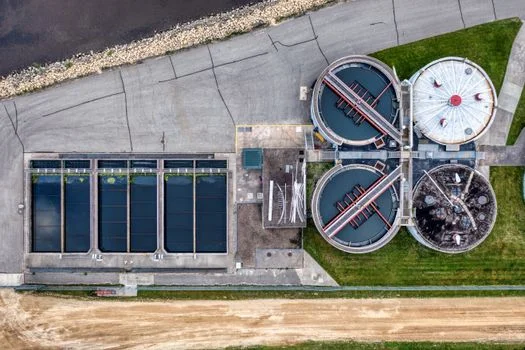
Begin by thoroughly analyzing the influent wastewater for fluoride concentration, pH, and flow rate. Simultaneously, identify all applicable discharge limits, including EPA, EU, and China GB standards, as well as any industry-specific requirements (e.g., <2 ppm for semiconductor manufacturing). Based on characterization, assess suitable treatment technologies: chemical neutralization is typically sufficient for influent fluoride concentrations below 500 ppm, DAF systems are effective for 500–2,000 ppm, while RO or MBR-RO systems are necessary for concentrations above 2,000 ppm or when zero-discharge and water reuse are objectives. Compare the capital and operational costs of viable systems. Conduct pilot testing for selected chemical dosing regimens and membrane performance to validate design parameters. A comprehensive DAF system selection guide for industrial wastewater can aid in the initial stages of this process.
5 Common HF Treatment Problems and How to Fix Them
Operational challenges in HF wastewater treatment systems can impact compliance and increase costs. Here are five common problems and their solutions:
- Problem 1: Scaling in pipes and membranes. Calcium fluoride precipitates can form hard scales. Solution: Implement effective antiscalant dosing (e.g., phosphonates) upstream of membrane systems and ensure pH is maintained below 9.0 during the initial neutralization stage.
- Problem 2: Incomplete fluoride precipitation. This leads to higher effluent fluoride concentrations than desired. Solution: Optimize chemical dosing ratios for calcium hydroxide, increase reaction time, and consider adding coagulants like polyaluminum chloride.
- Problem 3: High TDS (Total Dissolved Solids) in RO permeate. Even after primary RO, some applications require even lower TDS for reuse.