The flue gas desulfurization working principle is chemical absorption of sulfur dioxide (SO₂) into an alkaline slurry, then conversion to a stable sulfate solid. Wet limestone systems typically remove 95–99% of SO₂ when stoichiometry is 1.02–1.05 mol CaCO₃ per mol SO₂, absorber pH is held at 5.5–6.2, and the liquid-to-gas ratio is 8–15 L/m³. A 500 MW coal plant burning 5,000 tonnes/day of 3% sulfur coal needs roughly 1.2 million Nm³/h of scrubbing capacity to approach an EPA-style 0.07 lb/MMBtu SO₂ limit. Lime (CaO) systems follow the same mass-transfer logic with a different reagent cost curve.
Why Industrial Plants Need FGD for SO₂ Limits
Flue gas desulfurization is required because a 500 MW coal unit on 3% sulfur fuel can emit about 150 tonnes SO₂ per day without scrubbing, driving acid rain, PM2.5 formation, and permit exposure under current U.S., EU, and China stack limits.
Sulfur dioxide forms sulfuric acid when it meets atmospheric moisture, yielding rain with pH typically below 5.6. The same pathway feeds fine particulate (PM2.5). According to EPA 2024 data used in compliance planning, that PM2.5 burden is linked to about 15,000 premature deaths per year in the U.S. Coal sulfur commonly ranges 0.5–4% by weight; petroleum coke can reach about 6%.
Design targets now come from numeric stack limits, not vague language. The U.S. EPA’s 2025 Mercury and Air Toxics Standards (MATS) path lists SO₂ limits as low as 0.04 lb/MMBtu for new coal-fired plants. The EU Industrial Emissions Directive (IED) sets 50 mg/Nm³ for new large combustion plants. China’s GB 13223-2023 targets as low as 35 mg/Nm³ in key regions. Non-compliance is a cash risk. A Texas cement plant documented in an EPA Enforcement Case from 2023 cut outlet SO₂ from 220 ppm to 12 ppm after FGD installation and avoided an estimated $1.2 million per year in fines.
Even a well-tuned absorber still creates a chloride-bearing liquid purge. That is where flue gas desulfurization wastewater treatment becomes the next bottleneck after mist elimination and gypsum dewatering. Ignoring the water island is how many air-only projects fail during detailed design.
Industrial operators also see secondary corrosion and plume issues when untreated SO₂ slips through. Acid condensation in ducts and stacks shortens liner life. It can create a persistent visible plume after rain events. Most plants we audit for SO₂ exceedances already knew their fuel sulfur. They understated inlet flow or chloride, then watched the scrubber miss the continuous emission monitor span.
Fuel switching without re-rating the scrubber is another common miss. Moving from 1% sulfur coal to a 3% sulfur blend roughly triples the SO₂ mass rate at the same heat input. The absorber still runs, but stoichiometry and L/G that were fine last month now sit underdesigned. Update the SO₂ mass balance whenever purchasing changes the sulfur ticket.
Community exposure arguments rarely decide CapEx alone. They do decide how hard a permit writer pushes for continuous monitoring and backup reagent capacity. Budget a spare mill or a second lime silo if your sulfur supply is volatile.
What Is the Flue Gas Desulfurization Process?
The flue gas desulfurization process contacts hot SO₂-bearing gas with an alkaline reagent so SO₂ dissolves, reacts, and leaves as a solid or slurry byproduct instead of a stack pollutant. In wet limestone service the overall reaction is SO₂ + CaCO₃ + ½O₂ + 2H₂O → CaSO₄·2H₂O (gypsum) + CO₂. EPA AP-42 guidance used in many bids keeps reagent stoichiometry at 1.02–1.05 mol CaCO₃ per mol SO₂ to cover purity and bypass losses.
Gas rises through the absorber while slurry sprays downward at L/G 8–15 L/m³. Most plants we size for high-sulfur coal run toward the upper L/G end when inlet SO₂ is above a few thousand ppm. Slurry pH below 5.0 cuts absorption hard. pH above 6.5 raises scaling risk from calcium sulfite and sulfate supersaturation. Operators who chase extra alkalinity by pushing pH past 6.5 usually pay for it later in nozzle pluggage and mist-pad washes.
Forced oxidation then injects 1.5–2.0 mol O₂ per mol SO₂ so soft, sticky CaSO₃ converts to gypsum that dewaters to 10–15% moisture. Mist eliminators at the tower top remove >99.9% of droplets larger than 10 μm before an optional reheater and the stack. Skipping reheating can be acceptable on short, lined ducts. Acid condensation risk rises whenever gas stays saturated through cold weather.
A typical wet limestone process flow stays simple on paper and unforgiving in the field:
- Flue Gas Entry: Hot flue gas from the boiler or process heater enters the FGD train.
- Prescrubber (Optional): High dust or chloride loads are knocked down before the main absorber.
- Absorber Tower: Alkaline slurry absorbs SO₂; sulfite is oxidized to gypsum.
- Mist Eliminator: Entrained slurry droplets are removed from the scrubbed gas.
- Reheater: Saturated gas is heated to limit condensation, duct corrosion, and visible plume.
- Stack: Cleaned flue gas is discharged to atmosphere.
- Reagent Preparation: Limestone is ground and mixed with water into slurry.
- Gypsum Dewatering: Gypsum slurry is dewatered and process water is recycled where chemistry allows.
Keep the mass balance honest at each step. Inlet SO₂ load, reagent purity, oxidation air, and mist carryover all show up either as stack ppm or as filter cake that will not sell. When any one of those four drifts, efficiency claims from the nameplate no longer apply.
| Parameter | Typical Range (Wet Limestone FGD) | Significance |
|---|---|---|
| SO₂ Removal Efficiency | 98–99% | High compliance with stringent emission limits. |
| Reagent Stoichiometry (CaCO₃:SO₂) | 1.02–1.05 | Minimizes unreacted reagent, optimizes cost. |
| Absorber Slurry pH | 5.5–6.2 | Balances SO₂ absorption and scaling prevention. |
| Liquid-to-Gas Ratio (L/G) | 8–15 L/m³ | Ensures adequate contact for SO₂ transfer. |
| Oxidation Air (O₂:SO₂) | 1.5–2.0 moles | Converts sulfite to stable gypsum byproduct. |
| Mist Eliminator Efficiency | >99.9% for >10 μm droplets | Prevents carryover and downstream corrosion. |
| Gypsum Moisture Content | 10–15% | Suitable for handling, disposal, or sale. |
Use the table as a control band, not a wish list. If L/G is at 8 L/m³ while inlet SO₂ is 4,000–5,000 ppm, expect removal to sit at the low end of the 98–99% band until spray density rises. If gypsum moisture stays above 15% with a healthy vacuum filter, look at oxidation air and crystal habit before buying a larger filter.
Prescrubbers earn their keep on waste incinerators and high-chloride coals. Knocking down coarse dust and HCl before the main absorber protects mist pads. It also slows chloride build-up in the recirculating slurry. Skip them on clean, low-chloride gas and you mainly add pressure drop.
Flue Gas Desulfurization Working Principle: Reactions and Flow
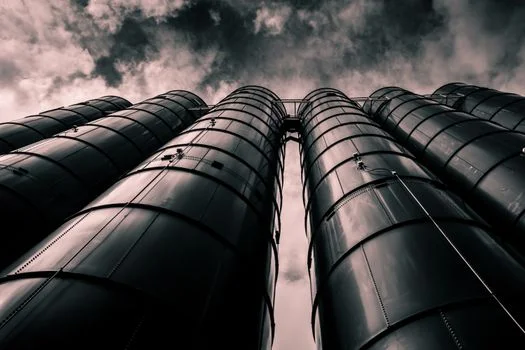
On the absorber chemistry side, flue gas desulfurization working principle details matter more than brand labels. Counter-current spray banks create the interfacial area. Stoichiometry, pH, and L/G set how far SO₂ transfer can go before mist elimination and reheating. When chlorides climb past about 1,000 ppm in slurry, duplex stainless steel 2205 or higher alloys replace plain stainless to slow pitting.
The reaction sequence is absorption first, then oxidation. SO₂ dissolves into the aqueous film and forms sulfite species. It becomes gypsum only later if enough oxygen is sparged into the sump. Plants that starve oxidation air to save fan power often see soft sulfite solids that blind vacuum filters within weeks. Restoring 1.5–2.0 mol O₂ per mol SO₂ at roughly 1.2–1.5 bar usually recovers cake dryness faster than changing filter cloth alone.
After absorption, mist eliminators and reheating protect downstream steel. Chevron or mesh pads are specified for >99.9% removal on droplets larger than 10 μm. Gypsum sold into board plants usually needs >90% CaSO₄·2H₂O purity under ASTM C472-type checks. Unreacted limestone and fly ash are the usual purity killers when grind or upstream particulate control drifts.
Field note: most wet islands we commission run stable when operators treat pH, density, and oxidation air as a linked triad, not three independent knobs. Change one without checking the other two and scale or carryover follows within a shift.
Reheater duty is often cut to save steam, then restored after the first winter of duct sweating. If you delete reheating, specify linings and drain points for saturated gas all the way to the stack. Visible plume complaints after rain are usually condensation optics, not a sudden SO₂ spike. The public rarely waits for that explanation.
Keep sample points for slurry density, pH, and sulfite near the sump, not only at the control room historian. Operators who can grab a quick densimeter reading catch feed errors hours before the continuous emission monitor shows a SO₂ bump.
Wet vs. Dry vs. Semi-Dry FGD by Use Case
Selecting among wet, dry, and semi-dry FGD is a constraint problem. Efficiency, water, byproduct, CapEx, and plot space rarely optimize together. Start with fuel sulfur and the numeric permit. Then eliminate options that cannot hit the stack limit with margin.
Wet limestone FGD reaches 98–99% SO₂ removal and fits 500+ MW units on fuels above about 1% sulfur when water and gypsum outlets exist. Water use is typically 0.5–1.0 L/Nm³ of flue gas. Scaling and corrosion are the main operating watch items. Where gypsum can be sold, wet systems often win on lifetime reagent cost despite higher CapEx.
Dry FGD (spray dryer absorber) usually delivers 90–95% removal on low-sulfur fuels (<1% S) or water-scarce sites. Reagents are lime or sodium bicarbonate. Reagent cost is often $50–$100 per ton of SO₂ removed versus about $12–$25 for limestone in wet service. The byproduct is a dry powder of sulfite/sulfate, unused reagent, and fly ash, usually landfilled. CapEx is lower, but OPEX tracks lime price and trucking distance.
Semi-dry circulating fluidized bed (CFB) FGD sits in the middle at 95–98% removal for 0.5–2% sulfur fuels. Water evaporates in the reactor, so liquid waste is low. Control loops are tighter and parasitic power can reach 3–5% of plant output. Retrofits with tight plot plans often prefer this footprint over a full wet island.
Use-case matching is blunt. Large power plants on high-sulfur coal default to wet limestone when gypsum can be sold. Cement kilns with high dust often take dry FGD because the powder can return to clinker or landfill. Refineries with mixed fuels lean semi-dry. Waste incinerators often pair dry FGD with activated carbon for mercury and dioxins, then a baghouse such as HydropureWater’s pulse jet baghouse for post-FGD particulate control. A packaged Flue Gas Desulfurization (FGD) Scrubber System is typically specified when the buyer needs 99% class SO₂ removal with defined L/G and oxidation duty.
Do not force wet technology into a desert site with no gypsum buyer just because a brochure shows 99% removal. Likewise, do not expect dry SDA to hold a 35 mg/Nm³ coal limit on 3% sulfur fuel without heroic reagent rates. Match the chemistry to the constraint set you actually have.
Hybrid thinking shows up on brownfield sites: a dry polishing stage after a partial wet train, or activated carbon between absorber and baghouse. Those layouts work when plot space and existing ID fans force compromises. They still need a single mass balance owner. Split ownership between air team and ash team is how reagent rates drift.
For water-scarce industrial boilers under about 1% sulfur, dry SDA plus a pulse-jet collector is usually the shortest path to compliance. For utility-scale high-sulfur coal with a wallboard customer nearby, wet limestone remains the default for a reason. Reagent cost and byproduct revenue dominate a 20-year model.
| FGD Method | SO₂ Removal Efficiency | Typical Reagent | Water Usage | Byproduct | Key Advantages | Ideal Industrial Use Case |
|---|---|---|---|---|---|---|
| Wet Limestone FGD | 98–99% | Limestone (CaCO₃) | High (0.5–1.0 L/Nm³) | Gypsum (CaSO₄·2H₂O) | Highest efficiency, saleable byproduct | Large coal-fired power plants (>1% S fuels) |
| Dry FGD (SDA) | 90–95% | Lime (CaO), NaHCO₃ | Low (near zero liquid waste) | Dry powder (CaSO₃/CaSO₄, unreacted reagent, fly ash) | Lower CapEx, no wastewater, good for water-scarce regions | Cement kilns, small industrial boilers (<1% S fuels), waste incinerators |
| Semi-Dry FGD (CFB) | 95–98% | Lime (CaO) | Medium (evaporated) | Dry powder (CaSO₃/CaSO₄, unreacted reagent) | Balances efficiency & water use, smaller footprint for retrofits | Refineries, medium-sized industrial plants (0.5–2% S fuels) |
Which Standards Guide FGD Design and Compliance?
Industrial FGD trains are usually sized to emission limits from EPA MATS, the EU IED, and China GB 13223-2023 rather than a single ISO/IEC FGD performance certificate. Stack SO₂, opacity, and continuous emission monitoring define acceptance more than a generic equipment standard number. Gypsum quality for sale often references ASTM C472-type purity and moisture checks. Reagent grind and stoichiometry still track EPA AP-42 practice at 1.02–1.05 mol CaCO₃ per mol SO₂.
Bid packages should list the numeric outlet limit in mg/Nm³ or lb/MMBtu, the guarantee point flue-gas flow in Nm³/h, and chloride or particulate allowances. Without those three numbers, wet-versus-dry debates stay abstract. Add the fuel sulfur range and expected turndown. Many failed guarantees were written only at full load on average sulfur.
If a specification asks for ISO/IEC FGD compliance without naming an emission limit, push back for the stack number and the test method. The absorber still has to clear a continuous monitor, not a paperwork label.
FGD System Components and Design Specs
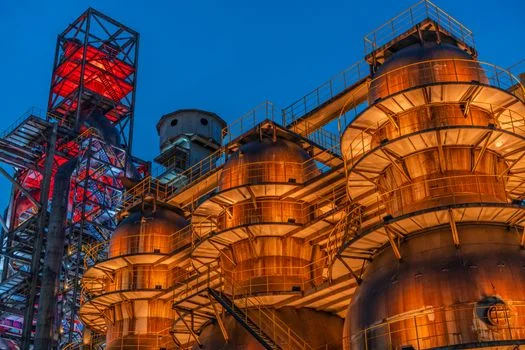
Absorber towers for a 500 MW class unit commonly run 10–20 m diameter and 30–50 m height at 3–4 m/s gas velocity. Duplex stainless steel 2205 resists chloride attack. Rubber-lined carbon steel remains the lower-CapEx option when lining integrity is maintained. Gas velocity above about 4 m/s drives entrainment that blinds mist eliminators and raises fan power.
Limestone grind is typically 90% passing 44 μm (325 mesh) at 20–30% slurry solids. Dry storage for 7–14 days of reagent keeps mills offline from forcing a trip. Vacuum belt filters target 10–15% gypsum moisture. Centrifuges can reach 5–10% when board mills demand dryer cake. If cake moisture stays high after cloth changes, check oxidation completeness before blaming the filter OEM.
Oxidation blowers sized for 1.5–2.0 mol O₂ per mol SO₂ often draw 0.5–1.0% of plant output. Chevron mist eliminators in 3–5 stages hold >99.9% removal on >10 μm droplets at 100–200 Pa pressure drop. That drop must sit in the ID fan curve before anyone claims spare fan capacity. Online wash headers at 10–15 bar keep pads open between outages.
Material selection is where many budget bids fail after year three. Chlorides above about 1,000 ppm punish ordinary stainless. Specify alloy or lining against the maximum expected chloride, not the annual average, or expect patch welding during forced outages.
Instrumentation short lists should include slurry density, pH, oxidation airflow, mist-eliminator ΔP, and gypsum belt speed. Those five tags explain most efficiency and cake-quality complaints. Fancy advanced process control helps only after the sensors are calibrated and the sample lines are not plugged with scale.
Spare strategy matters as much as metallurgy. Keep critical mist-pad modules, spray nozzles, and one oxidation blower element on site if the plant sits more than a day from the OEM warehouse. A scrubber waiting on a nozzle is still offline for SO₂ compliance purposes.
| Component | Key Engineering Specification | Design Consideration |
|---|---|---|
| Absorber Tower | Material: Duplex SS 2205 or Rubber-lined CS Diameter: 10–20 m (for 500 MW) Height: 30–50 m Gas Velocity: 3–4 m/s |
Corrosion resistance, optimal gas-liquid contact, slurry entrainment prevention. |
| Reagent Preparation | Limestone Grind Size: 90% <44 μm Slurry Concentration: 20–30% solids Storage: 7–14 days supply |
Reaction kinetics, pumping consistency, operational autonomy. |
| Gypsum Dewatering | Moisture Content: 10–15% (belt filter), 5–10% (centrifuge) Purity: >90% CaSO₄·2H₂O (for wallboard) |
Byproduct handling, commercial viability, water recycle. |
| Oxidation Air Blowers | Flow Rate: 1.5–2.0 moles O₂/mole SO₂ Pressure: 1.2–1.5 bar Energy Consumption: 0.5–1.0% of plant output |
Complete sulfite oxidation, energy efficiency. |
| Mist Eliminators | Type: Chevron, 3–5 stages Efficiency: >99.9% for >10 μm droplets Pressure Drop: 100–200 Pa |
Prevent carryover, protect downstream equipment, minimize fan power. |
FGD CapEx, OPEX, and Reagent Cost Drivers
Wet limestone CapEx is typically $150–$300/kW on new builds and $200–$400/kW on retrofits per EPA 2023 cost bands used in many screening studies. For a 500 MW plant that is about $75 million to $150 million before owner’s costs. That covers absorber, reagent prep, dewatering, civil, and I&C. Retrofits cost more because duct tie-ins, outage windows, and foundation limits dominate the estimate.
OPEX is reagent-heavy. Limestone often costs $12–$25 per ton of SO₂ removed. Lime runs $50–$100 per ton of SO₂ removed. Parasitic electricity for pumps, blowers, and mixers is commonly 1–3% of plant output. Wet makeup water sits near 0.5–1.0 L/Nm³. Maintenance usually burns 1–2% of CapEx per year when spares and labor are booked honestly.
A 500 MW unit emitting 150 tonnes SO₂/day at 1.05 stoichiometry needs on the order of 225 tonnes/day of limestone. Gypsum sales at $5–$15 per ton can offset 10–30% of annual OPEX when purity clears board specs. Avoided EPA-class penalties cited at up to $46,154 per day per violation dominate payback math when enforcement is active. Screening payback is often 5–10 years for new islands and 3–7 years for retrofits that stop immediate fines.
Cost models that ignore reagent logistics fail first. A $12/ton limestone number means little if the quarry is far and trucking doubles delivered cost. Dry lime systems show the same pattern. Quoted reagent price without freight is not an OPEX number you can defend to a board.
Owners sometimes undercount parasitic load by omitting reheater steam or gypsum conveying. Put those loads in the same OPEX sheet as limestone and power. A 1–3% electrical take for pumps and blowers is only the rotating equipment slice. Total station impact is higher when steam coil reheating is on.
Fine the model with local water price and landfill tipping fees. In regions where water is cheap and gypsum sells, wet wins. Where water is scarce and landfill is cheap, dry or semi-dry wins even if limestone looks inexpensive on paper.
| Cost Category | Metric | Typical Range (Wet Limestone FGD) | Notes |
|---|---|---|---|
| CapEx (New Plant) | $/kW | $150–$300 | Includes absorber, reagent handling, dewatering. |
| CapEx (Retrofit) | $/kW | $200–$400 | Higher due to integration challenges. |
| Reagent Cost | $/ton SO₂ removed | Limestone: $12–$25 Lime: $50–$100 |
Primary OPEX driver, depends on market & logistics. |
| Electricity Consumption | % of Plant Output | 1–3% | For pumps, blowers, mixers. |
| Water Consumption | L/Nm³ flue gas | 0.5–1.0 | For wet systems, makeup water and slurry. |
| Maintenance Cost | % of CapEx/year | 1–2% | Scheduled and unscheduled repairs, spare parts. |
| Gypsum Sales Revenue | $/ton | $5–$15 | Offsetting OPEX, dependent on purity and market. |
| Payback Period | Years | New: 5–10 Retrofit: 3–7 |
Includes avoided fines and potential gypsum sales. |
Common FGD Operating Problems and Fixes
Scaling in absorbers usually tracks pH excursions above 6.5 or high CaSO₃/CaSO₄ supersaturation. Hold slurry pH at 5.5–6.2. Adipic acid and similar organic buffers slow crystal growth. Forced oxidation that finishes the sulfite-to-gypsum step also lowers soft scale potential. Online density and pH trending catch most events before spray headers plug.
Chloride-driven corrosion attacks absorbers and ducts when coal or waste fuels push chlorides above about 1,000 ppm. Duplex 2205 or C-276-class alloys are the usual upgrade path when linings fail repeatedly. Reagent carryover points to blinded mist pads or gas velocity above the 4 m/s design band. Clean mist eliminators every 6–12 months. Cut velocity or add a prescrubber if coarse solids overload the pads.
Gypsum purity below 90% usually means short oxidation air, leftover limestone, or fly-ash entrainment. Restore 1.5–2.0 mol O₂ per mol SO₂ and keep solids at 20–30%. Rising system pressure drop often means packing or mist-pad fouling. High-pressure washes at 10–15 bar and redundant stages let one bank clean offline without a full outage.
When purge water chemistry swings, operators sometimes borrow clarifying ideas from other trains. Inclined-plate solids capture is covered under lamella clarifier working principle, while membrane bioreactor logic for high-COD aqueous streams sits under mbr working principle. These are different unit ops. The shared need is keeping solids and salts from recycling into the absorber.
Unexpected stack SO₂ spikes after a fuel switch are usually stoichiometry and L/G problems, not bad limestone. Raise reagent feed with the new sulfur load first. Then confirm oxidation air and mist ΔP before opening a warranty claim.
Pressure-drop excursions after a fuel change often track higher fly-ash loading into the absorber, not a sudden mist-pad failure. Check upstream ESP or baghouse performance first. If coarse ash is punching through, the FGD island will look dirty no matter how often you wash the chevrons.
Document every pH excursion above 6.5 with time, density, and reagent valve position. Those logs shorten the next outage inspection because scale location usually matches the periods you already know about.
How to Select an FGD System
Selection starts with fuel sulfur, water balance, byproduct outlet, lifetime cost, permit limit, and plot space—not brochure efficiency claims. Work the list in order so you do not optimize CapEx against a limit the technology cannot meet.
- Assess fuel sulfur. Below 1% S, dry FGD often clears moderate limits at lower CapEx. At 1–2% S, semi-dry CFB is the usual compromise. Above 2% S, wet limestone is the reliable path to >98% removal.
- Check water availability. Wet systems consume 0.5–1.0 L/Nm³. Dry systems win where makeup water or zero-liquid-discharge cost dominates.
- Map byproduct outlets. Saleable gypsum favors wet FGD. Landfill-only sites often prefer dry powder handling.
- Compare CapEx versus OPEX. Dry systems skew lower CapEx / higher reagent OPEX. Wet systems skew higher CapEx / lower limestone OPEX over a 5–10 year horizon.
- Match the permit. Limits near 0.04 lb/MMBtu or 35 mg/Nm³ almost always need wet performance. Moderate limits can accept 90–95% dry removal.
- Decide retrofit versus new build. Tight retrofits favor semi-dry footprints. New builds can take full wet islands when gypsum and water are solved.
Walk the checklist with measured inlet SO₂, Nm³/h, chloride, and dust loading before freezing the technology. Most industrial packages we review fail first on incomplete inlet data, not on absorber hydraulics. Bring continuous monitor history if you have it. Design on a single grab sample is how guarantees miss.
| Decision Factor | Low Sulfur Fuel (<1% S) | Medium Sulfur Fuel (1–2% S) | High Sulfur Fuel (>2% S) |
|---|---|---|---|
| Recommended FGD Type | Dry FGD | Semi-Dry FGD | Wet Limestone FGD |
| Water Availability | Water-scarce regions | Moderate availability | Water-rich regions |
| Byproduct Disposal | Landfill (dry powder) | Landfill (dry powder) | Saleable Gypsum |
| CapEx/OPEX Focus | Lower CapEx / Higher OPEX | Balanced CapEx/OPEX | Higher CapEx / Lower OPEX |
| Regulatory Stringency | Moderate (e.g., >90% removal) | High (e.g., >95% removal) | Very High (e.g., >98% removal) |
| Application Type | Retrofit, smaller footprint | Retrofit, medium footprint | New build, larger footprint |
Who This Is For / Next Step
This page is for plant engineers, EPC process leads, and procurement teams sizing SO₂ controls on coal, petcoke, cement, refining, or waste-to-energy flue gas. Look elsewhere if you only need particulate capture with no SO₂ limit. Look elsewhere if your project is a municipal drinking-water plant rather than a combustion stack.
Next step: send flue-gas flow (Nm³/h), inlet SO₂, fuel sulfur, water limits, and the outlet permit number so a scrubber balance can be checked against wet, dry, or semi-dry options. You can request a scrubber sizing review with those inlet figures attached.
Frequently Asked Questions
What SO₂ removal efficiency does wet limestone FGD achieve?
Well-designed wet limestone FGD systems typically achieve 98–99% SO₂ removal, including inlet concentrations up to about 5,000 ppm when L/G, pH, and stoichiometry stay in band. Retrofits with weak maintenance or short oxidation air often slip to 95–97%, consistent with EPA AP-42 performance bands used in many compliance models. Always confirm the guarantee point against your continuous emission monitor span and fuel sulfur swing.
How much water does a wet FGD system use?
Wet FGD typically consumes 0.5–1.0 L of water per Nm³ of flue gas treated at the absorber water balance. For a 500 MW coal unit treating 1.2 million Nm³/h, that is roughly 600–1,200 m³/day of circulating duty before recycle credits. After gypsum dewatering, 80–90% of process water can often return to the slurry loop, so net makeup is far lower than the gross circulation figure.
Can FGD systems remove mercury or NOx as well?
Standard FGD is built for SO₂ and usually removes less than 30% of mercury and less than 10% of NOx without add-ons. Mercury control commonly adds activated carbon injection upstream of a baghouse and can exceed 90% Hg removal when carbon and temperature are right. NOx still needs SCR or SNCR; do not count on the absorber to carry that limit.
How long does an FGD system last?
Duplex stainless absorbers are commonly designed for 20–30 years of service life when chloride chemistry stays controlled. Rubber-lined carbon steel sections often need relining or replacement on a 10–15 year cycle. Mist eliminators and slurry pumps wear faster and are typically replaced every 5–10 years, with annual maintenance near 1–2% of initial CapEx.
What reagents can replace limestone in FGD?
Lime (CaO) is more reactive than limestone and can raise removal in wet or dry service, but it usually costs 2–4 times more per ton of SO₂ removed. Sodium bicarbonate appears in some dry systems that need fast response on smaller boilers. Coastal plants sometimes use seawater alkalinity and magnesium hydroxide for SO₂ capture, with strict pH and discharge controls on the return stream.