Understanding Fabric Filter Dust Collectors: The Core Technology
Fabric filter dust collectors represent the primary method for high-efficiency dry particulate removal in industrial settings, functioning essentially as a factory's lungs by filtering out airborne contaminants before they reach the atmosphere. The fundamental operating principle involves passing contaminated gas streams through a specialized filter media—either cylindrical bags or pleated cartridges—where dust particles are intercepted while clean air exits through the material pores. As the dust layer, or "dust cake," builds up on the surface of the media, it actually improves filtration efficiency by acting as an additional filtering layer, though it also increases resistance to airflow.
The classification of fabric filters is primarily determined by their cleaning mechanism. The Pulse Jet Baghouse is the most prevalent industrial variant, utilizing high-pressure compressed air to "shock" the dust cake off the bags without interrupting the main airflow. This allows for continuous operation and high air-to-cloth ratios. For example, the HydropureWater Pulse Jet Baghouse is engineered to achieve stringent particulate emissions below 10 mg/Nm³, making it suitable for industries with rigorous environmental compliance standards. Other types include Shaker collectors, which mechanically vibrate the bags to dislodge dust during downtime, and Reverse Air collectors, which use a gentle back-flow of air to collapse the bags and release the cake, typically used in large-scale applications where the dust is fragile or the bags are made of delicate materials like fiberglass.
Fabric filters have a primary advantage in their versatility and extreme efficiency. They are capable of capturing sub-micron particles with over 99% effectiveness, provided the dust is dry and non-sticky. Because the waste product is collected in a dry state, it is often easier to handle, transport, or recycle back into the production process compared to the wet sludge generated by other systems. However, the selection of the filter media—ranging from polyester and polypropylene to high-temperature aramid or PTFE—is critical to the system's longevity and performance in specific chemical environments.
Fabric Filter Advantages and Disadvantages
Pulse jet fabric filters achieve collection efficiencies exceeding 99.9% for particulate matter (PM), making them the industry standard for meeting modern PM2.5 and PM10 emission regulations. One significant advantage of this technology is its modularity; systems can be scaled by adding more compartments to handle increased airflow volumes without a complete redesign of the facility's air pollution control infrastructure. For applications involving fine, dry dust, cartridge filters are often preferred due to their pleated design, which provides a much larger surface area in a compact footprint compared to traditional bag filters.
The main drawback of fabric filters is their sensitivity to moisture and "sticky" gas streams. If the temperature of the gas stream drops below the dew point, moisture can condense on the filter media, causing the dust to turn into a cement-like paste that "blinds" the filter. This leads to a rapid increase in pressure drop and potential system failure. Standard filter media has a maximum operating temperature limitation, typically around 260°C (500°F) for high-end synthetic materials. Beyond this range, the media will degrade or melt, necessitating expensive pre-cooling equipment or a shift to alternative technologies like ESPs or wet scrubbers. Maintenance is also a recurring factor; even with a robust baghouse dust collector maintenance guide, filters eventually require replacement, which involves both material costs and labor-intensive downtime.
Key Alternatives to Fabric Filter Dust Collectors
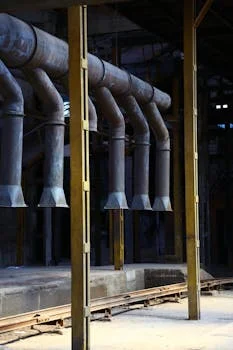
Wet scrubbers operate on the principle of inertial impaction, where dust particles are captured by liquid droplets—usually water—and then removed as a slurry. This technology is uniquely suited for gas streams that are hot, moist, or contain combustible dust that would pose a fire risk in a dry baghouse. A primary example is HydropureWater's FGD Scrubber System, which not only captures particulate matter but also facilitates simultaneous gas absorption for sulfur dioxide (SO₂) removal. While excellent for cooling gas and handling "sticky" emissions, wet scrubbers introduce the challenge of wastewater treatment and the disposal of wet sludge, which can increase operational complexity.
Electrostatic Precipitators (ESPs) utilize electrical energy to charge incoming dust particles, which are then attracted to and collected on oppositely charged plates. ESPs are characterized by their extremely low pressure drop—typically less than 25 mm H₂O—which translates to lower fan energy costs. They are the preferred choice for massive volumetric flow rates, such as those found in coal-fired power plants or large cement kilns. While they can handle temperatures exceeding 400°C and are highly efficient for fine particles, they require a massive physical footprint and a high initial capital investment (CAPEX). Their efficiency is highly dependent on the electrical resistivity of the dust, which can fluctuate with process changes.
Cyclones, or mechanical centrifugal separators, use the inertia of the dust particles to separate them from the gas stream. As the air spirals downward in a cone-shaped vessel, heavier particles strike the walls and fall into a hopper, while clean air exits through the center. Cyclones are remarkably simple, containing no moving parts and requiring no filter media. However, their efficiency drops significantly for particles smaller than 10 microns. In most modern industrial plants, cyclones are not used as primary emission control devices but rather as pre-cleaners to remove the bulk of heavy, abrasive dust before the air reaches a fabric filter or scrubber, thereby extending the life of the more expensive downstream components.
Inertial separators and settling chambers represent the simplest form of dust control, relying purely on gravity. By drastically reducing the velocity of the gas stream in a large chamber, the heaviest particles settle out. These are rarely used today except as very basic pre-collectors for extremely large particles (over 100 µm) to reduce the dust load on high-efficiency secondary systems.
Fabric Filter Dust Collectors vs. Alternatives: A Detailed Comparison
Choosing between dust collection technologies requires a technical evaluation of collection efficiency, particle size distribution, and operational costs. Fabric filters generally offer the best balance of efficiency and cost for dry particulates but fall short in high-moisture or extreme-temperature environments where wet scrubbers or ESPs excel. The following table provides a technical comparison based on industry standard performance metrics (HydropureWater field data, 2025).
| Metric | Fabric Filter (Pulse Jet) | Wet Scrubber (Venturi) | Electrostatic Precipitator | Cyclone Separator |
|---|---|---|---|---|
| Collection Efficiency | 99.9% + (incl. PM2.5) | 90% - 99% (variable) | 99% - 99.9% | 70% - 90% (Coarse) |
| Target Particle Size | 0.5 µm to 200 µm | 0.5 µm to 100 µm | 0.01 µm to 100 µm | >10 µm |
| Max Temperature | Up to 260°C (Media Ltd) | Handles hot gases (quench) | Up to 450°C+ | Up to 1000°C |
| Moisture/Sticky Dust | Poor (Risk of blinding) | Excellent | Poor (Resistivity issues) | Moderate |
| Pressure Drop (mm H₂O) | 75 - 150 | 125 - 500+ | 12 - 25 | 50 - 125 |
| CAPEX | Moderate | Moderate to High | Very High | Low |
| OPEX | Moderate (Filter changes) | High (Water/Sludge/Power) | Low to Moderate | Very Low |
| Footprint | Moderate to Large | Moderate (plus water treatment) | Very Large | Compact |
The data highlights that while fabric filters provide superior fine-particle capture, their operating expenditure (OPEX) is influenced by the need for compressed air and periodic filter replacements. Conversely, while an ESP has a lower pressure drop and thus lower electricity consumption for the fan, its massive footprint and high initial cost often make it impractical for smaller industrial facilities. Wet scrubbers, despite their high pressure drop and water treatment costs, remain the only viable solution when the gas stream contains both hazardous particulates and soluble acidic gases.
Choosing the Right Dust Collection System for Your Application
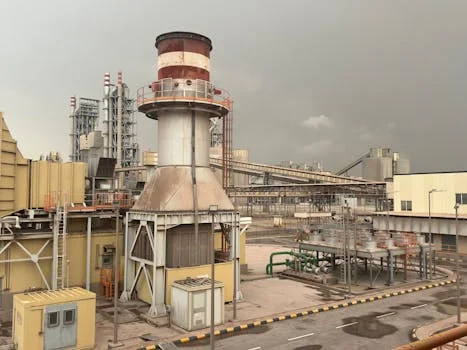
The selection process must begin with a comprehensive analysis of the dust characteristics. If the particulate is abrasive, a pre-cleaner cyclone should be installed to prevent premature wear on the fabric filter bags. For combustible dusts, such as those found in wood processing or metal grinding, the National Fire Protection Association (NFPA) standards may dictate the use of explosion venting on a baghouse or, alternatively, the use of a wet scrubber to inherently suppress ignition risks. If the goal is strictly to meet particulate emission limits below 10 mg/Nm³ for a dry process like cement bagging or grain handling, a pulse jet baghouse is almost always the most cost-effective high-efficiency choice.
Gas stream properties are equally decisive. If your process involves flue gas from a boiler where temperatures exceed 300°C, a standard fabric filter will fail. In this scenario, you must either invest in ceramic filter media, use an ESP, or implement a quenching stage before the baghouse. If the gas contains SO₂ or other acid gases, a system like a wet scrubber provides the dual benefit of particulate control and chemical neutralization. Operational logistics, including the ability to handle wet sludge versus dry dust, often tip the scale; facilities without existing wastewater treatment infrastructure typically prefer the dry waste produced by fabric filters.
Finally, consider the long-term ROI by evaluating the total cost of ownership. While a cyclone has the lowest CAPEX, it will not meet modern environmental regulations on its own. A fabric filter offers a balanced ROI, but it requires adherence to a strict industrial dust collection system maintenance guide to avoid unplanned downtime. For large-scale utilities, the high CAPEX of an ESP is often justified over 20 years by its low maintenance and energy requirements. For most B2B industrial applications, however, the high efficiency and modularity of pulse jet baghouses make them the standard-bearer for particulate control.
Frequently Asked Questions
What is the main drawback of fabric filters?
The most significant limitation is their susceptibility to moisture and oil, which can cause "blinding" of the filter media, leading to high pressure drops and the need for frequent, costly filter replacements.What is the best filter for dust removal in general industrial applications?
For dry, non-hygroscopic dust, the Pulse Jet Baghouse is considered the gold standard due to its ability to maintain continuous operation and achieve 99.9% efficiency on fine particulates.What are the disadvantages of baghouse filters compared to scrubbers?
Unlike scrubbers, baghouses cannot handle high-moisture or sticky gas streams effectively and do not provide simultaneous gas absorption for pollutants like SO₂ or HCl without additional dry injection systems.When should I choose an electrostatic precipitator over a