
Why Industrial Dust Collector Maintenance Protects Uptime and Safety
Industrial dust collector maintenance keeps differential pressure, airflow, and hopper discharge inside design limits through scheduled inspections and part replacements. Clogged filters or overfilled hoppers raise static pressure, overload fan motors, and allow combustible dust to build in housings and ducts. A written dust collector maintenance protocol cuts unplanned stoppages, energy waste, and ignition risk.
Unplanned industrial downtime costs facilities an average of $260,000 per hour, according to Deloitte's 2023 data, so critical air-cleaning equipment needs a written cadence. A 2024 Ceco Enviro field study reported that 42% of industrial dust collector failures stem from neglected filter maintenance or excessive hopper buildup. Those failures raise operating cost and increase the chance of severe process incidents.
When filters saturate, static pressure climbs and airflow efficiency can fall by up to 40% relative to a clean-filter baseline. The fan then draws higher amperage, which accelerates wear and can lead to motor burnout. Combustible dust left in hoppers, ducts, or on filter media is a separate safety hazard. Some industry summaries cite over 150 combustible dust incidents annually in the U.S.; the U.S. Chemical Safety Board (CSB) continues to investigate these events as a recurring industrial risk that housekeeping and collector upkeep can reduce.
Dust Collector Maintenance Protocol: 7-Step Schedule
A dust collector maintenance protocol assigns daily-to-annual tasks with measurable thresholds so operators know when to empty, clean, or replace parts. After each pulse-jet burst, differential pressure (ΔP) should drop by about 1.5–2.0" w.g. when cleaning is effective. Use the schedule below as the operating cadence for pulse-jet baghouses and similar collectors.
| Frequency | Maintenance Task | Key Threshold/Compliance |
|---|---|---|
| Daily | Check hopper level; Verify compressed air pressure; Inspect for visible leaks/vibration. | Empty hopper if >75% full; ≥80 psi for pulse-jet systems; Address immediate visible issues. |
| Weekly | Visual filter inspection; Clean sight glasses; Verify solenoid valve activation. | Inspect for tears/blisters; NFPA 654 mandates weekly inspections for dust accumulation. |
| Monthly | Measure differential pressure (ΔP); Clean control panel; Check fan motor amperage. | ΔP > 6" w.g. indicates filter replacement; Amperage ±10% from baseline requires investigation. |
| Quarterly | Inspect bag cages; Test pressure relief valves; Calibrate pressure sensors. | Check for corrosion/deformation; Verify PRV functionality per manufacturer specs. |
| Biannual | Replace timing diaphragms in pulse valves; Inspect ductwork for erosion/buildup. | Ensure optimal pulse-jet performance; Pay special attention to elbows and transitions. |
| Annual | Full system audit; Duct velocity test; Structural integrity check; Filter life review. | Target 3,500–4,500 fpm for wood dust; Assess wear and tear; Plan high-efficiency pulse jet baghouse dust collector filter replacement schedule. |
Daily tasks: Empty the hopper when level exceeds 75% full to limit re-entrainment and filter blinding. Keep pulse-jet compressed air at or above 80 psi; lower pressure weakens cleaning pulses. Walk the housing and ducts for dust leaks, and listen for abnormal fan vibration before the shift ends.
Weekly tasks: Inspect filters for tears, blisters, or bypass paths that cut collection efficiency. Clean sight glasses so hopper and media conditions stay visible. Confirm solenoid valves fire during the pulse cycle. Prior NFPA 654 practice required weekly checks for dust accumulation in the collector and ducts; that housekeeping cadence remains a core control under the consolidated combustible-dust rules.
Monthly tasks: Record ΔP across the filter bank. A reading that stays above 6" w.g. after cleaning usually means saturated media and replacement. Clean the control panel to limit dust on contacts. Compare fan motor amperage with the established baseline; a ±10% shift warrants checks for blockage or impeller wear.
Quarterly tasks: Inspect bag cages or cartridge supports for corrosion or deformation that can tear media. Function-test pressure relief valves against manufacturer criteria on combustible-dust services. Calibrate ΔP sensors so trends remain trustworthy for replacement planning.
Biannual tasks: Replace pulse-valve diaphragms on the OEM interval so cleaning pulses stay consistent. Inspect ducts—especially elbows and transitions—for erosion and buildup that starve pickup points. Plants that also run wet scrubbers or acid-gas trains can cross-check cadence ideas in a comprehensive flue gas desulfurization maintenance guide.
Annual tasks: Complete a full internal audit of the collector, fan, and duct network. Measure transport velocity and target 3,500–4,500 fpm for wood dust and similar light materials when the design basis uses that range. Review structural corrosion and filter life data, using the same disciplined logging approach described in an industrial mechanical bar screen maintenance guide.
How to Diagnose Common Dust Collector Failures
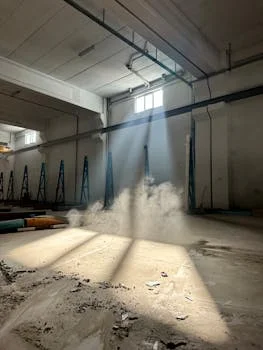
Dust collector troubleshooting starts with ΔP trends, airflow or velocity readings, and a visual check of valves, ducts, and seals. Treat high ΔP that does not fall after a cleaning cycle as filter saturation or sticky/oil-coated media. Replace the filters; for oil mist or adhesive dusts, add a pre-filter or move the pickup closer to the source.
Low airflow with relatively clean filters usually points to duct blockage—often at elbows—or fan impeller wear. Run a duct velocity survey and inspect the impeller for erosion or buildup. Corrective work ranges from duct cleaning to impeller repair or rebalancing.
Frequent pulse-valve failures often track moisture in compressed air. Install a coalescing filter, drain traps weekly, and verify dryer performance so diaphragms and solenoids last longer. Dust escaping the clean-air side signals filter bypass or a housing leak. Use a non-toxic smoke test in the dirty-air plenum to find door, weld, or gasket paths. Then reseat or replace media and reseal the housing.
What causes dust collection system motor burnout?
Dust collection system motor burnout usually follows sustained high static pressure from blinded filters, closed dampers, or hopper bridging that forces the fan outside its design operating point. Amperage rising more than about ±10% from the clean-system baseline is an early warning. Restore cleaning effectiveness, clear restrictions, and confirm belt tension and impeller balance before the winding overheats.
How should dust collection systems serve food production?
Dust collection systems in food production must control dry ingredients and packaging dust while meeting sanitary access, wash-down, and allergen-segregation rules set by the plant’s food-safety plan. Prefer smooth interiors, tool-free access doors, and hoppers that empty completely so residue does not harbor pests or cross-contact. Pair dry collectors with wet cleanup only where the process allows moisture; when wash water carries fines to wastewater, a High-Efficiency Sedimentation Tank (Lamella Clarifier) can settle solids before discharge or reuse.
Which OSHA, NFPA, and EPA Rules Apply to Collectors?
Combustible-dust collector compliance hinges on documented inspection, cleaning, and emission limits tied to the facility’s dust hazard analysis and air permit. Earlier guidance referenced NFPA 654 alone for manufacturing dusts. Under NFPA 660:2025, requirements formerly in NFPA 654 and NFPA 664 are consolidated (Nederman summary of NFPA 660:2025). Enclosureless-collector limits and daily dust-removal rules remain for qualifying units. Keep weekly accumulation checks and written logs for audits.
OSHA 1910.1000 sets Permissible Exposure Limits (PELs) for many respirable particulates. A leaking or under-maintained collector can allow workplace dust to exceed PELs by three times or more versus a sealed, clean-filter baseline, which raises citation and health risk. Filter change-outs tied to ΔP, not calendar guesswork, keep capture performance stable.
Earlier drafts sometimes cited EPA NESHAP Subpart YYYY for dust-collector opacity monitoring; 40 CFR Part 63 Subpart YYYY actually covers stationary combustion turbines at major HAP sources, not baghouses (eCFR). Visible-emission and opacity limits for particulate control devices come from the applicable NSPS/NESHAP subpart or state permit conditions—typically leak detection, Method 22/9 observations, or continuous opacity monitoring where required. Maintain housekeeping and LDAR-style records that match the permit language.
Selection and cost checklist:
- Confirm dust Kst, MIE, and moisture before choosing bag, cartridge, or wet scrubbing.
- Size pulse air for ≥80 psi at the valves under peak demand.
- Set ΔP alarm bands around a 2.5–4.0" w.g. normal band and a ~6" w.g. change-out trigger.
- Budget diaphragms, cages, and media on OEM intervals, not only emergency buys.
- Verify duct velocity for the material (for example 3,500–4,500 fpm for wood dust).
- Document weekly accumulation inspections for combustible-dust DHA records.
- If scrubber blowdown needs clarification, evaluate a High-Efficiency Sedimentation Tank (Lamella Clarifier) for solids capture.
Who this is for: Plant engineers, maintenance leads, and EPC teams running pulse-jet baghouses or cartridge collectors on combustible or nuisance dust. Who should look elsewhere: Teams seeking only HVAC filter changes or lab-scale fume hoods. Next step: Map your current ΔP and hopper logs against the table above, then close gaps before the next planned outage.
Frequently Asked Questions
How often should dust collector filters be replaced? Filters should typically be replaced every 12–24 months in continuous industrial service, or sooner when ΔP stays above 6–8" w.g. after cleaning or when media shows tears, holes, or bypass. Sticky, oily, or high-humidity dusts shorten life. Track ΔP after each pulse cycle so change-outs are planned, not forced by a sudden airflow loss or motor overload.
What is the ideal differential pressure for a dust collector? A normal operating ΔP range is generally 2.5–4.0" w.g. for many pulse-jet baghouses after a successful clean. Readings that remain above 6" w.g. usually mean clogged media and rising fan load. Always compare against the OEM curve for your media and can velocity; absolute targets shift with filter type and dust loading.
Why is my dust collector losing suction? Reduced suction most often comes from clogged filters, duct blockages at elbows or branches, worn fan blades, or air leaks in doors and duct joints. Measure ΔP and duct velocity, then inspect the impeller and hopper discharge. Fix the highest-restriction point first so the fan returns to its design operating region.
Can a poorly maintained dust collector cause fires? Yes. Combustible dust layered in hoppers, ducts, or on filters can ignite from sparks, static discharge, or hot surfaces and escalate into a fire or explosion. Weekly accumulation checks, prompt hopper emptying above 75% full, and working explosion vents or isolation devices lower that risk when required by the DHA.
What NFPA standard applies to dust collector maintenance? Facilities historically applied NFPA 654 for general combustible particulate solids and NFPA 664 for woodworking. Under NFPA 660:2025 those commodity requirements are consolidated, including inspection, housekeeping, and collector design limits. Follow the DHA and the commodity chapter that matches your dust, and keep written maintenance records for audits.