Compact Sewage Treatment Unit Working Principle: 2025 Engineering Specs, Process Flow & Zero-Risk Selection Guide
A compact sewage treatment unit (STU) integrates primary, secondary, and tertiary treatment into a single, space-saving package—typically using anoxic/aerobic (A/O) biological contact oxidation, sedimentation, and disinfection. For example, the WSZ series from HydropureWater achieves 92–97% COD removal (influent 50–500 mg/L) and effluent TSS <30 mg/L, meeting EPA and EU Urban Waste Water Directive standards. These units are ideal for sites with limited space, handling 1–80 m³/h with fully automated operation and no on-site operator required.Why Compact Sewage Treatment Units Are the Future for Space-Constrained Sites
Compact Sewage Treatment Units address critical industrial and municipal challenges by integrating full-scale wastewater treatment into a significantly reduced footprint. Modern industrial facilities, hotels, and hospitals often face a dual challenge: stringent environmental discharge limits (e.g., EPA <50 mg/L COD, <30 mg/L TSS for conventional pollutants) coupled with severe spatial constraints for infrastructure development. Traditional wastewater treatment plants demand extensive land, making them impractical for urban developments or existing facilities requiring upgrades. the rising cost of manual labor and the demand for consistent compliance necessitate solutions that minimize human intervention. Compact STUs provide a robust answer to these issues through their modular design, often allowing for buried installation beneath parking lots or green spaces, effectively reclaiming valuable land. Their fully automated operation eliminates the need for a dedicated, on-site operator, significantly reducing operational expenditure and ensuring continuous, reliable performance. For instance, a 50 m³/h WSZ unit installed under a parking lot in Shanghai reduced the required footprint by 70% compared to a conventional activated sludge plant, while consistently meeting China's Class 1A discharge standards (COD <50 mg/L, BOD <10 mg/L, TSS <10 mg/L). This guide breaks down the working principle, specific engineering parameters, and a zero-risk selection framework for compact STUs, providing the technical depth engineers and procurement managers need.How Compact Sewage Treatment Units Work: Step-by-Step Process Flow
- Step 1: Influent Screening and Equalization
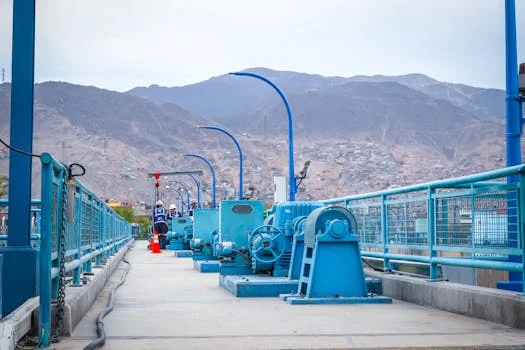
Raw sewage first enters a screening chamber where gross solids, debris, and non-biodegradable materials are mechanically removed. Rotary mechanical bar screens, such as HydropureWater's GX Series, typically feature 3-6 mm bar spacing, protecting downstream equipment from clogging. Following screening, the wastewater flows into an equalization tank. This tank serves to homogenize flow rates and pollutant concentrations, preventing hydraulic or organic shock loads to the biological treatment stage. - Step 2: Anoxic Zone (Denitrification)
From equalization, wastewater enters the anoxic zone, a crucial stage for nitrogen removal. Here, denitrifying bacteria convert nitrates (NO₃⁻) into nitrogen gas (N₂), which is then released into the atmosphere. This process occurs under low dissolved oxygen (DO) conditions, typically maintained at <0.5 mg/L. The hydraulic retention time (HRT) in this zone usually ranges from 1 to 2 hours, with mixed liquor suspended solids (MLSS) concentrations between 3,000–5,000 mg/L. Sludge recirculation from the aerobic zone provides the necessary nitrate for denitrification. - Step 3: Aerobic Zone (Biological Contact Oxidation)
The anoxic effluent then proceeds to the aerobic zone, the primary stage for organic matter degradation and nitrification. In this section, a high concentration of aerobic microorganisms, often supported by submerged biological contact media, oxidizes dissolved organic compounds (BOD/COD) into carbon dioxide and water. Simultaneously, nitrifying bacteria convert ammonia (NH₃-N) into nitrates (NO₃⁻). Aeration is supplied via diffused air systems (fine bubble diffusers) or jet aeration, maintaining a DO level of 2–4 mg/L. The HRT in the aerobic zone is typically 4–8 hours, ensuring sufficient contact time for complete biological oxidation. - Step 4: Sedimentation
After biological treatment, the mixed liquor flows into a secondary clarifier or sedimentation tank. Here, activated sludge flocs, laden with treated organic matter and microorganisms, settle under gravity, separating from the treated water. The design of these clarifiers in compact units often incorporates lamella plates to enhance settling efficiency within a smaller footprint. Typical surface loading rates range from 0.5–1.0 m³/m²·h. A portion of the settled sludge (return activated sludge, RAS) is recirculated back to the anoxic or aerobic zones to maintain the active biomass, with recirculation ratios commonly between 50–100%. Excess sludge (waste activated sludge, WAS) is periodically removed for further dewatering and disposal. - Step 5: Disinfection
The clarified effluent, now largely free of organic matter and suspended solids, undergoes a final disinfection stage to eliminate pathogenic microorganisms. Common methods include chlorine dioxide (ClO₂), ozone, or ultraviolet (UV) irradiation. For example, HydropureWater's ClO₂ generators achieve 99.9% microbial kill at a typical dosage of 0.5–2.0 mg/L, ensuring the treated water meets public health and environmental safety standards before discharge. - Optional: Tertiary Polishing
For applications requiring higher effluent quality, such as water reuse or discharge to sensitive receiving waters, compact units can integrate tertiary polishing stages. These may include multi-media filtration (e.g., sand filters, activated carbon filters) or reverse osmosis (RO) systems to remove residual suspended solids, phosphorus, or specific micropollutants.
| Process Stage | Key Parameters | Typical Values for Compact STUs |
|---|---|---|
| Influent Screening | Bar Spacing | 3–6 mm |
| Equalization Tank | Retention Time | 4–8 hours (peak flow management) |
| Anoxic Zone | Dissolved Oxygen (DO) Hydraulic Retention Time (HRT) Mixed Liquor Suspended Solids (MLSS) |
<0.5 mg/L 1–2 hours 3,000–5,000 mg/L |
| Aerobic Zone | Dissolved Oxygen (DO) Hydraulic Retention Time (HRT) Mixed Liquor Suspended Solids (MLSS) |
2–4 mg/L 4–8 hours 3,000–5,000 mg/L |
| Sedimentation | Surface Loading Rate Sludge Recirculation Ratio |
0.5–1.0 m³/m²·h 50–100% |
| Disinfection (ClO₂) | Dosage Contact Time |
0.5–2.0 mg/L 20–30 minutes |
Engineering Specs for Compact Sewage Treatment Units: What the Numbers Mean
Understanding the precise engineering specifications of compact sewage treatment units is crucial for evaluating their performance and ensuring compliance with stringent discharge regulations. These technical parameters define a unit's capacity, efficiency, and suitability for a given application.Influent Quality: Compact STUs are typically designed to treat domestic-strength sewage. Typical influent characteristics are:
- COD (Chemical Oxygen Demand): 200–500 mg/L
- BOD (Biochemical Oxygen Demand): 100–300 mg/L
- TSS (Total Suspended Solids): 150–400 mg/L
- TN (Total Nitrogen): 30–60 mg/L
- TP (Total Phosphorus): 5–10 mg/L
Effluent Quality: The primary goal of a compact STU is to produce an effluent that meets or exceeds local discharge standards. For example, the WSZ series compact A/O sewage treatment unit from HydropureWater consistently achieves:
- COD: <50 mg/L (92–97% removal)
- BOD₅: <10 mg/L (95–99% removal)
- TSS: <30 mg/L (90–95% removal)
- NH₃-N: <8 mg/L
- TN: <15 mg/L
- TP: <1 mg/L
Process Parameters: The internal workings of a compact STU are governed by precise biological and hydraulic parameters:
- Hydraulic Retention Time (HRT): This is the average time wastewater spends in a reactor. For compact A/O units, total HRT typically ranges from 4–12 hours (including anoxic and aerobic zones). MBR systems often have shorter HRTs (4–8 hours) due to higher biomass concentrations.
- Sludge Loading Rate (F/M Ratio): Expressed as kg BOD/kg MLSS·d, this ratio indicates the amount of organic load applied per unit of active biomass. For efficient nitrification and organic removal, compact STUs operate at low F/M ratios, typically 0.05–0.2 kg BOD/kg MLSS·d.
- Mixed Liquor Suspended Solids (MLSS): The concentration of biomass in the aerobic tank. Standard A/O systems operate with MLSS between 3,000–5,000 mg/L. MBR systems, due to membrane separation, can sustain much higher MLSS concentrations (8,000–12,000 mg/L), contributing to their smaller footprint.
- Sludge Age (Mean Cell Residence Time - MCRT): The average time microorganisms remain in the system. A longer sludge age (10–30 days) is critical for stable nitrification and robust biological nutrient removal.
- Oxygen Transfer Efficiency (OTE): This measures how effectively oxygen is transferred from the aeration system to the wastewater. Diffused air systems typically achieve 1.2–2.0 kg O₂/kWh, while jet aeration can be higher but also more energy intensive depending on design.
Footprint and Energy Use: Compact STUs offer significant advantages in space and resource consumption:
- Footprint: The WSZ series requires approximately 0.5–1.0 m²/m³·d of treatment capacity, compared to 2–3 m²/m³·d for conventional activated sludge plants, representing a 50–70% reduction in land use.
- Energy Consumption: Energy usage varies by technology. A/O compact units typically consume 0.3–0.5 kWh/m³ of treated wastewater. MBR systems, while offering superior effluent quality and smaller footprints, generally have higher energy demands, ranging from 0.8–1.2 kWh/m³, primarily due to membrane aeration and permeate pumping.
Sludge Production: Managing waste activated sludge is a key operational consideration. Compact A/O units typically produce 0.3–0.5 kg TSS/kg BOD removed, in line with EPA 2024 benchmarks for biological treatment. MBR systems, due to their longer sludge age, can have slightly lower specific sludge production rates but higher overall sludge volumes due to higher MLSS concentrations.
| Parameter Category | Specific Parameter | Typical Range/Value for Compact STUs (A/O) | Notes |
|---|---|---|---|
| Influent Quality (Domestic Sewage) | COD | 200–500 mg/L | Chemical Oxygen Demand |
| BOD₅ | 100–300 mg/L | Biochemical Oxygen Demand | |
| TSS | 150–400 mg/L | Total Suspended Solids | |
| TN | 30–60 mg/L | Total Nitrogen | |
| TP | 5–10 mg/L | Total Phosphorus | |
| Effluent Quality (WSZ Series) | COD | <50 mg/L | 92–97% removal |
| BOD₅ | <10 mg/L | 95–99% removal | |
| TSS | <30 mg/L | Meets EPA/EU standards | |
| NH₃-N | <8 mg/L | ||
| TN | <15 mg/L | ||
| Process Parameters | Hydraulic Retention Time (HRT) | 4–12 hours (total) | Shorter for MBR, longer for A/O |
| Sludge Loading Rate (F/M) | 0.05–0.2 kg BOD/kg MLSS·d | Lower for nitrification | |
| Mixed Liquor Suspended Solids (MLSS) | 3,000–5,000 mg/L (A/O) 8,000–12,000 mg/L (MBR) |
Higher MLSS for MBR | |
| Sludge Age (MCRT) | 10–30 days | Longer for nutrient removal | |
| Oxygen Transfer Efficiency (OTE) | 1.2–2.0 kg O₂/kWh | Diffused air systems | |
| Operational Metrics | Footprint | 0.5–1.0 m²/m³·d (WSZ) | 70% reduction vs. conventional |
| Energy Consumption | 0.3–0.5 kWh/m³ (A/O) 0.8–1.2 kWh/m³ (MBR) |
Varies by technology | |
| Sludge Production | 0.3–0.5 kg TSS/kg BOD removed | Per EPA 2024 benchmarks |
Compact STU Technologies Compared: A/O vs. MBR vs. SBR

Anoxic/Aerobic (A/O) Process
The A/O process, exemplified by HydropureWater's WSZ series compact A/O sewage treatment unit, is a continuous flow system that integrates anoxic and aerobic zones for biological nutrient removal.- Pros: Low energy use (typically 0.3–0.5 kWh/m³), relatively simple operation, and low sludge production (0.3–0.4 kg TSS/kg BOD removed). It is a proven and robust technology.
- Cons: Generally requires a larger footprint than MBR systems, and effluent TSS typically ranges from 20–30 mg/L, which may necessitate tertiary filtration for stricter discharge limits or reuse.
- Best for: Municipal sewage treatment, hotels, hospitals, schools, and industrial facilities with sufficient space for buried installation and discharge to less sensitive receiving waters.
Membrane Bioreactor (MBR)
MBR technology combines conventional activated sludge treatment with membrane filtration, replacing the secondary clarifier. HydropureWater's MBR membrane bioreactor offers superior effluent quality.- Pros: Produces near-reuse-quality effluent (<1 μm filtration, TSS <5 mg/L, turbidity <1 NTU), significantly smaller footprint (up to 60% smaller than A/O systems due to higher MLSS), and modular scalability. This allows for direct discharge to sensitive areas or for water reuse applications.
- Cons: Higher energy use (0.8–1.2 kWh/m³), risk of membrane fouling requiring periodic cleaning, and higher Capital Expenditure (CapEx) ($1,200–$2,000/m³·d vs. $800–$1,500/m³·d for A/O).
- Best for: Water reuse projects, industrial process water treatment, and highly space-constrained sites where premium effluent quality is paramount. For a more detailed guide to MBR technology, refer to our MBR Membrane Bioreactor Working Principle article.
Sequencing Batch Reactor (SBR)
SBRs are fill-and-draw activated sludge systems that perform all treatment steps (fill, react, settle, draw) in a single tank, albeit sequentially.- Pros: Flexible operation, can handle variable influent flows and loads effectively, and eliminates the need for a separate secondary clarifier.
- Cons: Higher energy use than A/O (0.5–0.8 kWh/m³) due to intermittent aeration, requires more complex automation and controls, and effluent TSS typically ranges from 20–40 mg/L.
- Best for: Small communities, seasonal facilities (e.g., resorts, campgrounds), and sites characterized by fluctuating wastewater loads or where operational flexibility is a priority.
Decision Framework:
- Step 1: Assess Effluent Quality Needs: Determine if discharge limits require conventional treatment (A/O, SBR) or near-reuse quality (MBR).
- Step 2: Evaluate Footprint Constraints: Prioritize MBR for minimal space, A/O for moderate space (especially buried options), and SBR for flexibility with slightly more space.
- Step 3: Compare Lifecycle Costs: Analyze CapEx, OPEX (energy, chemicals, maintenance), and sludge disposal for each technology to determine the most economically viable solution over the system's lifespan.
| Feature | Anoxic/Aerobic (A/O) | Membrane Bioreactor (MBR) | Sequencing Batch Reactor (SBR) |
|---|---|---|---|
| Effluent Quality (TSS) | 20–30 mg/L | <5 mg/L (Near-reuse) | 20–40 mg/L |
| Footprint (relative) | Medium (0.5–1.0 m²/m³·d) | Small (0.2–0.5 m²/m³·d) | Medium (0.6–1.2 m²/m³·d) |
| Energy Use (kWh/m³) | 0.3–0.5 | 0.8–1.2 | 0.5–0.8 |
| CapEx (relative) | Medium ($800–$1,500/m³·d) | High ($1,200–$2,000/m³·d) | Medium ($900–$1,600/m³·d) |
| Sludge Production (kg TSS/kg BOD) | 0.3–0.4 | 0.2–0.35 (lower specific) | 0.3–0.45 |
| Operational Complexity | Low to Medium | Medium (membrane cleaning) | Medium to High (automation) |
| Best for | Municipal, hotels, general industrial; buried installation | Water reuse, industrial process water, very limited space | Small communities, seasonal facilities, fluctuating loads |
Zero-Risk Selection Guide: How to Choose the Right Compact Sewage Treatment Unit
A robust, multi-faceted selection process is essential to ensure that a chosen compact sewage treatment unit optimally meets project demands, regulatory compliance, and long-term economic viability. Engineers and procurement managers must consider several critical factors beyond initial purchase price.- Step 1: Define Effluent Quality Requirements
The most critical factor is aligning the unit's performance with local discharge standards. These can vary significantly, from basic secondary treatment requirements to stringent nutrient removal or even water reuse quality. For example, for compliance with the EU Urban Waste Water Directive, especially for discharge into sensitive areas, an MBR unit (e.g., HydropureWater MBR membrane bioreactor) is often necessary to achieve COD <125 mg/L, TN <15 mg/L, and TP <1 mg/L, which conventional A/O systems might struggle to meet consistently without tertiary polishing. - Step 2: Assess Footprint and Installation Constraints
Evaluate the available space for the unit. Compact STUs offer flexibility with buried, above-ground, or skid-mounted options. The WSZ series, for instance, is specifically designed for buried installation under parking lots or green areas, minimizing visual impact and maximizing land use. For temporary or remote sites, trailer-mounted or containerized units offer rapid deployment. - Step 3: Evaluate Energy and Chemical Consumption
Operational costs are heavily influenced by energy and chemical usage. Compare the kWh/m³ consumption for different technologies (e.g., 0.3–0.5 kWh/m³ for A/O vs. 0.8–1.2 kWh/m³ for MBR). Factor in chemical dosing requirements for disinfection (e.g., chlorine dioxide from ClO₂ generators) or pH adjustment. While MBR systems consume more energy, they often eliminate the need for tertiary filtration and associated chemicals, which can balance the overall OPEX. - Step 4: Calculate Lifecycle Costs
A comprehensive financial assessment must include both Capital Expenditure (CapEx) and Operational Expenditure (OPEX) over the system's projected lifespan. CapEx for compact STUs typically ranges from $800–$2,000/m³·d, with A/O systems at the lower end and MBR at the higher end. OPEX, including energy, chemicals, routine maintenance, and labor, usually falls between $0.10–$0.30/m³. Sludge disposal costs ($50–$150/ton for landfill or beneficial reuse) are also a significant component. For a detailed breakdown of these costs, consult our Wastewater Treatment Plant Cost in Semarang 2025 article. - Step 5: Verify Vendor Support and Automation
Modern compact STUs should feature advanced automation (PLC control), remote monitoring capabilities, and robust after-sales service. HydropureWater provides PLC-controlled systems with 24/7 remote diagnostics, enabling proactive maintenance and minimizing downtime. This reduces the need for on-site operators and ensures consistent performance.
| Cost Category | Typical Range for Compact STUs (A/O vs. MBR) | Key Factors Influencing Cost |
|---|---|---|
| Capital Expenditure (CapEx) | $800–$2,000/m³·d | Technology choice (A/O lower, MBR higher), capacity, materials of construction, site-specific installation. |
| Operational Expenditure (OPEX) | $0.10–$0.30/m³ | Energy consumption (kWh/m³), chemical costs (disinfectants, coagulants), routine maintenance, labor for checks/sludge wasting. |
| Energy Costs | 0.3–1.2 kWh/m³ | Aeration requirements, pump efficiency, MBR membrane aeration. |
| Chemical Costs | $0.01–$0.05/m³ | Disinfection (chlorine dioxide, ozone), pH adjustment, coagulants for pretreatment. |
| Sludge Disposal Costs | $50–$150/ton | Local landfill fees, transportation, dewatering methods. |
| Maintenance & Parts | 2–5% of CapEx annually | Replacement of diffusers, pumps, membranes, sensors; scheduled servicing. |
Frequently Asked Questions
Q: What is the difference between a compact sewage treatment unit and a conventional plant?
A: Compact STUs integrate all primary, secondary, and often tertiary treatment stages into a single, modular package, typically resulting in a 50–70% smaller footprint compared to conventional plants. They are fully automated, requiring no daily on-site operator, and are ideal for space-constrained sites. Conventional plants use separate, larger tanks for each stage, demanding extensive land and often requiring more manual operation and supervision.
Q: How much does a compact sewage treatment unit cost?
A: Capital Expenditure (CapEx) for compact STUs generally ranges from $800–$2,000/m³·d, depending on the chosen technology (A/O being less expensive than MBR) and overall capacity. Operational Expenditure (OPEX) is typically $0.10–$0.30/m³, covering energy, chemicals, and maintenance. For example, a 20 m³/h WSZ series compact A/O sewage treatment unit might have a CapEx of approximately $160,000 with an OPEX of around $0.15/m³.
Q: What are the maintenance requirements for a compact STU?
A: While compact STUs are largely automated, routine maintenance is essential. This typically includes weekly checks of aeration diffusers, monthly sludge wasting to maintain optimal MLSS levels, and quarterly membrane cleaning for MBR systems. Automated systems like HydropureWater’s WSZ series require no daily operator intervention but benefit from annual servicing by a qualified technician to ensure long-term reliability and compliance.
Q: Can compact STUs handle industrial wastewater?
A: Yes, compact STUs can treat certain types of industrial wastewater, but pretreatment is often required for high-strength, toxic, or highly variable influents. For instance, wastewater from food processing, laundries, or certain chemical industries may need initial chemical dosing (e.g., PAC for coagulation) or physical separation (e.g., dissolved air flotation (DAF) systems) to reduce loads before entering the biological unit. For specialized applications like medical wastewater, HydropureWater’s compact treatment system is specifically designed with enhanced disinfection, such as ozone or advanced oxidation processes.
Q: What discharge standards do compact STUs meet?
A: Compact STUs are engineered to meet a wide range of national and international discharge standards. Standard A/O units can achieve compliance with EPA secondary treatment requirements (e.g., COD <50 mg/L, TSS <30 mg/L) and general EU Urban Waste Water Directive standards (e.g., COD <125 mg/L for sensitive areas). MBR systems, with their superior filtration, can produce near-reuse quality effluent (TSS <5 mg/L, turbidity <1 NTU), suitable for the most stringent regulations or direct water reuse applications.