Why TFT-LCD Wastewater Treatment Fails: The DMSO, MEA, and TMAH Challenge
TFT-LCD manufacturing processes generate high-strength wastewater where dimethyl sulfoxide (DMSO) concentrations frequently exceed 500 mg/L, requiring specialized anaerobic degradation phases that conventional activated sludge systems cannot provide. For many plant managers, the frustration stems from a "compliance seesaw": while they may successfully reduce Chemical Oxygen Demand (COD) in one shift, a spike in monoethanolamine (MEA) or tetramethylammonium hydroxide (TMAH) can suddenly inhibit the biomass, leading to permit violations for Total Suspended Solids (TSS) or nitrogen. Conventional systems fail because they treat these complex organic solvents as standard biodegradable waste, ignoring the specific toxicity thresholds and metabolic pathways required for breakdown.
DMSO is particularly problematic due to its high solubility (400 g/L) and its tendency to undergo slow anaerobic degradation. Under methanogenic conditions, DMSO has a half-life of 20–30 days, meaning standard hydraulic retention times (HRT) in municipal-style plants are insufficient. MEA, used as a stripping agent, is highly toxic to nitrifying bacteria at concentrations exceeding 200 mg/L (per Top 1 page data). Once nitrification is inhibited, the entire biological nitrogen removal process collapses. TMAH—a common developer—possesses a quaternary ammonium structure that acts as a microbial inhibitor at levels as low as 50 mg/L, effectively "poisoning" the activated sludge (cite Top 2 page’s batch study findings).
| Pollutant | Solubility | Biodegradability | Toxicity Threshold (Microbial) | Primary Treatment Challenge |
|---|---|---|---|---|
| DMSO | 400 g/L | Low (Anaerobic) | Low inhibition; high persistence | Slow methanogenic degradation |
| MEA | Miscible | High (Aerobic) | >200 mg/L (Nitrification) | High nitrogen load/Ammonia spikes |
| TMAH | High | Moderate (Aerobic) | >50 mg/L (General biomass) | Quaternary ammonium stability |
Treatment Process Deep Dive: How Hybrid A/O-MBR-RO Systems Break Down TFT-LCD Pollutants
The hybrid A/O-MBR-RO system is a multi-stage biological and physical barrier approach that achieves Chemical Oxygen Demand (COD) removal rates exceeding 95%.The process begins with anaerobic hydrolysis acidification, specifically designed for DMSO breakdown. In this stage, DMSO is converted to dimethyl sulfide (DMS) and eventually to methane and CO₂. HydropureWater field data and industry research indicate an 85% conversion efficiency within a 12–24 hour HRT, provided the redox potential is strictly maintained (per Top 1 page).
Following the anaerobic phase, the wastewater enters anoxic and aerobic Sequencing Batch Reactors (SBRs) or continuous flow tanks. Here, MEA is degraded into ammonium (NH₄⁺), which is subsequently nitrified to nitrate (NO₃⁻). This aerobic oxidation achieves a 98% efficiency rate for MEA removal. To ensure the system remains stable despite the quaternary ammonium structure of TMAH, the MBR systems for TFT-LCD wastewater utilize submerged PVDF membranes with a 0.1 μm pore size. These membranes provide a physical barrier that decouples Hydraulic Retention Time (HRT) from Sludge Retention Time (SRT), allowing for the cultivation of slow-growing specialized bacteria capable of mineralizing TMAH.
The MBR stage achieves 99% TSS removal, which is critical for protecting the downstream RO systems for TFT-LCD water reuse from organic fouling. At a flux rate of 15–25 LMH, the MBR permeate is sufficiently clear for tertiary Reverse Osmosis (RO). The RO stage provides the final polish, achieving 95% water recovery. The resulting permeate typically shows COD levels ≤10 mg/L and TDS ≤50 mg/L, meeting the stringent standards required for ultrapure water (UPW) makeup or cooling tower reuse. This hybrid approach is increasingly common in silicon wafer wastewater treatment for semiconductor plants where similar organic solvent profiles exist.
Hybrid System Comparison: A/O-MBR-RO vs. DAF-SBR vs. Conventional Activated Sludge for TFT-LCD Wastewater
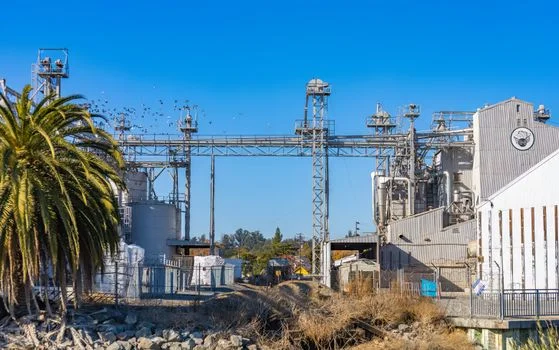
In facilities with high oil and grease or photoresist concentrations, DAF systems for TFT-LCD pretreatment are essential for reducing the organic load before biological treatment. However, DAF-SBR systems alone typically only achieve 70–80% COD removal for DMSO-heavy streams, necessitating further treatment if zero-liquid discharge (ZLD) is the goal.
| Performance Metric | A/O-MBR-RO (Hybrid) | DAF-SBR | Conventional AS |
|---|---|---|---|
| COD Removal % | 92–97% | 70–85% | 60–75% |
| TSS Removal % | >99% | 85–90% | 70–80% |
| Footprint | Compact (40% smaller) | Moderate | Large (Requires Clarifiers) |
| Water Recovery | Up to 95% | 0% (Direct Discharge) | 0% |
| Compliance | EPA/EU/ZLD Standards | Basic Local Limits | Risk of Non-compliance |
| CAPEX | High ($$$$) | Moderate ($$) | Low ($) |
The primary advantage of the A/O-MBR-RO configuration is its resilience. Conventional AS systems are prone to sludge bulking when faced with MEA-induced nitrification failure. In contrast, MBR-based designs maintain a high Mixed Liquor Suspended Solids (MLSS) concentration (8,000–12,000 mg/L), which buffers the system against toxic shocks. While the CAPEX is approximately 30% higher than a DAF-SBR setup, the ability to reclaim 95% of the water often results in a lower total cost of ownership over a 10-year lifecycle. This logic is also applied in PCB wastewater treatment systems for opto-electronic fabs, where high-value water recovery offsets initial investment.
CAPEX and OPEX Breakdown: How Much Does a TFT-LCD Wastewater Treatment System Cost?
The CAPEX for a full-scale TFT-LCD wastewater treatment system scales non-linearly, ranging from $300,000 for basic SBR setups to over $8,000,000 for high-capacity zero-liquid discharge (ZLD) configurations.For a medium-scale plant treating 200 m³/day, a hybrid A/O-MBR-RO system typically requires an investment of $1.8M. This includes the anaerobic reactors, MBR tanks, RO skids, and an chemical dosing for TFT-LCD pH adjustment to manage the volatile nature of MEA and photoresist acids.
| Daily Capacity | SBR-only (Basic) | DAF-SBR (Enhanced) | A/O-MBR-RO (Hybrid) | ZLD MBR-RO (Full) |
|---|---|---|---|---|
| 50 m³/day | $150K | $300K | $550K | $1.2M |
| 200 m³/day | $400K | $850K | $1.8M | $3.5M |
| 500 m³/day | $900K | $1.5M | $4.2M | $8.0M |
Operational expenditure (OPEX) is primarily driven by three factors: energy consumption, membrane replacement, and chemical dosing. Energy requirements for MBR-RO systems range from 0.8 to 1.2 kWh/m³, largely due to the aeration required for membrane scouring and the high-pressure pumps for RO. Membrane replacement remains the largest recurring cost, with PVDF MBR sheets and RO spirals costing between $50 and $100/m² every 3–5 years. Sludge management also contributes to OPEX; using a sludge dewatering for TFT-LCD waste can reduce disposal volumes by 75%, significantly lowering hauling fees. For high-volume plants, the ROI is typically realized in 3–5 years through a 60–80% reduction in freshwater intake costs.
Compliance Checklist: Meeting EPA, EU, and Local TFT-LCD Wastewater Discharge Limits
In many jurisdictions, such as Taiwan (a global hub for LCD production), specific limits are also placed on DMSO (≤1 mg/L) and TMAH (≤10 mg/L) due to their environmental persistence. To ensure continuous compliance, many plants integrate a chlorine dioxide generator for tertiary disinfection and organic oxidation.
- EPA Limits (40 CFR Part 469): COD ≤50 mg/L, TSS ≤30 mg/L, NH₄-N ≤1 mg/L.
- EU Limits (Directive 2010/75/EU): COD ≤125 mg/L, TSS ≤35 mg/L, Total Nitrogen ≤15 mg/L.
- Local Standards (e.g., Taiwan EPA): DMSO ≤1 mg/L, TMAH ≤10 mg/L, pH 6.0–9.0.
- Monitoring Protocols: Install continuous online sensors for pH, COD, and TSS at the final discharge point.
- Lab Verification: Perform weekly lab-scale chromatography tests for DMSO, MEA, and TMAH concentrations.
- Sludge Compliance: Ensure dewatered cake meets local hazardous waste leaching standards (TCLP).
How to Select the Right TFT-LCD Wastewater Treatment System: A Decision Framework
Selecting a TFT-LCD wastewater treatment system requires a five-step decision framework that prioritizes influent chemical composition over hydraulic flow rates.-
<