Third-gen semiconductor acid-alkaline wastewater from SiC/GaN fabs carries fluoride up to 2,000 mg/L and TMAH at 100–500 mg/L—far above typical silicon-fab loads. Hybrid ZLD trains that combine forward osmosis (FO), nanofiltration (NF), and reverse osmosis (RO) deliver 99.5%+ fluoride removal and about 98% TMAH recovery. 2025 operating costs commonly fall in the $0.25–$0.60/m³ range. Plants sizing third-gen semiconductor acid-alkaline streams must hold pH at 6.5–8.5 before membranes: that band limits fouling and scaling that can cut water recovery by up to 20%. Discharge permitting also tracks China's GB 39731-2020 (electronics industry water pollutants; GB 31570-2015 covers petroleum refining, not fabs) and the EU Industrial Emissions Directive 2010/75/EU.
Why Acid-Alkaline Wastewater is the Critical Bottleneck in SiC/GaN Fabs
Acid-alkaline wastewater is the critical bottleneck in SiC/GaN fabs because it often makes up 40–60% of total fab wastewater volume, according to SEMI F47-0707 standards. These streams swing from pH 1.5 to 12.5. Uncontrolled swings corrode infrastructure and foul downstream membranes. Unlike legacy silicon lines, SiC/GaN processes raise contaminant loads sharply. Fluoride can reach 500–2,000 mg/L, and TMAH typically sits at 100–500 mg/L—about 10 to 20 times conventional silicon-fab thresholds. That gap forces treatment trains beyond legacy neutralization-plus-precipitation packages.
Operational risk is concrete. A 2024 incident at a Taiwan 300mm SiC fab recorded three unplanned shutdowns in one year after critical pH deviations, with about $2.1 million in lost production and discharge-permit violations. Primary sources are hydrofluoric acid (HF) etching and chemical mechanical planarization (CMP) slurries. SiC/GaN CMP also sheds silicon carbide nanoparticles (10–50 nm). Those particles foul membranes fast and cut system efficiency if pretreatment is weak.
Neutralization Kinetics: Engineering Parameters for pH Stabilization
Neutralization of acid-alkaline wastewater is a fast exothermic reaction: H₃O⁺ + OH⁻ → 2H₂O releases about 57 kJ/mol. Target effluent pH is typically 6.5–8.5 for discharge or membrane feed. Most plants we size reach 90% neutralization in 30–90 seconds when mixing is adequate in static mixers or agitated tanks.
Chemical neutralization always makes sludge, especially when calcium reagents precipitate fluoride. Acid-alkaline streams typically yield 0.5–1.2 kg sludge/m³ of treated water, with particles of 5–50 µm. Solids need lamella clarifiers or DAF pretreatment for silicon carbide nanoparticle removal in SiC/GaN fabs. Common failure modes are local pH spikes from poor mixing or dosing. Those spikes drive calcium carbonate scale at higher pH and metallic hydroxide precipitates. Both cut life and flux on downstream RO systems for permeate polishing in hybrid ZLD semiconductor wastewater treatment and NF units.
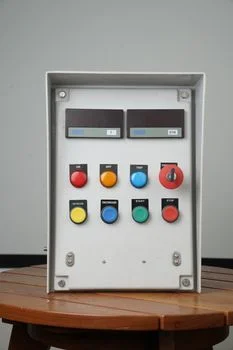
Stable pH also supports SEMI S23-0718 and EPA discharge benchmarks that set specific pH windows. Automated PLC-controlled chemical dosing for precise pH stabilization in semiconductor wastewater holds those tight bands in continuous service.
| Influent pH Range | Target Effluent pH | Typical Reaction Time (s) | Required Mixing Efficiency | Sludge Generation Rate (kg/m³) |
|---|---|---|---|---|
| 2.0 → 6.5 | 6.5 ± 0.5 | 30-60 | High (CSTR, >100 RPM) | 0.5-0.8 |
| 12.5 → 8.5 | 8.5 ± 0.5 | 45-90 | Moderate (Static Mixer) | 0.7-1.2 |
| 1.0 → 7.0 (HF) | 7.0 ± 0.5 | 60-120 | High (Multi-stage CSTR) | 1.0-1.5 (CaF₂ sludge) |
Hybrid ZLD Systems for Third-Gen Semiconductor Wastewater: Process Flow and Removal Rates
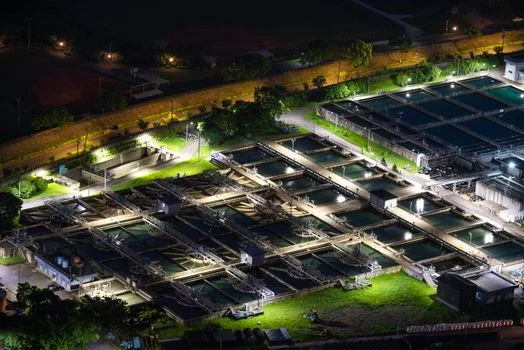
Hybrid Zero-Liquid Discharge (ZLD) systems are the practical route for fluoride control and TMAH recovery on SiC/GaN wastewater. A typical hybrid ZLD flow starts with pretreatment—dissolved air flotation (DAF) or lamella clarifiers—to strip TSS, oil and grease (FOG), and silicon carbide nanoparticles before they hit membranes.
After pretreatment, NF selectively removes fluoride and recovers tetramethylammonium hydroxide (TMAH). NF can push fluoride removal above 99.5%, ahead of Ca(OH)₂ precipitation at about 98%. NF plus RO can recover up to 98% of TMAH. Recovered TMAH reuse or sale is often valued at $0.10–$0.30/m³ versus disposal at $0.50–$1.20/m³. NF permeate is then polished by RO systems for permeate polishing in hybrid ZLD semiconductor wastewater treatment for fab reuse, with typical water recovery of 70–85%. RO brine goes to an evaporator/crystallizer for full ZLD, yielding solid waste and the last water fraction.
Energy for advanced hybrid ZLD usually runs 2.5–4.0 kWh/m³, above conventional biological treatment at 1.2–2.0 kWh/m³. The premium buys compliance, reuse, and chemical recovery. Influent at 1,500 mg/L fluoride and 300 mg/L TMAH can reach <1 mg/L fluoride and <5 mg/L TMAH in RO permeate, with concentrate sent to evaporation.
| Process Stage | Primary Function | Key Contaminant Removal/Recovery | Typical Removal/Recovery Rate | Energy Consumption (kWh/m³) |
|---|---|---|---|---|
| Pretreatment (DAF/Clarifier) | TSS, FOG, Nanoparticle Removal | TSS, SiC nanoparticles | >95% | 0.1-0.3 |
| Nanofiltration (NF) | Fluoride, TMAH Recovery, Hardness Removal | Fluoride, TMAH, divalent ions | >99.5% (F⁻), >98% (TMAH) | 0.8-1.5 |
| Reverse Osmosis (RO) | Permeate Polishing, High Purity Water | Dissolved salts, residual organics | >98% | 1.5-2.5 |
| Evaporator/Crystallizer | Zero Liquid Discharge (ZLD) | All remaining dissolved solids | >99.9% | Variable (high thermal) |
Membrane Fouling in SiC/GaN Fabs: Mechanisms and Mitigation Strategies
Membrane fouling in SiC/GaN fab wastewater is aggressive and raises OPEX when pretreatment slips. Silicon carbide nanoparticles at 10–50 nm drive irreversible fouling on RO and NF. Autopsy studies from 2024 show these particles can cut membrane flux by 30–50% within 24 hours, forcing frequent cleans and early replacement.
Fluoride at up to 2,000 mg/L drives scale. When pH exceeds 7.5, calcium fluoride (CaF₂) deposits on membrane surfaces and can cut permeability by 20–40%. TMAH acts as a surfactant: it raises membrane hydrophobicity and worsens organic fouling. Plants therefore need a layered mitigation plan, not a single chemical fix.
Robust pretreatment such as DAF pretreatment for silicon carbide nanoparticle removal in SiC/GaN fabs can remove over 95% of TSS and cut particulate load. Hold pH at 6.5–7.0 with PLC-controlled chemical dosing for precise pH stabilization in semiconductor wastewater to limit CaF₂ precipitation. Polyacrylic acid antiscalants further slow scale. For extreme fluoride, a ceramic membrane stage ahead of polymeric RO/NF extends polymeric membrane life.
| Fouling Mechanism | Key Contaminant(s) | Fouling Threshold | Impact on Membrane | Primary Mitigation Strategy |
|---|---|---|---|---|
| Particulate Fouling | SiC nanoparticles, TSS | TSS >50 mg/L | 30-50% flux reduction in 24h | DAF, Microfiltration, pH adjustment |
| Inorganic Scaling | Fluoride, Calcium ions | Fluoride >1,500 mg/L, pH >7.5 | 20-40% permeability reduction | pH control (6.5-7.0), Antiscalant dosing |
| Organic Fouling | TMAH, CMP organics | TMAH >100 mg/L | Increased hydrophobicity, flux decline | Oxidation, Activated Carbon, DAF |
Cost Breakdown: CapEx, OPEX, and ROI for Hybrid ZLD Systems
CapEx and OPEX for hybrid ZLD on high-volume acid-alkaline streams decide whether a 2025–2026 fab budget clears. For a typical 500 m³/day hybrid ZLD package, 2025 CapEx ranges from $1.2 million to $3.5 million. That envelope covers pretreatment (DAF, clarifiers), NF and RO skids, evaporators, crystallizers, and controls.
Full-ZLD OPEX typically sits at $0.25–$0.60/m³ treated. Partial-recovery NF/RO trains run lower, about $0.10–$0.20/m³. Energy usually takes 40–60% of OPEX because of membranes and evaporation. ROI drivers include TMAH recovery valued at $0.50–$1.20/m³ when reused or sold. Water reuse often exceeds 50–70% recovery. Avoided discharge fines are cited at $200–$500/m³ for non-compliant discharge in regions such as China and the EU.
A 2024 SiC fab in Germany reported a 35% OPEX cut after moving from chemical precipitation to hybrid NF/RO on acid-alkaline wastewater, with payback near four years.
| System Type | CapEx (500 m³/day, 2025) | OPEX ($/m³ treated) | Key ROI Drivers | Typical Payback Period |
|---|---|---|---|---|
| Hybrid ZLD (NF/RO/Evaporator) | $1.8M - $3.5M | $0.40 - $0.60 | TMAH recovery, water reuse, avoided fines | 3 - 5 years |
| Hybrid Partial Recovery (NF/RO) | $1.2M - $2.5M | $0.25 - $0.45 | TMAH recovery, partial water reuse | 2 - 4 years |
| Conventional Biological + Chemical Precipitation | $0.8M - $1.5M | $0.10 - $0.20 (excluding fines) | Compliance (limited), no recovery | N/A (higher risk of fines) |
Case Study: How a Taiwan SiC Fab Achieved 35% Cost Savings and Zero Violations
A 300mm SiC fab in Taiwan logged three unplanned shutdowns in 2023 from pH swings of 1.5 to 12.5 on acid-alkaline wastewater. Lost production was estimated at $2.1 million, plus discharge fines. The plant needed a tighter, membrane-ready train.
The upgrade used DAF pretreatment for silicon carbide nanoparticle removal in SiC/GaN fabs, then NF for fluoride and TMAH recovery. Permeate polishing used RO systems for permeate polishing in hybrid ZLD semiconductor wastewater treatment. An upgraded PLC-controlled chemical dosing system for precise pH stabilization in semiconductor wastewater held pH in the 6.5–8.5 band needed for compliance and membrane life.
Annual membrane replacement cost fell 35% after better pretreatment and stable pH. The fab recorded zero discharge violations through 2024. TMAH recovery reached 98% and was sold as a byproduct. Overall water recovery rose 20%. DAF alone cut membrane fouling by 40%, and stable pH saved about $120,000/year in chemicals. NF membranes were replaced every 18 months versus 36 months for RO, yet the system still beat the prior OPEX and compliance baseline.
Who This Guide Is For
This guide is for plant engineers, EPC contractors, and procurement managers scoping third-generation semiconductor fabs in 2025–2026. It targets defensible specs for third-gen semiconductor acid-alkaline wastewater and hybrid ZLD. If your project is a legacy 200mm silicon line with fluoride below 200 mg/L, conventional biological plus chemical precipitation remains more economical. This content focuses on high-fluoride, TMAH-laden streams. For sizing or a CapEx/OPEX review tied to your influent profile, send flow and contaminant data through our inquiry form. We will return a preliminary mass balance within five business days.
Frequently Asked Questions
What are the primary differences in acid-alkaline wastewater from SiC/GaN fabs compared to traditional silicon fabs?
SiC/GaN fabs produce acid-alkaline wastewater with much higher fluoride (up to 2,000 mg/L) and TMAH (100–500 mg/L) than traditional silicon fabs, where those levels are typically 10–20 times lower. SiC/GaN CMP also sheds silicon carbide nanoparticles (10–50 nm) that foul membranes aggressively and are uncommon in legacy silicon wastewater.
How does our equipment ensure compliance with standards like China's GB 31570-2022 and the EU Industrial Emissions Directive 2010/75/EU?
Use GB 39731-2020 for electronics industry water pollutants in China; GB 31570-2015 is the petroleum refining standard, not a semiconductor discharge code. Hybrid ZLD trains meet tight limits through pH control at 6.5–8.5, NF fluoride removal above 99.5%, and strong TSS removal. Automated dosing plus continuous monitoring supports EU Industrial Emissions Directive 2010/75/EU permit conditions and cuts violation risk, as shown in the Taiwan case.
What is the typical lifespan of membranes in a hybrid ZLD system treating SiC/GaN wastewater, and how is fouling mitigated?
NF membranes typically last 18–24 months; RO membranes often last 36–60 months on these streams. Fouling control starts with DAF for >95% TSS and nanoparticle removal, then pH hold to limit CaF₂ scale, plus antiscalants. Scheduled chemical cleans keep flux and extend membrane life under SiC/GaN loads.
Can TMAH be recovered and reused from SiC/GaN wastewater, and what are the economic benefits?
Yes. NF and RO can recover up to 98% of TMAH from SiC/GaN wastewater. Recovered TMAH can return to fab tools or sell as product at about $0.10–$0.30/m³ in savings or revenue, against disposal costs of $0.50–$1.20/m³.
What are the key factors influencing the ROI of a hybrid ZLD system for third-generation semiconductor wastewater?
ROI rests on TMAH recovery value, lower freshwater intake from 50–70% water reuse, and avoided discharge fines cited at $200–$500/m³. Lower fouling and stable pH also cut OPEX and downtime. Payback commonly falls in the 3–7 year band when those credits are booked.