
Why Kapolei Transportation Equipment Plants Are Re-evaluating Clarifiers in 2026
Kapolei transportation equipment plants running rail car rebuild, heavy-truck assembly, or aerospace MRO operations entered 2026 with a washwater problem their 1990s-era clarifiers were never designed to solve. The influent is a mix of drawing compounds, E-coat drag-out, machining coolant drips, phosphate cleaner rinses, diesel and lubricant drips, and fine metal fines — a colloidal stream with emulsified FOG that gravity settling cannot polish to current discharge targets. Federal effluent limits under 40 CFR Part 438 (Metal Products & Machinery Point Source Category) set the floor; Hawaii DOH implements these through HAR 11-55 Appendix C NPDES permits and adds an antidegradation review that has tightened oil & grease and zinc limits during the 2024–2025 Kalaeloa corridor permit renewals.
Industrial water rates on Oahu and limited municipal sewer capacity in the Kalaeloa corridor make water reuse a financial lever. A DAF polishing a clarifier's effluent to <50 mg/L TSS and <10 mg/L oil & grease makes closed-loop rinse reuse feasible; a clarifier alone typically leaves 30–60 mg/L TSS and 15–30 mg/L oil & grease on emulsified streams. Plants now face a binary decision: replace the clarifier, retrofit it with a DAF cell, or accept escalating NPDES surcharges as limits tighten through 2026.
What's Actually in Transportation Equipment Wastewater
Industrial influent characterization is the first step in selecting equipment, rather than relying on generic DAF-vs-clarifier selection tables. Transportation equipment washwater in Kapolei typically carries emulsified oil and grease from parts washers, E-coat rinses, and lubricant drips at 200–2,000 mg/L — well above the 100 mg/L ceiling most clarifiers can handle without carryover. Phosphate cleaners and surfactants stabilize these emulsions, preventing the natural coalescence that a gravity tank relies on. Fine metal fines from machining and grinding (iron, aluminum, zinc) enter at 50–800 mg/L TSS, and most particles are under 50 μm — below the size where Stokes' law gives a clarifier a workable settling velocity.
Cutting fluid emulsions are the primary challenge for clarifier performance: a hybrid oil-in-water plus colloidal TSS stream where the oil phase is chemically stabilized. Bench data from similar transportation facilities show 60–75% TSS removal and 50–70% oil & grease removal in a conventional clarifier on this stream, versus 85–98% TSS and 90–95% oil & grease in a properly sized DAF (Ecologix 2026 selection guide; H2Flow 2026 product data). If your plant sees any of these streams — drawing compounds, E-coat drag-out, coolant drips, parts-washer rinses — the chemistry favors flotation over sedimentation. These performance disparities directly impact the ability to meet increasingly stringent discharge permits.
DAF vs Clarifier: How the Two Technologies Actually Work on This Stream
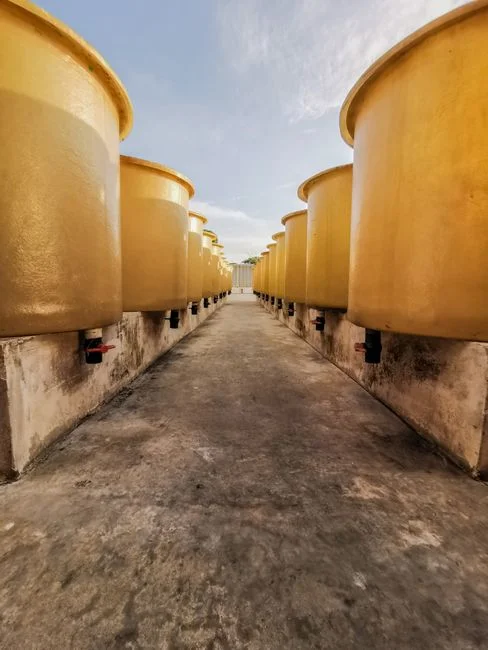
A conventional gravity clarifier relies on settleable solids dropping to a sludge cone under quiescent conditions, with hydraulic retention of 2–4 hours and a footprint measured in tens of feet of diameter for mid-size flows. It handles grit and heavy inorganic TSS at low operating cost, but it struggles with anything buoyant or emulsified. Particles below ~50 μm settling velocity simply do not reach the cone before the clarified overflow exits the launder.
A dissolved air flotation system works in the opposite direction. Pressurized recycle water saturated with air is released into the flotation tank at atmospheric pressure, generating 20–40 μm microbubbles that attach to oil droplets and fine TSS, lifting them to the surface in 5–20 minutes. A skimmer sweeps the floated layer into a sludge hopper; the clarified effluent exits below the surface. DAF sludge typically runs 2–4% solids — drier than clarifier underflow — which lowers downstream dewatering and hauling cost. Designs like the H2Flow Delta (plate-pak) and DAF Corp FC Maximizer compress this into a small footprint suited to retrofits: the FC Maximizer's 6–70 ft diameter range covers 10–11,000 gpm, and H2Flow skid offerings cover 4–300 m³/h. The 95% FOG removal versus clarifier's ~70% on emulsified streams is the central reason technology choice matters here (Ecologix 2026 selection guide).
Side-by-Side Comparison for Kapolei Transportation Equipment
The table below consolidates the parameters a Kapolei plant engineer needs in front of a compliance officer. Numbers reflect vendor data and field experience on similar transportation equipment streams; site-specific jar testing should always precede final specification.
| Parameter | DAF (Dissolved Air Flotation) | Clarifier (Gravity Sedimentation) |
|---|---|---|
| FOG removal (emulsified) | ~95% (Ecologix 2026; H2Flow 2026) | ~70% (Ecologix 2026) |
| TSS removal | 85–98% | 60–80% |
| Footprint (mid-size, 100 gpm) | ~50–100 ft² (incl. skid) | ~400–800 ft² (30–50 ft diameter tank) |
| Hydraulic retention | 5–20 minutes | 2–4 hours |
| Sludge consistency | 2–4% solids | 0.5–2% solids |
| CAPEX (100 gpm, installed) | $150K–$350K | $70K–$200K (incl. civil) |
| OPEX driver | Polymer + saturated-air pump power | Sludge pumping + hauling |
| Salt-air tolerance (Kapolei) | Requires 316L SS wetted parts, FRP/coated tank, IP66 controls | Concrete/FRP tank naturally tolerant |
| Retrofit onto existing clarifier | Yes — top cell or sidecar | N/A |
| 40 CFR Part 438 O&G compliance | Reliable on emulsified streams | Marginal; risk of excursions |
| Flow range available | 10–11,000 gpm (DAF Corp FC Maximizer) | No practical upper limit; size = footprint |
For a 50–200 gpm Kapolei mid-size plant — the typical transportation equipment rebuild or MRO facility — both technologies have credible vendors, but the DAF's smaller footprint, higher FOG removal, and drier sludge usually tip the decision before site constraints are even considered.
Kapolei-Specific Constraints That Push the Decision Toward DAF
Land cost in the Kalaeloa industrial corridor runs high relative to mainland industrial parks, and a 30–50 ft diameter concrete clarifier consumes footprint that a 50–200 gpm DAF skid fits inside a single 40-foot container or concrete pad. For a retrofit project, that delta often decides the project before the technology comparison is even opened.
Salt-air corrosion is the second site-specific driver. Kapolei's trade-wind exposure accelerates attack on carbon steel; specifying 316L stainless wetted parts, FRP or glass-fused-to-steel tanks, and IP66/NEMA 4X control panels is standard practice for outdoor DAF skids. The clarifier's concrete or FRP tank is naturally tolerant, but a DAF retrofit must be specified for the marine environment from day one. Brackish groundwater and high humidity argue for containerized DAF skids with HVAC, mirroring the H2Flow Alpha 10 containerized concept, so electronics and air-saturation equipment stay dry.
Limited local operator headcount also favors DAF. A modern DAF runs on a PLC with automated skimming, polymer dosing, and pH control; a clarifier needs regular weir cleaning, sludge-pump babysitting, and manual sludge-bed management. Hawaii DOH's 2024–2025 permit renewals in the Kalaeloa corridor have required demonstrated 95% oil & grease compliance, which a clarifier alone cannot reliably hit on emulsified transportation washwater.
When a Clarifier Still Wins (or When to Keep Both)
A clarifier earns its place when the stream is heavy inorganic grit — shot blast dust, abrasive tumbling washwater, or shot peening residue. In that case, a clarifier as a pre-thickener ahead of a DAF protects the flotation cell from solids overload, reduces wear on the recycle pump, and cuts polymer consumption. The hybrid layout is often the lowest-CAPEX retrofit for facilities that already own a serviceable clarifier tank.
For a brand-new greenfield line producing under 50 gpm with low FOG — say, a small aerospace MRO wash bay — a lamella clarifier may be the CAPEX-smarter choice, and the 40 CFR Part 438 O&G limits are easier to meet on a dilute stream. Most Kapolei transportation plants exceed that threshold once parts-washer rinses, E-coat drag-out, and coolant drips are combined, but the lamella option should stay on the table for low-FOG branches. A well-specified HydropureWater lamella clarifier can serve as the pre-thickener in a hybrid DAF-on-clarifier arrangement.
Cost Bands and 2026 ROI Snapshot
For a mid-size Kapolei plant in the 50–200 gpm range, a packaged DAF skid runs $80K–$350K installed, depending on materials of construction and automation. An equivalent clarifier runs $40K–$120K in civil work plus $30K–$80K in equipment — but the 3–5x footprint penalty in the Kalaeloa corridor often wipes out that CAPEX advantage once land cost is included.
DAF OPEX is dominated by polymer and coagulant at $0.02–$0.08 per treated gallon plus saturated-air pump power; clarifier OPEX is lower per gallon in energy terms but generates wetter sludge (0.5–2% solids) that costs more to haul. A hybrid DAF cell retrofitted onto an existing clarifier typically runs 40–60% of full DAF CAPEX, installs in 2–3 weeks, and pays back in 14–24 months through reduced sludge hauling, avoided NPDES surcharges, and lower polymer consumption on a polished feed. The HydropureWater DAF system covers 4–300 m³/h and pairs naturally with a HydropureWater plate and frame filter press for downstream sludge dewatering to 25–35% dry solids, which cuts hauling cost further.
Frequently Asked Questions
DAF or clarifier for transportation equipment wastewater in Kapolei — which should factories choose in 2026?
For FOG-dominated streams from parts washers, E-coat, and coolant drips, a DAF is the correct primary unit; a clarifier belongs upstream as a grit pre-thickener or in a hybrid retrofit cell. A standalone clarifier is defensible only for dilute, low-FOG greenfield flows under 50 gpm (per Ecologix 2026 selection guide; 40 CFR Part 438).
What removal efficiency does a DAF hit on transportation washwater?
A properly sized DAF achieves roughly 95% oil & grease removal and 85–98% TSS removal on emulsified transportation washwater (H2Flow 2026 product data; Ecologix 2026 selection guide). Clarifiers on the same stream typically achieve only 60–80% TSS and ~70% FOG.
Does 40 CFR Part 438 apply to transportation equipment manufacturers in Hawaii?
Yes. 40 CFR Part 438 (Metal Products & Machinery Point Source Category) is the federal effluent limitation guideline that applies; Hawaii DOH implements it through HAR 11-55 Appendix C NPDES permits, adding site-specific antidegradation review for the Kalaeloa