
Why Freeman Food and Beverage Factories Need the Right Primary Separator in 2026
Food and beverage wastewater in the Freeman corridor typically runs 200–3,000 mg/L TSS, 100–1,500 mg/L BOD, and 50–800 mg/L FOG depending on the sub-sector, with meat and poultry on the high end and beverage bottling on the low end (Ecologix 2026 industrial selection guide). EPA 40 CFR Part 432 subparts — including D (dairy), E (meat and poultry products), F (rendering), and I (aquatic processing) — set federal FOG, BOD, and TSS limits that any Freeman plant discharging to a publicly owned treatment works (POTW) must meet through pretreatment. The receiving POTW layers its own surcharges on FOG and TSS above published threshold concentrations, so an under-sized or mismatched primary separator pushes both compliance risk and the monthly sewer bill upward. Daily clean-in-place (CIP) surges swing pH, temperature, and hydraulic loading by 1.5–2x average flow, which rules out small-footprint clarifiers tuned to steady-state design flow. The 2026 decision for a Freeman plant is a regulatory decision before it is a capital decision, and the right technology choice depends on whether the dominant load is FOG, settleable solids, or both.
How a DAF System Treats Food and Beverage Wastewater
A dissolved air flotation system pressurizes a recycle stream of clarified effluent with air at 60–80 psig, then releases that stream into a flotation cell through needle valves or a micro-bubble generator. The pressure drop nucleates 20–40 micron bubbles that attach to chemically conditioned oil, grease, and light solids, lifting them to the surface for skimming while clarified water exits the bottom (per DAF Corp micro-bubble generator spec; Spectrum Water DAF equipment page). The floated layer is typically thickened to 2–4% dry solids inside the unit, which is the single biggest reason a downstream dewatering device can be smaller and cheaper (per DAF Corp FC Maximizer performance data, 2025).
DAF Corp's round FC Maximizer line covers 10–11,000 GPM at 92–98% TSS removal, and the rectangular RC UniMax line covers 10–1,000 GPM at 85–90% TSS removal. FRC Systems' PCL high-rate and PWL open-tank DAF units reach 2,000+ GPM with 35–3,100+ sq ft of effective area on stainless-steel construction. HydropureWater's dissolved air flotation system covers 4–300 m³/h across 13 models, suitable for mid-size Freeman dairies, breweries, and snack plants. These units effectively remove free and emulsified FOG, fine suspended solids, fibre, and protein—material that a clarifier physically cannot pull to the bottom in a reasonable residence time.
How a Clarifier Handles Food and Beverage Wastewater
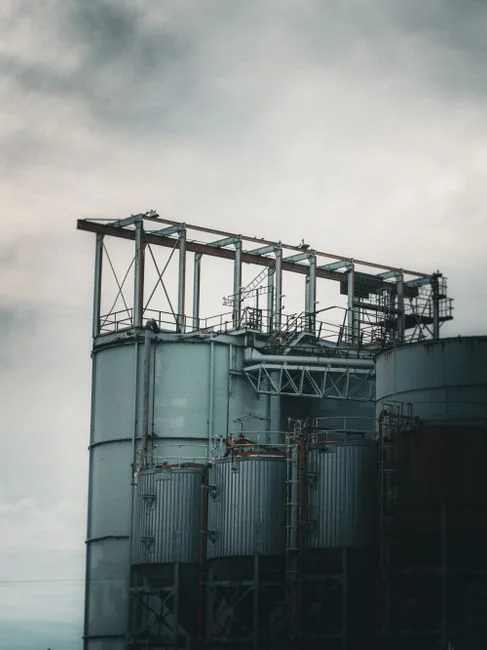
Gravity clarifiers and lamella plate settlers use Stokes-law sedimentation: particles denser than water fall to the bottom of a tank under quiescent or low-velocity conditions and are scraped out as underflow sludge. They are tuned to settleable inorganic and organic solids, not free oil, which is why a clarifier on a high-FOG food stream typically plateaus around 70% FOG removal versus 95% for DAF on the same influent (Ecologix 2026 industrial selection guide, food-processing case). The trade-off is real capital savings and a smaller chemical footprint on streams where oil is not the primary contaminant.
A modern lamella clarifier reaches 20–40 m/h surface loading rate in a fraction of the footprint of a conventional clarifier, because the inclined plates multiply the effective settling area. The HydropureWater high-efficiency lamella clarifier is specified at 20–40 m/h surface loading and cuts coagulant consumption by up to 30% versus a conventional clarifier (HydropureWater product spec, 2026). The right clarifier fit is heavy grit, settleable protein and fibre, low-FOG produce wash water, or a polishing step behind a DAF. Where a Freeman plant is under FOG, BOD, or TSS limits but not all three, the clarifier often wins on operating cost.
DAF vs Clarifier: 2026 Comparison Matrix for Food and Beverage Plants
The table below provides the procurement-grade view required for 2026 capital requests. It compares DAF and clarifier performance on key parameters: removal efficiency, polymer demand, sludge consistency, footprint, and CAPEX.
| Parameter | DAF system | Gravity / lamella clarifier |
|---|---|---|
| Separation principle | Micro-bubble flotation of conditioned floc | Gravity sedimentation, with optional lamella plates |
| Target contaminant | Free and emulsified FOG, fine TSS, fibre, protein | Settleable inorganic and organic TSS, grit |
| FOG removal | 90–95% (Ecologix 2026 case) | 60–70% (Ecologix 2026 case) |
| TSS removal | 85–98% (DAF Corp FC Maximizer 92–98%, RC UniMax 85–90%) | 70–90% on settleable solids |
| BOD reduction | 30–60% as primary (entrained BOD on floated solids) | 20–40% as primary on settleable BOD |
| Footprint | Compact, 0.05–0.10 m² per m³/h | Large conventional; lamella at 20–40 m/h surface loading |
| Polymer / coagulant demand | 5–25 mg/L polymer plus coagulant | Lower; up to 30% less chemical on lamella (HydropureWater spec) |
| Sludge consistency | 2–4% thickened float (DAF Corp spec) | 0.5–2% underflow, often needs plate-and-frame dewatering |
| Flow range | 4–300 m³/h; 10–11,000 GPM (DAF Corp FC); 50–2,000+ GPM (FRC) | Sized to design flow; lamella handles 1.0–1.3x surge |
| Typical CAPEX band (skid, stainless) | Higher upfront (skimmers, saturation tank, controls) | Lower upfront, especially conventional concrete |
| Best-fit food stream | Meat, poultry, dairy, snack, brewery with FOG > 100 mg/L | Produce wash, low-FOG bottling, post-DAF polishing |
The headline numbers in the table — 95% vs 70% FOG and 2–4% float versus 0.5–2% underflow — represent the difference between paying one POTW surcharge line and paying two, and between buying a small dewatering press versus a larger one.
Decision Framework: When a Freeman Plant Should Pick DAF, Clarifier, or Both
The decision reduces to three questions: how high is FOG, how heavy are the settleable solids, and how much does the receiving POTW surcharge FOG and TSS above its published threshold.
Pick DAF as the primary separator when raw FOG exceeds 100 mg/L, when TSS is light or colloidal and will not settle under gravity, or when the plant must hit 40 CFR Part 432 FOG limits without diluting process streams with clean water. This is the typical 2026 call for Freeman meat, poultry, dairy, snack, and condiment lines, where the 95% FOG removal rate is required to clear 40 CFR Part 432 subpart limits without a downstream polishing step. DAF also tolerates 1.5–2x peak flow surges from CIP better than a small lamella, because the hydraulic residence time is short and the floated sludge is mechanically skimmed rather than relying on quiescent settling.
Pick a clarifier or lamella as the primary separator when raw FOG stays under 50 mg/L, when solids are heavy and settleable, when CAPEX is constrained, or when polymer use must be minimized. Produce wash water, beverage bottling, and pre-treatment before a biological reactor often fit this profile. Run a DAF followed by a lamella clarifier when the stream carries both high FOG and heavy settleable solids, which is the most common 2026 configuration for Freeman meat-and-dairy plants producing both rendering waste and wash-down solids. The DAF pulls FOG and light TSS to the top; the lamella polishes settleable solids that slip through and protects downstream biology from shock loads.
Cost, Footprint and ROI Snapshot for a 2026 DAF or Clarifier Project
Stainless-steel DAF systems from established OEMs dominate CAPEX because of the skimmers, air-saturation equipment, recycle pumps, and PLC controls, but they deliver 2–4% thickened float sludge that materially cuts downstream dewatering cost and hauling weight. Gravity clarifiers and lamella units have lower upfront cost and lower polymer use — the HydropureWater high-efficiency lamella clarifier cuts coagulant consumption by up to 30% versus a conventional clarifier (HydropureWater product spec, 2026) — but their 0.5–2% underflow usually needs a plate-and-frame filter press to reach haulable dryness above 18–22% cake solids. Pairing either separator with a HydropureWater plate and frame filter press is the standard 2026 sludge-end configuration, and the dryness of the upstream float or underflow directly drives press sizing and cycle time.
Footprint is the second lever. Lamella clarifiers at 20–40 m/h surface loading replace a much larger conventional clarifier, which matters in a tight Freeman plant where civil work is a major cost driver. Payback is driven by the receiving POTW's FOG and TSS surcharge schedule: once the raw stream's FOG concentration crosses the surcharge threshold, the difference between 70% and 95% removal is a recurring monthly line item on the sewer bill, and DAF pays back on surcharge avoidance faster than it pays back on sludge handling. For a deeper look at the physics behind the separator choice and how to avoid the most common sizing errors, the DAF clarifier working principle and microbubble physics guide and the DAF machine maintenance checklist are the natural follow-up reads. For plants in adjacent sectors, the parallel DAF vs clarifier for mining and metals wastewater guide applies the same framework to a different influent profile.
Frequently Asked Questions
Is DAF or a clarifier better for FOG removal in a food and beverage plant?
DAF removes 90–95% of FOG on food-processing wastewater versus 60–70% for a clarifier on the same stream (Ecologix 2026 industrial selection guide), which is why DAF is the standard primary separator for meat, poultry, dairy, and snack plants that must hit 40 CFR Part 432 FOG limits.
When does a clarifier make more sense than DAF for a Freeman food plant?
A clarifier or lamella is the right primary separator when raw FOG is below 50 mg/L, solids are heavy and settleable, and CAPEX or polymer use must be minimized — for example, on produce wash water or low-FOG bottling lines.
Can a Freeman food plant run DAF and a clarifier together?
Yes. A DAF followed by a lamella clarifier is the common 2026 configuration for Freeman meat and dairy plants, with the DAF pulling FOG and light TSS to the top and the lamella polishing settleable solids before biological treatment.
What drives the ROI on a DAF versus a clarifier upgrade in 2026?
Freeman POTW surcharges on F